
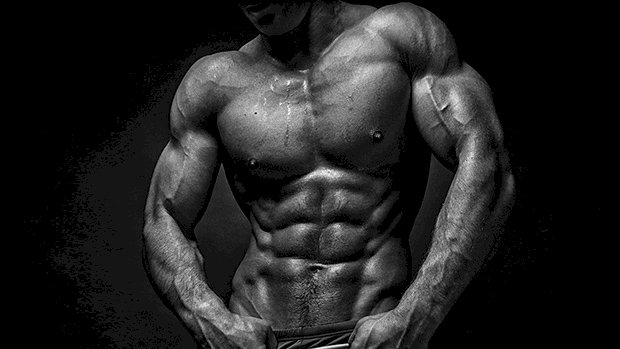
 Keep Lifting Heavy While Getting Shredded You’ve been training hard and heavy on basic movements while trying to gain as much muscle as possible. Now that you’re on a diet you must give your body a reason to hold on to this new muscle tissue. High-intensity strength exercises (in the 70-100% range) are better than low-intensity strength exercises (in the 40-70% range) while dieting. The higher training loads help you preserve strength and muscle while on a reduced calorie diet much better than super-high volume/low-intensity workouts. Believe it or not, the human body is more interested in survival than being a hulking hunk of manhood (or a chiseled Wonder Woman). So energy reserves such as body fat are more precious than muscle tissue since the latter actually consumes energy. When calories are dropped, we enter a survival mode and the energy-costly muscle mass goes away – it’s broken down into amino acids and then transformed into glucose for energy. To keep your muscle mass, you must give the body a reason to do so. Will lifting light weights do it? No. You need to continue to lift heavy, otherwise some muscle will go to waste! You’ve Been Lied to We’ve been brainwashed by the muscle magazines to believe that you should do high-rep training for definition. This is absolutely ridiculous! Sure, you use a little more energy during your workout, but think about it: the higher the training volume you perform, the more energy you need to recover from your workout. The more glycogen you burn while strength training, the more carbs you’ll need to recover and progress. If you’re on any kind of cutting diet, chances are that you’ve lowered your carb intake quite a bit. So you need more carbs, but you’re actually giving less to your body! Furthermore, while on a hypocaloric diet your body has a lowered anabolic drive, meaning that it can’t synthesize as much protein into muscle as it does when you’re eating a ton. A super-high volume of work leads to a lot of microtrauma to the muscle structures. A lot of microtrauma requires a great protein synthesis increase, which your body can’t do at this point. So if you use high-volume/low-intensity training while dieting, you’ll break down more muscle and build up less. Not exactly good news. Perhaps one of the greatest benefits of high-rep training is an increase in blood and nutrient flow to the muscles, but if you have a reduced amount of nutrients available in your body, this benefit is pretty much wasted. Repeat after me: I will use my diet and cardio/metcon work to stimulate fat loss. I will use strength training to maintain or gain muscle. That’s the bottom
Origin: Tip: Go Heavy to Retain Muscle
Tag: Tip:
Tip: The 4-Second Negative
 Quality, Then Quantity This is especially relevant to anyone with recurring injury issues, as well as people who are relatively new to lifting. We often become myopic when it comes to the idea of progressive overload, assuming that it always means putting more weight on the bar each week. Adding load has an important place in legitimate training, but if your biomechanics are shaky, that heavier load will do more to wreck your joints than to make you bigger or stronger. Let’s be real for a moment: If you squat 185×10 with collapsing knees and a rounded low back, do you really think it’s wise to add more weight? One Way to Boost Workout Quality Sometimes, improved quality simply translates to slowing things down and just exerting better command over the loads you’re lifting. If you typically use the “easiest” lifting speed in your constant attempts to add more weight to the bar, you really don’t have much margin for continued improvements. Consider a different approach: Lighten things up and use a 4-second eccentric (negative) tempo. Then pause for a full second at the bottom, and finally, return to the start position with an aggressive but controlled concentric. It’s All About Stress Muscles only know stress, not how much weight you’re using. Most people report significant soreness after trying this technique, despite using lighter weights. One additional perk is that slowing things down serves to increase confidence. After all, if you can lift a given weight using a slower, more difficult tempo, it means you’ve got some margin available for heavier weights next time
Origin: Tip: The 4-Second Negative
Tip: A New Way to Hammer the Hammer Curl
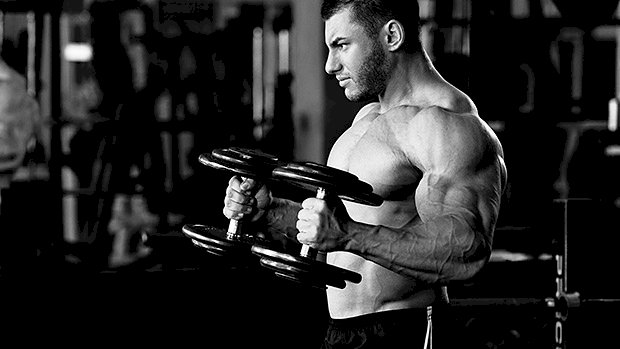 A “muscle round” is where you use a weight you could normally do about 12 reps with, but only do 4 reps with it. You rest 10 seconds and do another 4 reps. Do this 6 times. Then, on the last mini-set, you do as many reps as possible (AMRAP): 4 reps, rest 10 seconds 4 reps, rest 10 seconds 4 reps, rest 10 seconds 4 reps, rest 10 seconds 4 reps, rest 10 seconds AMRAP Here’s what it looks like with preacher hammer curls: Do these on the vertical side of a preacher bench. (If you use the angled preacher bench, there’s virtually no resistance at the top of the movement.) This gives you a built-in work to rest ratio because you’ll be swapping hands on each mini-set. The right arm does 4 reps, the left arm does 4 reps; back and forth like this for the entirety of the round. Do 2 complete muscle rounds to light the brachialis up, taking 2-3 minutes between each
Origin: Tip: A New Way to Hammer the Hammer Curl
Tip: Body-Build For Brute Athleticism
 The Myth Many coaches claim that they don’t use bodybuilding concepts like isolation exercises because they don’t want their athletes to become overly muscle-bound and less athletic… the way they perceive many bodybuilders. This view is out of touch with reality. The Reality Doing some hamstring curls and triceps extensions won’t automatically turn you into a pro bodybuilder any more than doing sprints on a track turns you into an Olympic sprinter. Nor is the central nervous system so fragile that performing a few sets of isolation exercises or a few sets on weight machines could somehow undercut the functional abilities and movement skills acquired from long hours of sport practice and competition. Improving your sports performance from training isn’t purely related to gains in strength. They can also be related to increased bodyweight from muscle size. So, building your body actually can help you improve your overall athletic performance. In fact, one of the things that determines our stability and strength from our feet is bodyweight. A body’s mass (or weight) contributes to stability because heavier bodies are harder to move and hence are more stable. On the flipside, lighter bodies are moved more easily and are less stable (1). So, getting bigger can help you better use your strength by providing a greater platform from which to push against your opposition. It can also give you a better chance of avoid getting knocked over or knocked off balance. The Bottom Line Getting bigger by putting on 20 pounds of muscle mass (not fat) through hypertrophy training can help you better use your strength by providing a greater platform from which to create and resist
Origin: Tip: Body-Build For Brute Athleticism
Tip: Another Reason to Avoid Low-Fat Milk
 First off, let me dispel some of the usual crap you hear about milk in general: The China Study This milk-shaking and oft-referred to study reported that casein, the primary protein in milk, causes cancer, but that doesn’t hold up when you look closely at epidemiological studies. Besides, there’s a lot of casein in mother’s milk. That would be a pretty silly idea on nature’s part if it were to cause cancer. That would be a biological error on par with nature placing a rhino’s genitals on his horn. Every time he butted another rhino, wham! Another generation would go down the tubes. Growth Hormone Yeah, maybe milk contains a little bit of GH, but cows produce it naturally and the levels found in the milk of cows treated with it hasn’t been found to be any higher than cows not treated with it. Besides, GH is a protein. It doesn’t get absorbed in its entirety. Do you think if you eat an egg, it gets absorbed intact, eventually ending up in your liver next to some bacon at Bob’s 24-Hour Bacteria Breakfast Bistro? No, it gets broken down into its constituent amino acids when it hits your digestive system, just like GH does. Whole Milk vs. Low-Fat or Fat-Free Milk Take away all the nutritional mythology and milk is a fairly decent drink, filled with protein, minerals, and, in the right circumstances, nutrients. It’s important to drink whole milk, though. Whole milk drinkers have been shown to have fewer incidences of cancer, diabetes, and heart disease than drinkers of skim milk, and whole milk has also been shown to grow more muscle than skim milk, possibly because of the CLA (conjugated linoleic acid) it contains. Skim milk is also less functionally nutritious and it has to do with how they make it. They remove all the fat, thereby removing all the fat-soluble vitamins like A and D. They then have to fortify the milk by adding those vitamins back in, but unless you’re drinking the milk with some fatty food, those vitamins won’t get absorbed. All that being said, a new study reveals a surprising and compelling new reason to choose whole over skim or low fat and it has to do with estrogen. What They Did Scientists herded up 109 postmenopausal women to see what drinking milk would do to their endocrine levels. (They chose postmenopausal women because they wouldn’t be susceptible to the daily and hourly fluctuations in natural estrogen levels seen in premenopausal women). Each test subject drank 1 liter of semi-skimmed milk (1.5% milk fat) per day for four days, and 1 liter of whole milk (3.5% milk fat) per day for four days, interspersed with a four-day washout period. The scientists measured sex hormone levels in 24-hour urine samples collected after each 4-day period. What They Found The lower-fat milk ended up causing much higher estrogen levels than the whole milk did. That’s not to say the lower-fat milk had more estrogen in it than the whole milk. Instead, it had to do with the way the body handled the estrogen in the milk after drinking it. “Milk consumption resulted in a significant increase in urinary estrone (E1) excretion, whereas estradiol (E2), estriol (E3), and 16ketoE2 excretion only increased after semi-skimmed milk consumption.” Moreover, the semi-skimmed milk led to a higher percentage of conjugated estrogens, which are the most bioavailable form of estrogen and have a longer half-life. They’re also the type found in birth control pills. The scientists theorized that maybe the fat in the whole milk inhibited the enzymes needed to deconjugate the estrogen. What This Means to You Drinking skim milk can contribute to having higher-than-desirable estrogen levels, making it harder to put on muscle and easier to gain fat. It can also lead to heart problems. Granted, the women in this study were drinking a lot of milk – a liter, or a little more than 4 cups a day. Most of us don’t drink that much unless you’re one of those GOMAD (gallon of milk a day) bodybuilders who, after they’re curdled and aged, turn into giant blocks of cheese. Still, even if you’re only drinking average amounts of milk – either for the protein it contains, its nutrients, or as a tasty topping for your oatmeal or cereal – you’re better off drinking whole
Origin: Tip: Another Reason to Avoid Low-Fat Milk
Tip: Crush Your Lats With This Exercise
 This is one of the very best bang-for-your-buck exercises for increasing strength and muscle mass while also maintaining and even enhancing mobility through the shoulders and back. As anyone who’s tried to stretch a fully pumped muscle knows, this is not a comfortable feeling. That said, this isn’t for beginners. Neutral-Grip Lat Pulldown, Accentuated Eccentric The neutral grip allows the lats to increase their range of motion into a stretch at the top of the movement while also helping the shoulder complex stay in a more centrated position. Both variables are great for longevity, orthopedic health, and muscularity. Rock back a little in this exercise to create almost a high-row angle on the concentric (pulling) portion of the exercise, then come back and normalize your torso position into neutral. Bring your head forward to really stretch through the eccentric (negative) portion of the exercise. If you master this movement, get a partner to force the eccentric by pressing down on the weight stack as you slowly let your hands and arms move up into a straightened position. (See video.) If you’re a sicko who loves the pain, add a 10-30 second forced stretch out of this exact position while maintaining neutral shoulder alignment and stretching through the lats. This will stick a fork in your workout, so program it on the tail-end of an upper body or back-emphasized training
Origin: Tip: Crush Your Lats With This Exercise
Tip: A Common Chest Training Mistake
 Dumbbell Flye Bench Press: Redundant? Dumbbell flyes and dumbbell bench presses both involve horizontal shoulder adduction. They also create the most tension on the pecs when the forearm is parallel to the ground, which is 90-degrees to the force vector. So they’re basically the same exercise when it comes to how they load your pecs, thus making them redundant to one another. You don’t need to do them in the same workout. Dumbbell Bench Press Dumbbell Flyes The reason you can use much more weight when doing a dumbbell bench press is because it allows the triceps to contribute. The weight is also much closer to your shoulder joints, which gives your pecs and front delts a much better mechanical advantage. Do Cable Flyes Instead Cable flyes aren’t redundant to dumbbell bench presses because they load the pecs in a different manner than flyes with dumbbells. Dumbbell flyes provide little to no force on your pecs when your wrists are directly above your shoulders. However, since cable flyes involve working against 45-degree force vector (the cables themselves), your pecs end up dealing with a great deal of load when your hands are directly in front of your
Origin: Tip: A Common Chest Training Mistake
Tip: The Foreskin Supplement?
 Forskolin is a testosterone and thyroid hormone raising supplement derived from the herb, Coleus forskohlii. Studies have shown it to increase lean body mass, decrease body fat, and lower blood pressure while raising metabolic rate. It does all this by elevating levels of cAMP (cyclic adenosine monophosphate), which is an interesting compound because it acts as a kind of chemical switch that turns all kinds of body cells on and off. For instance, increased levels of cAMP can cause the Leydig cells of the testicles to produce more testosterone, which in itself can lead to additional lean body mass. Increased levels of cAMP can also lead to the increased production of hormone-sensitive lipase (HSL), which leads to the release of free fatty acids to be used as fuel by the body. Forskolin also upregulates the thyroid, causing some researchers to compare its effectiveness with thyroid stimulating hormone (TSH). But Be Careful… Since it’s derived from a plant, standardization is a pretty big problem. A lot of forskolin products are just “grass clippings” (the whole plant dried, crumbled, and stuffed into a capsule). The herb also has a short half-life of about 4 hours, so you need to take it pretty often for best results. Not ideal. And while its oral absorption is good, its bioavailability is questionable because a lot of things seem to interfere with how successfully it makes it into the bloodstream. Forskolin That Works Just as you’d like all the tomatoes you buy to taste great, you also want every batch of forskolin to work like advertised. But plants are fickle. One batch isn’t like the one before it or the next, so you need to make sure you get a product that’s made entirely of the active ingredient – forskolin carbonate – and not the aforementioned “grass clippings.” By extracting and purifying the active ingredient, you extend the duration of action from 4 to 12 hours. Secondly, you need to improve its bioavailability by combining it with the aforementioned gelucire, a compound made from mixtures of mono, di, and triglycerides. Carbolin 19® is pure forskolin carbonate and uses the proper delivery
Origin: Tip: The Foreskin Supplement?
Tip: Build Muscle With “Death By” Sets
 Contractile failure is the main trigger to stimulate muscle growth. That means you go until can’t get another full rep with good form. The key in this variation of rest-pause training is hitting failure at several points in the same set. Basically, one “set” may be two minutes long with little 10-second breaks taken within the set. “Death by” means that you continue until you can’t do any more. Here’s an example. Hamstring Curl, Death-By Rest-Pause Start with a weight you can do for 6-8 reps. The number you get isn’t important, this is just to help you pick the best weight to start with. Go to failure. The last rep should be tough, but you should be able to do the full rep in good form. Don’t try to do half of a ninth rep and then fail. Remember, contractile failure means completing a FULL rep and not being able to do another full rep. Rest for 10 seconds. Using the same weight resume the set and once again go to failure. Continue the pattern: reps to failure, 10 second pause, reps to failure, 10 second pause… until you reach a point where you know you can’t possibly get one more full rep. Continue doing the same process until you can only perform a single complete rep in a mini-set, where you know that getting a second one would be impossible. Since these sets are amazingly powerful but also traumatic on the body, only do one or maybe two sets per exercise. This method is ideal for isolation
Origin: Tip: Build Muscle With “Death By” Sets
Tip: 10 Supplements for Overall Health & Longevity
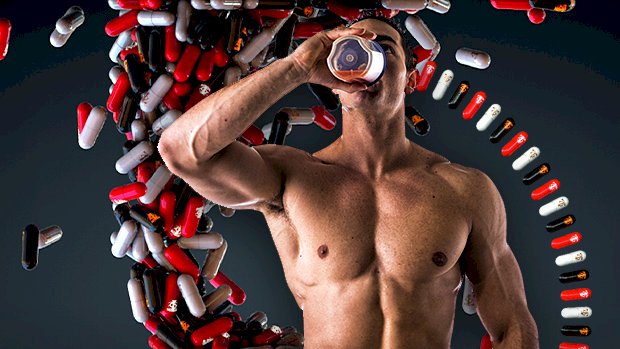 There are plenty of good supplements for building muscle, but what about the other stuff, like general health? There are thousands available, so let’s narrow down the list and focus on the most important ones for longevity and feeling good. 1 – Certain Chelated Minerals If you’re an athlete, you sweat and thus you’re likely deficient in zinc, which, along with selenium, maintains high testosterone levels and the immune system. If you’re a plain old human, you’re also likely deficient in magnesium, and magnesium alone is responsible for over 300 biochemical reactions in the human body, ranging from muscle and nerve function to protein synthesis. Likewise, certain minerals like chromium and vanadium help maintain regular blood sugar levels and insulin, the importance of which would take another 10,000 words to explain. Suffice it to say that these particular minerals are often in short supply and athletes would do well to take them, preferably in chelated form. Elitepro™ Minerals is the best source. 2 – Vitamin D3 If you’re able to spend between 15 and 30 minutes in the sun, pretty much naked, every day, without getting skin cancer or looking like an old catcher’s mitt, skip the vitamin D3 supplements. Otherwise, take 1,000 to 2,000 IU every day to enjoy increased cognition and better immune health and bone health while reducing the risks of cancer, heart disease, and diabetes. 3 – Coenzyme Q10 CoQ10 is what’s known as a pseudovitamin in that it’s essential for life, but it’s not essential to life that you supplement with it. Nevertheless, consider taking 90 to 200 mg. a day, with food, to reduce plaque in the arteries and to feed mitochondria. 4 – Resveratrol It can protect us from insulin resistance and heart disease, along with working as a potent estrogen antagaonist and aromatase inhibitor. Take about 1800 mg. per day. Rez-V™ is the top choice. 5 – Cyandin 3-Glucoside This substance regulates the chemical master switch called AMPK (adenosine monophosphate-activated protein kinase). This master switch plays a huge role in determining not only how fat you are, but how long you live. Take 2400 to 3600 mg. per day before meals. Indigo-3G® is the most potent. 6 – Omega-3 Fatty Acids We live in an omega-6 world and it’s killing us. Nature intended for us to have a two-to-one or three-to-one ratio of omega-6 to omega-3 fatty acids in our body, but because of our fast-food, snack-food, meal-in-a-box way of life, this ratio is now more like 20 to 1 in favor of the omega-6s. Inflammation is thus running rampant through our bodies and the best way to stop it is to cut down on the omega-6’s and to start swallowing those beautiful amber fish oil gelcaps. Take up to 12,000 milligrams of a combined DHA/EPA formulation such as Flameout® once a day. 7 – CLA Conjugated linoleic acid is a fatty acid found in high quantities in grass-fed beef. Since most of us don’t get much grass-fed beef, we’re likely deficient in this important fatty acid. Numerous studies have shown it to be a potent cancer fighter, as well as playing a role in normalizing blood pressure, fighting cardiovascular disease in general, and helping with osteoporosis, inflammation, and even body composition. Take about 1,000 mg. a day. Products, like Flameout®, that contain the two isomers of CLA are the best. 8 – Curcumin Curcumin is one of those supplements that sometimes seems too good to be true because the stuff does everything. It helps enhance cardiovascular health, reduces body fat, relieves pain, kills multiple types of cancer cells, and reduces estrogen levels, among other things. Take about 1,000 mg. a day for general health, more, as needed, to alleviate pain. Make sure you use a formula that’s employing additional food technology to make it more absorbable, though. 9 – Superfood This product is the thinking man’s alternative to multivitamins. It consists solely of 18 nutrient-dense fruits and vegetables that have been desiccated, pulverized, and stored in a pouch. As such, Superfood contains all the nutrients, vitamins, minerals, and phytochemicals intrinsic to the fruits and vegetables it’s made from. Take two scoops a day. 10 – Saw Palmetto The research behind saw palmetto as a prostate savior isn’t conclusive. We’re not sure that it relieves symptoms of benign prostatic hyperplasia or that it lowers levels of prostate specific antigen. However, we’re fairly certain that it does lower levels of DHT while increasing levels of testosterone. The latter achievements, and the possibility that it does help with the former, convince us that it merits inclusion in your health prescription. Make sure you buy a product that was manufactured using the “supercritical C02” method. Take between 160 and 320 mg. a
Origin: Tip: 10 Supplements for Overall Health & Longevity
 All about sport xlsport.club