
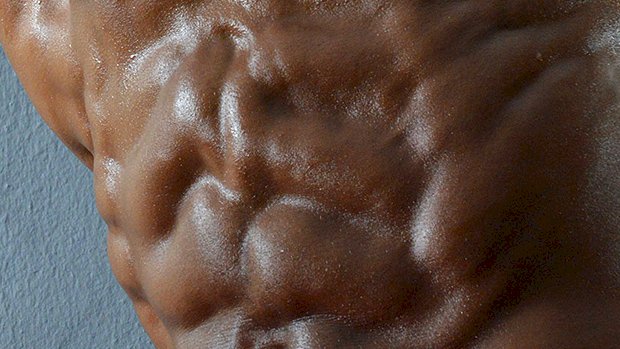
 Take two groups of guys and have them do back squats. Both groups will use the same weight, bar position, foot position, and do the same number of reps. Now, how can you make one group get much greater activation in the core musculature? Answer: Change how the weight is loaded. This leads to drastically different training stimuli. Unstable loading is getting more popular. It’s usually accomplished by hanging weight on the bar with bands (see video below with Joel Seedman) or by using a specialized “wobbly” bar. Let’s take a look at a new study on unstable loading. The Study Fifteen resistance-trained men performed 3 sets of 10 back squats at 60% of their 1RM under two conditions: stable and unstable load. The stable load was a just a normal barbell load. The unstable load had the weights suspended by elastic bands from the barbell. Subjects were able to freely choose their stance. EMG of the biceps femoris, rectus abdominis, erector spinae, external oblique, rectus femoris, soleus, vastus lateralis, and vastus medialis were recorded. (EMG records the activity produced by muscles.) Peak ground reaction forces were also recorded. The Results EMG of the biceps femoris, erector spinae, rectus femoris, vastus lateralis, vastus medialis were not significantly different between stable and unstable loading. So your back and quads won’t see any activation differences. But the EMG of the rectus abdominis, external oblique, and soleus were significantly greater in the unstable group. The peak ground reaction forces generated were significantly lower in the unstable load compared to the stable load. What This Means Unstable loading produced far greater core activation at the same level of submaximal loading. An increase of 85.7% in the rectus abdominis and 13.1% in the external oblique was seen. Also, a 72.2% increase in muscle activation in the soleus (the calf muscle used for balance and stability along with plantarflexion) was observed in the unstable loading trial. If you want to increase core activation, try loading the weights on the bar with bands, but be very conservative when choosing a starting weight. The unstable loading adds a significant level of difficulty. Note: Because of the mild decrease in peak ground reaction force, unstable loading shouldn’t be used for explosive work because it decreases peak force generated. On top of that, common sense tells us that rapid movements of heavy weights swinging from elastic bands is an injury waiting to
Origin: Tip: The Core Squat
Tag: Tip:
Tip: Ramp Up Your Prowler Training
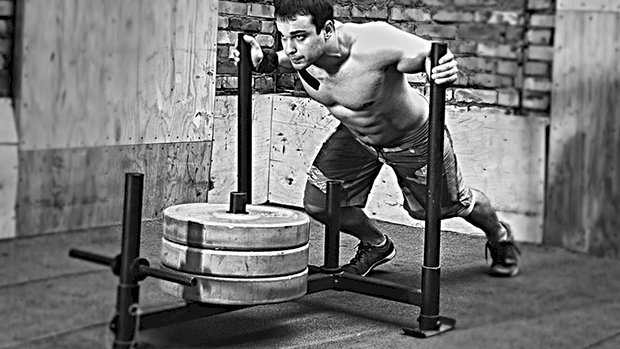 There are variables when it comes to sled pushing, like the height of the handles, the height of the pusher, and whether you push the sled with straight arms or bent arms. Since the bent-arm style usually involves a slightly more upright torso position, it tends to create a shorter stride length than when you push on the handles with your arms extended. Most people can push more weight on the Prowler-style sled with the bent-arm pushing style, so the weight-load you use can influence your arm position. When you’re pushing heavier loads for shorter distances or durations, you may want to choose the bent-arm position. Conversely, when you’re and pushing the sled for longer distances or durations with lighter loads, you may want to go with using the straight-arm position. Straight Arm vs. Bent-Arm Sled Pushes Here’s how to take advantage of this straight arm/bent arm distinction and get more out of your Prowler work: Straight-Arm, Then Bent-Arm With Same Weight: Take advantage of the fact that the bent-arm position is slightly easier because of the reduced range of (stride) motion. You can increase your work volume by extending a set of pushes by switching from the straight-arm version to the bent-arm version when fatigue starts to set in. Straight-Arm, Then Bent-Arm With Heavier Weight: Do 2-3 sets of straight-arm pushes. Then do a few more sets of bent-arm pushes using a heavier load for roughly the same distance or duration. Bent-Arm, Then Straight-Arm With Lighter Weight: This is the reverse of the previous strategy. Do a few sets of pushes with bent-arms, followed by a few more set with a straight-arm using a lighter weight. In this scenario, the bent-arm sets are done first using heavy loads for shorter distances or durations. You then do the straight-arm sets with lighter loads for longer distances or
Origin: Tip: Ramp Up Your Prowler Training
Tip: Methods vs. Mechanisms. Know the Difference
 What’s Your Main Goal in the Gym? Think of your primary goal. Now, how are you going to achieve that goal? There are two steps: Seek out others who were successful in reaching that goal. Next, isolate the behaviors and/or methods that these people have in common, rather than what they did differently. (That last part is crucial.) Fat Loss Goals A great example of this is fat loss. If you look at 100 people who lost a significant amount of weight, perhaps some of them used Weight Watchers, some went low carb, while others focused on eating “clean” foods. At first glance this seems confusing, but if you dig a little deeper you realize that all these people found a way to consistently eat fewer calories long enough to achieve their weight loss. In this example, there are various methods, but only a single mechanism. If you need to drop some fat and you’re debating whether or not to go vegan or use intermittent fasting, for example, do some serious thinking about which method you’re more likely to do consistently. Does that mean that all weight-loss methods are equally effective? Certainly not, but a “less effective” method that you’ll do is preferable to a more effective method that you won’t (or can’t) do. Training Goals You might notice that some successful bodybuilders use bro-splits while others use a push/pull split. Some use lower reps, others high reps. Some use mostly free weights, others focus on machines. Some use forced reps, others don’t. If you focus on these various methods, however, you’ll be blinded by the fog that prevents you from seeing the underlying mechanisms of success: brutally hard work for long periods of
Origin: Tip: Methods vs. Mechanisms. Know the Difference
Tip: Get a Great Workout in Half the Time
 More Volume in Less Time Training volume – the amount of work you do in the gym as measured by exercises, sets, and reps – is key for muscle growth. And if you’re looking to maximize training volume in a short amount of time, agonist-antagonist paired-sets may be your new best friends. Agonist-antagonist sets involve doing a set of an exercise for one muscle or muscle group immediately followed by an exercise working the opposite muscle or muscle group before taking a rest. Think bicep curls paired with tricep extensions, no rest between. Or leg extensions for quads paired with hamstring curls. This study examines the differences between agonist-antagonist training versus a traditional training routine. The Study Researchers recruited 15 recreationally trained men with an average of 3.5 years of training experience. After 10RM testing for the wide-grip seated row and bench press, subjects came in for two sessions in randomized order: agonist-antagonist paired-set training or a traditional training routine. Here’s how each workout looked: Agonist-Antagonist Workout After a warm-up, the lifters did as many reps as possible (AMRAP) at their established 10RM load for bench press followed immediately (10 seconds later) by maximum reps at their established 10RM load on the wide-grip seated row. They then rested two minutes and repeated the pairing three times. Traditional Workout After warming-up, the subjects did three sets of AMRAP at their established 10RM load for bench press with two minutes rest between sets. Then they did three sets of AMRAP at their 10RM load for wide-grip seated row with two minutes between sets. EMG was recorded for the pecs, lats, biceps, and triceps. Volume load for each exercise and workout time was recorded. What They Found Workout time was about half in the paired set group: 8.5 minute average versus 16 minute average. Total volume for the bench and wide grip seated row was higher in the paired-set session compared to the traditional training session. The fatigue index calculated from the EMG (based on greater levels of activation) was greater for pecs, lats, biceps, and triceps during the wide-grip seated row in the paired-set group. What This Means This study shows you can cram more volume into less time using agonist-antagonist sets, at least for bench press and rows, while getting more recovery time between working the same muscle groups. Rest time between like sets in the paired-set group was about 170 seconds (about 50 seconds more than the traditional sets). This is because of the 10 seconds to switch exercises, the time it took to complete the other exercise, and the given two minute rest. The increased rest time for muscles may be what lead to the increased training volume. Nonetheless, being able to use agonist-antagonist sets to increase training volume in a shorter amount of time than normal training may be helpful to anyone who has limited training time. And it’s an effective workout. Give it a try the next time you’re in a time
Origin: Tip: Get a Great Workout in Half the Time
Tip: The Biceps Exercise for Powerlifters
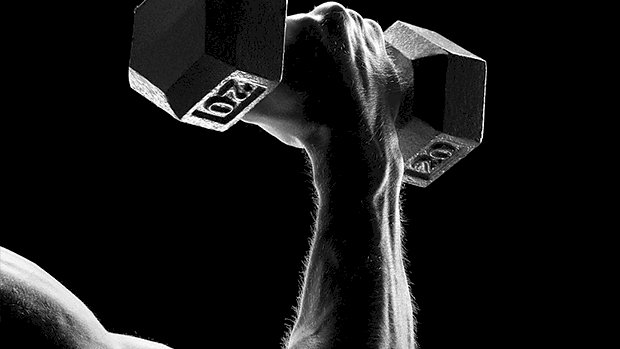
 Most big-three guys – strength athletes who focus on the squat, bench, and deadlift – don’t think they need bicep work. But having strong forearms and biceps will help the bench. How? These muscles stabilize the elbow joint. Neglecting bicep work is a great way to end up with horrible elbow pain, which is a common occurrence, yet they seem to not know why. Hammer curls, done the right way, will prevent this. Strict Hammer Curl Now, these aren’t the swinging-dick hammer curls you see a lot of guys do at the gym, where they use ultra-heavy dumbbells and get almost no tension on the biceps and brachialis. Instead, do these with the dumbbells started on the front of your legs. This prevents cheating at the start of the movement, which means all of the tension gets hogged by the forearms, brachialis, and biceps. To add some pain to it, do sets of 30
Origin: Tip: The Biceps Exercise for Powerlifters
Tip: The Weirdest Way to Leg Press
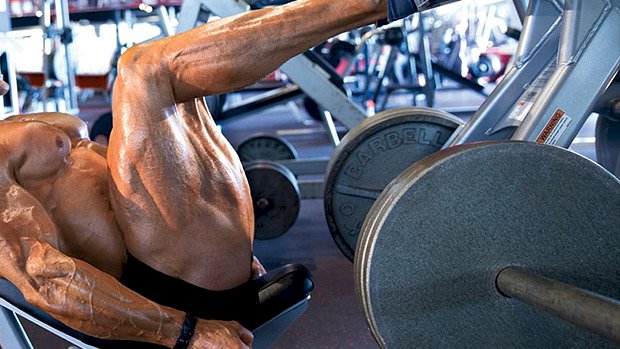 Let’s turn the Smith machine into a lying leg press machine. You’ll need to set the pins or safety catches here so that the bar is resting on them at the bottom. It will need to be high enough for you to wedge yourself underneath the bar, but low enough so that you’re getting a decent range of motion. No three-inch rep stuff. Smith Machine Leg Press Try this: Start with a hard set of 10, take some weight off, and immediately do another hard set of 10. Repeat that one more time and find your safe
Origin: Tip: The Weirdest Way to Leg Press
Tip: Avoid Labels that Make You a Victim
 Want to get in shape? Develop a mindset of unshakable determination and a belief that you can change yourself. Want to stay shackled to your current circumstances? Develop the belief that you have an illness and it’s out of your control. The American Medical Association (AMA) may be helping the obese do the latter. The Study Researchers studied the behavior of obese people who read an article regarding the AMA’s decision to call obesity a “disease.” Those who read the article were more likely to choose high calorie foods and less likely to self-regulate than those who didn’t. According to the study, the only upshot in believing they had a disease was that test subjects exhibited more “body-love” as a result. What This Tells Us Believing that your weight problem is a disease will make you more likely to embrace it. On the flipside, believing you have a problem that’s manageable, reversible, preventable, and within your power to change, will make you more likely to self-regulate and take the onus to lose weight. The self-esteem of these study participants may have been cushioned by a word that improved their body image, but is that form of “body-love” worth Type II diabetes, dependency on prescription meds, and a shortened lifespan? Obesity will not be reduced by making people feel comfortable about being obese, nor will instilling a false sense of helplessness and contrived victimhood. What You Can Take Away The AMA’s verbiage keeps fat people fat. Perhaps a better message would be that while genetics or medical conditions may load the gun, it doesn’t mean you have to pull the trigger and reload twice. You are not helpless when it comes to your fitness level and quality of life. Accept that and you’ll realize that new, better behaviors can mitigate the problem. The first step is to stop thinking like a victim. Off The Record Even if you’re not obese, you may have labeled yourself with other “diseases” – things you’ve accepted as unavoidable and unchangeable. Maybe you’ve accepted your fate as being skinny-fat, or a non-athlete, a hard-gainer, a junk food addict, a weakling, a wallflower, or a person with no self-discipline. If you’ve embraced these or any other self-limiting labels, then realize that you’re living up to low expectations. Chances are, these things are under your control. You just need to drop the helpless sufferer status and do something about it. References Hoyt, Crystal L., Jeni L. Burnette, and Lisa Auster-Gussman. “Obesity Is a Disease” Psychological Science, 24 Jan. 2014. Web. 9 Dec. 2014. “Labeling obesity as a disease may have psychological costs – association for psychological science.” Association for Psychological Science. 28 Jan. 2014.
Origin: Tip: Avoid Labels that Make You a Victim
Tip: The Fat Loss Hormones
 Hormones Matter It’s true that no hormonal issue, imbalance, or whatever, can negate a calorie deficit. But that doesn’t mean hormones don’t play a huge role in the fat loss process, and the proper regulation of the following is critical to how efficiently and easily you lose fat. Insulin Any time we eat, our bodies produce insulin to help shuttle the nutrients to where we need them – either to our muscle cells or fat cells. And in a perfect world (for physique purposes), we’ll eat so that insulin spikes around workouts to support performance, recovery, and growth. The rest of the time we’ll try to keep these spikes minimized. However, most people are constantly stuffing their faces throughout the day, resulting in constant insulin production. The problem is, the more insulin that gets produced, the less sensitive we become to its effects. That means the body becomes less effective at shuttling nutrients for workout recovery and muscle growth and more effective at storing excess fuel around your waistline. Takeaway: Get your doctor to test your resting insulin levels. This will go a long way in helping you determine your best diet. Focus on timing your highest carbohydrate meals around your workouts to maximize post-exercise insulin sensitivity. Leptin Leptin is produced in the fat cells and works by sending signals to your brain when you’ve stored enough fat and you don’t need to eat any more food. The fatter you are, the more leptin you produce. You’d think that having more body fat would make it easier to eat less food, but like trying to understand cryptocurrency, it’s not that simple. Similar to what happens with insulin, you can become leptin resistant. This happens when too much fat produces too much leptin, and the leptin signals stop getting sent to your brain. When this happens, the body thinks it’s starving and activates feelings of hunger, whether you need food or not. Takeaway: The best way to control leptin is to stay lean in the first place. Sorry, no soft-touch tips here. Ghrelin If you’ve ever been in a lean bulking phase and unintentionally skipped a meal, only to be met by ravenous hunger and a bellowing stomach, you’ve felt the effects of ghrelin. Ghrelin is responsible for the physiological feelings of being hungry. It’s produced in the stomach and it increases when your stomach is empty. Conversely, it decreases when your stomach is full. The less food you eat – like when you’re trying to lose fat – the more ghrelin your body produces as a response. Ghrelin can also be secreted at regular intervals when you’re not dieting. This is one reason starting a diet like intermittent fasting can be brutal for the first few days. Once your hormones adapt to the change in your diet, things get better. But ghrelin doesn’t care whether you’re trying to lose fat or not – it’s fired up and ready to devour anything you put in front of it. Takeaway: Eat at regular intervals to control ghrelin. Intermittent fasting can be a powerful tool in resetting and regaining control over hunger signals. Cortisol The stress you feel when you narrowly avoid a traffic accident is physiologically the same as the stress you feel when dieting, skipping out on sleep, arguing with your coworkers, and training hard. This stress causes the release of cortisol. Chronically elevated cortisol makes it easy to break down muscle tissue, easier to accumulate body fat (specifically belly fat), and it suppresses levels of beneficial hormones like testosterone and growth hormone. Elevated levels of cortisol are also associated with elevated levels of ghrelin, which is why your appetite increases in times of high stress. Takeaway: Stress is inevitable, so you need to find ways to manage it. Sure, iron therapy is great, but take a daily walk, find a few minutes of quiet time in your car before leaving the gym, or adopt a meditation practice. Thyroid Your thyroid hormones, specifically triiodothyronine (T3) and thyroxine (T4), are primarily responsible for the regulation of your metabolism, as well as supporting fat loss and muscle growth. Thyroid hormone levels are directly related to how we live our lives. Poor sleep, nutrition, and high stress can all reduce thyroid levels, as can chronic caloric restriction. This is one of the main reasons why, as you diet, your metabolic rate slows down. Takeaway: Make sleep a priority and avoid long-term strict caloric deficits, which can bring your thyroid to a screeching halt. Growth Hormone Growth hormone (GH) is one of the most powerful hormones produced by your body. Growth hormone stimulates cellular repair and to a lesser extent, muscle growth. More importantly, levels of growth hormone promote the burning of stored body fat for energy while simultaneously limiting the storage of fatty acids. Takeaway: Growth hormone naturally decreases as you age, which is why it’s often considered “the fountain of youth” hormone. To maximize natural levels of growth hormone, sleep 7-9 hours.
Origin: Tip: The Fat Loss Hormones
Tip: The 36,000 Reps Challenge
 I’m almost embarrassed to call this technique a challenge because it’s so darn easy. I’m afraid you’ll think, “Hey, if I wanted some lame exercise advice, I’d read Men’s Health,” but bear with me for a minute. The beauty of this “challenge” lies in its simplicity. Because it’s so easy, it’s infinitely doable and, given that you can do it week after week, infinitely sustainable. Despite its apparent ease, though, it works really, really well. 100 Reps Every Day Just pick one bodyweight exercise – one that correlates to some body part or lift you want to improve – and do 100 reps of it every day. For instance, if your bench press is a little shaky or has stalled out, do 100 perfect push-ups a day – in as many sets as necessary – for 7 days. You don’t even need to do the sets in succession. You can do one or two sets before your morning ablutions, another later on in the day after you sweep up the kitty’s hairballs, and a last one while Serbia and Iceland are battling for World Cup glory. It’s an absolute certainty that your bench will be a little sturdier or a little stronger after those 7 days. 36,000 “Bonus” Reps Per Year Once that challenge is over, start another one. If your squat is lagging, do 100 walking or stationary lunges (50 per leg) every day for a week. Even 100 full-range bodyweight squats would work, but feel free to do them goblet style holding a small weight if the bodyweight thing is just too easy for you. You might follow that up with a week of single-leg Romanian deadlifts to shore up your glutes and hamstrings, or 100 burpees a day to strengthen the ol’ ticker. Keep doing the challenges every week. It doesn’t matter if you do the 100 reps in 10 sets or 1 set. As they say, you’re only limited by your imagination, and maybe your slothfulness. After a year, you’ll have added over 36,000 reps to your training, and you’re loopy if you don’t think that’ll make a difference in how you look or perform, even if the reps are low resistance. Try This One One of my favorites is side step-ups, using a milk crate, step stool, or your little brother’s back. You could even get away with doing it on an ordinary stair, provided you make one modification: Instead of touching your foot to the floor, touch your heel lightly to the floor and start the next rep. This prevents you from pushing off with that leg and makes the move a helluva’ lot
Origin: Tip: The 36,000 Reps Challenge
Tip: The Triple Pyramid Conditioning Challenge
 Try something a little different to measure your progress and to test yourself. This challenge will do just that. All you need is a power rack (or Smith machine) and a bench. And, well, maybe a mop. The Challenge This challenge consists of horizontal rows, push-ups, and rear-foot elevated split squats. Set up your space so you can use the bench for all three exercises and go at it. Do one horizontal row, one push-up and one split squat per leg. That’s the first round. Without rest, do another round, only this time you’ll do 2 reps of each (4 for the split squat, 2 each leg). So in round two your reps will be 2-2-2-2, then 3-3-3-3, 4-4-4-4… up to 10 of each exercise as you go up the pyramid. Then make your way back down the pyramid with 9-9-9-9, 8-8-8-8… to one of each at the end. Try to move immediately from one exercise to the next without any rest at all for the duration of the challenge. (Good luck with that.) You may think the challenge is too easy for most of your trip up the pyramid, but at some point after 6 reps, you’ll discover the joy of suffering. Modifications The great thing about the Triple Pyramid is that it’s infinitely adaptable. Each exercise can be modified to make it harder or easier. For the horizontal rows, you can bend your knees to get your feet under you and make it easier. To up the intensity, you can stretch your legs out, place your feet up on the bench and/or add a weight vest. Modify the push-ups with different hand placements (wide vs. narrow; on the floor or on the bench), foot placement (on the floor or elevated on the bench) or with extra load (weight vest). You can make the split squats easier by switching to body weight squats or you can make them harder with added load like kettlebells, dumbbells, or by using the Smith machine. 20 Minutes of Suffering This challenge should take about 20-25 minutes, but it shouldn’t be a race against the clock. Keep your form strict and controlled along the way to maximize time under tension. If it takes you less than 20 minutes with good form, you’ll want to move to a more challenging version of the exercises. Throw the Triple Pyramid in at the end of a regular workout for some extra metabolic conditioning or make it a stand-alone workout during an (almost) off-day, a metcon day, or a
Origin: Tip: The Triple Pyramid Conditioning Challenge
 All about sport xlsport.club