
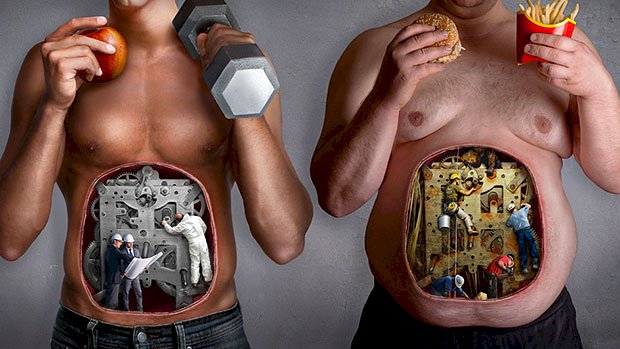
 Here’s what you need to know… If you’re an athlete or a lifter trying to gain muscle and get strong, then you need carbs. Fat people have poor nutrient partitioning abilities. The carbs they eat are more likely to be stored as fat. If you’re relatively lean, your carb intake can be higher because leaner people have better nutrient partitioning abilities. People cling to the diets that initially gave them good results. Bad idea. Your metabolic condition changes. Lower-carb diets may be the best approach for improving body composition. Shoot for 100-125 grams per day. Serious lifters and athletes need 1-3 grams of carbs per pound. The Carb War The carb war has been raging in gyms, kitchens, classrooms, and nutrition conferences for decades, and will continue to do so in perpetuity. There’s religious-like passion and cult-like followings on both the low-carb and high-carb sides of the fence. The pendulum of popularity seems to swing back and forth between the two. Regardless, both sides of the battle can be right. Both approaches can work. The answer lies in this simple recommendation: Match your carbohydrate intake to your individual activity levels, metabolic condition, and physique or performance goals. It seems simple and logical enough, but it’s surprising how often that advice gets ignored when it’s applied to real-life diets, even when it comes to intelligent athletes and coaches. So how do you decide whether you should be following the food pyramid, the fitness freaks, or the paleo geeks? How about you stop following any dogmatic and inflexible system, and have the balls to find what works for you. There are four variables you should consider in your quest to customize your carb intake. 1 – High Intensity Activity Levels Carbs are the primary fuel for high-intensity activity. While the body can use fatty acids as fuel during rest, and even those who train only in the aerobic zone can become “fat adapted,” high intensity activity requires glucose. If you perform strength-training sessions on a regular basis, or compete in intermittent sprint sports, then you need carbohydrates. Perhaps you need a lot of carbohydrates. Those carbs will be used to optimally fuel your body and help you recover from your training sessions. This of course isn’t true for the sedentary individual. Muscle-energy reserves fuel muscular activity. If you’re not depleting muscle energy reserves through activity, you don’t need to refill them, thus you don’t need to consume a lot of carbs. The Car Analogy If your car has been sitting in the garage, it doesn’t need gas. Loading up on carbs is like trying to fill up a full tank. It just spills over the side. In the human body, that overspill equates to sugar backing up in the bloodstream (high blood glucose). This in turn leads to body fat storage and a host of other negative effects like elevated triglycerides and cholesterol, insulin resistance, and type II diabetes. However, if you drive your car around every day, sometimes for long mileage, you have to fill it up often. If you don’t, you’ll run out of gas. An empty tank in the human body equates with fatigue, depression, lethargy, impaired performance, muscle loss, stubborn fat, insomnia, low testosterone, impaired thyroid production and resting metabolic rate, foul mood, and frustration over your body not changing despite dieting and training. No diet is worth developing a lifeless noodle or its female equivalent, the dusty papaya, and then being an ass to everyone around you because of it. So give your body the fuel it needs when it needs it and you’ll be good to go. 2 – Current Shape We all have different physiological responses to food based on our individual metabolic condition, which is a combination of a couple of things. The first is just the general shape you’re in. If you’re overweight or are someone trying to go from out of shape to decent shape, your carbohydrate intake should lean towards the lower side. That’s because, in general, overweight individuals have poor nutrient partitioning abilities, meaning the carbs they eat are more likely to be stored as fat. At the very least, they have a damaged capacity to burn fat. If you’re normal weight, relatively leaner, or trying to go from good shape to great shape, your carb intake can be higher, or at least moderate, even in dieting phases because leaner individuals have better nutrient partitioning abilities. That means the carbs they eat are more likely to be stored as glycogen and less likely to be stored as fat. 3 – State of Insulin Sensitivity/Insulin Resistance The second side of the metabolic condition coin is your state of insulin sensitivity or insulin resistance. This is basically a term that describes how easy or difficult it is for your body to properly store nutrients (particularly carbs) in its cells. In an otherwise healthy person, your insulin sensitivity is related to the physical shape you’re in. Leaner individuals tend to have good
Origin: How Many Carbs Do You Need?
Tip: Try the Gironda 8×8 Set/Rep Scheme
 Legendary bodybuilding coach Vince Gironda called this “the honest workout” because of the simple, honest muscle it could build. Just do 8 sets of 8 reps. The volume is high so keep the weights around 60% of 1RM. That’s a weight you could handle for about 12 reps. Here’s the catch: Take only 30 seconds between sets. This is obviously demanding and the goal is to create the biggest pump possible in the shortest time possible. That means strictly-timed rest periods and not being afraid to reduce the weight when needed. You’ll build muscle, increase work capacity, and ramp up your
Origin: Tip: Try the Gironda 8×8 Set/Rep Scheme
Tip: Forget the IT Band
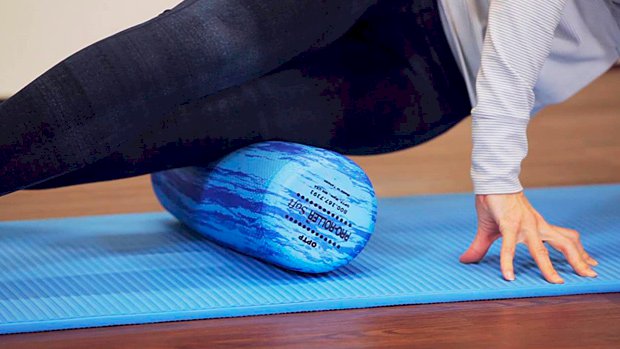 Foam Rolling the IT Band Rehab pros are divided on the topic of foam rolling the IT band. Some say you can’t deform dense fascial layers like the IT-tract (they’re correct), but they’d be blind if they didn’t recognize that a ton of people do get positive responses to rolling this piece of fascia. What Really Happens Here’s what’s really going on when you do it: By positioning the foam roller on the outside of your thigh on where you think the IT band is located, you’re actually targeting the underlying vastus lateralis (lateral quadriceps) and biceps femoris (lateral hamstrings) musculature. Most people have no idea how to target, let alone locate, a functionally shortened area of musculature or symptomatic trigger point. Just because it hurts and is located on the side of your leg doesn’t mean you’re “treating” the IT band. So if you’re a fan of foam rolling this area, then whether you realize it or not, you’re probably not on the IT band. You’d probably get long-term benefits by rolling a different area. Instead of trying to squash the IT band, target the quads and hamstrings directly. The Fix: Foam Roll the Quads and Hams Forget the IT band. Target the vastus lateralis and biceps femoris directly. All you have to do is slightly change the position of your body over the foam roller. You’ll get maximum benefit from SMR work in the lateral leg without continuing to be a slave to the IT band
Origin: Tip: Forget the IT Band
Tip: Try This Quick & Dirty Calf Fix
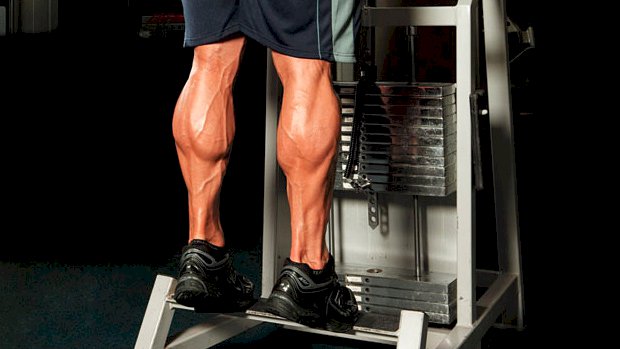 Talk to lifters and bodybuilders about calves and you’ll the hear the word “stubborn” come up often. The calves just don’t seem to want to grow, even if you persuade them with standard resistance training. That’s why many strength coaches employ shock techniques to force breakdown and subsequent muscle growth. Here’s one of those techniques from coach Charles Poliquin. Start at the standing calf-raise machine. Perform eight reps with a two-second pause at the bottom of each rep. Rest 10 seconds. Have a barbell sitting nearby loaded with about 25% of your body weight. Hold it in a squat position and, with minimal knee bend, jump up and down, bounding with the calves on each rep. Do this for 30 reps. “The eccentric damage caused by the landing will favor hypertrophy,” notes Poliquin. Repeat the superset four more times. “If that doesn’t make your calves grow, nothing will!” says
Origin: Tip: Try This Quick & Dirty Calf Fix
Tip: Vitamin D for Strength and Power
 Vitamin D deficiency is common. Fewer people are getting outdoors, and those who are vitamin D deficient will get even less during winter months. As you know by now, this has numerous health implications. But new research by Jung et al. found that vitamin D status can influence performance as well. The Study The researchers used 35 collegiate Taekwondo athletes with a low serum vitamin D concentration and randomly assigned them to two groups: One group of 20 people received 5000 IU of vitamin D per day for four weeks. The other group of 15 people received a placebo for four weeks. After four winter weeks, serum vitamin D concentrations increased significantly in the vitamin D group with no change in the placebo group. The results? The vitamin D group produced greater power and muscular strength. The placebo group saw no change. How to Use This Research First, get a blood test to see if you’re vitamin D deficient. Some health professionals even encourage people take it year round… without any testing beforehand. But if it’s winter or you live in an area that stays overcast and rainy most of the year, or you spend most of your time indoors, there’s a higher likelihood you’re deficient. Then find a dose that will raise your blood concentration levels. In the current study, 5,000 IU did the trick. We already knew getting sufficient vitamin-D could make you healthier and less susceptible to illness. And now there’s evidence it can make you stronger and more powerful
Origin: Tip: Vitamin D for Strength and Power
Tip: Protect Your Wrists from Lifting Injuries
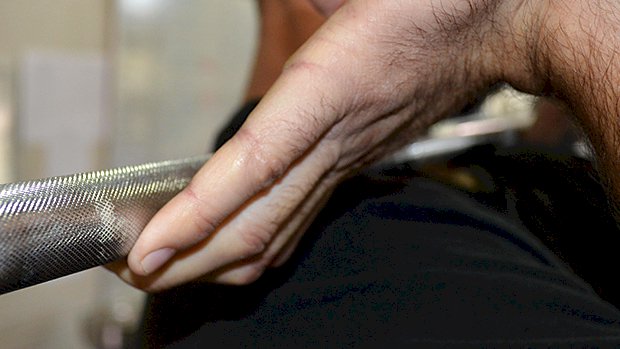 Passive Wrist Stretches These stretches will help you to create range of motion in your wrist flexion and extension by using the floor as assistance. If you have tons of wrist extension and zero flexion, your wrists aren’t balanced, and your elbows are going to get pissed off in the long-term. Never force any stretch and always listen to your body. If you notice that your wrists feel tender the next day after doing these, that’s your sign to back off a bit. If they’re okay then you can start to push a bit further the next time. If even using the floor is painful, then step it back a bit. These exercises can be regressed by using the wall. Try doing them after a session with a lot of grip work. You’ll notice forearm tightness practically disappear within minutes. As a side note, doing “shoulder rotations” in any of these positions also makes for a great warm-up addition. Radial and Ulnar Deviation Radial and ulnar deviation is the side-to-side motion of the wrists. It’s neglected by almost everyone. If you practice advanced hand balancing then this is absolutely crucial, and if you do overhead squats or snatch presses, this thumb-grab stretch is an awesome way to alleviate some of the pressure caused by heavy
Origin: Tip: Protect Your Wrists from Lifting Injuries
4 Horrible Truths About Pro Bodybuilding
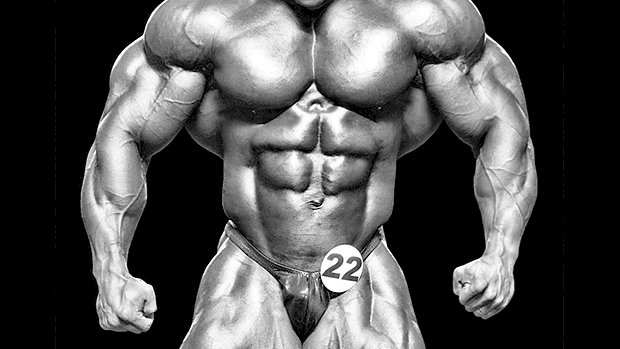 Here’s what you need to know… Chasing a pro card turns you into an asshole. If you have a girlfriend or spouse, you’ll probably end up cheating on her. Contest prep makes you hurt everybody you love. The drugs, brutal dieting, hard training, and contest prep will make you hate the world and the world hate you. Trying to become a pro will likely leave you broke. Even if you do win a show or two, the prize money won’t come close to covering your expenses. Becoming a pro will likely wreck your health and cause you to die young. The amount of muscle mass you need to acquire, the drugs, and the yo-yo dieting will ruin your health. There are good things about pro bodybuilding, too. You’ll meet great people, learn a lot about your body and mind, and have the potential to become a more determined, passionate, intense, human being. Drinking Crankcase Oil By most definitions, I’ve been a success in my chosen field. I’ve built a career in bodybuilding over the course of 20 years. I’ve won Israel’s national bodybuilding title 5 times. I earned my pro card and had a respectable showing in the Mr. Olympia. Perhaps more importantly, I’ve coached hundreds of athletes. But looking back on it, I can see that there are things I sacrificed that weren’t worth sacrificing. So when I walk into a commercial gym and see a motivated young kid who’ll do anything and everything to get a pro card, my instinct is to sit him down and have a conversation about his goals and dreams. I want to make damn sure he understands what he’s getting himself into. He needs to realize his chances of actually becoming a professional bodybuilder are stacked against him and the path is often ugly and soul draining. The late Steve Michalik once said he’d drink crankcase oil to get further in the sport, and that was for the Mr. America contest, an amateur competition. I would ask this motivated young kid if he’s willing to “drink crankcase oil” to get where he wants to go, because that would be the easy part of the journey. I’d then make sure he understood the following points: 1 – Bodybuilding is a very selfish and mentally destructive sport. To do well, you need to become a self-centered asshole. It’s the nature of this sport and it’s not a matter of “if” it will affect you, but by how much. Some individuals are more affected than others, but the use of certain “supplements” for an extended period of time will cause profound psychological effects, including changes in personality. You’ll experience increased aggression and anger. It may be over something as inconsequential as someone talking too loud or looking at you the wrong way. The most trivial incident might become goddamn HUGE AND ANNOYING. You’ll have no patience, a short temper, and will feel sluggish during most of your day. Simple things will become huge chores. Increased libido will plague you. If you have a girlfriend or spouse, you’ll probably end up cheating on her. If you have any underlying, previously dormant mental issue like OCD or an eating disorder, these “supplements” will make it rear its ugly head and increase exponentially in power. Depression, anxiety, and shortness of breath will all become part of your daily life. And rest assured, if you’re planning on becoming a pro bodybuilder, you’re going to need and use a lot of these volatile drugs (there, I said it). It’s just another thing that needs to be done in order to compete at the highest levels (the same as every other professional sport, for that matter). But when you combine all this with an obsession with your body fat and how much you weigh, with looking at yourself in the mirror multiple times a day, and, in general, living a life where every action from eating, to breathing, to sleeping is about improving your outside appearance, selfishness and self-centeredness are inevitable. It’ll affect your personality, and at the end of the day when you leave the gym and the competition is over, these changes don’t disappear and you’ll still need to deal with life outside of bodybuilding. 2 – You will hurt the people you love and you may end up alone. To this day, after more than twenty years in the industry, I still haven’t met a bodybuilder who’s prepared for a show without seriously affecting his or her marriage. When you diet, you become cranky, tired, and moody. You hate the world. When you diet, the first person you lash out at is typically your spouse – the person who generally provides you with the most support. Ironic, isn’t it? I’ve seen couples break up, separate, and even get divorced after lousy show preps. The higher the level, the more drugs involved, the more severe the drama. And don’t think you’ll treat your friends or family any better, either. The drugs, combined with the brutal diet, the hard training, the cardio, and the final pre-contest week with its dehydration and carb load/depletion will take any bad situation and exponentially increase it. Anyone who thinks this won’t happen to them is
Origin: 4 Horrible Truths About Pro Bodybuilding
Tip: 7 Things Smart Lifters Know
 If you’ve been training for a decent amount of time, you’ve made some mistakes. It’s part of the process. But doing your homework can definitely save you some time and energy. It would be nice if there existed a simple answer or method to get us to our goals in the shortest possible time, but in reality we have to spend time under the bar and learn what makes our unique profile tick. With that in mind, here are some things to avoid, some things to think about, and some ideas to try out. 1 – Sometimes less is more. Try time-capping your training sessions at 60 minutes. Training for longer than 60 minutes might decrease serum testosterone levels and increase cortisol, at least if you’re hitting it hard and not taking 20-minute rest breaks between sets. 2 – Identify and stick to a goal. If you have training ADD then you’ve probably felt like your goals change biweekly. Avoiding this mistake is important if you’re ever going to make progress. Pick your goal and stick to it for at least 12 weeks and then reassess. The same goes for programs. It’s easy to get distracted by the “next best thing,” but that can lead to never knowing if a program is actually the right fit for you. Within 3-4 weeks you should be able to tell if that’s the case, but rotating programs weekly or biweekly won’t serve this purpose. 3 – Narrow your exercise choices. Today we have access to a lot of info, and that can be a handicap. We overthink what exercises to perform. Your workout will be much more efficient if you narrow it down to 4-5 movements and call it day. Your session should consist of a core lift, two to three accessory movements, and some direct ab work. 4 – Realize that not all experts are really experts. Access to information comes very easily on the internet, and if you have a great physique you’re an “expert.” Do your homework on the people you’re taking advice from. Having a great physique doesn’t mean you’re qualified to write individual training programs. 5 – Avoid the “one size fits all” approach. Having a one-size-fits-all program would make life easier, but unfortunately this just isn’t the case. Even if you have a coach, you have to experiment and find out where you’re weakest. Even the best coach may not be able to figure that out. Trying a program you found online is okay, but remember that just because a program worked for your friend doesn’t mean it’ll be the right fit for you. 6 – Do the boring work. Many lifters avoid the work they need the most because it doesn’t look cool on paper. That could be unilateral work, sled work, or weighted carries. This work goes a long way for everyone, regardless of your current level of experience. You’re only as good as your weakest link. If you don’t spend time building your base and bringing up your lagging muscle groups, you run the risk of injury. This work should be as high of a priority as anything else you do. 7 – Always be a student. We’re never done learning. As much as we know, there will always be people that know more. Find experts that know more than you do. Study their work, read their books, and experiment. Successful lifters know that they don’t know
Origin: Tip: 7 Things Smart Lifters Know
The Squat: 10 Damn Good Tips
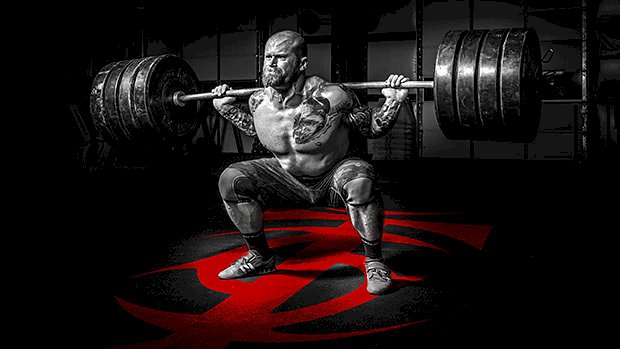 The Question What’s your best squat tip? Bronwen Blunt – Nutrition and Strength Coach Do heavy squat stand-ups. Warm up to about 90% of your max but don’t squat this weight. Unrack it and hold it for 10 seconds then put it back down. Continue to add 5-10% for each set and up to 20% over your 1RM. Be conservative if it’s your first time trying this. This is a way to overload your squats, which will allow your body to recognize and adapt to heavier weights beyond your current capabilities. It stimulates your nervous system and makes you feel more comfortable with heavy weight on your back. Once you become more comfortable with these overloads, your current 1RM is going to feel a lot less taxing. Pay attention to your setup to maintain stability during the movement. Proper breathing and bracing is extremely important to avoid injury. Most people neglect the importance of proper breathing while unracking the bar. It’s a problem that can get you out of position and make or break your squat. – Bronwen Blunt Jake Tuura – Strength and Conditioning Coach Jump first, then squat. For years we’ve known about the benefits of something called “post-activation potentiation.” Get warmed up, then do a heavy, low-volume squat or deadlift. Afterward, do a jump or sprint. What happens? Explosive jumping and sprinting performance increases after the heavy lift. Put another way, loading muscles with high resistance acutely improves explosive muscle action. Heavy helps explosive. But we never look at it the other way. Will explosive help heavy? Research by Masamoto et al. tested this out. They tested the 1RM of several athletes: sometimes they did tuck jumps and drop jumps first; other times they just performed their usual warm-ups first. The result? When they jumped before squatting heavy, they lifted more weight. Next time you’re getting ready for a heavy squat workout, do a few jumps before training. Not only will it develop explosive ability, but it can significantly add poundage to your squat. Joel Seedman, PhD – Strength and Performance Expert Do eccentric isometrics – lower slowly and pause at the bottom. Visually, the squat pattern is simple. However, neuromuscularly and biomechanically it’s actually very complex. It requires a number of precisely executed components to lock the movement in. Some of these include: Set the hips back without bending over. Spread the knees apart but not excessively. Keep a neutral spine while maintaining a very slight natural curvature of the back. Squat somewhere between 90 degrees and parallel (don’t collapse or go ATG). Pull yourself into the bottom position rather than allowing gravity to push you down. Brace the core and tense your abs. Keep the chest out without hyperextending the back. Screw the feet into the floor by pushing slightly more to the outside of the feet. Keep the feet relatively straight and aligned with the each other. Pull the bar into your back by activating your lats. Keep the head neutral (don’t look up but don’t let the head drop). Maintain maximal full body tension each and every rep. Move in a perfectly vertical fashion without shifting horizontally. Load each leg as symmetrically as possible without favoring one side. And this list doesn’t cover everything. So how the heck do you actually learn to squat without going through an exhaustive myriad of endless cues? The answer lies in performing eccentric isometrics. Now I’m not talking about simply collapsing down into the bottom of a squat, then pausing for a few seconds while you hang out on your tendons and ligaments. That’s a bastardized version of an eccentric isometric squat, and it won’t do anything to improve your squat mechanics… not to mention strength or muscular development. Instead, squat with painstaking attention to sensory signals and proprioceptive feedback using Jedi-like focus and intensity. Lower slowly under control, stay tight, then pause in the naturally stretched position while attending to as much somatosensory feedback as possible. Why does it work? Your own body can provide all of the necessary feedback, coaching, and cuing you need. You simply have to learn how to listen to the sensory feedback coming from your proprioceptive mechanisms and you’ll immediately begin to use the “sense of feel” to make subtle adjustments and fine-tune your movement. The best way to do this is through properly executed eccentric isometrics. This also means learning to sense where the natural stopping point and optimal range of motion is, which happens to be somewhere between 90 degrees and parallel. And just in case you were wondering, no, your body is not an exception to the rule. A proper squat including optimal range of motion and ideal joint angles will look almost identical from human to human if it’s performed correctly, regardless of individual anthropometrics. – Joel Seedman, PhD Lee Boyce – Strength Coach and Performance Expert There are two that I recommend. 1 – Squat the bar
Origin: The Squat: 10 Damn Good Tips
Tip: Does Compression Gear Really Work?
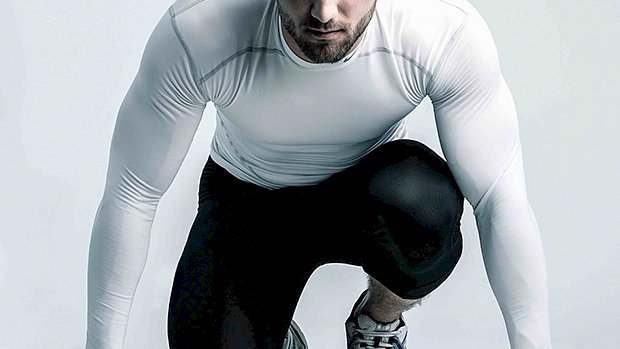 Is compression gear worth wearing during strength or cardio workouts? The short answer is… sort of. It depends on the activity and your goal. Multiple studies have examined the effect of compression clothing on endurance, strength and power, motor control, and post-exercise recovery. Let’s go through it. Endurance This one is a little hazy. What we’re looking for here is some impact of compression on physiological markers such as oxygen uptake, blood lactate concentration during continuous exercise, blood gases, and cardiac parameters. The majority of research in this area is inconclusive on the impact of compression on these physiological markers. Note that while there seems to be plenty of anecdotal evidence supporting the use of compression wear during endurance exercise, the studies have been unable to consistently show a correlation. People may THINK they’re benefitting, which may in fact create a psychological and even an actualized benefit. But it’s impossible to isolate the psychological effect without using a placebo condition in a study. Strength and Power Exercise Research is mixed in this area as well. Some small positive effects have been observed on sprint performance and vertical jumping, but these benefits seem to be almost negligible. However, here’s where we get to some real potential benefits of compression gear: studies have shown positive effects on the removal of lactate (H+ buffering) during short rests between sets of High Intensity Interval Training (HIIT). Without getting into too much detail about hemodynamics, it makes sense that tight compression gear may enhance local blood flow and improve oxygen delivery, and additionally, may enhance arterial blood flow, which in turn will facilitate more efficient clearing of metabolites, the aforementioned H+ buffering, and distribution of nutrients. Proprioception and Neural Mechanics Research on compression gear has shown some improvements in proprioception and sensory feedback. As a reminder, proprioception is the body’s ability to know where it’s located in space. These improvements also may help explain the strength and power benefits during HIIT exercise. Muscle Recovery We know that compression will increase arterial blood flow and venous return. We can say that it will also increase clearing of cellular waste products, which may result in quicker recovery after an intense bout of high intensity exercise. Thermoregulation Clothing generally provides a barrier to heat transfer and thus slows sweat evaporation. Compression clothing may inhibit this natural process of heat transfer even more, which would IMPAIR performance in the short term (during exercise), even while potentially improving muscle repair and recovery times (post-exercise). Research is lacking on the effect of compression gear on sweat evaporation in cold weather temperatures. However, in theory, inhibited sweat evaporation would be less important in cold weather environments, so the negative impact of compression gear may be lessened, while the potential performance and recovery enhancements would remain. Summary It’s important to understand that compression may have benefits to exercise performance and recovery, particularly during and after high intensity interval training, but it may also have negative impacts on overall exercise performance in others areas such as the inhibiting of sweat evaporation. Hey, maybe you just wear it because it makes you look jacked, but it’s always a good idea to get the facts
Origin: Tip: Does Compression Gear Really Work?
 All about sport xlsport.club