
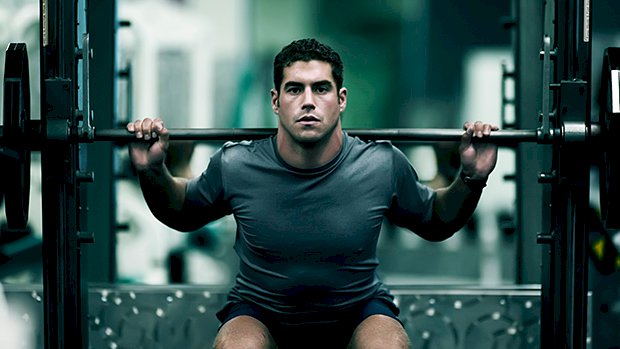
 Here’s what you need to know… The rate of shoulder injuries rises with excessive reps, excessive machine use, and often bodybuilding-style programming. Lower back injuries increase when flexing or extending the lower back under heavy loads. Keep the spine neutral. Knee injuries are high when the knees don’t track properly throughout the lifts. Keep the knees from collapsing inward if you want them to be healthy. Upper back and neck injuries occur with poor posture. Fix a hunched over back to prevent cervical spine injuries. Lifting Isn’t Dangerous Not inherently at least. And not compared to a number of other types of athletic endeavors. Resistance training is actually pretty safe. What makes lifting unsafe are the missteps, and sometimes just plain idiocy, many individuals bring to the practice. From bastardizing technique and butchering form to pumping ego instead of muscles, some people have given weight training a black eye. If lifting is dangerous in the eyes of the ignorant, we better figure out what exactly “lifting” entails so we can be sure to keep these lifting-phobes a safe distance from the squat rack, bench press, and other physically catastrophic environments. What’s Considered Lifting? We can break lifting down into four major categories: Traditional weight training – bodybuilding The sport of lifting weights – powerlifting, Olympic lifting Sport performance training – athletics Crosstraining – classes and boot camps There’s more, but these are the major players. The Four Most Common Lifting Injuries 4 – Cervical Spine Injury The cervical spine – upper back and neck – is most notably vulnerable to injuries in both the soft tissue and joint structures such as the discs and ligaments due to heavy bracing techniques, poor spinal posture and loads of ugly repeated flexion and extension movements. Soreness and joint stiffness due to bracing in a neutral cervical position under heavy loading is part of the iron game, but flailing your head around and putting undue stresses on intricate body structures is just plain stupid. If you don’t know what I’m referring to, just think of turning the dumbbell shrug movement into a mosh pit at a Slip Knot concert. Don’t be that guy. The most innocent of all just may be transferring poor spinal posture from your daily sedentary life into the gym and not realizing you’re putting yourself at risk. The average American has a forward head posture which causes hyperextension of the upper segments of the cervical spine, and lower segmental flexion. That’s a recipe for a nasty neck tweak on your next squat or deadlift if not corrected. Prevent It Fix your posture. Get a neutral spine. For the cervical spine, I can’t think of a single position that is of more importance than the braced and neutral neck position. Drive your chin directly backwards towards your spine and create a slight downward gaze with your eyes. This position holds true for every single movement, no matter if it’s upper body or lower body specific. 3 – Knee Injury Most assume the knee is highly injurious. There is some truth to this joint being more vulnerable than others due to its anatomical properties and orientation relative to the ankle and hip complexes. But there’s more to the story. First, the structure of the knee joint is very immobile by nature, as it is a hinge joint with only two true degrees of freedom, meaning it only moves into flexion and extension. Less relative motion from the knee in combination with poor gross movement through joints that are supposed to be highly mobile – like the many synergistic joints of the ankle complex in addition to the ball and socket type hip joint – put undue stress over non-contractile tissues like ligaments and cartilage. This kink in the kinetic chain is most notable for lifters in quad-dominant movements like squat and lunge variations. While global instability of the knee joint may be a chicken-or-the-egg argument with the co-morbid factors like stiff and immobile joints above and below the level of the knee, many chronic natured injuries also become symptomatic over the front side of the knee at the patella. Increased tone and tightness through the quads can increase compressional and shear forces through the kneecap, causing increased rates of patella-femoral friction and irritation. Functionally shortened and stiff quads in combination with poor patellar movement is exacerbated with poor squat mechanics such as anteriorly drifting knees and valgus drop, and also in lunge-type movements when the knee joint is forced into terminal flexion. If this sounds like a pretty big problem that most lifters need to address, it is. Pay attention, this simple cue below can clean up your movement and give those pissed-off knees just enough of a break to recover for good. Prevent It Pay attention to knee tracking. There are loads of different lower body movements that involve both the squat and lunge variations. Though each
Origin: The 4 Most Common Injuries for Lifters
Tip: The Most Awful Way to Do Burpees
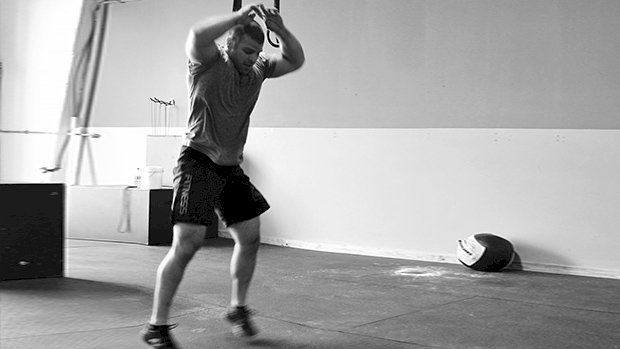 Though the burpee has become popular, you’ve probably never seen this option. It’ll give you a far better upper-body blast than the traditional hop-in, hop-back burpee. Burpee Walkout Keep your legs as straight as possible on the walkout and the walk-back, and alternate between
Origin: Tip: The Most Awful Way to Do Burpees
Go Fund Yourself!
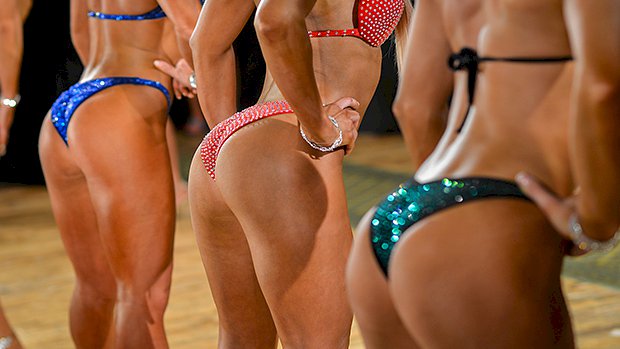 Begging Made Easy! I had never heard of requesting money from strangers for something as trivial as a bikini contest. Then someone told me about it. Had to be a joke, right? Nope, it wasn’t. On GoFundMe.com you’ll find numerous requests for donations to support bikini competitions. Google “GoFundMe bikini competition” and you’ll see how common it is. If you’re not familiar with GoFundMe, it’s a crowdfunding platform typically used to raise money for charities, disaster relief, and people with illnesses. Or at least it used to be. Then the wannabe bikini competitors moved in, sharing their sob stories and begging for your money. Because, you know, competing in a T I’m saying don’t perpetuate a problem. If you toss some broad 50 bucks with no return on your investment, you’re only furthering the freewheeling entitlement and false reality that this is a worthy pursuit. No one should finance that shit. If she needed the money, and actually wanted to earn it, she could be taking on second and third jobs like dog walking, babysitting, or cleaning houses for twenty bucks an hour. In fact, make that offer! Ask her to clean your house for fifty bucks. I’ll bet you fifty bucks that she’ll decline. That’d be beneath her. Digital Panhandling Unfortunately, on a more sophisticated level, panhandling can be a lucrative thing. I knew a guy back in the day who was bringing home $600 a week in cash panhandling in Venice. At the time, I was bringing home $500 working construction! With such a generous society, this odd phenomenon has metastasized to the shameful degree that you can now beg – successfully – for money online. I imagine this was just a natural progression in today’s maligned world of entitlement and bizarre expectations that technology would enable people to succumb to their lazy and entitled impulses, and provide them with a platform that amounts to digital panhandling. The most egregious of which is, in my opinion, GoFundMe. Unlike platforms such as GiveForward, which raises money for expenses related to illness or injuries, or Kickstarter and Indiegogo, which seek investment in business, charity, and artistic pursuits, GoFundMe caters to snowflakes looking to raise money for just about anything, including fake tits and sponsorship for a first bikini competition. When you do a Google search for “GoFundMe bikini competition” you’ll get over 900,000 results. And they’re fascinating to read. When you click on them they go something like this… “Hi everyone! Well, I decided that after training for the past 6 weeks it’s time to enter a NPC bikini competition. I was kinda shocked to see how much it would cost, especially those crystal-studded suits, hair extensions, and a boob job, lol! “So I’m reaching out to see if anyone would be willing to sponsor my fitness journey by contributing to this fund. $3,000 covers almost all of my costs including the entry fee, the suit and shoes, hair, makeup artist, trainer, diet coach, posing coach, chiropractor, life coach, all my food, supplements, and a few different colors of Six Pack coolers to match my gym outfits. “And now after WEEKS of grueling training, my fitness journey has brought me here. And I want to be able to bring my best package to the stage. I use my Instagram page to be an inspiration for others (meal plans available). And I will give you a shout-out there. You can’t help but see my love and dedication to building the best package on the planet. So thank you for taking the time to read my story and a bigger thank you for your donations!” Go Fund Your… Boobs? Now, not all bikini girls ask for money for boob jobs, but enough girls have used GoFundMe and similar donation sites for that purpose that you can link the two together. Really, it’s all the same entitled bullshit, no different than asking someone to buy them a car because they’re tired of walking the four blocks to the gym. Secondly, there isn’t a single philanthropically-minded dude out there who’s going to finance all that body work and stuff it into a thong without “visitation rights.” If such rights are indeed discussed and an agreement of sorts is made, you have ostensibly created a transaction known as “prostitution.” And if you don’t think that happens in our beloved little world, I have a nice bridge to sell you. No woman wants to be considered a whore. Be that as it may, if you take a guy’s money for all your contest needs, and in return offer him unfettered access to the most intimate corners of your nook and cranny, honey, you a ho. The last thing our industry needs is more hoes, but prostitution has many faces. I know for a fact that there are ladies in our industry who’ve sold some visitation rights, or traded for the odd “session” that has a happy ending for at least one of the parties involved. There used to be a crowdfunding site specifically for breast augmentations. It introduced guys willing to finance the augmentation to the panhandler and her chest. In what can
Origin: Go Fund Yourself!
Tip: Do the Tabletop Row
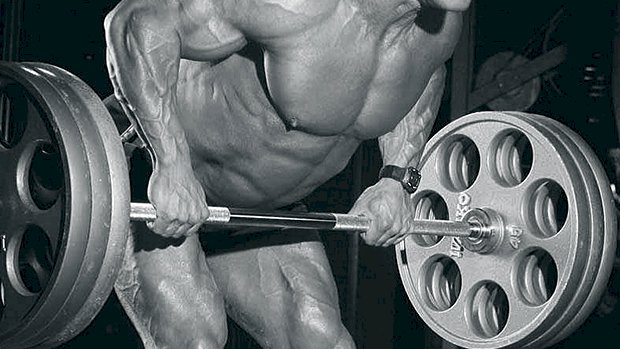 Most lifters butcher the form of the barbell row. Do this exercise to fix it. Tabletop Row Just before you do any row that involves a bent-over position, have a training partner place a plate or two on your middle upper back. The Benefits Helps maintain a steep, near parallel, bent-over position. Improved form because the back must maintain a natural arch for the plate to sit on. Spinal flexion is impossible. Eliminates top rock and excessive momentum. Otherwise, the plates will literally fall off the back and injure animals or small children. Increased proprioceptive feedback from lats, middle, and upper back. The plates against your body provide sensory palpation, giving you better kinesthetic awareness of your back activation and postural alignment. Greater direct overload to the entire posterior chain, including upper back, low back, glutes, and hams, without further fatigue to the arms and grip. As a result, your back muscles are more likely to fail before your arms. Keeps you from over-rowing with excessive range of motion because the elbows and shoulder blades will run into the plates, causing them to move around on the back. Improves low back strength immensely. The movement represents a combination Romanian deadlift and good-morning in terms of weight distribution with direct tension to the erector
Origin: Tip: Do the Tabletop Row
Tip: Do This Before Heavy Squats
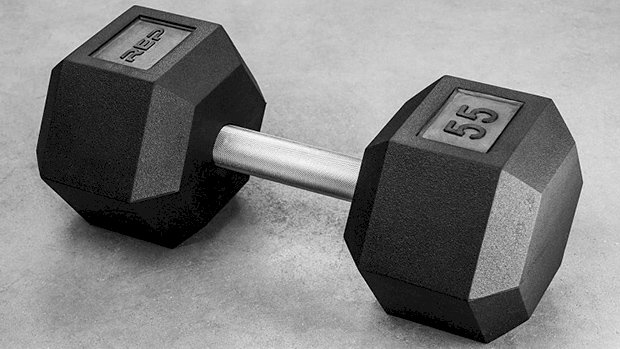 This exercise fires up the CNS and recruits a ton of muscle fibers. It’s a great primer exercise that’ll prepare any lifter for a big squat session. The Goblet Jump Squat The most common types of jump squats come with their own set of problems that you won’t have with this version: The barbell jump squat often results in compromised mechanics because of the bar that lands on the spine, which can cause the knees to cave at the bottom of the rep. Even landing properly with a barbell on your back leads to unnecessary stress with each jump. Holding the dumbbells by your side is the most common dumbbell squat jump but it comes with some problems. When you hold the dumbbells by your sides you end up internally rotating your legs to provide room for the dumbbells. Then the knees cave in slightly at the bottom of each rep. This becomes an even bigger issue as you progress to heavier (larger) dumbbells. The Goblet Jump Squat is Better You could load goblet jump squats with any size dumbbell without compromising your mechanics. The front-loading also takes stress off the spine. Weighted jumps are crucial for explosive athletes. Try 3 sets of 5 before your next leg
Origin: Tip: Do This Before Heavy Squats
Tip: Take the Hang Pull-Up Test
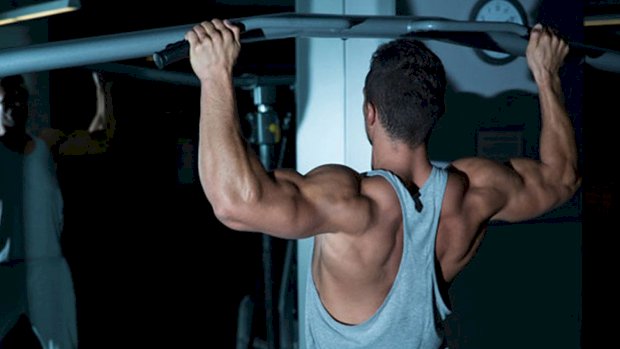 Every lifter should be able to hang from a pull-up bar for 30 seconds. If you can’t then you need to work on grip strength… and maybe lose some of that useless dead weight. (That would be fat). Aside from grip strength, the hanging test might highlight some shoulder and spinal issues. Can you do that easily? Good. Now try this: Hang from the bar for thirty seconds. When the timer rings, do a pull-up. If you can do that, you’re not too bad. Now let’s ramp it up. Without letting go, drop back down and hang for another thirty seconds and do a second pull-up. For the true crazies, let’s see who can do 10 of these 30-second hang pull-ups. Few can “hang” for over five minutes. Can
Origin: Tip: Take the Hang Pull-Up Test
7 Pros, One Controversial Question
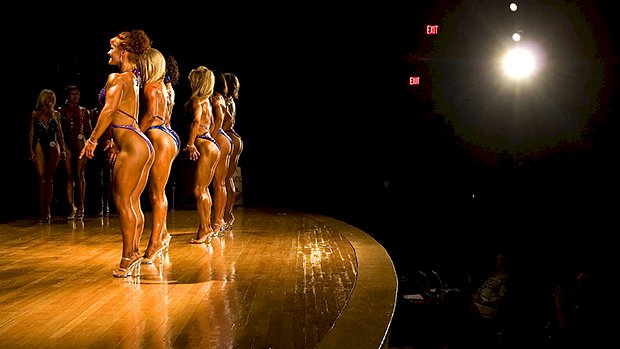 We asked some of our T Nation pros this question: Would you want your child to compete in a physique competition (bodybuilding, figure, bikini, etc.)? Here’s what they had to say. Mark Dugdale – IFBB Pro As a father to three teenage daughters I would certainly not pressure them to compete in a physique competition. If they expressed an interest I’d be more concerned about their hearts. I’d want to know the motive compelling them to compete. There is little financial reward in physique competitions, particularly for women who aren’t willing to sell themselves salaciously on social media and elsewhere. If I felt garnering that kind of attention was their motive, I’d encourage them to consider a different pursuit. — Mark Dugdale Dr. Lonnie Lowery – Exercise Physiologist and Nutritionist I’ve wrestled with this question in the past. I have a son and I’m a former competitive bodybuilder, not just a one-timer, so I’ll focus on these particulars. My son, now 20, grew up in a household that was pretty balanced regarding fitness. Barbells are good things. Strength and muscle mass are empowering. Appreciation of healthy foods enriches life in a way most of the population simply doesn’t grasp. On the other hand, I didn’t want him in the kind of environment to which I was sometimes exposed as a competitive bodybuilder or as a back stage attendee at big events. Extreme calorie counting, eating disorders, full blown celebrations in the house over just being allowed to eat a tablespoon of peanut butter (true story), endocrine damage, unbalanced narcissism – and occasionally at competitions even recreational drugs and overt deviance. I didn’t even encourage him to attend my bodybuilding competitions, although he was welcome to. Before I get hate mail for being seemingly hypocritical – I do love bodybuilding – it’s just important to understand that I’ve seen some sketchy, damaging, and deviant stuff on its periphery. I know several journalists and organizers who share my view. Each has some mind-numbing tales, stories that may be more extreme at high-levels in the sport. There seems to be a fine line between dedication and obsession in physique competition. I’ve been guilty of drifting into self-destructive “warrior mode” more than a few times in my career. I bet many readers can relate. The flip side of the dark underbelly is of course the discipline and courage to stand out that physique competitions can develop. These are the lessons any young person should be exposed to: The daily act of “punching the clock” during those early morning or evening workouts when most people are comfy on the couch. The delayed gratification of a 20-week diet. Pouring your heart into something meaningful. Dismissing the naysayers. And all this for just a few minutes on stage. In many ways it’s more of a total lifestyle commitment than other sports. Anything worthwhile in life comes with commitment and sacrifice. So I can only offer the “middle path” as an answer to this question, especially if the entry into competition would lead to further competitions. If there’s a genuine calling to the sport and a seasoned guide who can keep the focus on the positivity and purity of what bodybuilding can be – then yes, I would want it for my boy. But without a little idealism, balance, and a voice of reason at his back, I’d have to say no. — Dr. Lonnie Lowery Paul Carter – Strength and Bodybuilding Coach I’d be okay with it because my middle daughter is, in fact, my training partner. I’d be able to help her with training, diet, and mental preparation. I already do my best to help her understand good nutritional choices without becoming obsessive about it. But there are plenty of women who compete and end up developing eating disorders or unhealthy relationships with food as a result. I’d also be there to help her understand that while it is a competition, it’s a subjective one. And that her placing isn’t a representation of the amount of work she had to put in to prepare for it. She can’t control the judging, but she can control how hard she works and how disciplined she has to be in order to be her very best. This is really the most important part about competing in any subjective sport like physique competitions, but also how we should be applying ourselves to virtually everything in life. The point is giving her best effort to succeed, even if the manifestation of that success doesn’t come by way of plastic trophies. Like with anything we immerse ourselves in, there can be valuable lessons learned in preparation for a physique competition, and it can teach you a lot about yourself. So yes, I’d be perfectly fine it. — Paul Carter TC Luoma – T Nation Editor No. God no. This question makes me think of a line from Breakfast of Champions, a Kurt Vonnegut novel. One of the characters has a daughter who he’s encouraging to be an Olympic swimmer, prompting the narrator to ask, “What kind of a man would turn his daughter into an outboard
Origin: 7 Pros, One Controversial Question
Tip: Spot the Squat Like a Pro
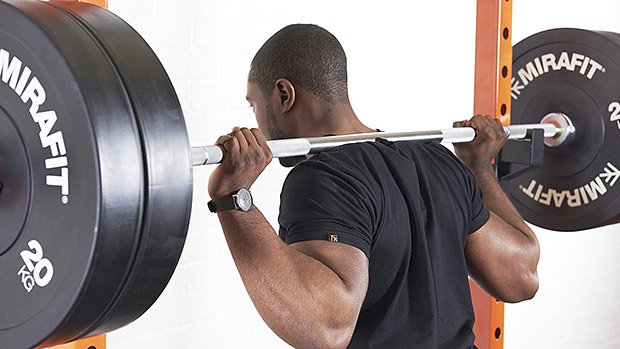 Spotters are often needed during the back squat because many lifters just don’t have experience dumping the bar. Squatting down with a heavy weight and realizing you don’t have the strength to stand back up can be a frightening and potentially dangerous situation, especially if you don’t have safety racks ready. Good Communication First Make sure you ask how many reps the lifter is going for so you’re ready to assist when needed. Make sure you communicate that you’ll be standing close and will under-hook their arms and help them stand back up if needed. This is especially important to mention if you’re a male spotting a female. The Do’s of Spotting the Squat Do make sure you’re standing very close to the person you’re spotting. Although this looks awkward, you need to be there should you see the person start to fail. Do use a double-under hook under the arms to keep the lifter’s chest upright should he start to fail. Do maintain a strong flat back and use your hips to help the lifter back to a standing position. There’s no way you’re going to pull the lifter back up with your biceps alone. Do offer assistance when the bar comes to a complete stop and the lifter starts to drop back down. Make sure you’re using just enough assistance to get them past the sticking point. The Don’ts of Spotting the Squat Don’t have your junk against the lifters butt for the entire duration of the set. You should be close, but this shouldn’t look like you’re grinding at the club. Don’t try to grab the bar when offering assistance. If the person you’re spotting is lifting an appreciable amount of weight this isn’t a good way to help him if he begins to struggle. Don’t assist before you’re needed. That’s annoying and ruins the set. Don’t stand so far back that you won’t be able to offer
Origin: Tip: Spot the Squat Like a Pro
Tip: Turn Up the Volume
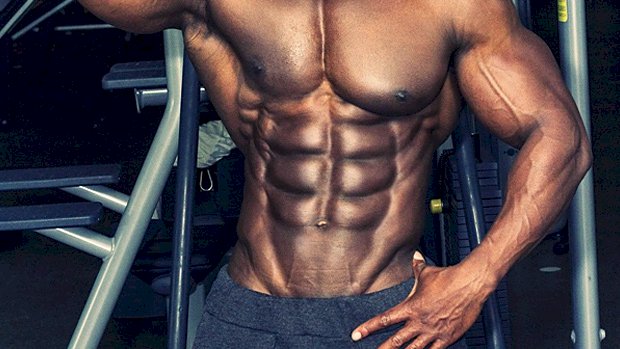 Back in the 1970’s, Arthur Jones popularized the so-called high-intensity training (HIT, not to be confused with HIIT – high intensity interval training) approach to building muscle. HIT is based on the premise that only a single set of an exercise is necessary to stimulate growth, provided you train to the point of momentary concentric muscular failure. According to HIT dogma, performing additional sets beyond this first set is superfluous and perhaps even counterproductive to muscle development. Other prominent industry leaders such as Mike Mentzer and Ellington Darden subsequently followed Jones’s lead and embraced the HIT philosophy, resulting in a surge in its popularity. To this day, HIT continues to enjoy an ardent following. Now before I get accused of being anti-HIT, I’ll readily admit that it’s a viable training strategy. There’s no denying that it can help build appreciable muscle. And if you’re time-pressed, it can provide an efficient and effective workout. That said, if your goal is to maximize muscle development, HIT simply doesn’t do the trick. You need a higher training volume. Substantially higher than just one set per exercise. Multi-Set Protocols Are Superior The prevailing body of research consistently shows that multiple set protocols are superior to single set protocols for increasing strength and size. Meta-analyses published in The Journal of Strength and Conditioning Research show that multiple set training results in 46% greater increases in strength and 40% greater increases in muscle growth when compared to single-set protocols. Whether the hypertrophic superiority of multiple sets is due to greater total muscle tension, muscle damage, metabolic stress, or some combination of these factors isn’t clear. What is clear is that multiple sets are a must if you want to maximize your muscular potential. The Problem Problem is, even if you employ multiple sets it’s very possible you’re still not training with sufficient volume. The optimal number of sets needed to elicit superior growth will vary from person to person and depend on a host of individual factors such as genetics, recuperative ability, training experience, and nutritional status. But individual response is only part of the equation. The size of a given muscle also has relevance. Larger muscle groups such as the back and thighs need a higher volume than the smaller muscles of the arms and calves, which get significant ancillary work during multi-joint exercises. Splits vs. Full-Body Programs Another important consideration here is the structure of your program. All things being equal, training with a split routine allows for a greater daily training volume per muscle group versus a total body routine. And if you follow a training split, the composition of your split will influence training daily volume (a 3-day split allows for a greater volume per muscle group compared with a 2-day split). Accordingly, training volume is best determined on a weekly basis as opposed to a single session. Whatever your target weekly volume, optimal results are achieved by taking a periodized approach where the number of sets are strategically manipulated over the course of a training cycle. Understand that repeatedly training with high volumes will inevitably lead to overtraining. In fact, evidence shows that volume has an even greater correlation with overtraining than intensity. Only by embracing periodization can you reap the benefits of a high training volume while avoiding the dreaded overtrained state. Effective Periodization Let’s say you’ve determined that your maximum weekly volume should entail performing 18-20 sets per muscle group. Focus on a three-month mesocycle where you target 8-10 sets a week the first month, 14-16 sets the second month, and then culminate with an overreaching cycle in the final month where you perform 18-20 sets per week. Follow this with a brief period of unloading or active recovery to facilitate restoration and rejuvenation. Given that it generally takes one to two weeks for the full effects of supercompensation to manifest after completion of an overreaching cycle, you should realize optimal muscular gains sometime during the restorative
Origin: Tip: Turn Up the Volume
Tip: The Recovery Intrusive Deadlift
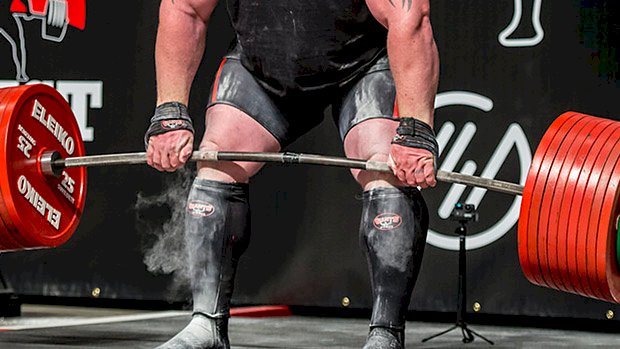 Don’t Do High Volume or High Rep Sets The deadlift is a “takes more than it gives” movement. It’s recovery intrusive, possibly more than any other compound movement. No lift causes a greater degree of “workout hangover” than heavy and hard deadlifting. Why? Most coaches say it’s because of the direct attachment of the hands to the bar, and the effect that has on the spine and autonomic nervous system. They also believe this causes a high degree of stimulation to the sympathetic nervous system, depressing the parasympathetic nervous system, causing a massive inroad to systemic recovery. All of this is theory, but it feels true. Especially after a heavy day of deadlifting. But theory aside, science shows us that volume isn’t actually the driver for strength gains. The neurological adaption to moving loads with greater speed, or moving greater intensities in a lift, are the primary drivers for strength improvement. There’s literally zero reasons to be doing highly-volumized deadlift routines. Same for trying to do high-rep (12-plus) working sets of deadlifts. Both will drive recovery into the ground. Do Sets of 3 to 5 Reps If you’re looking to build maximal strength in the deadlift then sets of three to five should be your bread and
Origin: Tip: The Recovery Intrusive Deadlift
 All about sport xlsport.club