
 Several years ago, Christian Thibaudeau walked into T Nation headquarters and said, “I have a theory that when you’re very stressed out, the food you eat is more likely to be stored as body fat.” He must’ve been thinking about that all morning. He’s always thinking. As it turns out, new research shows he was right: anxious eating makes you gain fat faster. Eat When Stressed, Get (Even) Fatter Some people are stress eaters. They use the drug-like effects of food to distract themselves and calm down. Problem is, these are usually high-calorie foods. No one stress-eats kale. As expected, this leads to fat gain. Now, we’ve always assumed the fat accumulation occurs because of basic calorie math: the stress eater consumes more than he or she needs and stores the excess energy as excess jiggle. And that’s certainly part of it. But there’s more. In a recent study, Herbert Herzog, PhD, and his team of nerds overfed two groups of mice: One group was overfed in a stress-free environment. The other group was overfed too, but in an over-stressed environment. Dr. Herzog had them eat while sitting in 5 ‘o clock traffic and being nagged by their mouse-spouses… or something. (Sorry, the paper wasn’t clear how one goes about stressing out a rodent.) As expected, both groups of mice gained fat. But the stressed-out mice got fat faster than the stress-free mice, even though they were consuming the exact SAME number of calories. How Did That Happen? Hunger is largely controlled by the brain’s hypothalamus, while the amygdala is responsible for handing emotional responses, including anxiety. NPY (neuropeptide Y) is one of the brain chemicals that stimulates eating. It’s even produced in response to stress: get stressed and you’ll often experience false hunger signals. When scientists “switched off” NPY production in the stressed-out mice, their weight gain normalized – they gained the same amount as the unstressed rodents. Turns out the nerve cells that produce NPY have “docking stations” for insulin. Normally, after a meal, insulin is produced to help send the stop-eating signal to the brain. But in the study, the combo of high stress and high-calorie foods lead to insulin levels that were 10 times higher than the levels of the stress-free mice. Prolong this stress and the nerve cells become desensitized to insulin, causing them to crank out NPY. As you’d expect, this leads to overeating, but it also disrupts a body’s ability to burn energy through heat. As a result, an overstressed mouse (or human) will store more fat faster if he overeats when anxious. How to Use This Info Yes, this was a rodent study, but the human brain and body are the same, at least in this case, as a mousy brain and body. We all have those same brain bits, nerve cells, and neuropeptides. So the message is pretty clear: You’ll experience more cravings when you’re stressed out. If you eat high-calorie foods in that anxious state of mind, you’ll get fat faster. Don’t do that. Try to relax and calm down before eating, especially if it’s a high-calorie “cheaty” meal. Here’s a trick for that: De-Stress and Boost Recovery in 3 Minutes. If Christian Thibaudeau has a theory, he’s probably
Origin: Tip: The Absolute Worst Time to Eat
Tag: Tip:
Tip: Lower Blood Pressure With This Tasty Treat
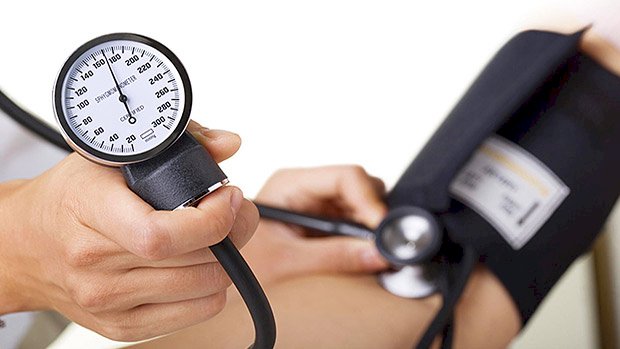 Large humans often have elevated blood pressure. At least, that’s what we’ve seen in large, obese humans. The data on large, muscular humans is mostly lacking, but generally speaking, having more muscle (and the exercise that led to it) is usually associated with a lower blood pressure reading. Still, it’s not uncommon to run into lifters whose blood vessels are straining at their cellular seams. Their high BP might be caused by anabolic steroids, unfortunate genetics, or maybe just a rotten diet. It might even be psychological if the poor red-faced bastards manifest rage as their default emotional state. Also of concern is misdiagnosis. The standard blood pressure cuff in your doc’s office is designed for people with a 13-inch arm, which is going to run a tad tight on the average lifter. That can result in a systolic reading that’s about 8 points higher than it really is, which might be enough for the doctor to pull out a prescription pad and write a scrip for high BP. While the average Joe might not notice the effects of BP medicine, the average lifter might not fare so well. He or she’s likely to feel tired or dizzy and fail to match any previous PR’s in the sack. There’s an alternative, though… a palatable alternative. Scientists found that eating the equivalent of 100 grams of blueberries twice a day works as well as blood pressure medicines in reducing high blood pressure. What They Found Investigators from King’s College in London published a report that was a combination of four separate studies in humans and one in animals about the effects of blueberries on blood pressure and blood flow. The four human studies used a blueberry drink, a blueberry powder drink, or capsules that contained blueberry anthocyanins (the class of chemicals that give blueberries their characteristic blue color). The fifth study, conducted with mice, was designed to confirm the bioactivity of the anthocyanins and their metabolites. They found that after 28 days, the 24-hour systolic BP (the first number in a blood pressure reading) dropped a mean of 5.5 mm. Additionally, participants that drank the blueberry drink experienced an increase in “flow-mediated dilation” (FMD) of 1.5% just two hours after ingestion, with the FMD plateauing at 2.3% after 28 days. “Flow-mediated dilation” is a term for improved blood flow, and it’s important because each 1% increase in blood flow translates to 10% decrease in the risk of cardiovascular disease. How to Use This Info To try to duplicate the result of this study, you’d have to eat about 100 grams of blueberries twice a day, which equates to about two total cups of blueberries. That could be expensive or difficult, given the price or availability of blueberries in the off-season. Furthermore, it could grow old fast. A more feasible alternative might be to use anthocyanin capsules derived from blueberries. Cyanidin 3-glucoside is one such anthocyanin, its blood-pressure lowering properties having been confirmed through other, separate studies (Xu, 2004, Aloud 2018). As a bonus, it’s also been shown to increase insulin sensitivity and exercise capacity, along with turning white fat cells into more metabolically active (i.e., more fat-burning) brown fat (Yilin, 2017). For best results, take 4 to 6 capsules of cyanidin 3-glucoside, sold as Indigo-3G®, once per day on an empty stomach 30 minutes prior to
Origin: Tip: Lower Blood Pressure With This Tasty Treat
Tip: Smoke Your Legs With an EZ-Bar
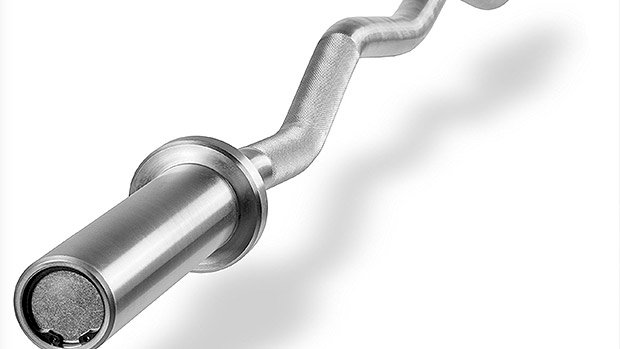 Every gym has an EZ-curl bar, and it’s not just for arm day. It’s actually a great tool for lower-body training. Due to the unique shape of the bar, two positions work well: the front rack or front squat position, and the Zercher. The Front Rack Holding the EZ-bar in a California-style (arms crossed) front rack is as comfortable as it gets. Here’s how it looks with a rear-foot elevated split squat: Many struggle with the standard front rack because of mobility restrictions and jacked-up shoulders. The shape of the EZ-bar sits nicely on the shoulders, while the California grip adds to the comfort. The narrow width of the bar also makes it less awkward for beginners, as well as for times when the squat rack is taken up or space is limited. Having an EZ-bar in your garage gym is always a good idea. Benefits of the front rack include a more upright torso, a forward load distribution, greater quadriceps dominance, and solid trunk development. The Zercher Position The shape of the bar fits nicely in the crooks of the elbows, and a little padding increases the comfort of this sometimes-awkward setup. Here’s how it looks with a squat: That anterior load will fire up nearly every muscle in your body. It’s a good position to use if you’re limited on workout time, and it’s great for those involved in MMA and tactical strength and conditioning. In the Zercher position you can squat, lunge, split squat, hip hinge, and do step-ups and loaded carries. Preparation The front rack position is easy. For the Zercher however, you might want to use some elbow or knee sleeves, a towel, or fat grips for added padding. If there’s respectable weight on the bar it can be awkward to pick the bar up and get it into position. You have four options: Sit the bar on a gym bench and load it there. Take it from a kneeling or half-kneeling position. Use free-moving (independent) squat stands. This is the best option for bigger weights. Load the bar while it sits in a preacher bench and take it from there. Set the Zercher position off the floor. You’re also welcome to pick it up like a gorilla if your body allows you to. Exercise Options Zercher Good Morning (Staggered Stance) Front Rack Lunge Zercher Lunge Zercher Split Squat Step-ups and loaded carries also work great with an EZ-bar in either the Zercher or front rack
Origin: Tip: Smoke Your Legs With an EZ-Bar
Tip: Cutting and Bulking – Age Matters
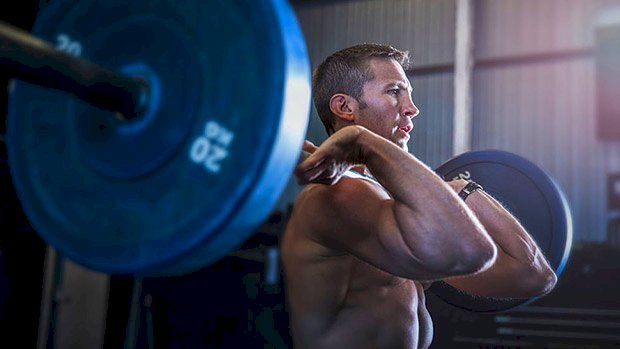 Your age is probably the biggest factor when it comes to being able to bulk or add lean tissue effectively. Under 30 Years Old Young dudes tend to be bathing in testosterone and growth hormone. They have good insulin sensitivity and they’re working with efficient metabolisms. These are the prime years for all-out bulking cycles, and it’s when you’ll get the most out of them from a growth standpoint. I’m talking about dudes past puberty and younger than 30. Over 30 Years Old After 30, the loss of fast twitch muscle fibers, the slowing of metabolism, and a shallower and less responsive hormonal pool all become factors for muscle building. This doesn’t mean a noob in his 30’s isn’t capable of making some awesome muscle mass gains. He can. It just means he’s not working with his most optimal physiological environment compared to the late teens and early 20’s. From a nutritional standpoint, your actual age matters significantly. Due to being less insulin sensitive as you age, and needing a greater supply of leucine to maximize muscle protein synthesis, you’ll need to manipulate your carbohydrate and protein intake to take these variables into account. Protein Lifters under 40, regardless of whether they’re bulking or cutting, will get by just fine on a protein intake of 0.8 to 1.0 gram per pound of bodyweight. Someone in their 40’s will need a greater intake of protein to fully maximize muscle protein synthesize (while paying special attention to leucine intake). Over 40 you’re going to want to eat protein at a rate of around 1.25 to 1.5 grams per pound of bodyweight, whether you’re trying to gain muscle or lose fat. Carbs Carb intake should be comparatively different as well. A young guy swimming in hormonal bliss that’s relatively lean might need to take in as much as 3.5 grams of carbs per pound of bodyweight in order to maximize growth. A 45 year old guy who’s similarly lean probably won’t be able to do that without gaining excessive fat. For a guy in his 40’s, carb intake to the tune of 1.5 to 2 grams per pound of bodyweight will be in the ballpark for mass gaining. Fat Fat intake during a mass cycle for a younger guy should be on the lower side with carbs being the focus. For the older guy, a slightly higher fat intake, lower carb intake, and high protein intake will serve him best. Calories During a smart bulking or cutting cycle, everyone needs to create a starting point at maintenance calories, then adjust protein, carbs, and fats from there. Maintenance for most people is going to fall within the spectrum of bodyweight x 13-15 for caloric intake. For mass gains, add about 10% to your maintenance intake. Yes, you’ll have to log everything, track your weight and body comp, and adjust as needed to fine-tune these starting numbers. That 10% increase in calories comes from carbs, fats, or a combination of both, as long as the requirements for protein are being met. For a fat loss cycle, simply subtract 10% from maintenance and reduce carbs, fats, or both based on preference. Protein really shouldn’t change very much, if at all. Age and Training Younger guys with limited training experience will be able to get away with more workouts in a week and still recover. That’s mostly because they aren’t very strong and haven’t cultivated the ability to train with an exceptional amount of effort. Due to their more efficient physiological environment and lack of existential life stress, young dudes can often train more and recover just fine. But this more or less applies to noobs at any age. If you’re still novice to intermediate, you’ll probably be able to get away with training more often each week than an advanced guy who’s capable of slinging some heavy iron. For the young lads, 5-6 training sessions a week will probably be doable. With guys over 30, four to five times a week might work best. For those over 40, three to four times a week is often
Origin: Tip: Cutting and Bulking – Age Matters
Tip: Assisted Dips – Useful or Just a Sissy Exercise?
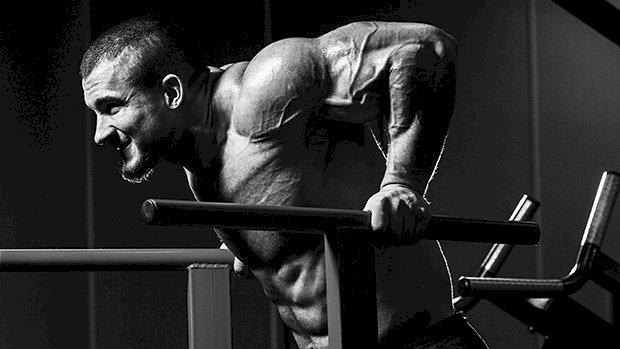 This machine gets poo-poo’d by the strength training community. The thinking is that everyone should be able to do regular dips with their bodyweight, bare minimum, for a set of 20. I don’t disagree with that. If your shoulders are in good health and you’ve got adequate anterior serratus strength, then dips are a staple in a “just barbell” program. Dips do an amazing job of developing the chest and triceps and, for the most part, have a low degree of injury potential. (I write that even though I suffered a tremendous pec tear doing dips, but I still consider them relatively safe.) The benefit of the Gravitron or any assisted dip machine is that the shoulder joint isn’t dealing with as much torque on it by having to offset the load of your bodyweight. With the Gravitron, you can still get the benefits of dips, but in a more joint-friendly fashion that also allows you to focus on making the muscles do the work, rather than focusing on moving your body through space. Thanks to the offset loading, you get a chance to “feel around” with different body positions, and that can help you figure out a torso and elbow angle that feels natural for you. Lastly, you can crank out some bad-ass metabolic stress work with assisted dips. Start by selecting an offset load that allows for 12 reps. Then increase the offset load so that you can do another set of 12 reps, but this time to failure. Increase the load one more time for another set of 12 reps to failure. If you haven’t done a set of these, then you’re missing out on some sweet pecs/triceps pump action. These hurt in a really glorious way. If you’re truly maniacal, hop on over to the Smith machine and do a set of Smith machine push-ups with the bar set at the bottom position. If that doesn’t smoke all of your pressing muscles to the max, then you’re truly dead
Origin: Tip: Assisted Dips – Useful or Just a Sissy Exercise?
Tip: The Best Power and Conditioning Test
 The Test Hop on a stationary bicycle, like an Assault or Airdyne bike, and go hard for 1.5 miles. To pass the test, you need to finish in 3:30 or less. The Reasoning If your anaerobic power is lacking, you’re going to have a tough time pushing through multiple hard sets of a lift, let alone an entire training session. If your aerobic capacity is non-existent, you’re going to have a hard time recovering in both the short-term (between sets/exercises) and the long-term (between training days). Since the test is short, yet long enough to tap into the aerobic system, you’re simultaneously testing both qualities. As a refresher, anaerobic power is the ability to exert maximal power in the presence of fatigue while sustaining high levels of metabolic stress. Aerobic capacity is the ability to be maximally efficient with the entire body while feeling like you have a flamethrower going off inside your lungs. If you lack either quality, the 1.5-mile bike test will humble you in a matter of minutes. The positive is, you’ll find out which area you need to focus on: If you were able to maintain a solid pace but still didn’t beat 3 minutes and 30 seconds, your anaerobic power needs work. If you shot out of the gates but burned out within the first minute, you need to build up your aerobic
Origin: Tip: The Best Power and Conditioning Test
Tip: The Strength Athlete’s Mistake
 Don’t Attack the Low Back There’s one very common mistake I see in a lot of strength athletes’ programs – extra low-back work. They have absolutely zero awareness of just how much work their erectors are already doing. If you’re squatting, deadlifting, and doing standing overhead presses, then your low back is getting a metric butt-ton of work; not even indirect work, but very direct work. The erectors recover more slowly than any other muscle group, yet guys will do all of the above and then decide to throw in a bunch of barbell rows, T-bar rows, hypers, and a whole slew of other movements where the erectors have to contribute mightily. I can’t tell you how many strength athletes had their squat and deadlift climb up once I removed all of the extra spinal-loading movements. The fact is, fatigue will mask fitness. The best thing you can do is choose exercises where you give the low back a break from loading while working the musculature around it so that it has a stronger support structure. That’s where the chest-supported row comes in. There are countless variations of this machine, but virtually any of them can be a strength athlete’s best friend. It allows you to really smash the entire upper back while giving you a break from more axial loading. Many times this is exactly what you need to get past a plateau. I like the seated machines rather than the ones where you’re lying at a 45-degree angle because the natural tendency on those is to arch very hard once the loading gets heavy, which defeats the whole purpose of choosing the chest-supported version. If you don’t have access to the seated machine, rig up your own with an incline bench and a low cable. The best bar to use in this situation is one with a curve in it so you aren’t banging it into the bench and can get your elbows behind you far enough to get a strong contraction in the upper back. Loading on chest-supported rows is secondary to achieving a strong mind-muscle connection. If you want to really get a smoke show going, do them after your deadlifts. You should feel an immensely strong contraction in the upper back due to the maximal loading and increased neural output that came from the deadlift. Don’t rip the weight on the initiation phase. Pull with a “roll on” rep fashion where you initiate with the upper back in a very deliberate manner and then pull aggressively into the strong peak contraction. Hold that puppy for a second before lowering. Two to three sets of 10-12 reps will do the
Origin: Tip: The Strength Athlete’s Mistake
Tip: Simple Power Training for Muscle
 How many lifters train to become more powerful? Do YOU make power training part of your program? Well, you should consider it. You’ll unlock more strength, more athleticism, and more muscle. How’s That Work? Power is the ability to produce force quickly. And remember, as you age you lose power twice as fast as strength. But a recent study by Franchi et al. showed that plyometric training is an effective intervention. It produces a rapid increase in muscle mass and power, no matter your age. Jumping, throwing, sprinting, and the Olympic lifts will heavily recruit fast twitch muscle fibers (which have the highest propensity for growth) as well as help improve your athleticism and prime your nervous system for the heavier strength training that follows. Luckily, this doesn’t require a complete program overhaul, just a few extra minutes and a bit of planning. Looking at the force velocity curve, the far left is max strength. This is the heavy stuff, and of course the loads don’t move very fast. This is where most lifters spend the majority of their time, and rightfully so. However, if you never venture outside of that, you’re leaving a lot of progress on the table. As you slide down the curve, the loads will lighten up and the speed of movement will increase. Knowing what you’re trying to accomplish will help you pick the right tools at the right loads for the task at hand. For example, if you’re performing 10 reps of hang cleans, you’re not really training strength-speed like you might think. The speed of the reps isn’t fast enough to be improving speed-strength either. You end up in a middle ground: doing things that make you tired, but don’t make you more powerful. Or maybe you’re using a medicine ball that’s far too heavy to throw fast enough to make any improvement in the speed-strength area, or “sprinting” for a minute or so. Again, the tools aren’t the issue, but the application of them needs to be better. How To Do It Better Before your strength training sessions, pick one or two movements from various sections on the force velocity curve that match up with the main movement pattern you’ll be tackling in your lifting. Here are some ideas: Squat Olympic lifts Box jumps Loaded squat jumps Heavy sled marches (10 yards) Sled sprints (10-20 yards) Single-leg hurdles Short sprints Deadlift Olympic lifts Heavy sled marches (10 yards) Sled sprints (10-20 yards) Loaded trap bar jumps Broad jumps Kettlebell swings Short sprints Upper Body Days Medicine ball throws: chest passes, lateral throws, overhead soccer throws, slams Keep your reps on the low end. Make sure the last rep of each set is just as explosive as the first. As a rule of thumb, do 2-4 sets of 3-10 reps. The lighter the implement, generally the higher the rep range (8 medicine ball throws isn’t the same as 8 dumbbell snatches). The trickiest part of training for power is figuring out how much weight to use on things like sled sprints and loaded jumps. Remember, moving with speed is the goal, not loading the movements up so heavy that you hardly leave the ground or are moving at the speed of smell. And don’t get caught up in the “more is better” game. More just means slower, and slower doesn’t equate to more
Origin: Tip: Simple Power Training for Muscle
Tip: Keto and Bodybuilding Don’t Mix
 I’ve often written about how hard it is to really be in ketosis. It’s not a problem if you’re an epileptic in a hospital being fed a controlled diet by a team of white-gowned specialists who weigh all your food, along with all your doodie. But if you’re a regular Joe who isn’t in total command of his food chain – who doesn’t live on a farm and grow all his own food and make all his high fat, unsweetened, almond flour peach cobbler with no peaches – you’re liable to slip up sooner or later. All it takes is eating an apple that’s too big, a spoonful of hidden sugar in a sauce, or a morsel of matzo in a meat loaf. Beyond all that is a problem that’s probably unique to lifters: They eat an f-ton of protein. Every day. People who are truly in ketosis need to get 80 to 90 percent of their calories from fat, and that doesn’t leave much space for protein, which is the lifeblood of a lifter. Hell, lifters argue all the time about whether they need to eat one entire cow or two every day to best grow muscle, and most keto people, if you threaten to force-feed them a sugary churro, will admit that eating a lot of protein – more than, say, 20 percent of total calories – will take you out of ketosis. Twenty percent might be generous, though. Even if a generic keto-er could get away with eating a diet of 20% protein, eating such a relatively small amount of protein every day would cause the muscles of most bodybuilders and lifters to start to shrink. No One Guidelinend easily enough to Works for Everybody If you don’t give your body sugar, the body will break down protein to get it, and that protein will come mostly from muscle. Ketosis itself is your body’s way of trying to preserve that protein and ipso facto, your muscles. But take in a sufficient amount of carbs or protein and the body takes a pass on all that keto silliness and goes back to using sugar as its energy source. The trouble is, there’s no one guideline that works for everyone. One person might get knocked out of ketosis for having a diet that’s 20% protein, and another person might get booted out for eating a lot less. Lately, though, people who worship at the keto altar are low-carb waffling on this protein speed limit. They’re saying that worries about gluconeogenesis – the process by which amino acids are converted to sugar – are overblown and that it doesn’t really happen when keto dieters eat high-ish amounts of protein, at least not to the point where it knocks you out of keto. Others argue about the actual biochemistry of the phenomenon, saying that gluconeogenesis is a non-factor, and if protein does take you out of ketosis, it’s because the excess protein is donating oxaloacetate to acetyl-CoA in the Krebs cycle… but that’s getting pretty deep in the biochemical weeds. What matters is whether the amount of protein a bodybuilder or lifter needs to grow muscle – or even maintain it – is enough to take you out of ketosis, and I think it is, as do a lot of other biohackers, nutritionists, and keto autodidacts. But those who have financial interests in promoting a ketogenic diet disagree. Studies Aimed at Diabetics Don’t Fly Some of the keto revisionists point to studies (mostly published in diabetes journals) that showed gluconeogenesis does occur after a high protein meal, but under very unusual circumstances. Even so, they maintain the amount of sugar produced amounted to just a duck snort; not enough to knock a flour beetle out of ketosis. Granted, those studies do show that dietary proteins contribute very little to glucose production, but the test subjects weren’t in ketosis in the first place. Generally, the subjects were run-of-the-mill diabetics, or healthy people who’d just fasted overnight and were then given a high protein, zero-carb meal. Sure, gluconeogenesis occurred, but as keto apologizers claim, only to a minor degree. Fasting overnight, though, is hardly enough to deplete anyone of their glycogen reserves, so it’s not surprising that a significant amount of gluconeogenesis didn’t occur in these test subjects. Keto protein-deniers need to look at studies like the one performed by Veldhorst, et al where subjects were truly depleted of carbs – fed a low-carb diet (0% carbs, 30% protein, and 70% fat) and depleted of glycogen reserves through exercise. They found that the low-carb, high-protein diet led to an increase in energy expenditure, 42% of which was explained by an increase in gluconeogenesis. That’s significant, and ealy enough to knock anyone out of ketosis. If lifters or bodybuilders want to lose fat, they’d best do it the old-fashioned way: reduce caloric intake while eating modest amounts of functional carbs and fat and striving for protein intake of between 30 and 40% of total
Origin: Tip: Keto and Bodybuilding Don’t Mix
Tip: 3 Reasons Trap Bar Deadlifts Are King
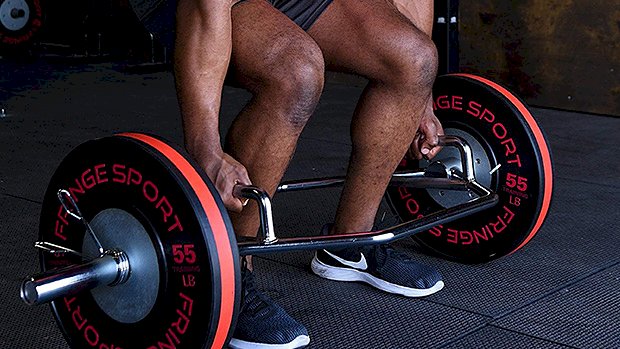 The trap bar deadlift is the king lift for keeping a healthy spine while pulling a stack of weight off the floor in a functional pattern. It checks all the boxes for health, strength training, and maintaining general badassery. There are several reasons why it’s superior to barbell pulls: You have no bar blocking your shins, which is a saving grace for longer-legged lifters, lifters with back problems, or lifters with mobility restrictions. This also allows the shins to migrate forward, allowing the hips to sit lower and the spine to remain more vertical when pulling. It also helps hit the quads harder. You’re using a neutral grip. That means no mixed grip (which has a high risk of biceps tears) and a posture that more easily engages your upper back and keeps you closer to anatomical position. That’s huge. You get to pull from a slightly higher point (at least when you go high-handle). Football and basketball players everywhere are rejoicing in the fact that they don’t have to crumple their bodies into a deep pulling position, like when they use a barbell. But most people already know all this. The true reason they won’t make the switch is bro-based stubbornness, not because a barbell “works better for them.” They think that it’s not a true deadlift if you don’t pull with a straight bar from the floor. Those are the same people who don’t have long-term health, strength, and wellness in mind. Are you sure you want to be one of them? Of course, if it gets too easy, just flip the bar and go low handle. Problem
Origin: Tip: 3 Reasons Trap Bar Deadlifts Are King
 All about sport xlsport.club