
 It’s a Trap! The pattern just keeps repeating itself. A “new” exercise or diet trend comes along, the mainstream crowd jumps on it, eventually gets bored, and moves on to the next big thing. Even trainers and coaches can fall into the trend trap. We need to avoid getting caught up in these fitness and nutrition trends. We need to focus instead on the basic principles that always work and will never go out of style. To do that, let’s look back and see what lessons we’ve learned so far. Workout Trends In the 70’s and 80’s there was an explosion in isolation exercises and bodybuilding-style training among men. And while actual women bodybuilders existed, it was fairly uncommon for the average woman to want to build muscle. Nautilus machines made their debut in 1970 and isolating muscle groups became a trend. Aerobics like jogging, Jazzercise, and step classes took off. Many of these introduced small dumbbells, but their emphasis stayed on cardio. Some of these programs made their way to video cassette by the late 80’s and early 90’s (Buns of Steel, The Firm) and people began “toning up” in the privacy of their living room. In the late 90’s exercising on stability balls or wobbly boards became known as the hot new thing celebrities did with their expensive personal trainers. This gained mass appeal and the trend trickled into the masses by the 2000’s. Somehow it became known as “functional” training. Group fitness classes like Les Mills Body Pump (which required a lightly-loaded barbell and hundreds of reps to get a “burn”) also began to take off in the late 90’s and early 2000’s. In the 2000’s group circuit training and boot camp-style workouts blew up. Some were called “MMA workouts” or “hardcore” or “underground” workouts. These classes emphasized getting you extremely fatigued, sometimes to the point of feeling pukish. Then in the 2010’s we saw another variant of group interval conditioning classes explode promising super intense, calorie-torching workouts – think Spin classes, Orange Theory, and 9-Round. In the weight room, the focus has shifted toward powerlifting (standard barbell movements) and bodyweight exercises. Are these trends bad? Of course not. But recognize your bias. You probably believe that what you’re doing right now is the superior way to work out… because that’s what every generation thinks. The Lesson Workout trends fall in and out of favor like clothing styles. And it’s often thought that every new wave is better than the previous one. However, history proves otherwise. Every era has its fans and its great-looking celebrities. They’re on board with the hot fitness methods of their respective time. So you can’t look at whatever methods athletes and celebrities are using as the “secret” to their success. Because in a different era they’d be doing something else. The last thing you need to do is see what others are doing and feel like that’s exactly how you need to exercise in order to get their look or athleticism. It’s okay to not be on-trend. What all the successful fitness fans from each generation have in common is that they stayed dedicated to exercising regularly and eating well. And this should tell us that a lot of exercise methods can work if done with effort and consistency. So, find a form of exercise (or a few) that you’re interested in because you’re much more likely to stay consistent if you do. If you think about it, when people fail to get fit, it’s not because they didn’t try to change their lifestyle; it’s because the lifestyle changes they made were unrealistic or misguided. For example, when beginning to exercise, many otherwise intelligent adults ignore the universal life lesson of taking things one step at a time, and instead think, “I’ve never exercised before, so why don’t I begin like a Navy SEAL?” That’s just not realistic or sustainable for most people. So it’s no surprise that trend-chasers will often think that to get into better shape, they must either be a gym rat or do extreme routines like the ones we see athletes and models doing in the media. It’s simply not true. Sure, if you’re trying to become a bodybuilder or a high-level athlete, you have to exercise like one. However, if you’re someone who’s interested in simply getting into shape, you certainly don’t need to organize your entire life around kitchens and gyms. You just need to improve your eating habits in a realistic way that fits your lifestyle, and make sure you’re getting regular exercise (in forms you enjoy) on most days of the week. That’s how you ensure consistency, and consistency is the common thread that runs between athletes and the great-looking celebrities from each era. Diet Trends In 1972 the Atkins diet was created and variations of it have continued to make a comeback every decade since. (Believe it or not, before it became a hit among the masses, the extremely low-carb diet was first administered by a doctor named William Banting in the 1800’s.) In the
Origin: Avoid the Trend Traps!
Category: mysql
4 Cool Fixes For Awkward Exercises
 Not every great exercise is designed with your individual body type in mind. Whether you’re too big, too small, too tall, or too busted up for a certain exercise, it doesn’t mean you have to skip the lift. All you have to do customize the exercise to make it work for you. Here are four examples. 1 – Use a Decline Bench for Hip Thrusts Hip thrusts can be awkward to set up. Since most gyms don’t own one of Bret Contreras’ patented Hip Thrusters, many lifters resort to getting a flat bench and propping it against a wall or sticking weight plates behind it to keep it from moving. This can work, but when it doesn’t it’s usually because of one of these reasons: The lifter is too short for the bench, so sitting on the floor puts the bench edge high up on his shoulders. That means he has to squirm and writhe to get into position before the first rep, and then do the same to take a seat on the ground after his final rep. The lifter slides on the bench and doesn’t have a consistent point of contact to use as an axis while thrusting. This gets worse if his back is sweaty. The bench itself slides or tips, usually away from the lifter as he progresses through his sets. The lifter struggles to get the right elbow and arm position to hold the bar comfortably. Making the shift from a flat bench to decline bench solves all of these problems. Since the bench is heaviest towards the high end of the decline, it’s much harder to make it shift by pushing against the low end. That’s simple physics. But banking the heavy end against a wall makes it foolproof. Plus, since you’re now using a bench lengthwise and not widthwise, your elbows are free to tuck towards your body and hold the bar in the position that works best for you. Lastly, since the south side of the decline bench typically terminates quite close to the floor, a lifter of any height can comfortably use one. 2 – Got Cranky Joints? Use Fat Grips for Pressing Many people rely on fat grips to increase the difficulty level of pulling exercises like chins, rows, and loaded carries. They’re a tremendous grip-training tool. They have another use, too, that benefits people who suffer from joint stress in the shoulders, elbows, and wrists. These people never consider bar thickness. Bar thickness during pushing movements like strict presses, bench presses, and dips can play a huge role in the amount of joint stress a lifter experiences due to the amount of centralized pressure in the palm of the hand. It takes a few sets to get used to it, but adding fat grips to each of the above movements (and even when pressing dumbbells) can create a world of difference to joint health and happiness. This is due to the added surface area of the handle that’s now spread across a larger percentage of the lifter’s hand. This tip can come in quite handy, especially if you’re a big guy with big hands. The load now diffuses itself over a greater area instead of one specific spot. You’ll notice the difference immediately. 3 – Big Guys, Use Two Ropes for Face Pulls If you’re tall with long arms, or if you’re very muscular, you may have trouble doing face pulls. Since a face pull starts in internal rotation and finishes at or above forehead level, its purpose is to exploit not only the scapular retractor muscles, but also to exploit a rotary component of the shoulder, dominated mainly by the rear deltoid. Guys with longer arms who use a standard rope will be at a much smaller (more acute) elbow angle when compared to shorter-armed guys at the end point of each rep. This difference can hinder how much rotation they can achieve at the shoulder joint, compared to what they could achieve if given the opportunity for a wider grip. The same problem exists for big guys with tight shoulders, pecs, or triceps. Ropes come in varying lengths, but many gyms feature ropes that are fairly short. Home and condo gyms are even worse. Since they usually attach to a carabiner, a smart move would be to instantly increase the length of the ropes by doubling them up. Put two sets of ropes on one carabiner and pull them long. Now you’ve instantly got a double-sized rope to do your pulls. Another benefit comes in the form of physics. Intentionally trying to “spread the ropes” on each rep requires a lifter to create outward (lateral) force at the same time he creates resistance against a horizontal force angle. Because of this, it proves much more challenging for the target muscles (kind of the same way squatting with banded knees works). In short, it won’t take as much weight to get the same result due to your “utilization of space” within your range of motion. As a bonus, all of this applies perfectly to triceps rope pressdowns too. 4 – Use an Incline Bench for Foot-Elevated Split Squats It can be a real hassle for someone who has limited ankle mobility to get to a reasonably comfortable starting position on rear-leg elevated split squats. Many debate between “squishing the bug” on the flat
Origin: 4 Cool Fixes For Awkward Exercises
The 12 Minute Fix for Abs and Glutes
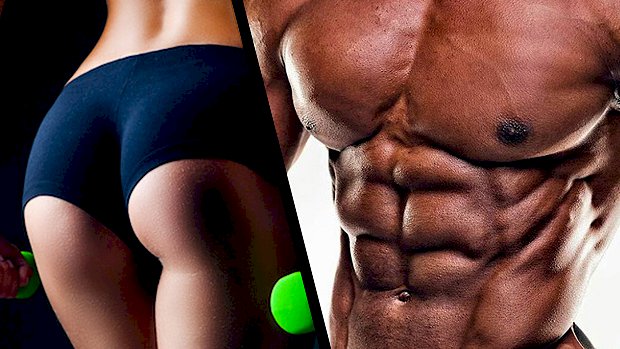 Here’s what you need to know… Too many people waste time working the abs and glutes separately when they could be training them simultaneously. To understand that you can work the abs/glutes/core together, you need to think of the core as a cylinder that wraps around the middle of the body. Joining and working these body parts increases efficiency, along with improving effectiveness and metabolic enhancement. The most effective and efficient way to train abs/glutes/core together is from the plank position. Since much of the core/glutes/shoulder metabolic blast is done from the plank position, there’s also a huge spillover effect to shoulder stabilization as well. Better Abs, Tighter Glutes Most women want nicer abs and round, lifted glutes. Men want one of those things more than the other (so they say), but both men and women want to work the core quickly and effectively. And if they can get some metabolic conditioning in at the same time, it’s a good day. Too bad I see them wasting gym time by training these areas as separate entities when they could instead be capitalizing on how the glutes and core often work in concert. That’s just what the this ab/glutes/core metabolic exercise sequence does. Change the Way You Think About the Core When targeting the core and glutes together for a single training effect and for metabolic optimization, it’s best to think “form follows function.” To really “get” that you can effectively target abs/glutes/core at the same time, you need to think of the core more as a cylinder that wraps around the middle of the body, engaged in the anterior chain, but supported all around the cylinder, from front to back and back to front, and top to bottom. Joining and working them together increases training efficiency not only in terms of saving time, but in terms of targeted effects and metabolic enhancement as well. The Power of the Plank Position The most effective and efficient way to train abs/glutes/core together is from the plank position. No exceptions. That’s what makes this monster metabolic sequence so effective. Additionally, there are huge spillover effects to shoulders as well, as the shoulder muscles go back and forth from unilateral and bilateral stabilization support. The abs/glutes/core sequence was conceived by considering a gymnast on the pommel horse and then tweaking the exercise sequences for overall fitness and body sculpting needs. The Workout Below is the sequence as demonstrated by Kevin Weiss, a two-time World Champion in raw powerlifting. As he says, “Even when training for size, strength, or development, there’s no downside to just ‘a little’ athleticism!” Perform 3-4 rounds. (Four is the max and only for super-beasts). Rest 15 seconds or so between each exercise in the sequence. Here are the exercises in the sequence, broken down: A.Full Sit Outs8-15 reps B.Alternating Contralateral Hand to Toe Touch8-15 reps C.Alternating Contralateral Elbow to Knee Touch8-15 reps D.Alternating Swiss Ball Step Offs8-15 reps E.Dumbbell Overhead Lockoutslow 30 count Exercise Breakdown Full Sit-Outs These engage the muscles and demand recruitment through the speed of execution and kinesthetic awareness of muscles in space. Alternating Hand to Toe Touch The relatively straight leg alters the movement pattern from the full sit outs and adds rotation and keeps muscle recruitment not only engaged, but for lack of a better term, “thinking” about that movement pattern change. This enhances the kinesthetic awareness demands, much as it would for a gymnast on the pommel horse. Furthermore, by keeping the leg relatively straight just like in the full sit outs, we’re still emphasizing longer lever arms, which demand more muscle recruitment and neural activity. Alternating Contralateral Elbow to Knee Touch What we do here is continue the movement pattern in the core cylinder, but we shorten the lever arms (meaning bent knee and touching to elbows, instead of hand to toe). This change still engages substantial effective rotational elements, but now involves the intercostals as well because of the shorter lever arms. Alternating Swiss Ball Step Offs Now the real fun begins. Because of the previous sequences and this change in movement patterns, we see tremendous lower abs and direct glute involvement, too. The nature of this movement is about stabilizing and counteracting the movement of the leg, while the other leg takes on a more kinesthetic demand by contributing to stabilization and balance as well. At this point, the abs and glutes are burning. Dumbbell Lockout Holds This movement completely alters the effects and demands of abs/glutes/core stabilization through an overhead hold. The weight has to be heavy enough to create that demand. This movement acts as a finisher as the shoulders, serratus, paraspinals, glutes, and abs are all contracting hard in order to support the overhead hold. Furthermore, because you’re using the plank position in the first four
Origin: The 12 Minute Fix for Abs and Glutes
8 Back Exercises You’ve Never Even Seen

Tip: The Push-Up That Prevents Injuries
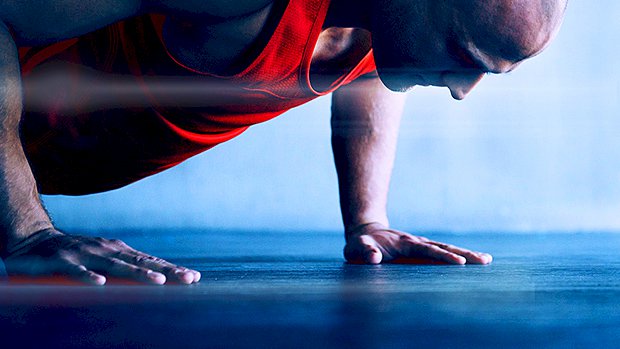 Rotation-Focused Push-Ups Strong and explosive athletes have a tendency to get locked in the sagittal plane (driven into extension). If this becomes excessive, they lose access to their frontal and transverse planes, which can cause injuries up and down the kinetic chain. To remedy this, offset push-up variations can be crucial in getting trunk rotation back. Push-ups in this category can include offset variations off a box (see video) and offset variations with one hand on a medicine ball. Based on your needs and goals there are tons of different options at your disposal. And if you want the best of all worlds, simply rotate your emphasis every 2-3 months to help build a strong, well-balanced, and bulletproof
Origin: Tip: The Push-Up That Prevents Injuries
Tip: Exercise Variety is Overrated
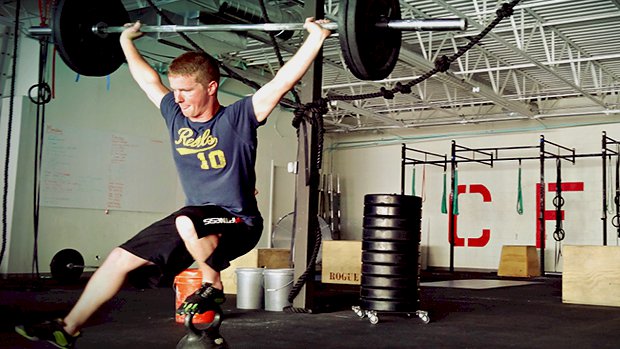 “You Must Have Variety, Bro!” Oh Really? Some say that you won’t make progress if you do the same workout twice in a row. Others say that you won’t make progress if you keep the same exercise in your program for more than a few weeks. The truth? It’s those who don’t stick to any one program for more than a few weeks that never seem to make any significant progress. They’re the ones quoting old-school Dave Tate articles, yet don’t even look like they could squat their bodyweight. The worst culprits are those who like to toss in exercises for the novelty alone. “Look Ma, BOSU ball squats while juggling oranges! You know, to keep the body guessing!” The Greatest Training Gap Look, I’m not bashing exercise variety. Variety has a time and place. However, the greatest gap in most people’s training isn’t lack of novelty, but rather lack of mastery. Most people never experience their “true” fitness or strength because they never allow themselves enough time to get comfortable with a particular lift or movement. Who wants to perform plain ol’ vanilla deadlifts when you can add chains or perform them in a mine field? Master the Simple Stuff To add variety you don’t need to be excessive. Just changing your grip, foot stance, bar height, or adding pauses can be enough of a change to make the deadlift more effective (given a specific technique flaw or weakness). So rather than adding exercises haphazardly for the sake of “doing something cool and different,” use less variety and learn to get really good at doing the simple stuff
Origin: Tip: Exercise Variety is Overrated
Tip: Improve Ankle Mobility Fast
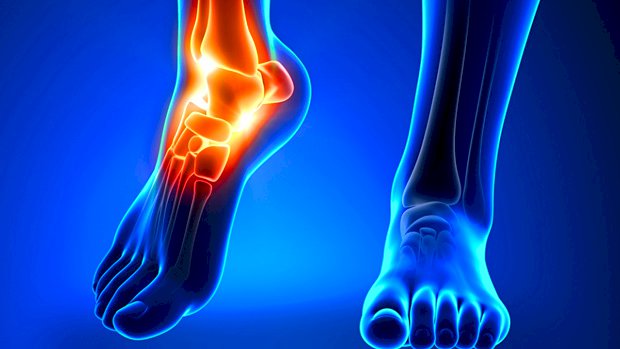 Nearly everyone has limitations moving into dorsiflexion, which is required for squatting, lunging, and deadlifting. To increase mobility, hit the calves first on lower body days before your big compound lifts. Get a nasty pump using agonist/antagonist training. Improve Ankle Mobility By using calf raises (for gastroc work) along with lying banded dorsiflexions (for tibialis anterior work), you’ll get a metabolic-stress effect. This combo will unlock the neurological tension that makes your ankles as flexible as concrete bricks. The key is to train both of these movements out of an extended range of motion into the stretched position: For calf raises, control your ankles deep into dorsiflexion, get a stretch at the bottom of each rep for a full second, then drive up explosively. For the lying banded dorsiflexions, hold each peak of contraction for a full second at the top and control the movement back down with deliberate tension. Do sets between 15-20 reps for calf raises, and between 30-50 reps for dorsiflexions with short rests between the exercises. Rest 30-45 seconds between each
Origin: Tip: Improve Ankle Mobility Fast
Tip: Build Your Back With Bodyweight
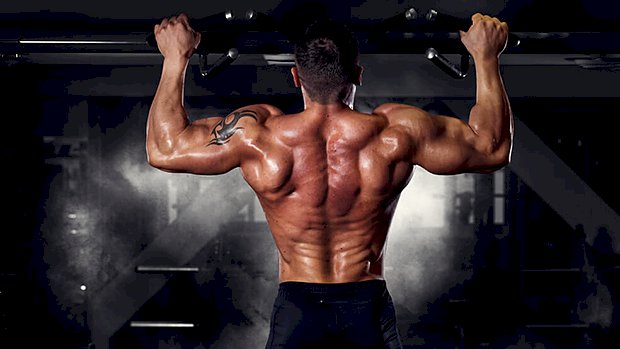 Mechanical drop sets (unlike regular ones where you just reduce the weight as you fatigue) allow you to switch to an easier modification of the movement, usually with the same weight. This helps you to increase metabolic stress and time under tension, both of which will stimulate hypertrophy. If you use this during the main part of the workout, shoot for 3-4 mechanical drop sets. If you use this as a finisher, then one set is more than enough. Do as many standard wide-grip pull-ups as you can. Use a weight vest or hang additional weight from a belt if you can do more than 15. Next, go to volitional failure on eccentric (negative) pull-ups. Jump up to the top position, then lower yourself as slowly as possible. Drop down under a suspension trainer or a bar and perform as many horizontal rows as you can (feet on the ground or elevated, depending on your level of fatigue). The suspension trainer is preferable as it allows your hands to rotate to maintain optimal shoulder position and to better engage the back muscles.
Origin: Tip: Build Your Back With Bodyweight
Tip: Age Makes No Difference in Recovery Rates
 The Middle-Age Stereotype? A lot of unfortunate things happen when a man hits his forties or fifties. His skin starts to resemble distressed leather and he leaves behind a winter storm of dead skin flakes whenever he gets up off the sofa. Stiff hairs and strange growths start to sprout from his body, making him look more like a potato that’s been stored under the sink too long than a man. He also finds himself giving up on colorful, presumably flattering underwear and gravitating towards the same, 5 in-a-bag discount, asexual, tightie-whities his mom used to buy for him when he was 10 years old because, realistically, there’s no scenario where any woman aside from an emergency room nurse is going to see him with his pants off. On the weightlifting front, he finds his progress slowing. Muscle comes hard while fat comes easy. His joints and muscles ache so bad in the morning that he wishes he could just call an Uber to take him straight to the can. But maybe all these age-related assumptions are just stereotypes, especially the ones related to weight lifting, because American researchers have discovered that as far as recovery rates, there’s no real difference between men in their 20’s and men in their 40’s or 50’s. What They Did The scientists recruited 19 recreationally trained men and split them into two groups, a “young adult” group (21.8 years old, plus or minus 2 years) and a “mature adult” group (47.0 years old, plus or minus 4.4 years). The men were asked to train one leg on an “isokinetic dynamometer,” which is a kind of glorified leg extension machine with electronic readouts. Their training protocol consisted of 8 sets of 10 reps with 60 seconds of rest between sets. The scientists measured max voluntary isometric contractions and isokinetic peak torque, along with blood values to determine levels of inflammation. Blood samples were taken before lifting and immediately after lifting and were repeated 30, 60, 120 minutes, 24 hours, and 48 hours post-exercise. What They Found The results revealed no differences between max voluntary isometric contractions and isokinetic torque. More importantly, there were no between-group differences between myoglobin, creatine kinase, C-reactive protein, or interleukin-6, all markers of recovery or inflammation. What This Means to You The researchers concluded that, “…this study indicated no differences in the recovery response between young adults and middle-aged adults for any of the performance measures, nor in subjective levels of muscle pain or soreness. Furthermore, no between-group differences were observed in the inflammatory or muscle damage response to the exercise protocol.” So maybe this study will help put to bed some of the misconceptions about age and lifting. Too many people have it in their minds that 40 or beyond is some sort of real, tangible barrier to progress. Granted, older lifters need to stay mobile and flexible, because that’s where real aging will manifest itself if you’re not diligent with your stretching, mobility drills, yoga, Kama Sutra sex, or whatever you do that keeps you from turning into a human floorboard. Other than that, older lifters shouldn’t necessarily temper their training or their goals because of fears they’re in the throes of codgerdom. Progress should continue just fine, thank
Origin: Tip: Age Makes No Difference in Recovery Rates
Tip: This Can Stop Fat Loss
 Gut Dysfunction and Stalled Fat Loss Gut issues are a major source of stress for the body, and digestive issues can stall efforts to lose body fat. Think gut problems aren’t a big deal? They’re a huge deal. Proper digestion and the absorption of nutrients is essential for fat loss. The body is a complex chemical factory that can’t function properly without the right nutrients available. So asking your body to perform when it’s deficient is like expecting your car to run without oil. Luckily there are some basic ways to assess whether digestion is a problem. Study Your Poop The first consideration is the regularity and consistency of your bowel movements. These should be well formed with elimination at least once a day. Constipation and diarrhea are both red flags of digestive issues that need to be addressed. If you experience bloating, excessive gas, or reflux, then it’s likely you’re having difficulty absorbing nutrients and may have bacterial imbalances or food intolerances. Taking antacids or other medications to alleviate these issues will make the problem worse. They’re temporary fixes for deeper issues. Bad Bugs If your diet is low in processed foods and you suffer from these symptoms then testing for bacterial overgrowth, Candida, parasites, and other bugs may be necessary to identify exactly what’s going on. Food allergies and histamine reactions occur frequently when digestion and elimination pathways aren’t performing well. Gluten and lactose sensitivity are common and may have genetic components. If you find yourself becoming itchy, getting hives, urticaria or suffering from other chronic skin conditions, that’ll be another sign that you have bowel problems. Yes, all these things indicate gut dysfunction. Lots of symptoms indicate problems: gas, bloating, even the excessive feeling of fullness. It’s interesting how many people tell me they think those things are normal. So many fit, lean and otherwise healthy-appearing people have chronic gut issues. It’s not something to brush off. Testing and professional consulting from a specialist may be in
Origin: Tip: This Can Stop Fat Loss
 All about sport xlsport.club