
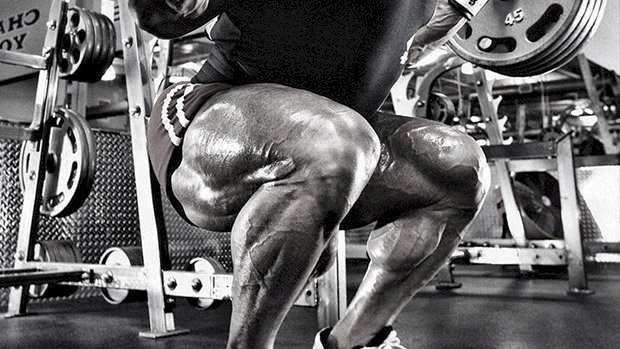
 Any trainer worth his salt will say the big compound movements like squats, deadlifts, and overhead presses deserve an important place in your program. They deliver the most dividends for strength development, calorie burning, fat loss, and even carry over into hypertrophy (size gains). The problem is, this applies predominantly to beginners. They work best for folks who need to build a solid foundation of muscle and strength. But look at what happens when lifters approach intermediate or advanced status: They often eat up 45 minutes of their hour-long lunch break workout just ramping up to their working weight for their squats and deadlifts, where they stay for 5 or so sets. The uncomfortable truth is that many lifters spend way too much time squatting and deadlifting. No Dis. Just Truth I’m not here to discount the big lifts that built your foundation. Nor am I saying that you should forego those lifts altogether. But I will say that the stronger you get at squatting, deadlifting, and barbell pressing, the less you need them in every last corner of your programming, at least if your goal is general health, fitness, and hypertrophy. Once we become better lifters, we seem to forget to add variety to our training. Instead we focus on not placing a ceiling on how good we get at just 3 or 4 particular skills, which often leads to some form of injury. At the very least, it creates lesser returns for the investment made. It took me a double knee injury, the most invasive of surgeries, and a summer in a wheelchair to see the reality in these truths, and you shouldn’t have to experience the same thing to learn the lessons I learned. If you want, you can instead depend on people who’ve gone spiralling down a rabbit hole of all-or-nothing barbell strength training for advice. But these are often the same folks who think you’re making a grave compromise simply by using a trap bar instead of a regular bar to do deadlifts. In this game, don’t miss the forest for the trees. If your goal is to be stronger than most people, respect your own maturation in the weight room and provide it with more challenges than just the “big 3.” No Squats, No Problem Now that you’ve (hopefully) made the mental adjustment and are willing to spend less time on the big 3, it’s time to gain some perspective on other movements that deserve some of your attention. For instance, it says a lot if you can squat or deadlift a ton of weight, but a simple stability-based trunk training drill leaves you shaking like a leaf! Try these: 1 – Lateral Plane Exercises Stuff like Cossack squats and the glute L-bridges in the video would be a good place to start. 2 – Lunge Patterns Whether we’re talking forward, reverse, deficit, lateral, walking, or drop lunges, lunges are a prime unilateral movement pattern that often gets forgotten in strength training programs. 3 – Leg Presses Stop hating on them. They’re a staple in many bodybuilders’ routines for a reason. There are few exercises that allow you to really isolate the muscles of the lower body while also moving a ton of weight in the process. If great quads are your goal, then it’s time to recognize the benefits leg presses can bring. 4 – Swiss Ball Curl (2 up, 1 down) This is one of the most deceptively challenging movements to do really well, especially if you’re a big, muscular lifter. Pairing this with high reps of kettlebell swings will leave your hamstrings torched for days. 5 – Chinese Plank Variations You’ll be surprised how fast your hips sag with this movement that’s largely based around using just bodyweight or light loads. It’s times like this when you realize that the big lifts alone just aren’t enough to cut it. 6 – Hip Thrusts/Back Extensions/Swings All three of these movements enforce the same biomechanics as a deadlift while utilizing different force angles and curves. 7 – Sled Pushes/Tows/Loaded Carries If you really want to make heavy weight training the basis of your conditioning work, then don’t just pick it up, try moving it somewhere. Take a page out of the strongman book. Embrace the Suck Look, when you choose a new skill that you’re not yet good at, your body has a harder time being efficient at that movement, and that’s something we should welcome. If you’re a strength training hobbyist who strictly wants to improve performance of the big lifts, that’s one thing, but if you’re a health-oriented lifter who’s looking to have skin in the game for life, you need to build some perspective. The amount of good training that strong, experienced people everywhere are foregoing in order to protect the sanctity of their precious squats and deadlifts is exactly what’s holding back plenty of their gains. The truth is, most people don’t have the time (or the energy) to do a two-hour workout, especially when doing barbell squats takes up three quarters of their training time. Hell, most would be lucky to squeeze in two extra exercises before it was time to hit the showers
Origin: Stop Squatting and Deadlifting So Damn Much
Tip: The Best Power and Conditioning Test
 The Test Hop on a stationary bicycle, like an Assault or Airdyne bike, and go hard for 1.5 miles. To pass the test, you need to finish in 3:30 or less. The Reasoning If your anaerobic power is lacking, you’re going to have a tough time pushing through multiple hard sets of a lift, let alone an entire training session. If your aerobic capacity is non-existent, you’re going to have a hard time recovering in both the short-term (between sets/exercises) and the long-term (between training days). Since the test is short, yet long enough to tap into the aerobic system, you’re simultaneously testing both qualities. As a refresher, anaerobic power is the ability to exert maximal power in the presence of fatigue while sustaining high levels of metabolic stress. Aerobic capacity is the ability to be maximally efficient with the entire body while feeling like you have a flamethrower going off inside your lungs. If you lack either quality, the 1.5-mile bike test will humble you in a matter of minutes. The positive is, you’ll find out which area you need to focus on: If you were able to maintain a solid pace but still didn’t beat 3 minutes and 30 seconds, your anaerobic power needs work. If you shot out of the gates but burned out within the first minute, you need to build up your aerobic
Origin: Tip: The Best Power and Conditioning Test
5 Foods For Better Erections & A Healthy Prostate
 You may be at an age where thoughts about the health of your prostate enter your mind once every never, but like a schnauzer nuzzling your pant leg for a Milk Bone, it’ll eventually get your attention one way or another. It may start to swell up as early as your forties, at which point you’ll say goodbye to sleeping the whole night through without getting up to go to the bathroom. But regardless of whether it gives you any problems or not, your doctor will at some point start to nag you about adding a PSA test to your blood work so he or she can begin to monitor it, in case, you know, the big C. The problem with that is, as I explained in The Truth About Prostate Testing, is that the PSA test itself is problematical. One task force concluded that you’re 120-240 times more likely to be misdiagnosed as having prostate cancer from a positive PSA test and 40-80 times more likely to get unnecessary surgery or radiation than you are of having your life saved (1). Another study concluded that, “Harms associated with PSA-based screening and subsequent diagnostic evaluations are frequent, and moderate in severity… Common major harms include over-diagnosis and overtreatment, including infection, blood loss requiring transfusion, pneumonia, erectile dysfunction, and incontinence (2).” Even the guy who discovered PSA, pathologist Richard J. Ablin, called the PSA test a “profit-driven public health disaster” because it’s led to approximately 30 million American men being tested every year at a cost of at least 3 billion dollars. Of course, these false positives, if they occur, are much more likely to happen when you’re an old or semi-old coot. Even so, it’d be a good idea to at least start taking a little bit of preemptive care of the organ when you’re still young. And for those who have already reached coot or semi-coot status, it’s imperative that you start giving your prostate a little love now, and by that I mean some sensible, prostate-friendly dietary strategies. Besides, most of the following foods also strengthen erections, so if prostate health isn’t a concern of yours, let carnal self-interests guide you. Prostate (and Erection) Supporting Foods Here are five foods that you should be eating on a regular basis, all of which have been found to be helpful in freezing or lowering PSA levels: 1 – Tomatoes Tomatoes contain lycopene, a powerful polyphenol that has, like all polyphenols, powerful anti-oxidant properties, but lycopene almost surely has some other potent, yet undiscovered mechanisms through which it lowers prostate cancer risk. We know that lycopene is more absorbable through cooked tomatoes and tomato products like pastes and sauces. We also know that eating them with a little fat, like olive oil, further helps absorption. But even raw tomatoes seem to help, as does pedestrian ketchup, regardless of whether it’s green, purple, or red tomato ketchup, although the dark red variety has been shown to contain the most lycopene. Try adding some sort of tomato product to your diet at least 4 to 5 times a week. Other than using a lot of ketchup, the easiest way to do this might be to just cut up a raw tomato into bite-size pieces, douse them with salt and olive oil, and munch on them as a pre-dinner appetizer. 2 – Carrots Chinese epidemiologists, after scanning ten studies, found a stunning correlation between eating carrots and the rate of prostate cancer (3). They found that the more often men ate carrots, and the greater the amount of carrots eaten (to a point), the less likely they were to get prostate cancer. They even came up with some definitive numbers: For every 10 grams of carrots consumed each day, men reduced their risk of developing prostate cancer by 5%. That means that if men had at least 50 grams of carrots a day, their chances of developing prostate cancer could be cut in half. The researchers think it has something to do with the large amount of cancer-fighting carotenoids (including lycopene) found in carrots. Sadly, doubling the amount of carrots eaten only goes so far. Increasing your carrot intake to 100 grams doesn’t drop the chances of getting prostate cancer to zero, so don’t suddenly think you figured out a way to cheat death. Anyhow, the average carrot weighs about 72 grams, and a cup of chopped carrots weighs around 122 grams, so eating 50 grams a day is about as easy a dietary task as you’ll ever get. 3 – Pomegranate Juice While the people who make POM Wonderful pomegranate juice have made claims about its efficacy in treating prostate cancer that were a little too bold for the FDA, there is some evidence that shows it can slow the rise of PSA levels in men who’ve been diagnosed with prostate cancer. Pomegranate may also juice up erections, so there’s that, too. Drink about 6 ounces of juice a day with or without meals. 4 – Green Tea This drink, made from the steeped leaves of camellia sinensis, allegedly benefits almost every organ system in the body. It
Origin: 5 Foods For Better Erections & A Healthy Prostate
Tip: The Strength Athlete’s Mistake
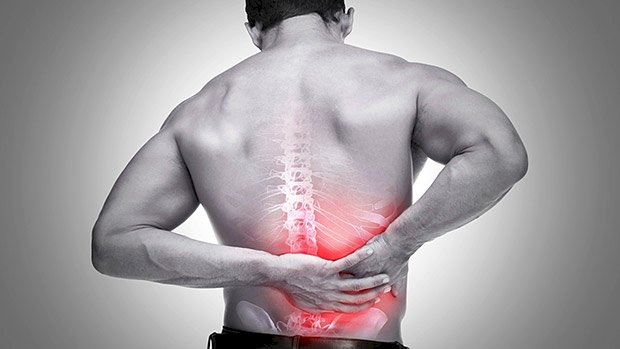 Don’t Attack the Low Back There’s one very common mistake I see in a lot of strength athletes’ programs – extra low-back work. They have absolutely zero awareness of just how much work their erectors are already doing. If you’re squatting, deadlifting, and doing standing overhead presses, then your low back is getting a metric butt-ton of work; not even indirect work, but very direct work. The erectors recover more slowly than any other muscle group, yet guys will do all of the above and then decide to throw in a bunch of barbell rows, T-bar rows, hypers, and a whole slew of other movements where the erectors have to contribute mightily. I can’t tell you how many strength athletes had their squat and deadlift climb up once I removed all of the extra spinal-loading movements. The fact is, fatigue will mask fitness. The best thing you can do is choose exercises where you give the low back a break from loading while working the musculature around it so that it has a stronger support structure. That’s where the chest-supported row comes in. There are countless variations of this machine, but virtually any of them can be a strength athlete’s best friend. It allows you to really smash the entire upper back while giving you a break from more axial loading. Many times this is exactly what you need to get past a plateau. I like the seated machines rather than the ones where you’re lying at a 45-degree angle because the natural tendency on those is to arch very hard once the loading gets heavy, which defeats the whole purpose of choosing the chest-supported version. If you don’t have access to the seated machine, rig up your own with an incline bench and a low cable. The best bar to use in this situation is one with a curve in it so you aren’t banging it into the bench and can get your elbows behind you far enough to get a strong contraction in the upper back. Loading on chest-supported rows is secondary to achieving a strong mind-muscle connection. If you want to really get a smoke show going, do them after your deadlifts. You should feel an immensely strong contraction in the upper back due to the maximal loading and increased neural output that came from the deadlift. Don’t rip the weight on the initiation phase. Pull with a “roll on” rep fashion where you initiate with the upper back in a very deliberate manner and then pull aggressively into the strong peak contraction. Hold that puppy for a second before lowering. Two to three sets of 10-12 reps will do the
Origin: Tip: The Strength Athlete’s Mistake
Tip: Simple Power Training for Muscle
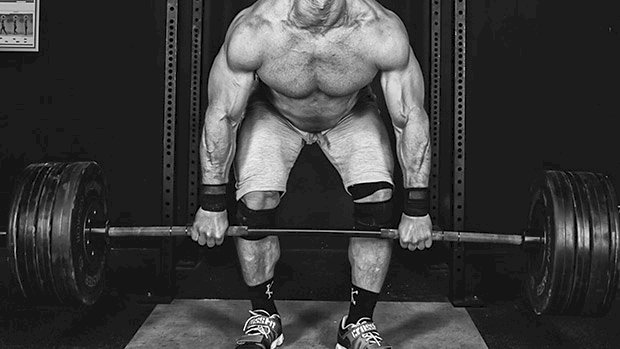 How many lifters train to become more powerful? Do YOU make power training part of your program? Well, you should consider it. You’ll unlock more strength, more athleticism, and more muscle. How’s That Work? Power is the ability to produce force quickly. And remember, as you age you lose power twice as fast as strength. But a recent study by Franchi et al. showed that plyometric training is an effective intervention. It produces a rapid increase in muscle mass and power, no matter your age. Jumping, throwing, sprinting, and the Olympic lifts will heavily recruit fast twitch muscle fibers (which have the highest propensity for growth) as well as help improve your athleticism and prime your nervous system for the heavier strength training that follows. Luckily, this doesn’t require a complete program overhaul, just a few extra minutes and a bit of planning. Looking at the force velocity curve, the far left is max strength. This is the heavy stuff, and of course the loads don’t move very fast. This is where most lifters spend the majority of their time, and rightfully so. However, if you never venture outside of that, you’re leaving a lot of progress on the table. As you slide down the curve, the loads will lighten up and the speed of movement will increase. Knowing what you’re trying to accomplish will help you pick the right tools at the right loads for the task at hand. For example, if you’re performing 10 reps of hang cleans, you’re not really training strength-speed like you might think. The speed of the reps isn’t fast enough to be improving speed-strength either. You end up in a middle ground: doing things that make you tired, but don’t make you more powerful. Or maybe you’re using a medicine ball that’s far too heavy to throw fast enough to make any improvement in the speed-strength area, or “sprinting” for a minute or so. Again, the tools aren’t the issue, but the application of them needs to be better. How To Do It Better Before your strength training sessions, pick one or two movements from various sections on the force velocity curve that match up with the main movement pattern you’ll be tackling in your lifting. Here are some ideas: Squat Olympic lifts Box jumps Loaded squat jumps Heavy sled marches (10 yards) Sled sprints (10-20 yards) Single-leg hurdles Short sprints Deadlift Olympic lifts Heavy sled marches (10 yards) Sled sprints (10-20 yards) Loaded trap bar jumps Broad jumps Kettlebell swings Short sprints Upper Body Days Medicine ball throws: chest passes, lateral throws, overhead soccer throws, slams Keep your reps on the low end. Make sure the last rep of each set is just as explosive as the first. As a rule of thumb, do 2-4 sets of 3-10 reps. The lighter the implement, generally the higher the rep range (8 medicine ball throws isn’t the same as 8 dumbbell snatches). The trickiest part of training for power is figuring out how much weight to use on things like sled sprints and loaded jumps. Remember, moving with speed is the goal, not loading the movements up so heavy that you hardly leave the ground or are moving at the speed of smell. And don’t get caught up in the “more is better” game. More just means slower, and slower doesn’t equate to more
Origin: Tip: Simple Power Training for Muscle
Tip: Keto and Bodybuilding Don’t Mix
 I’ve often written about how hard it is to really be in ketosis. It’s not a problem if you’re an epileptic in a hospital being fed a controlled diet by a team of white-gowned specialists who weigh all your food, along with all your doodie. But if you’re a regular Joe who isn’t in total command of his food chain – who doesn’t live on a farm and grow all his own food and make all his high fat, unsweetened, almond flour peach cobbler with no peaches – you’re liable to slip up sooner or later. All it takes is eating an apple that’s too big, a spoonful of hidden sugar in a sauce, or a morsel of matzo in a meat loaf. Beyond all that is a problem that’s probably unique to lifters: They eat an f-ton of protein. Every day. People who are truly in ketosis need to get 80 to 90 percent of their calories from fat, and that doesn’t leave much space for protein, which is the lifeblood of a lifter. Hell, lifters argue all the time about whether they need to eat one entire cow or two every day to best grow muscle, and most keto people, if you threaten to force-feed them a sugary churro, will admit that eating a lot of protein – more than, say, 20 percent of total calories – will take you out of ketosis. Twenty percent might be generous, though. Even if a generic keto-er could get away with eating a diet of 20% protein, eating such a relatively small amount of protein every day would cause the muscles of most bodybuilders and lifters to start to shrink. No One Guidelinend easily enough to Works for Everybody If you don’t give your body sugar, the body will break down protein to get it, and that protein will come mostly from muscle. Ketosis itself is your body’s way of trying to preserve that protein and ipso facto, your muscles. But take in a sufficient amount of carbs or protein and the body takes a pass on all that keto silliness and goes back to using sugar as its energy source. The trouble is, there’s no one guideline that works for everyone. One person might get knocked out of ketosis for having a diet that’s 20% protein, and another person might get booted out for eating a lot less. Lately, though, people who worship at the keto altar are low-carb waffling on this protein speed limit. They’re saying that worries about gluconeogenesis – the process by which amino acids are converted to sugar – are overblown and that it doesn’t really happen when keto dieters eat high-ish amounts of protein, at least not to the point where it knocks you out of keto. Others argue about the actual biochemistry of the phenomenon, saying that gluconeogenesis is a non-factor, and if protein does take you out of ketosis, it’s because the excess protein is donating oxaloacetate to acetyl-CoA in the Krebs cycle… but that’s getting pretty deep in the biochemical weeds. What matters is whether the amount of protein a bodybuilder or lifter needs to grow muscle – or even maintain it – is enough to take you out of ketosis, and I think it is, as do a lot of other biohackers, nutritionists, and keto autodidacts. But those who have financial interests in promoting a ketogenic diet disagree. Studies Aimed at Diabetics Don’t Fly Some of the keto revisionists point to studies (mostly published in diabetes journals) that showed gluconeogenesis does occur after a high protein meal, but under very unusual circumstances. Even so, they maintain the amount of sugar produced amounted to just a duck snort; not enough to knock a flour beetle out of ketosis. Granted, those studies do show that dietary proteins contribute very little to glucose production, but the test subjects weren’t in ketosis in the first place. Generally, the subjects were run-of-the-mill diabetics, or healthy people who’d just fasted overnight and were then given a high protein, zero-carb meal. Sure, gluconeogenesis occurred, but as keto apologizers claim, only to a minor degree. Fasting overnight, though, is hardly enough to deplete anyone of their glycogen reserves, so it’s not surprising that a significant amount of gluconeogenesis didn’t occur in these test subjects. Keto protein-deniers need to look at studies like the one performed by Veldhorst, et al where subjects were truly depleted of carbs – fed a low-carb diet (0% carbs, 30% protein, and 70% fat) and depleted of glycogen reserves through exercise. They found that the low-carb, high-protein diet led to an increase in energy expenditure, 42% of which was explained by an increase in gluconeogenesis. That’s significant, and ealy enough to knock anyone out of ketosis. If lifters or bodybuilders want to lose fat, they’d best do it the old-fashioned way: reduce caloric intake while eating modest amounts of functional carbs and fat and striving for protein intake of between 30 and 40% of total
Origin: Tip: Keto and Bodybuilding Don’t Mix
Tip: 3 Reasons Trap Bar Deadlifts Are King
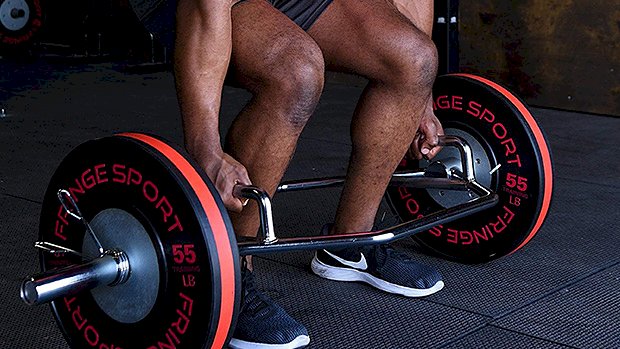 The trap bar deadlift is the king lift for keeping a healthy spine while pulling a stack of weight off the floor in a functional pattern. It checks all the boxes for health, strength training, and maintaining general badassery. There are several reasons why it’s superior to barbell pulls: You have no bar blocking your shins, which is a saving grace for longer-legged lifters, lifters with back problems, or lifters with mobility restrictions. This also allows the shins to migrate forward, allowing the hips to sit lower and the spine to remain more vertical when pulling. It also helps hit the quads harder. You’re using a neutral grip. That means no mixed grip (which has a high risk of biceps tears) and a posture that more easily engages your upper back and keeps you closer to anatomical position. That’s huge. You get to pull from a slightly higher point (at least when you go high-handle). Football and basketball players everywhere are rejoicing in the fact that they don’t have to crumple their bodies into a deep pulling position, like when they use a barbell. But most people already know all this. The true reason they won’t make the switch is bro-based stubbornness, not because a barbell “works better for them.” They think that it’s not a true deadlift if you don’t pull with a straight bar from the floor. Those are the same people who don’t have long-term health, strength, and wellness in mind. Are you sure you want to be one of them? Of course, if it gets too easy, just flip the bar and go low handle. Problem
Origin: Tip: 3 Reasons Trap Bar Deadlifts Are King
Ask Us Anything 4
 “Oral” Bioavailability Q: If a female lifter (not on gear) sleeps with a guy who runs gear, is she in danger of failing a drug test? A: This is a question that probably goes through every woman’s mind the moment she decides to copulate with a gearhead. Even if she’s not an athlete, she probably can’t help but wonder if she’s going to wake up with a beard and a puzzling urge to check her NCAA bracket. As far as transmission of steroids through intercourse, it’s possible that a tiny bit of hormone catches a ride in the spermatic fluid. After all, untainted prostatic fluid normally contains trace amounts of estrogen, FSH, and testosterone anyhow, along with a good number of prostaglandins. It’s even been hypothesized that the vagina absorbs some of these prostaglandins, and since prostaglandins modulate neurotransmitters, they can possibly improve a woman’s mood (1). However, even if there were steroids in seminal fluid, it’s pretty much impossible that the 2 to 5 cc’s of seminal fluid in the average ejaculation would contain enough steroids to budge the needle on a sex partner’s drug test. And even if the fluid did contain some steroids, the contact between the juiced juice and vaginal tissues is usually brief because of plain ol’ fluid dynamics (liquid flows downhill). Much of the same is true of oral sex with a steroid user. While there was recently a report of a woman going into anaphylactic shock and almost dying because she swallowed some amoxicillin-tainted sperm (she was allergic to penicillin and its analogs), steroids are a different situation. It only takes a few molecules of something to elicit an allergic reaction, but absorbing a detectable amount of steroid through oral sex is probably impossible. For one thing, if the steroid in question is testosterone, you’d have to absorb at least 200 mg. of the hormone for it to overcome the first pass effect of the liver. That’s generally a whole cc of testosterone, which would mean that half of the volume of the hypothetical steroid user’s semen was steroid. Not very likely. Other steroids are built to survive the first pass effect, but still, there’s no way the semen would contain enough steroids for anyone to fail a drug test, or experience any steroidal effects at all. – TC Luoma No Gains, Bro! Q: My gains have stalled. What do you suggest? A: We get this (extremely vague) question often. It’s tough to answer since we don’t know your main goals, your age, or even if you’re a girl person, a boy person, or one of these people who identifies as a lesbian parakeet. But here’s some general advice: 1. Do the opposite. There are tons of great training programs here on T Nation, but the best one is probably the one that’s the most different than the one you’re doing now. Here’s an example. Back in 2005, not-yet-a-Dr. Chad Waterbury introduced a training system based around doing 10 sets of 3 reps. Not 3 x 10, but 10 x 3. And T Nation readers who adopted the program reported great gains in muscle and strength. Now, there’s more to the program than the set/rep scheme, but doing 10 x 3 was radically different than what most lifters were used to doing. It presented a new challenge, recruited motor units that had been largely dormant, ramped up force production and, in short, “shocked the system” and triggered new adaptations in size and strength. So take a look at how you’ve been training for the past few months. Now, do the opposite: Always do 12-15 reps? Then load up the plates and do 3-5. Always train super heavy for low reps? Then lighten it up and shoot for 60 seconds of time under tension for each set. (Set a timer and try not to poop out your spleen.) Always use barbells because “free weights are best?” Switch to a mostly machine-based program. Always do decline barbell presses? Do inclined dumbbell presses. Train 6 days a week? Train 3. Or vice-versa. You get the idea. Or just adopt someone else’s program. I know, I know, the internet experts often advise people to avoid “cookie cutter” programs, but they can be valuable. Any program from the T Nation archives is probably going to push you harder than you push yourself. And it’s probably going to force you to try some new things. 2. Do something that excites you. Several T Nation coaches have said it: Training very hard using a substandard program is better than lazily going through the motions on the “perfect” program. Take 6 weeks off from what you “should” be doing and train in way that gets you amped up. Maybe you’ve been training like a bodybuilder because hypertrophy is your main goal, but powerfully swinging around kettlebells looks damn fun at the moment. So do it. (We won’t tattle on you.) You’ll get better in other ways, and after a while you’ll be itching to do slow negatives, set-extending partial reps, and pump workouts again. 3. Examine your diet. Keep a food log. After a week, figure out the average number of calories you consume per day. Now add around 300 to that. Take tape
Origin: Ask Us Anything 4
Tip: The Truth About the Bad Girl Machine
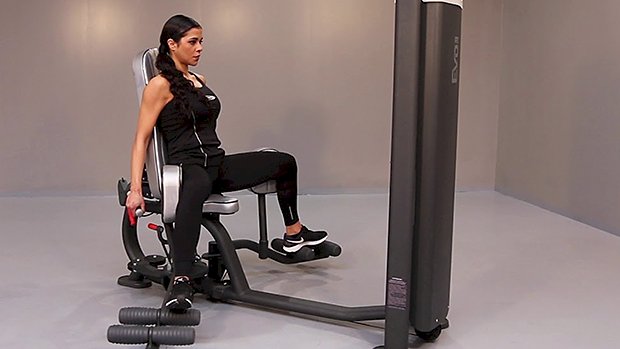 The Good Girl/Bad Girl Machine These two machines get a bad rap because for a long time women were told to get on them to “shape and tone” their thighs via the bullshit known as spot reduction. In fact, I often have to wait for some little old lady to be done with these before I can hop on. And yeah, I got a few stares along the way. Even from granny. It’s crazy how many people hate these machines because they’re not regarded as “hardcore.” They saved me from a recurring injury when I was competing in powerlifting. I suffered from a bout of adductor strains during those years that drove me nuts, but once I got really freaking strong on the adductor machine my squat climbed from 635 to 660 pounds. I’m not saying there was “carryover” to my squat from doing the good-girl machine. But once I stopped having adductor strains, I was able to smash out some very productive squat cycles that allowed those gains to happen. I credit the adductor machine for that. But I didn’t approach it like Suzanne Summers ThighMaster time. I really pushed the progressive overload and worked to get brutally strong on them, eventually working up to using the whole stack for lengthy sets. With the bad-girl machine, aka the abductor machine, I used it prior to squatting as a way to get my hips and glutes warmed up. I stayed lighter for this movement and worked in the 15-20 rep range. When I initiated a squat workout this way, my squats felt way better and were more “in the groove” right out of the gate. If you find yourself struggling to hit depth early in your squat session because the loading isn’t heavy enough to force you down into position, or that your hips and knees are ornery in the warm-up process, throw these in before squats to potentially alleviate that problem. Three to four sets of 15-20 reps will do the
Origin: Tip: The Truth About the Bad Girl Machine
The Real Driver of Muscle Growth
 Most people think the primary driver for muscle growth is volume, but most of these same people define volume as the number of sets you’re performing in a training session (not counting your warm-up sets, mind you). More accurately defined, volume is sets x reps x loading (weight). Total tonnage – that’s what really determines growth. Let’s take a look at a solid study that proves it, along with defining the exact amount of volume that builds the most muscle. Study Design Barbalho, et al. separated 40 experienced female lifters into four groups. Each group trained to failure using a different amount of volume. Average Age:24-25 years old Training Experience:At least three years Length of Study:24 weeks Note that a resistance training study done for 24 weeks is very rare. The usual is 8 to 12 weeks. We’re literally looking at six months worth of training with a 100% completion rate by the subjects. That means all 40 women who started the study finished it. Fantastic. The Program Each group did a different amount of total sets per workout: 5 sets per workout 10 sets per workout 15 sets per workout 20 sets per workout The program itself was done three days a week, hitting each muscle group once a week. Monday Training A. Barbell Bench Press B. Incline Barbell Press C. Barbell Military Press The 5 set group did 2 sets of bench presses, 2 sets of inclines, and 1 set of military presses. The 10 set group did 4 sets of bench presses, 4 sets of inclines, and 2 sets of military presses. The 15 set group did 5 sets of bench presses, 5 sets of inclines, and 5 sets of military presses. The 20 set group did 7 sets of bench presses, 7 sets of inclines, and 6 sets of military presses. Thursday Training A. Lat Pulldown B. Cable Row C. Upright Row The 5 set group did 2 sets of pulldowns, 2 sets of cable rows, and 1 set of upright rows. The 10 set group did 4 sets of pulldowns, 4 sets of cable rows, and 2 sets of upright rows. The 15 set group did 5 sets of pulldowns, 5 sets of cable rows, and 5 sets of upright rows. The 20 set group did 7 sets of pulldowns, 7 sets of cable rows, and 6 sets of upright rows. Friday Training A. 45-Degree Leg Press B. Barbell Squat C. Stiff Legged Deadlift The 5 set group did 2 sets of leg presses, 2 sets of squats, and 1 set of stiff legged deadlifts. The 10 set group did 4 sets of leg presses, 4 sets of squats, and 2 sets of stiff legged deadlifts. The 15 set group did 5 sets of leg presses, 5 sets of squats, and 5 sets of stiff legged deadlifts. The 20 set group did 7 sets of leg presses, 7 sets of squats, and 6 sets of stiff legged deadlifts. Rep Periodization The scientists periodized the training so that the lifters used different rep schemes each week. Then they rotated back around each month: Week 1:12-15 reps, 30-60 seconds rest between sets Week 2:4-6 reps, 3-4 minutes rest between sets Week 3:10-12 reps, 1-2 minutes rest between sets Week 4:6-8 reps, 2-3 minutes rest between sets This periodization model was repeated six times (there’s your 24 weeks). The Results The researchers tested the women’s 10-rep max on the bench press, lat pulldown, leg press, and stiff-legged deadlift at the beginning of the study. The scientists also measured muscle thickness of the biceps, triceps, pecs, quads, and glutes. The tests and measurements were repeated after 24 weeks. This is what they found: All groups showed significant increases in all muscle thickness measurements and 10-rep max tests. There were no differences in any 10-rep max tests between the 5 and 10 set groups. The 5 and 10 set groups showed significantly greater 10-rep max increases for lat pulldowns, leg presses, and stiff-legged deadlifts than the 15-set group. For the bench press, the results from the 5, 10, and 15 set groups didn’t differ significantly, but the 20-set group tested out the worst. In fact, 10-rep max changes for the 20-set group were lower than all other groups for all exercises. As for muscle thickness improvement, as you might expect, it correlated with the strength gains. The 5 and 10 set groups showed significantly greater increases than the 15 and 20 set groups in all measured sites. Muscle thickness increased more in the 15 set group than the 20 set group in all sites. The increases in the 5-set group were higher than the 10 set group for the pecs, whereas the 10-set group showed higher increases in quadriceps muscle thickness than the 5-set group. To put this in perspective, the 20-set group exhibited about a quarter of the gains that the 10 set group did. A Possible Flaw in Their Findings? The one argument against this study is that the subjects in the 15 and 20 set groups probably did too much volume in their sessions and exceeded their capacity to recover. If the work load had been spread out over more training days in the week, the outcome could have been different. Nice try, but they didn’t exceed their maximum recoverable volume in a single session! Look at the
Origin: The Real Driver of Muscle Growth
 All about sport xlsport.club