
 The ketogenic diet (keto) has many potential benefits ranging from preventing epileptic seizures to potentially “starving” cancer cells. Unfortunately, when it comes to transforming your body, it’s not the magic cure it’s made out to be. Can it help you lose fat? Sure, by satiating your hunger, helping you eat less, and creating a caloric deficit – just like any other diet. But when it comes to building muscle? It fails miserably. A Primer On the Keto Craze A real keto diet is high fat (75 percent of calories) with an extremely low carbohydrate intake (less than 5 percent of calories) and low-ish protein intake (15-20 percent). Ketosis occurs by depleting your body of stored glycogen and incoming glucose from carbs. As a result, your body breaks down fat, creating molecules called ketones to use as fuel. Okay For Fat Loss, Bad For Muscle Growth Can you lose fat while following the ketogenic diet? Of course. But can you build actual muscle on it? Well, it’s possible, but not easy, likely, or ideal. I could walk from my house (in Georgia) all the way to San Diego, but it would be much faster if I took a flight. Hypertrophy while on keto is kind of like that. When it comes to building muscle, carbs and a balanced diet are far superior because they give you adequate (and preferred) fuel for anaerobic performance. And above all else, they make it easier to consume enough calories to trigger muscle growth. Let’s take a look at the science while keeping our eye on the goal: more lean muscle mass. A 2018 study, published in the Journal of the International Society of Sports Nutrition, tested how the ketogenic diet affected the body mass index (BMI) of 24 healthy males over the course of eight weeks. All 24 men performed a resistance training program for the eight-week period. Nine of the men were assigned to the ketogenic diet. Ten were assigned a non-ketogenic diet, and five were told to eat like normal. The results? The keto group saw a significant reduction in fat mass, while the other two groups didn’t see a reduction in fat mass, but did see an increase in muscle gain. The researchers concluded that the keto diet might be an effective way to decrease fat mass without decreasing lean body mass. However, it’s probably not useful to increase muscle mass (1). The Fuel Source Argument There’s some evidence ketogenic diets can work for endurance and ultra-endurance athletes. But it’s been established that glucose is the optimal fuel for high velocity muscle contractions and anaerobic sports like weight lifting and sprinting. A 2019 study in the Journal of Sports Medicine and Physical Fitness took 16 men and women through a randomized, counterbalanced crossover study analyzing exercise testing under ketogenic diets versus higher-carb diets. The diets were matched for total caloric intake with carb intake being the difference in the subjects. After analyzing dietary compliance as well as urine pH and ketone levels, testers administrated the brutal Wingate anaerobic cycling test. Here’s what they found: Mean power, peak power, and recovery measurements were all significantly worse for the low-carb dieters. This lead researchers to conclude short-term ketogenic diets reduce exercise performance in activities heavily dependent on anaerobic energy systems (2). This means your ability to perform the types of exercise that are best for building muscle is impaired with low-carb diets. Keto Is Low Protein If your primary concern is building muscle, you need adequate protein to do so. Unfortunately, keto isn’t only a low-carb diet, it’s also a low-protein diet. Too much protein can prevent you from getting and staying in ketosis. In 2011 a study by Phillips and Van Loon found that .82 grams per pound of bodyweight is the upper limit of protein needed to derive maximum protein synthesis, (3) or slightly below one gram per pound of bodyweight. Obviously, yes, you can increase protein intake with your diet. But reaching adequate protein levels often dictates you’ll eat more protein than recommended in the ketogenic diet, pulling you out of ketosis. Therefore, you’re not really following a ketogenic diet – you’re following a low carb, moderate protein diet – a glorified Atkins diet basically, like your mom tried once. The Hormonal Argument For building muscle, testosterone is important. Fat intake is essential for healthy T levels since cholesterol, found primarily in animal products, serves as a precursor for testosterone production, among other things. But fat isn’t the only nutrient you need to maintain healthy testosterone levels. Carbs, specifically post-workout, have been shown to restore muscle glycogen, reduce cortisol levels, and improve testosterone levels. Going deeper, you need to understand the role of glucose. Glucose from carbohydrates plays an important role in GnRH (gonadotropin releasing hormone) levels. Its secretion leads to other vital hormonal functions in the body. GnRH leads to the release of
Origin: Killing Keto
Author: ondriving
Tip: Nail Both Heads of the Biceps With This
 Rise Ups This is a very effective mechanical advantage drop set. You’ll start face down but spin around on the subsequent set, finally ending up standing, hitting both the long and short heads of the biceps hard in the process. Dumbbell Spider Curl:8-12 reps (to failure) Incline Dumbbell Curl:Max reps (same weight, same incline) Strict Standing Dumbbell Curl:Max reps (same weight) Standing Cheat Dumbbell Curl:Max reps (same weight) 90-Degree Isometric Hold:Max time (after last cheat rep) Do the first variation using a weight you can lift for 8-12 reps. Then go for maximum reps on the exercise variations that follow. Do this as a finisher for one or two sets after your heavier biceps
Origin: Tip: Nail Both Heads of the Biceps With This
Tip: How to Diagnose Your Bench Press Problem
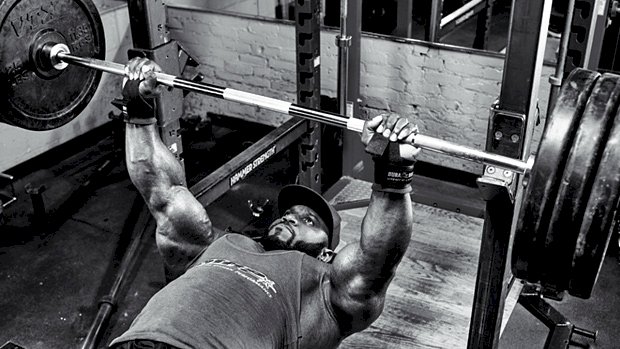 This table lists the most probable issue causing each sticking point on the bench press. Now, there could be something more complex going on, or a technical issue that’s more unique to you. But most of the time, I’ve found that strengthening the sticking point area will solve the problem. So take a look at this table, determine where your sticking point is, take note of the causes, and use the appropriate assistance exercises to strengthen that area. Bench Press Sticking Point Causes Assistance Exercises Breaking off from chest 1. Lats weak or not properly engaged 2. External shoulder rotators 3. Upper traps more dominant than lower traps and rear delts 1. Straight-arms pulldown, Pendlay row, seal row 2. Cuban press, seated dumbbell snatch, external shoulder rotations 3. Trap-3 raise, rear delt machine, Powell raise, victory raise Lower third Pecs Wide-grip bench press, Spotto press, decline bench press, floor press, dumbbell bench press, bench press with Duffalo bar Mid third 1. Anterior delts 2. Rear delts and rhomboids (Shoulder lifts up from bench) 1. Incline bench press, slight incline bench press, lying front raise 2. Bench press with resistance band around wrists, rear delt machine, face pulls Upper third (lockout) Triceps, especially long head Close-grip pin press, lockout bench press, close-grip floor press, close-grip decline bench, overhead triceps extensions If you’re unfamiliar with some of these exercises, use this list: Seal Row A seal row is a chest-supported row (using dumbbells or a bar) using a bench. Elevate the bench on blocks or plates. If you don’t have that setup, a regular chest-supported row will do. Cuban Press Trap-3 Raise Powell Raise Victory Raise Spotto Press Bench Press With Resistance Band Around Wrists Bench Press With Duffalo Bar Once you fix a muscle weakness, it’ll take some time to transfer those strength gains to the bench press. Your body will need to change the intermuscular coordination pattern. Don’t panic if your strength gains in pressing lag a few weeks behind your strength gains in the assistance
Origin: Tip: How to Diagnose Your Bench Press Problem
Tip: Make Room for Big-Bottomed Girls?
 I’ve judged NPC shows on the regional level in New England for approximately twenty years, as well as a few Fitness America shows and a few other now defunct organizations. Like most old-school purists, I didn’t love the inclusion of new divisions such as bikini and I got all grumpy about dudes wearing long, flamboyant surfer shorts in the Men’s Physique division. Still, while I may have had my issues with the inclusion of those divisions (where’s the muscle?!), I acknowledge that they were at least all based on the foundational concepts of physique sport: proportions, symmetry, and balance. Not so with the new “Wellness” division that makes room for women who have thick legs and glutes but a bikini competitor’s top half. I Like Big Butts But This I’m Not so Sure of Problematic name aside, the Wellness division is not actually new per se; it’s just new to the US. It’s popular in other parts of the world, and I even judged a show in Panama a few years ago that featured that division. While the gals who compete in the Wellness division are stunningly attractive – especially for those who like the look of thicker legs and glutes – it often looks like someone glued together the upper and lower bodies from separate people. It allows these leg/glute heavy women to compete where they may not have done well in say, bikini, figure, or physique. Sound like an unbalanced physique? It is! I’ve since labeled it the Thickness Division. These women don’t represent a proportional, balanced physique, which is the foundational focus of physique sports and what’s supposed to separate them from a basic beauty show or T&A extravaganza. While I, as a man with healthy, functioning sex organs, find thick legs and glutes terribly attractive, my judge brain just says “nope.” When I voiced my objections, one NPC judge responded, “That’s just it. This division is not about symmetry and balance. This division was made for the girls who are more muscular on their lower half. Brazilians, Colombians, and Venezuelans are the perfect athletes for this division.” Translated, that means to hell with proportions and balance. These women can’t fit into the other divisions because they don’t have either the genetics and/or the drive to fit into them, so let’s supply one they can compete in to be more inclusive. Okay. How about a wide-waisted division for guys like me? Or a division for pancake-butt women who can’t grow glutes at all, no matter how hard they try? Maybe even a Dad Bod division? Well truth, as they say, is stranger than fiction because one show has instituted a Dad Bod division. I shit you not. Sure, it’s all in good fun, but where does it stop? Of course, that show isn’t sanctioned by any major organization, but let’s say it was widely popular at that show and it caught on. With our all-inclusive, everyone should get a medal for just participating, striving for mediocrity society, could the Dad Bod division end up in more shows? A few years ago I would have said no, hell no. Today? I’m really not so sure. Heap Big Woman, You Made a Bad Boy Out of Me As far as the inclusion of the big-bottomed Wellness division in the NPC, I fully understand business is business and if they don’t fill seats and have competitors, there’s no NPC. The NPC, like all orgs, is stuck between a rock and a hard place on this type of issue, and this is in no way intended as a negative spotlight on the NPC or powers that be. But, if the essential aspects of the physique sports that have bodybuilding as their underpinning – which is a focus on proportions, symmetry, and overall balance – are abandoned in favor of being more inclusive, it’ll be a short-term gain but a long-term loss. In my admittedly jaded view, it’ll just be another victim of the current trend to allow everyone to compete in a given endeavor whether they should or shouldn’t. For this grumpy, old school purist, that’s truly where bodybuilding will have officially jumped the shark. Now if you’ll excuse me, I’m gonna go look at some more pictures of women from the Wellness
Origin: Tip: Make Room for Big-Bottomed Girls?
Tip: Do This Finisher, Pack on Muscle
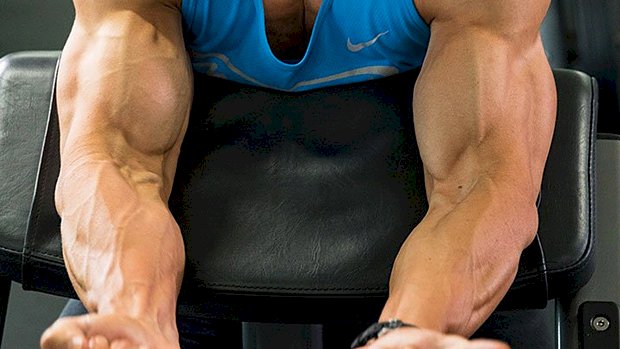 Back Off! Back-off sets are usually the first “finisher” a lifter learns. That makes sense because back-off sets are somewhat instinctive. Even someone who’s never read any articles about lifting will eventually stumble onto the technique all on their own. You do your 3, 4, or 5 heavy work sets and then, maybe having failed to get a satisfying pump, you reduce the weight for a final set and piston away until your gloriously blood-engorged muscles flame out. It’s bodybuilding’s version of an orgasm, complete with an O face. We’ve always assumed back-off sets work because, to a point, more volume is generally good, more time-under-tension is good, and a final set done with lighter weight and a greater number of reps taps into muscle fibers that only participated casually, if at all, in your main work sets. Even so, part of us wondered if these sets really did do anything to make muscle grow, or worse yet, were detrimental to muscle growth because maybe the back-off sets tapped too far into our recovery abilities. To find some answers, I dug up an older study conducted by some Japanese researchers who were also curious about back-off sets. What They Did Goto, Nagasawa, and their colleagues recruited 16 men and assigned them to one of two groups: Hypertrophy/Strength (HS) Hypertrophy/Combination (HC) During the first 6 weeks, both groups did leg presses and leg extensions using a hypertrophy-style regimen to gain muscle (10-rep maxes, short rest intervals, and progressively decreasing loads). After the 6 weeks were up, the HS group continued to work out another 4 weeks, this time performing a strength program where they did 5 high-intensity (90% of 1RM) sets. The HC group also continued to work out for another 4 weeks. Like the HS group, they also did 5 high-intensity sets, but they added a single set of low-intensity, high-rep work (the back-off set). Throughout the study (at weeks 2, 6, and 10), the researchers measured the muscle strength, endurance, and cross sectional area of the participants’ leg muscles. What They Found After the initial six weeks (during which the participants had practiced identical exercise programs), there was, predictably, no significant difference in the percentage changes of all variables between the two groups. After 10 weeks, though, the group that had switched over to the back-off set protocol (HC) showed significantly larger increases in leg press 1RM, maximal isokinetic strength, and muscular endurance in the leg extension. The cross sectional area of the quadriceps muscles of the HC group also “tended” to be larger. The researchers concluded the following: “A combination of high- and low-intensity regimens is effective for optimizing the strength adaptation of muscle in a periodized training program.” How to Use This Info There are various ways to do back-off sets. Powerlifters might do some work sets at 90% of their 1RM and then do a couple of doubles or triples at 90% of their work sets as back-off sets. This is done to build additional strength. Bodybuilders, however, generally drop their working weight by anywhere from 35 to 50% for their back-off set and aim to pump out an additional 25 reps or more until the muscles get all angried up and they can’t do any more. This, hopefully, gets them results similar to those noted in the Japanese study. One back-off set should suffice and while many lifters might choose to do them only on bench presses (mainly because they don’t have the cojones to do them on squats), there’s no real reason, outside your personal recovery limitations, that you can’t do a back-off set for nearly every body part in a workout. Most lifters wait 30 to 60 seconds between their final heavy work set and their back-off set, but many prefer the additional agony imposed by doing a back-off set immediately after the last heavy
Origin: Tip: Do This Finisher, Pack on Muscle
Tip: Your Morning Orange Juice May Be Killing You
 Juiced to the Gills It’s hard to find a woman wearing yoga pants who isn’t carrying a Big Gulp-sized cup of blended fruits and vegetables. They’re practically inseparable – kind of like Thor and his hammer – but there are plenty of men that seem willing to swill this stuff too. They all put their heads on their pillows at night and sleep peacefully, believing that all that juice is helping them thwart a whole spectrum of diseases and ailments, along with making them slimmer with breath that smells like an Air Wick plug-in dispensing the clean scent of fresh-cut hay. They probably shouldn’t sleep so soundly, though. Juicing and plain old fruit juice carries a host of potential problems. Drinking too much of it or drinking it too frequently can make you pre-diabetic, fat or fatter, wipe out the microflora in your gut, and, according to new research, possibly increase your chances of dying by 24%. (1) It’s all because of the sugar they contain and, lest you think that sugar from pulverized fruits and vegetables is somehow better for you, realize this: All sugar, whether it’s from fruit, honey, Coca-Cola, or high-fructose corn syrup (HFCS): “Delivers the same sugars in the same ratios to the same tissue within the same timeframe to the same metabolic pathways.” (2) A Crock Filled With Horse Manure Instead of Honey I know what you’re thinking: “How can honey be just as bad as HFCS? For that matter, how can HFCS be the same as sugar from fruits, regular corn syrup, or table sugar? That’s certainly not what I’ve read.” The simple answer is that what you’ve read is a crock, like when your older brother swore to you that the movie “Ratatouille” was based on a true story. The more complicated answer is that regular corn syrup doesn’t have any fructose in it at all. It’s 100% glucose. By that standard, ANY corn syrup that’s manufactured to contain any fructose is automatically classified as HFCS. Consider that the HFCS most commonly used in industry contains only 42% fructose, while the much-revered-by-granola-crunchers honey contains 49% fructose. (3) Even plain old table sugar is a 50/50 blend of glucose and fructose. And yeah, fructose is metabolized differently and can more directly impact blood sugar than glucose in the short run, but the overall metabolic effects are the same as you get from any type of sugar. All of this begs the question, why then is HFCS so feared? The problem originated with a 2004 study that correlated America’s increasing fatness with the rise in HFCS production, but as we know, correlation doesn’t always mean causation. Hell, you could have made a similar case that America’s fatness was in fact caused by decreased use of the 90’s slang term, “Boo-Yah!” Again, correlation but not necessarily causation. A 2014 review in the journal Diabetes Care tried to smack down the fructose myth by writing: “The belief that sucrose is metabolized differently than HFCS is a myth. No study has shown any difference between the two… nor is there any difference in sweetness or caloric value.” (4) That means that all sugars, regardless of where they come from, can do equal amounts of harm, but juicing in particular poses a litany of unique problems. What’s the Deal with Juices? When you Osterize your fruits, you obliterate all the fiber so that the microflora in your gut have little to munch on. They end up kicking tiny buckets and their bodies are loaded onto the turd train leaving for Porcelain City at 7 AM. Not only that, but the carbs are so bladed up, so cut up into teeny-tiny pieces, that they can actually bypass a lot of the digestive process. That means insulin surges. Big ones. If the surges were tsunamis, your uncle’s goat farm in Nebraska would be washed away. Much of that huge bolus of sugar gets hand delivered to the liver, where it’s converted into fatty acids and then sent to your thighs, butt, waist, or wherever else you don’t want it, for storage. This grinding up also affects the volume of whatever fruit’s juice you’re swilling. Un-pulverized fruits and vegetables take up a lot of space and push against the walls of your stomach, which tells the brain to lay off with any more food. Not so much with juices. You might be able to eat a few whole kiwis, but you can probably drink a considerably larger number of them. More fruit equals more calories. More fruit equals more sugar. And more sugar is, as you know, a problem. You’re probably still clinging to the notion that the sugar in juices can’t be as bad as those in sugar-sweetened beverages like Mountain Dew, Coco-Cola, or Red Bull. They are. In terms of long-term effects on diabetes and overall mortality, there’s no difference between the two categories, at least if you believe the results of the big study I mentioned above. Sugar’s Current Employer is Death Researchers from Emory University, writing in JAMA, detailed the results of a study of 13,400 US adults over a mean of 6 years. (1) They found that each additional 12-ounce
Origin: Tip: Your Morning Orange Juice May Be Killing You
9 Superior Exercises for Abs and Obliques
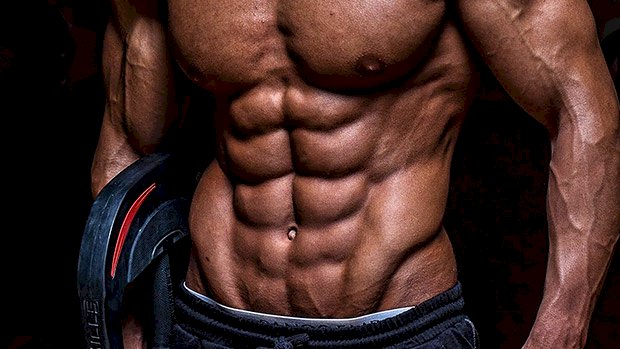 You’ve seen them before: Planks and anti-rotation or Pallof presses. They’re isometric exercises that require your abs and obliques to work by preventing your torso from side bending or twisting. They’re fine exercises, especially if you’re a beginner in your first weeks of training, or even if you’re an advanced lifter who simply enjoys them. Problem is, they’re overrated, and as a result, overused. The good news? You won’t need to do them if you’re already doing the upper-body exercises highlighted below. If you find planks and anti-rotation presses just as exciting as watching grass grow, you can swap them out for other things. The exercises listed here are more interesting and efficent options, and just as effective at creating an anti-spinal movement challenge on your abs and obliques. When it comes to program design and exercise selection, I follow the principle of minimizing redundancy and maximizing efficiency. These exercises minimize redundancy because they’ll give you the same core training benefits as side planks and anti-rotation presses, plus help you maximize your training efficiency by challenging your upper-body pushing musculature. Better Anti-Rotation Exercises These variations create a significant anti-rotation challenge on your torso. So if you’ve done them in your workout already, the Pallof press is just, well, redundant. 1 – Lock-Off Push-Up Can’t do a one-arm push-up yet? Try this. It’s a little easier to master than the one-arm push-up. Press up with one hand on top of the platform, kettlebell, or medicine ball. At the top of the push-up, lock off by fully straightening the elbow of the arm resting on the platform or ball. Place the other arm at your chest and pause for one or two seconds at the top of each rep, then slowly lower yourself. Do half the reps with your right arm elevated and the other half with your left arm elevated. Don’t allow your shoulders or hips to rotate at any time; keep your torso parallel to the ground throughout. 2 – One-Arm Cable Press This is one of the most underrated exercises. You likely don’t see it used in your gym or promoted online nearly as much as Pallof presses. The one-arm cable press places just as much, if not more, of an anti-rotation demand on your hips and torso musculature. For one thing, you can use heavier loads due to the split-stance position. And it gets more done than the Pallof press because it also involves the upper-body pushing musculature, plus the calves and hamstrings of the back leg, which prevent you from being pulled backward. It’s also not as boring to perform as the Pallof press. With the cable handle in your left hand and your elbow at roughly a 45-degree angle from your body, split your stance by putting your left leg behind your right. Keep your front foot flat and your back heel off the ground. Press the cable straight out in front of you. Slowly reverse the motion and bring the handle back toward you in a row-like motion while extending the opposite arm. Don’t allow your shoulders or hips to rotate more than a few degrees. Lean slightly forward to move heavier loads. To prevent the cable attachment from digging into your arm, use an extender strap (which can be purchased at a store that sells rock-climbing gear) between the handle and the cable attachment. You can also do this exercise with your lead leg on the same side as you pressing arm. This increases the demand on your torso muscles since the cable is trying to turn you in the opposite direction of your foot. Therefore, it can’t help you as much as when the cable is pulling your towards you back leg. 3 – Cable Bar Press Since it’s a variation of the one-arm cable press, it offers the same benefits, but also adds an element of reciprocal movement for your opposite arm. You’ve got to pull the bar as your pressing arm pushes it. The same general set-up and coaching tips from the one-arm cable press also apply here. As with the one-arm cable press, you can also do this exercise with your lead leg on the same side as your pressing arm, further increasing the demand on your torso. However, the tradeoff in doing so is that you can’t use as much weight. 4 – Reciprocal Cable Push-Pull If you don’t have cable bar, you can use this variation, which involves a reciprocal push-pull motion that also lights up your torso muscles to resist rotation. Once again, you can do this with your lead leg on the same side as your pressing arm, which will further challenge your core to maintain your torso position. 5 – One-Arm Push-Up The one-arm push-up is an advanced exercise, partly due to its high demand on the torso. However, there are ways you can gradually progress to doing your first one. And if you’re already a pro, there are ways to make it even more challenging. My guide on one-arm push-ups will tell you everything you need to know. Exercises that Replace Side Planks These exercises can effectively replace side-planks
Origin: 9 Superior Exercises for Abs and Obliques
Tip: How to Do a Regular-Guy Deload
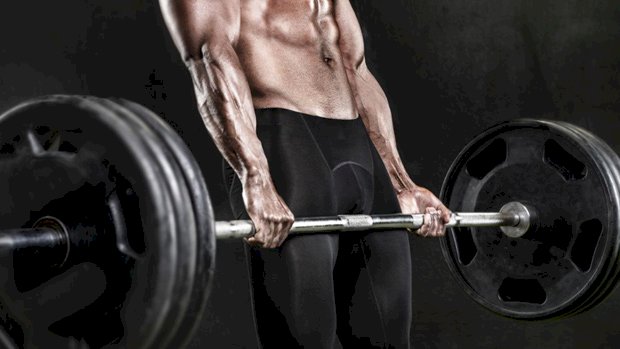 Deloads For Non-Competitors In a perfect world, we’d be able to figure out the exact number of days a week to train, with the exact amount of volume that stimulates growth and improves performance without ever feeling burned out. And in that perfect scenario training would never have to stop. Unfortunately we don’t live in a perfect world, so mental, physical, and emotional burnout from training is a real thing. For the non-competitor (who isn’t trying to time a training/recovery cycle to create supercompensation for competition) what are the benefits of deloading? It gives the sympathetic nervous system a break. It gives the lifter time to reflect on the previous training cycle. That reflection allows for better planning on the next training cycle. It gives the joints and connective tissue a break. You only have so many revolutions in those things. It allows for higher levels of strength and fitness to manifest through the multifaceted elimination of fatigue (systemic, muscular, mental, emotional). Sort of like a mini supercompensation. Here’s some real talk for you. If you don’t pay attention to the signs of being rundown from training, then you’re probably going to end up getting some “forced rest” from injury. Training is a metaphysical undertaking, especially if you’re training hard. That taxes virtually every physiological system you have. So it just makes sense to take some time off to allow for total systemic recovery. So When Should You Deload? Here’s the method I use: Every six weeks, do some self assessments. My self assessment was to ask myself if I was hungry or full. Confused? Lemme explain. If you’re living in primal times and need to find food, then dopamine is going to be elevated because finding food is kind of important when it comes to survival. It’s the neurotransmitter for motivation, achievement, and attainment. Once you get food, and eat a lot of it, your serotonin levels will rise and you’ll feel satisfied. I’m oversimplifying, but the point is that the brain is constantly analyzing in order to assess the risk of pain or injury against the satisfaction of winning or achievement. Your brain knows when you need to rest. If you’re paying attention to that feedback you’ll heed it and rest, not be a dumbass and keep pushing through. At six weeks, I’ll analyze if I feel full or if I’m still hungry. Do I look forward to walking into the gym to load up the bar (hungry), or would I rather be doing anything other than that (full)? Do my joints hurt? Is my perception of effort really high compared to what it was last week or the week before, i.e. “these workouts feel tougher than they did two weeks ago.” When I realize I need to deload, I take at least three complete days off. If I need more, I take it. I’ve taken as much as ten days off. I just didn’t want to go back into the gym during that time. I wait until enthusiasm returns. That means I’m not ruled by the ridiculous notion that all of my gains are going to dry up while I’m resting. Once I start feeling the itch to return to the gym, I don’t. That’s right, I don’t yet. I sit down and write out my potential programming and think about what it is I’d like to accomplish in the next training cycle. After that, I use one to two weeks of break-in training. This is where I slowly ramp the effort and intensity back up. There’s a myriad of ways to deload, but this is the way I’ve found that works best. Regardless of what method you choose, adhere to the full three-days off no matter what your deload protocol might
Origin: Tip: How to Do a Regular-Guy Deload
Shock Training for Superhuman Power
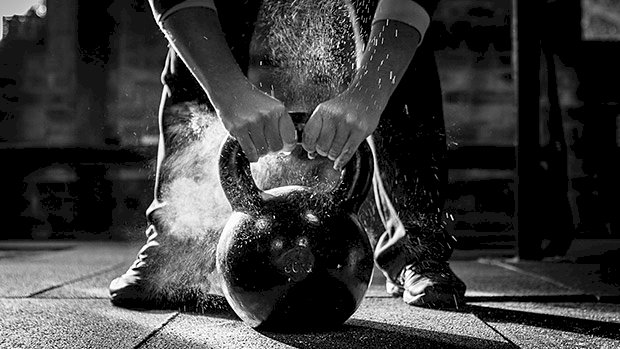 Although you’re probably tired of hearing about “secret” Soviet training programs, the Soviet track and field teams really were dominant in the Olympics. One reason is the work of obsessive sport scientist Yuri Verkhoshansky who created a hugely successful training protocol based on jumping drills. He’d have athletes drop from 60-inch boxes in what he called “depth jumps.” Specifically, an athlete drops off a box, lands briefly to absorb the shock, and then immediately jumps as high as possible, which led to a 14% increase in maximal strength among highly-trained volleyball players. Even so, I wouldn’t recommend them for most athletes unless they’ve got great squat form and strength. There are, however, safer alternatives. Lower Body Shock Training – Kettlebell Over-Speed Eccentrics We can activate the same beneficial mechanisms found in the depth jump with Russian kettlebell swings. How? By placing an emphasis on the downward (eccentric) portion of the swing. Instead of absorbing the weight of our own body, as we do in depth jumps, we absorb the shock of the kettlebell when it switches directions. The more we force the kettlebell down, the greater the plyometric effect. In the lab, Brandon Hetzler found that experienced kettlebell instructors could swing a 32-kilogram kettlebell back down with a force equivalent to three times their bodyweight. Most of the beneficial effects of kettlebell swings come from when we reverse force, so the more force there is to reverse, the more strength (and explosiveness) we’ll gain. Kettlebell swing over-speed eccentrics can be done in three ways. Accentuate the Eccentric:Normally, we let the kettlebell float into position and let gravity take it back down into our next swing. However, we can actively accelerate it downward by forcefully “throwing it” between our legs. Partner Assisted Downward Throw:In this scenario, we have a person stand on the side and push down on the kettlebell when it reaches the top. Band Assisted Eccentric:This version involves wrapping a band around the kettlebell and standing on the band. Once the kettlebell hits the top of the swing, the band accelerates the kettlebell back down. Don’t do these over-speed eccentrics with higher reps. You’re taxing the nervous system a lot more than you would with regular swings. Ten or fewer reps is a good rule of thumb. Upper Body Shock Training – Drop Push-Ups Verkhoshansky also created multiple apparatuses to create a similar “depth jump” effect with the upper body. Picture a bench-press type device that drops the weight down on top of you and then allows you to explode it up. (Please don’t try creating this type of gizmo at home as Verhoshansky’s device had built in safety features.) However, we can mimic this effect with drop push-ups. To do these, create a stable base of about 12 inches high, just outside your normal push-up stance. Position yourself atop the stable base. Drop off the base. Catch yourself (and simultaneously absorb some plyometric force) before you do a face plant. Explosively push up as quickly as possible (similar to the depth jump). Once the rep is finished, place both hands back on the base and start the next rep. An Explosive Program Doing this type of “depth jump” training can build enormous amounts of explosiveness. It can also serve as a nice adjunct to your traditional training by providing a bit more explosive power. For most people, I’d suggest doing the following program to break out of your plateaus. It takes about 6-10 minutes and should be done three times a week. A note of caution, though – this program is only for trained athletes who exhibit good control of their movements: On odd minutes, do 10 kettlebell swing over-speed eccentrics. On even minutes, do 10 drop push-ups. Continue back and forth for the prescribed number of rounds. On Mondays:6 rounds On Wednesdays:10 rounds On Fridays:8 rounds Why This Works There are three main reasons why kettlebell swing over-speed eccentrics and drop push-ups (and depth jumps, of course) build explosiveness and strength: Greater CNS Stimulation:The shock of the sudden reversal of force leads to greater muscular excitation. The more frequent the muscle nerves fire, the more strength you build. Myotatic Reflex:As the muscle lengthens, the muscle spindle is stretched and its nerve activity increases. Powerlifter Andy Bolton utilizes this reflex. He performs three hamstring stretches immediately prior to executing the lift, performing the lift on the execution of the third stretch. Neurogenic Effects:These occur when the time between stretching the muscle and the subsequent shortening decreases as the pre-motor cortex anticipates the shock. This means our reflexes get faster. In general, the more we do these plyometric-type movements, the more our body builds explosive power. This explosive power can help our absolute strength (deadlift), speed strength (clean), and pure speed (sprinting). Basically, we’re
Origin: Shock Training for Superhuman Power
Tip: What Powerlifters Can Learn From Bodybuilders
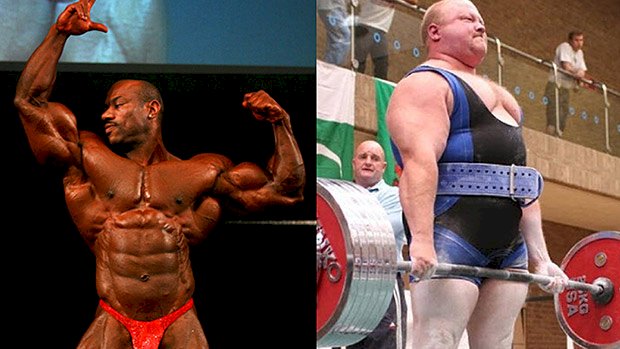 The Tale of Two Pauls I’ve competed in both powerlifting and bodybuilding, and each endeavor taught me a lot about the other. One thing that Powerlifting Paul learned from Bodybuilding Paul was how important it is to train muscles and not just movements. That was a huge lesson. Once I left powerlifting behind and dove back into bodybuilding, I really saw the vast differences in the two. Outside of the fact that you’re using barbells in both, they couldn’t be any more dissimilar. With powerlifting you want to put the body in the most mechanically advantageous position as possible to move the greatest amount of weight. It’s actually quite counterproductive, and I see a litany of competitive powerlifters show up on social media each week with new tears and strains. Powerlifters should have some periods where they think and train like bodybuilders. More muscle means better leverages, and more muscle increases maximum strength potential. When you’re trying to focus on muscular development (bodybuilding), you actually want to put that muscle into the least advantageous position so that it has to work much harder during the movement, i.e locking down the joints in a way that reduces the involvement of other muscle groups. Problem is, most powerlifters become very one-dimensional in their training thoughts. I fell into the same trap. I forgot that despite the fact that maximal strength is largely neural based, the muscles are still moving the weight. Newsflash, right? I continued to suffer from adductor strains when my squat would begin to climb. Simply training the adductors on the “good girl machine” rectified that problem. I had a similar problem later with my quads. Weight would go up, quads would sustain a strain. I knew my quads needed to get stronger, but I was already doing high-bar paused squats with over 600 pounds, and front squats with 455 for reps. Surely I had strong quads. Wrong! Due to years of perfecting my squat for my leverages, I’d really learned how to load up the hips and rely on them to do the brunt of the work. This meant my hips were capable of squatting 635 pounds, but my quads were capable of, well, far less. Which is why anything in that range often resulted in me straining a quad. I decided one day to rectify this and remove my superlative birth-giving hips from the equation. This meant hack squats, where the hips couldn’t contribute as much, and my quads would be forced to bear the brunt of the load. It wasn’t much of a load. I struggled with three plates for a set of ten on hacks. That was a very humbling day. But it also let me know I was on the right track. I knew that if I got strong as hell on hacks, then my quads would be able to contribute to my squat and not be the weak link. I followed up all of my squats with 1-2 sets of hack squats for 10-15 reps. I was living in the “anything over 5 reps is cardio” mantra at that time, so I can’t explain in words how awful this was. After a few months of being diligent with this plan, both my hacks and my barbell squats ascended. I hit a gym-best 660 pound raw squat with good speed months later. My quads stayed attached to the bone, thankfully. 12 Weeks a Year All powerlifters should be training for muscle growth and bringing up weak muscle groups for at least one twelve-week training cycle during the year. I believe both powerlifters and bodybuilders can benefit from having training cycles where they focus on the other objective: Powerlifters should have some pure hypertrophy training cycles to shore up weak links. Bodybuilders should do some training cycles where they focus on getting stronger on a few basic lifts. Doing so will carry over into moving heavier loads in the traditional bodybuilder rep ranges, which should manifest into more muscle
Origin: Tip: What Powerlifters Can Learn From Bodybuilders
 All about sport xlsport.club