
 How accurate are those watches that tell you how many calories you burned during a workout? Well, not really accurate. A friend of mine recently told me that she did a lifting workout that burned 960 calories. And while I’d like to believe that – because it would make lifting the best fat loss tool known to man – it’s simply not realistic. It’s hard to know exactly how many calories you burned during a workout. It depends on the exercises (a squat uses more fuel than a curl), the number of reps completed, the training methods used, and how much muscle you recruited during each rep. For upper body lifts, a hypertrophy set lasting 40-60 seconds might expend 7-10 calories while it can get as high as 40 calories for a set of squats lasting one minute (Victor M. Reis, R. S. 2011. Energy Cost of Resistance Exercises: J Hum Kinet. 29A: 33–39). If you do 4 work sets like that, we’re talking about 160 calories. If you have another big lift in your workout, done with the same parameters, that could add another 160 calories. Then if you have four smaller exercises it could add 350-400 calories. Such a workout would expend 650-700 calories and it’d be one helluva workload. A hypertrophy workout for the upper body could expend 250-400 calories more than your normal caloric expenditure for the duration of the workout. For the lower body, it could burn up to 500-700 calories more than your normal caloric expenditure, and a whole-body workout could be in the 300-500 calorie range. I believe that the caloric expenditure estimated by those watches/apps use mostly heart rate as the measure for energy expenditure. These formulas were developed with cardiovascular exercise in mind. In that type of exercise, the heart rate is directly proportional to the rate of energy expenditure because the heart rate increases only in response to the need of the heart to pump blood to the muscles to supply oxygen to produce fuel. However, with resistance training the increase in heart rate can also be due to a high release of adrenaline. Furthermore, heart rate might spike for the duration of the set and stay elevated because of the adrenaline/neural activation during the rest periods, despite no work being done. As a result, these instruments will dramatically overestimate how many calories you’re burning during a lifting workout. Why Is That a Problem? By giving the impression that you’re burning a metric ton of calories, it might lead you to overeat or overindulge. “I just burned 1200 calories in my lifting workout! I can eat that burger since it only has 600 calories!” No, you can’t. In the grand scheme of things it’s not the end of the world, but it’s still
Origin: Tip: Is Your Tracker Making You Fat?
Tag: Your
Tip: Build Your Back With DUDS
 Try this lat-dominant drop set on back day after you’re done with your heavier, progressive-overload work. Pulling For The Pump Don’t let the “DUDS” acronym fool you: they’re far from a dud finisher. Pick literally any lat pulldown or pullover variation and do this: Do an all-out set to failure (5 to 8 reps). Cut the weight in half and double the number of reps (10 to 16). Immediately cut the weight in half again and double the number of reps (20-32). If you need to take mini 10-second breaks to finish, go ahead. I’d suggest doing it on a well-designed pullover machine. Think of it as metabolic-stress type work, which should come at the end of a workout and only be done for ONE set. Don’t abuse it! Maybe sprinkle it in every other
Origin: Tip: Build Your Back With DUDS
Tip: Pull Your Way to Growth
 One of the things that separate the wolves from the sheep in the iron game is back development. A guy who puts in years grinding away on his upper back and lats will end up with a physique that ultimately blows away the one developed by the dude who’s just pressing, flying, and curling his way to mediocrity. So if you’re looking for more to do on back day, add this finisher to the mix. Just do ONE set at the end of your normal back workout. Pulldown Drop Set for Maximum Gains This is an efficient mechanical drop set requiring only a high pulley and a rope attachment. You won’t even have to change the weight. Do the following: Straight-Arm Pulldown:12-15 reps to failure (upright position) Straight-Arm Pulldown:max reps (bent over position) Bent-Over “J” Pulldown:max reps Hybrid Motorcycle Row/Face Pull:max reps Bent-Over Lat Pulldown:max reps Take no rest between exercises. This protocol has a nice flow to it and you’ll appreciate the
Origin: Tip: Pull Your Way to Growth
Tip: Strict Diets vs. Your Metabolism
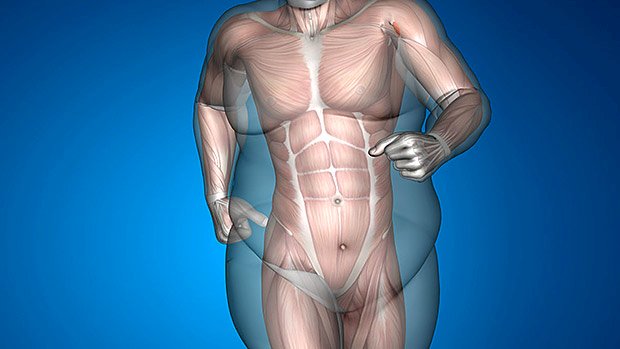 Can You “Break” Your Metabolism? Some people say that a really strict diet – like one you do to get ready for a bodybuilding show – will wreck the metabolism. Will it? Well, it probably won’t… at least not in the way most seem to think. There are definitely some issues you can induce with extreme dieting and exercise, but “wreck” is probably too strong a term. That assumes you broke something. The metabolism doesn’t break. In fact, it’s doing exactly what it’s designed to do. Let’s get some definitions out of the way, because that’s where most of the confusion starts. You’ve likely heard of the admittedly vague and non-medical terms like “adrenal fatigue,” “starvation mode,” and “metabolic damage.” These are more marketing lingo than medical terminology. But that doesn’t mean they don’t have some utility. In medicine there’s often dysfunction before disease. For example, if you have a fasting blood sugar level above 126 on two separate occasions, then I can diagnose you with diabetes. However, if you have a blood sugar above 100 but below 125, what do I call that? You don’t yet have diabetes, but you obviously have some dysfunction. We call these a lot of different things in medicine: prediabetes, dysglycemia, impaired glucose tolerance, or something else. Same thing with the metabolism. When you have difficulty sleeping, insatiable hunger, unstable mood, unpredictable energy, uncontrollable cravings, and you’re no longer responding to the same calorie deficit BUT your blood labs and vitals are all normal, what do we call that? There’s obviously something going on, but we can’t put a diagnosis on it, can we? So, we use some descriptive terms like metabolic compensation, metabolic resistance, metabolic dysfunction, or metabolic damage. Or like you, we just say, “Damn, I think I wrecked my metabolism!” You didn’t. What happened is a predictable phenomenon and we know some (although not all) of what it’s about. Part of it is what research calls “adaptive thermogenesis.” What Happens During Adaptive Thermogenesis A competition diet is well-known for inducing a very wide calorie cap. You cut calories down and you expend a lot of energy through weight training and/or cardio. In the same way not changing your car’s oil or filling up with gas will cause the engine to conk out, the body does not respond well to this large energy discrepancy. In response it will increase hunger, reduce motivation, lower energy and (most insidiously) decrease its metabolic output. It does that in many ways: It reduces resting energy expenditure through downward regulation of thyroid and other hormones. It increases hunger and cravings. It sneakily causes you to move around less the rest of the day. If you normally get up and walk around 100 times per day you’ll find that it’s now only happening 25 times per day. If you move in your sleep that will stop as well. You’ll also burn less during exercise, something research calls “constrained caloric burn.” What’s worse, after the show, when you no-longer have the external motivator and would prefer to eat like a human being, you’re primed to gain all that weight back plus some. I’ve come to call this the “metabolic credit card effect” –– you get short-term results, but you pay steep metabolic penalties later. Anyone that’s seen a first-time figure competitor blow up like a helium balloon post competition knows this well. Is that a wrecked metabolism? I suppose you could describe it that way, but another way to look at it is your metabolism is doing just what it’s designed to do. It feels it needs to recover that debt. After all, it evolved in a feast and famine reality and it thinks it’s doing you a favor by mitigating the famine and maximizing the feast. How to Limit Metabolic Compensation The good news is there are some ways to reduce metabolic compensation. Here are some things to do: Do your best to maintain as much muscle as you can. The metabolic rate will not slow as much and be more resistance to fat regain. This means to make weight lifting the dominant part of your fitness regime during fat loss. Cardio becomes a little more important after weight loss, when the metabolic rate has lessened. You may want to save your cardio for after, rather than during the competition diet. Eat more protein, see the first point above about maintaining muscle mass. And probably increase the amount of protein as a percent of total calories. Do this during, but perhaps more importantly, after fat loss. Cycle the calorie gap, having times where you’re in a strong deficit and other times where you’re in no deficit at all. The recent MATADOR study (minimizing adaptive thermogenesis and deactivating obesity rebound) showed this strategy got better results, had less metabolic adaptation, and much longer lasting results. Don’t eat like an asshole when it all ends. Focus on blander foods and less variety of them. Doing the traditional burger, pizza, and cheesecake binges will trigger the
Origin: Tip: Strict Diets vs. Your Metabolism
Tip: Change Your Attitude About Achy Joints
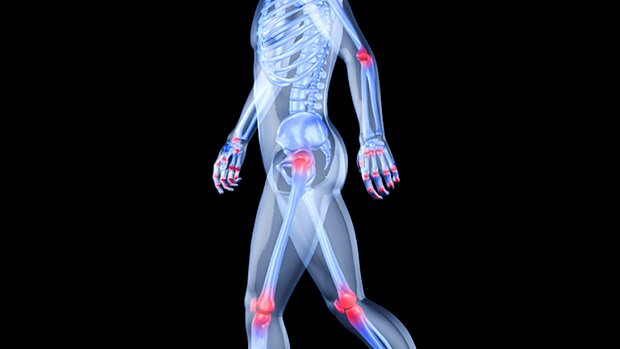 Screw Your Achy Joints If you’re over 40, it’s no excuse to let up. Everyone who’s been doing any serious lifting for at least 10 years wakes up in the morning feeling like they spent the previous day trying to ride the back of Bodacious the bucking bull, and was flung clean over the stands into the deep-fried Twinkie concession stand. Get over it. Sure, you can do your stretching, that hot Yoga where they treat you like a pork dumpling, or whatever rehab exercises fit the situation, but for the most part, you’re always going to hurt. The Two-Part Plan For Recourse 1. Simply get smart about it. Do exercises that don’t hurt the particular joint; use grips or foot positions that allow you to train with no pain; do a reduced range of motion, or lower the weights with a slower tempo. A good 4-second descent should take the strain off any angried-up tendon. And also… 2. Say goodbye to sets under 5 reps. This is your one, big, lifting concession to Father Time. You should forget about doing sets for fewer than 5 reps. There’s just no need to use such heavy weight, and the risk of suffering an injury that you can’t work around, like tearing tendons or ligaments that just aren’t as spry as they used to be, is just too great. No worries, though. You can stay plenty strong by devoting some time to sets of 6 to
Origin: Tip: Change Your Attitude About Achy Joints
Tip: Fix Your Rounded-Back Deadlift
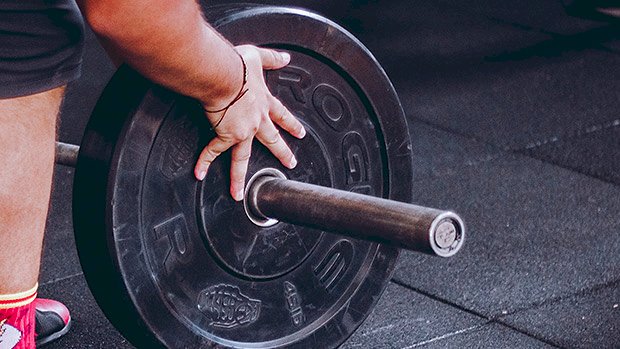 Rounded deadlifts are an epidemic. You can’t scroll through Instagram for two seconds without seeing some bro attempting a max effort deadlift with their spine bending like a accordion. A little rounding in the thoracic spine is actually okay, but most people round over at the lumbar region which turns an epic one-rep max attempt into a cringy display of a nearly snapped low back. Lumbar flexion during deadlifts occurs because of one of the following (or a combination): Weak or unsustained intra-abdominal bracing Weak spinal erectors Loss of tension in the upper back How to Fix It Here’s an odd trick I learned from powerlifter Greg Nuckols that fixes all of these common causes. (And this trick can be used for the squat as well.) Take a band and anchor it to a heavy weight in front of your deadlift setup. You won’t need a strong band. A light band goes a long way with this drill. Where you anchor the band will depend on how tall you are as well as your deadlift variation. If you’re doing a stiff-legged deadlift or an RDL where you’re more hinged over, you’ll need to anchor the band closer. If you’re doing something more upright like a conventional or trap-bar deadlift, the anchor should be further. Wrap the band around your neck and do a few sets with this setup. You’ll feel your entire posterior chain light up. Why It Works The band will pull on your spine from the top down. The tension reminds you to stay tight while strengthening your spinal erectors. This will fix both low back and upper-back rounding. Thanks to the band, your deadlift is now stable, safe, and no longer a joint-crumbling eyesore. For programming, do these before your actual working sets. Or if you struggle heavily with rounding your back, you can do all your sets with this setup. Your spine will thank
Origin: Tip: Fix Your Rounded-Back Deadlift
Worthy vs. Worthless Vitamins: Your Guide
 The 30-billion dollar a year vitamin industry is suffering from existential angst right now. Their collective stomachs are all aflutter because of the publication of a new study in the Annals of Internal Medicine that says vitamin or mineral supplements offer no discernible benefits; that they don’t reduce the risk of death from practically anything and they might, in fact, harm people. (1) Now all those supplement companies are wondering if they should instead start selling roofing materials or something else useful. I’ve got no solace to give. Unfortunately for the vitamin seller, yeah, most vitamins and mineral supplements are a waste of time. Some could actually harm you. And yeah, you’re often better off getting some vitamins, minerals, and other classes of supplements from whole foods. But there are notable exceptions. In those cases, it’s unrealistic or even plain daffy to rely on whole foods to fulfill all your supplement needs. Let’s take a look at some of the most common vitamins, minerals, and supplements and see if we can make some sense of it. Multivitamins – Forget About ‘Em I don’t think there’s a single reputable study that shows they’re effective, but we don’t need studies to come to this conclusion. There are just too many problems with multivitamins: The one-size-fits-all philosophy. The human need for the 24 vitamins identified by science is based on a bell curve and while it may hold true for a 150-pound municipal worker named Phil who lives in Akron, Ohio, they might not hold true for sweaty athletes, bigger (or smaller) people, or you. Giving the same vitamin combo to every man or woman alive is like making only one size of underwear for everybody – fine for some, but uncomfortable, unworkable, and in the case of vitamin-caused skin reactions, even unsightly for others. So many possible interactions. Vitamins A, D, E, and K are fat-soluble and, as such, are best taken with food. Iron shouldn’t be ingested with coffee or tea because the tannins in them interfere with absorption. Likewise, iron blocks the absorption of zinc and copper. Vitamins E and A can gang up on K. Cherry picking and not seeing the big picture. Maybe, just maybe, these nutrients aren’t supposed to be isolated and taken by themselves. Maybe they need to be taken in whole-food form to be truly effective. Maybe the nutrients need to work in conjunction with some (or maybe even all) of the micronutrients and phytochemicals intrinsic to the whole food source for them to work. Calcium – Forget About It Taking too much calcium (more than about 1,000 mg. a day) can be a huge problem. At worst, the calcium starts to accumulate on the linings of your heart and arteries so that they look like the tiled walls of a White Castle restaurant. The excess calcium might also form kidney stones or, on the less severe end of the spectrum, cause constipation. Calcium is one example where people really would be better off getting this crucial mineral from whole food. Here’s the thing: When you get too much calcium from foods (milk-based protein powders, dairy products), a fail-safe system kicks in and the intestines start limiting further absorption of the mineral. Not so with calcium supplements. They have no fail-safe system. The more you take, the more ends up in your urine, blood, kidneys, heart, and arteries. Vitamin D – Take It! The study from the Annals of Internal Medicine found that when people who weren’t deficient in vitamin D took vitamin D supplements, they had higher risks of death from all causes, particularly cancer. It’s important to realize that this study was based on people accurately remembering and reporting what they had eaten over a period of several years, so it’s easy to be skeptical, particularly when several other studies have shown that people who took vitamin D supplements lived longer, on average, than those that didn’t take it. Sure, ideally, we’d all lie naked in the sun like harp seals for at least 20 minutes a day so we could make our own vitamin D, but that just isn’t plausible for everybody, particularly if you live anywhere north of Memphis, Tennessee (about 2500 miles north of the equator) or, for that matter, anywhere south of Santiago, Chile. (2) The sun just doesn’t get high enough during winter months in those areas for all those vitamin-D generating UVB wavelengths to benefit us. Never mind persistent clouds. The Chippewa tribe of Michigan had an old saying: “If the shadow of a groundhog is longer than it is tall, its body isn’t making vitamin D.” Alright, the Chippewa didn’t say that, but if you apply the “longer than tall shadow” thing to yourself, the advice pretty much rings true. If you can’t regularly spend a few minutes in the sun, or you’re a mole-like gym person who rarely see any lights that aren’t fluorescent, you should probably take vitamin D year-round. Vitamin B3 (niacin) – It Depends If you’re over 40 or 50, or if you’ve got cholesterol issues, think about
Origin: Worthy vs. Worthless Vitamins: Your Guide
Tip: Over 40? Build Your Work Capacity
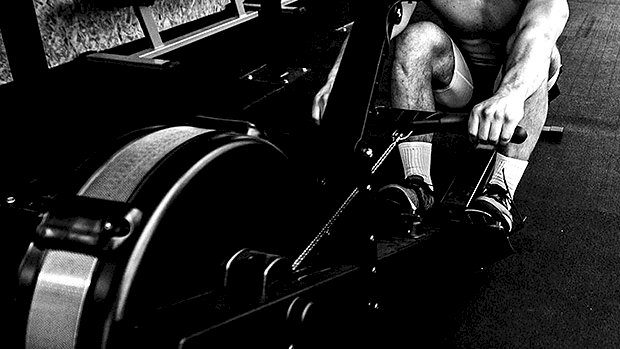 Conditioning Matters Even More Now I realize there are some differences between 25 and 40, and probably a lot of differences between 25 and 50, but not as many as you might think, especially if you have at least 10 years’ worth of training experience. But you can’t train hard if merely pulling your pants on makes you wheeze. You need to do cardio or metabolic conditioning or whatever term you feel comfortable with. How do you expect to work hard if your lungs don’t have the sass to carry on? Moreover, your cellular batteries – the mitochondria – start to wear out, get lazy, take extended vacations in Cabo, or die as you get older. They need a kick in the pants so they get to multiplying, and that’s what intense exercise provides. Fear not, though, because you don’t have to devote hours and hours to all that tedious, conventional aerobic training stuff where you sit on a stationary bike for an hour as your panini-ed prostate swells up to the size of one of those sand-filled Bulgarian bags. Options That Don’t Suck At least three times a week, get on the treadmill, rower, or yes, stationary bike for a measly 10 minutes for some HIIT-style training. Focus on all-out efforts of 20 seconds, followed by 60 seconds of “active recovery.” On a treadmill, that might mean setting the speed at a leisurely 3 miles per hour and then cranking it up as fast as your little stubby legs allow for about 20 seconds, after which you’d drop the level back down to 3 again for a minute or two before you do another round. You could do the same thing on a stationary bike or rower, or you might prefer short sprints followed by walking-recovery periods. Alternately, you can crank up the incline on the treadmill to the Himalaya setting, or as high as it goes, and trudge uphill, Sherpa like, for 30 to 60 seconds before zeroing out again. This type of training has been shown to increase mitochondria. That, coupled with the increase in endurance you’ll experience, will allow you to lift as hard as you need
Origin: Tip: Over 40? Build Your Work Capacity
Tip: Slow Cook Your Biceps for Growth
 Biceps Rotisseries Let’s “slow cook” your biceps, as well as the brachioradialis, via a lot of rotation and change in hand position. The Protocol Dumbbell Reverse Curl:6-8 reps with an estimated 12-rep max weight Dumbbell Hammer Curl:6-8 reps (same weight) Dumbbell Curl:6-8 reps (same weight) Dumbbell Cheat Curl:6-8 reps (same weight) 90-Degree Alternating Pronation/Supination:6-8 reps (after last cheat rep) 90-Degree Isometric Hold:Hold for as long as possible (after last supination and pronation) You’ll use the same weight throughout and there’s no rest between the variations. Rest 90-120 seconds and repeat. You’ll likely have to drop down a set of dumbbells to do a second series. (You’ll only need two “sets” of this at the end of your workout.) Leave your ego at the door for this one. This protocol is straight-up metabolic stress, skin-splitting pump work! If you need to use 15-20 pound dumbbells, then so be it. Now isn’t the time to try and impress the Gym Shark girl next to you with huge weights. Weight Selection is Key on the First Exercise You want to have several reps in reserve. If you go too heavy on the reverse curl and get too close to failure, you won’t last and won’t hit the rep targets on the movements that follow. Trust me, by the third or fourth movement, it’ll get plenty hard. Note on the Cheat Curl You want to hip hinge just a little and “pop” up powerfully. Pause the contraction and then do a very slow and focused
Origin: Tip: Slow Cook Your Biceps for Growth
Tip: How to Diagnose Your Bench Press Problem
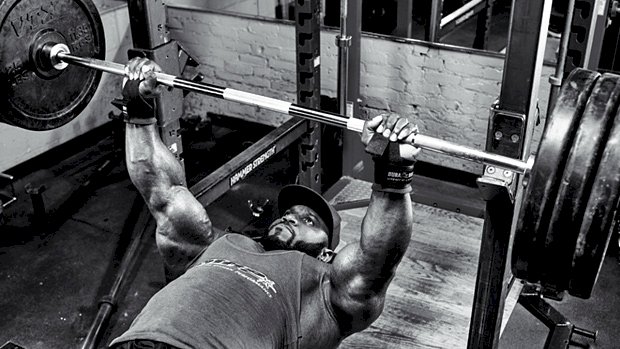 This table lists the most probable issue causing each sticking point on the bench press. Now, there could be something more complex going on, or a technical issue that’s more unique to you. But most of the time, I’ve found that strengthening the sticking point area will solve the problem. So take a look at this table, determine where your sticking point is, take note of the causes, and use the appropriate assistance exercises to strengthen that area. Bench Press Sticking Point Causes Assistance Exercises Breaking off from chest 1. Lats weak or not properly engaged 2. External shoulder rotators 3. Upper traps more dominant than lower traps and rear delts 1. Straight-arms pulldown, Pendlay row, seal row 2. Cuban press, seated dumbbell snatch, external shoulder rotations 3. Trap-3 raise, rear delt machine, Powell raise, victory raise Lower third Pecs Wide-grip bench press, Spotto press, decline bench press, floor press, dumbbell bench press, bench press with Duffalo bar Mid third 1. Anterior delts 2. Rear delts and rhomboids (Shoulder lifts up from bench) 1. Incline bench press, slight incline bench press, lying front raise 2. Bench press with resistance band around wrists, rear delt machine, face pulls Upper third (lockout) Triceps, especially long head Close-grip pin press, lockout bench press, close-grip floor press, close-grip decline bench, overhead triceps extensions If you’re unfamiliar with some of these exercises, use this list: Seal Row A seal row is a chest-supported row (using dumbbells or a bar) using a bench. Elevate the bench on blocks or plates. If you don’t have that setup, a regular chest-supported row will do. Cuban Press Trap-3 Raise Powell Raise Victory Raise Spotto Press Bench Press With Resistance Band Around Wrists Bench Press With Duffalo Bar Once you fix a muscle weakness, it’ll take some time to transfer those strength gains to the bench press. Your body will need to change the intermuscular coordination pattern. Don’t panic if your strength gains in pressing lag a few weeks behind your strength gains in the assistance
Origin: Tip: How to Diagnose Your Bench Press Problem
 All about sport xlsport.club