
 The Dawn of 30-Minute Workouts? When I first started lifting weights, I lifted for two hours a day, six days a week, because that’s what Joe Weider told me to do. Those weren’t his direct instructions, but that’s what was implied by the workouts of the professional bodybuilders featured in his flagship magazine, Muscle & Fitness. The trouble was, neither me nor any of the other poor newbies that followed that training template knew that all those freaks were on steroids. It just wasn’t talked about… ever. As such, we didn’t know that the drugs allowed them to get away with training so much and that we should have been following an entirely different set of rules. My two-hour workouts probably slowed my progress more than enhanced it, but worse than that was all the stuff I missed out on from being in the gym all the damn time. Missed parties! Missed weddings! Even missed funerals (sorry Ma, sorry Pa, sorry Aunt Trudy, sorry Duke)! I had so little spare time that the only woman whose touch I knew all those years was the female powerlifter whose calloused hand would sometimes brush against mine when she spotted me. For all that, I’ve often wished I’d put an axe in Joe Weider’s chest. Man, I’d do it now if I knew where he was buried and was willing to put up with all the flak from the woke people who’d be offended by my belated act of vengeance. Anyhow, as I grew more knowledgeable, my workout periods shrank by at least half and I made a lot more progress. Thank you, exercise science. But what’s this? A new study says I could probably halve my gym time AGAIN. It actually says that if I do multi-joint exercises, then all my single-joint exercises (biceps curls, triceps extensions, etc.) are a waste of time. That means no direct biceps work and no direct triceps work, among other things, and the findings even apply to steroid users, too. Could this be the dawn of 30-minute workouts? What They Did Brazilian scientists rounded up 30 male bodybuilders, each of whom had been training for at least three years. They split them up into four groups. The first group trained the primary muscle groups with nothing but standard multi-joint exercises for 8 weeks. The second group did the same multi-joint exercises for 8 weeks but added a few single-joint exercises to the mix. Now here’s where it got interesting. The third group mirrored the exercise protocols of the first group (nothing but multi-joint exercises) and the fourth group mirrored the workouts of the second (multi-joint exercises and single-joint exercises), but these two groups combined training with weekly injections of 600 mg. of a testosterone ester and 200 mg. of stanozolol. The workouts programs were fairly sophisticated. Each lifter worked out 6 days a week and they were required to vary rep ranges and rest intervals from week to week. A typical Monday/Thursday workout consisted of the following: A. Barbell Bench Press B. Incline Barbell Bench Press C. Military Press D. Pulley Elbow Extensions Since elbow extensions are a single-joint exercise, they were excluded from the workouts of both the natural and the steroid-assisted multi-joint exercise groups. Each lifter was also required to take in 2.5 to 3 grams of protein per kilogram of bodyweight. What They Found Adding single-joint movements to their workouts was pretty much a waste of time in both the “natural” group and, surprisingly, the steroid group. Those who did biceps curls made virtually the same amount of progress in both strength and size as the lifters who stuck to multi-joint movements. Those who did triceps extensions didn’t get any stronger – in their triceps or in their bench – than the lifters who didn’t do them. The steroid users, of course, made far greater gains overall than the natural lifters. The researchers wrote the following in their conclusion: “The addition of single-joint exercises to a resistance training program that already contains multi-joint exercises brings no additional benefit in terms of muscle performance and anthropometric changes in trained men, whether they are using anabolic steroids or not. “These results might help to design more time-efficient resistance training programs, since it suggests that trained men can save time not including single-joint exercises in their routines and still achieve optimal results.” What to Make of This Info I gotta tell you, the results of this study are a little disconcerting. Do we accept the results of this one study and stop doing direct work for biceps and triceps? Do we kick leg extensions to the training gutter? How about leg curls? At the very least, the study’s results probably still don’t apply to the pro bodybuilders that mucked up my early training days or their current counterparts. Unlike the steroid users in this study who used less than a gram of steroids a week, modern pros often use upwards of 3 grams a week. They’re so roided up that they almost undoubtedly still benefit from any and all
Origin: Tip: Are Single-Joint Exercises Worthless?
Tag: Worthless
Worthy vs. Worthless Vitamins: Your Guide
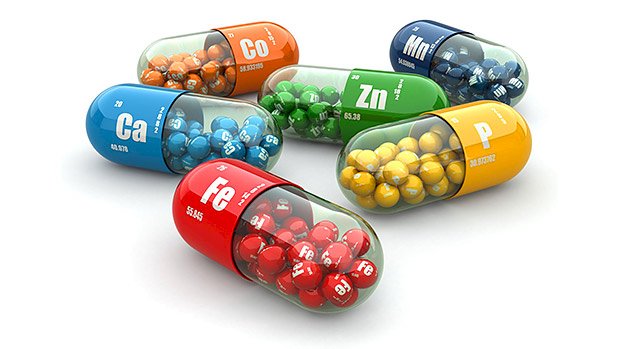 The 30-billion dollar a year vitamin industry is suffering from existential angst right now. Their collective stomachs are all aflutter because of the publication of a new study in the Annals of Internal Medicine that says vitamin or mineral supplements offer no discernible benefits; that they don’t reduce the risk of death from practically anything and they might, in fact, harm people. (1) Now all those supplement companies are wondering if they should instead start selling roofing materials or something else useful. I’ve got no solace to give. Unfortunately for the vitamin seller, yeah, most vitamins and mineral supplements are a waste of time. Some could actually harm you. And yeah, you’re often better off getting some vitamins, minerals, and other classes of supplements from whole foods. But there are notable exceptions. In those cases, it’s unrealistic or even plain daffy to rely on whole foods to fulfill all your supplement needs. Let’s take a look at some of the most common vitamins, minerals, and supplements and see if we can make some sense of it. Multivitamins – Forget About ‘Em I don’t think there’s a single reputable study that shows they’re effective, but we don’t need studies to come to this conclusion. There are just too many problems with multivitamins: The one-size-fits-all philosophy. The human need for the 24 vitamins identified by science is based on a bell curve and while it may hold true for a 150-pound municipal worker named Phil who lives in Akron, Ohio, they might not hold true for sweaty athletes, bigger (or smaller) people, or you. Giving the same vitamin combo to every man or woman alive is like making only one size of underwear for everybody – fine for some, but uncomfortable, unworkable, and in the case of vitamin-caused skin reactions, even unsightly for others. So many possible interactions. Vitamins A, D, E, and K are fat-soluble and, as such, are best taken with food. Iron shouldn’t be ingested with coffee or tea because the tannins in them interfere with absorption. Likewise, iron blocks the absorption of zinc and copper. Vitamins E and A can gang up on K. Cherry picking and not seeing the big picture. Maybe, just maybe, these nutrients aren’t supposed to be isolated and taken by themselves. Maybe they need to be taken in whole-food form to be truly effective. Maybe the nutrients need to work in conjunction with some (or maybe even all) of the micronutrients and phytochemicals intrinsic to the whole food source for them to work. Calcium – Forget About It Taking too much calcium (more than about 1,000 mg. a day) can be a huge problem. At worst, the calcium starts to accumulate on the linings of your heart and arteries so that they look like the tiled walls of a White Castle restaurant. The excess calcium might also form kidney stones or, on the less severe end of the spectrum, cause constipation. Calcium is one example where people really would be better off getting this crucial mineral from whole food. Here’s the thing: When you get too much calcium from foods (milk-based protein powders, dairy products), a fail-safe system kicks in and the intestines start limiting further absorption of the mineral. Not so with calcium supplements. They have no fail-safe system. The more you take, the more ends up in your urine, blood, kidneys, heart, and arteries. Vitamin D – Take It! The study from the Annals of Internal Medicine found that when people who weren’t deficient in vitamin D took vitamin D supplements, they had higher risks of death from all causes, particularly cancer. It’s important to realize that this study was based on people accurately remembering and reporting what they had eaten over a period of several years, so it’s easy to be skeptical, particularly when several other studies have shown that people who took vitamin D supplements lived longer, on average, than those that didn’t take it. Sure, ideally, we’d all lie naked in the sun like harp seals for at least 20 minutes a day so we could make our own vitamin D, but that just isn’t plausible for everybody, particularly if you live anywhere north of Memphis, Tennessee (about 2500 miles north of the equator) or, for that matter, anywhere south of Santiago, Chile. (2) The sun just doesn’t get high enough during winter months in those areas for all those vitamin-D generating UVB wavelengths to benefit us. Never mind persistent clouds. The Chippewa tribe of Michigan had an old saying: “If the shadow of a groundhog is longer than it is tall, its body isn’t making vitamin D.” Alright, the Chippewa didn’t say that, but if you apply the “longer than tall shadow” thing to yourself, the advice pretty much rings true. If you can’t regularly spend a few minutes in the sun, or you’re a mole-like gym person who rarely see any lights that aren’t fluorescent, you should probably take vitamin D year-round. Vitamin B3 (niacin) – It Depends If you’re over 40 or 50, or if you’ve got cholesterol issues, think about
Origin: Worthy vs. Worthless Vitamins: Your Guide
 All about sport xlsport.club