
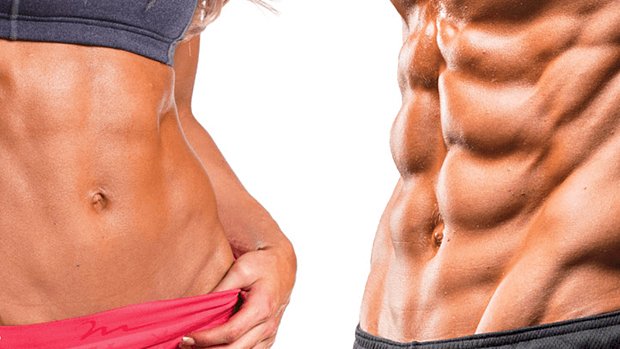
 You’re probably not trying to get peeled like a stage-ready bodybuilder. That’s fine. But if you want to get relatively lean (something beyond seeing your top two abs), and you’ve had trouble doing it, then your dietary compliance probably sucks. You just can’t stick with the plan. But why? Let’s get into that, then talk about five proven ways to stay compliant. Compliance Matters Most “My diet is better than your diet!” You hear that a lot these days… and anyone who says it is probably wrong. Throughout the 1990s, bodybuilders used moderate protein, high carb, low fat diets to get ripped. But somewhere into the 2000s there was a shift where carbs suddenly became the enemy and were responsible for everything from cancer to Nickleback. Lately it’s become sugar. Just eliminate sugar and eat more fat and your jiggly tissue will fall off. None of that’s accurate, of course. But it hasn’t kept the masses from getting overzealous about high-fat, low-carb, n=1 anecdotes. Incidentally, they ignore mountains of research and discredit the anecdotes of those who didn’t use that approach. Here’s the truth: For the person who’s lifting weights and trying to lose fat, all diets that equate for caloric and protein intake work basically the same. When it comes to fat loss, no one type of diet is superior to any other when those factors – eating plenty of protein and being in a caloric deficit – are considered. What generally allows a person to get results from ANY diet is their degree of compliance. Ultimately, that ends up being the secret of why it worked. It’s not because removing carbs or reducing fat did something magical. Each diet just reduced caloric intake. Those who claim that their diet is superior basically just found a style of eating that was easier for them to adhere to. Because their diet was a nice fit for them, they were able to stay in a caloric deficit for enough time to lose fat. Period. Why is compliance a big deal? Because a consistent energy deficit is what has to happen to get lean, and you can’t maintain a consistent energy deficit if your diet is too hard to keep doing. The 5 Steps to Dietary Compliance 1 – Know Your Triggers All of us have trigger foods. These are foods that send us spiraling right into the seventh circle of gluttony hell. Those triggers vary greatly from person to person. This is one area where I’d define foods as being “good” or “bad” based on your reaction to eating them. Contextually, a bad food is one that meets the seventh circle criteria when you’re trying to get lean. It’s up to you to be aware of what foods cause you to eat more even after you’ve had your fill. For me, it’s basically anything that doesn’t fall under the bro-diet umbrella. So basically anything that’s not eggs, oatmeal, rice, chicken, etc. I don’t just eat a slice of pizza; I eat four pizzas. I don’t just eat one doughnut; I clean out the bakery. Some people CAN just have two Oreos. They’re called sociopaths and they feel nothing, have no emotions, and lack empathy. It’s up to you to identify your trigger foods and eliminate them during the time that you’re trying to have a high degree of compliance. No, this isn’t something you have to do forever. But if you’re wanting to shed fat and you don’t want to screw it up, then just eliminate the foods that cause those problems. Now, there’s one obstacle to look out for: the scarcity effect. It’s when we end up wanting something because of the perceived lack of availability. The less access we have to something, the more we tend to crave it. This can be a lethal combination when it comes to trigger foods. The solution to replace those trigger foods with foods that are “close enough.” If you love pizza, try a thin crust or cauliflower option using toppings that are higher in protein and lower in calories: grilled chicken instead of sausage, extra veggies, half the cheese, etc. If you love cookies and brownies, try the low fat and/or low carb recipes for those foods. If it’s easier for you to just abstain all together, then do that. But figure out what you need to do to stop short-circuiting the fat loss process by giving in to your trigger foods. 2 – Figure Out Your Ideal Meal Frequency For decades there was this belief that eating more often raised our metabolic rate causing us to lose more fat. You know, eat six small meals a day instead of three big ones. We know now this isn’t actually true and eating frequency has no major effect on metabolic rate. What most likely was happening was that frequent eating created a higher degree of satiety throughout the day, so people had a higher degree of compliance and didn’t feel the need to overeat at any one meal. From a muscle retention standpoint, it’s probably a good idea to have some protein coming in every four hours or so to stay highly anabolic and to keep muscle protein synthesis elevated. That usually means about four meals a day. Anecdotally, I’ve found this to work well for people who don’t
Origin: How To Make Any Diet Work
Tag: Work?
16 Unstable Exercises That Actually Work
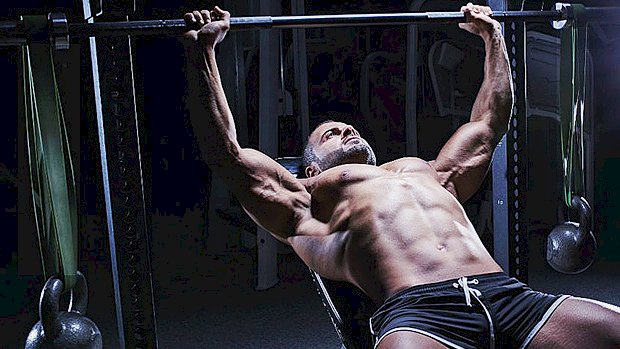 From Rehab Clinic to Your Gym If you mention “unstable” and “training” in the same sentence, there’s a good chance some knowledgeable meathead will stuff you into a locker. And for the most part, doing so is warranted. BOSU balls, wobble boards, and other unstable shenanigans belong in a physical therapy office, not a gym – and therein lies the problem. The unstable surface training (UST) craze began in clinical rehab settings after showing some promise in treating particular ankle issues. As is often the case, though, something that was useful within a single context took off and weaseled its way into the mainstream. Hipsters doubling as personal trainers began putting their clients on balance boards and Swiss balls while they juggled kettlebells and talked trash about egg yolks. The problem is, UST doesn’t hold any water outside of the physical therapy realm. As a matter of fact, multiple studies chastise its use for injury prevention as a whole, limiting its efficacy to individuals with a history of ankle sprains. Other studies have found that people who train on unstable surfaces are more likely to experience significant injuries. Does that mean that UST is more likely to contribute to injuries? You can be the judge. If there’s one thing that the research undoubtedly proves, though, it’s that training on a STABLE surface is the clear king for getting bigger, stronger, and more athletic. But not all unstable training is created equal. Some unstable training methods and exercises can provide unique benefits that, when implemented properly, can stimulate newfound gains in strength, hypertrophy, and performance. To reap the unique benefits that certain forms of instability can provide, give the following methods and exercises a go. 1 – Use Unstable Exercises as Primers in a Warm-Up To get bigger and stronger, your training should be centered around exercises that can be sufficiently loaded and progressed over time. For the most part, exercises that fail to meet these two criteria serve little to no purpose for gains in strength and size. But there are a number of unstable exercises that can be valuable when used as “primers” prior to your regular training. Why? When performing certain exercises with slight instability, each rep reinforces proper movement mechanics, improves intra- and inter-muscular coordination, forces joint stabilization, and grooves stability. By checking these boxes, your muscles and nervous system get to a place where they’re better equipped to handle heavy loads with pristine technique. Here’s a few examples of how to get primed to lift using unstable surfaces: Chaos Push-Up One of the recurring themes of intelligent unstable training is a constant demand for core stability and control, and the chaos push-up is no exception. On top of pushing the anterior core to the max, it targets the entire musculature of the upper body while strengthening the scapula and shoulder stabilizers. Since the oscillations are significant, chaos push-ups require a slow tempo and perfect mechanics, which translates to increased shoulder stability and better pressing mechanics. Half-Kneeling Bottoms Up Kettlebell Press Who said unstable training has to involve fancy equipment? By nature, holding a kettlebell in a bottoms-up position is inherently unstable. This will improve your pressing mechanics, help you build healthier shoulders, and get a slight pump. And as an added bonus, the half-kneeling position requires full-body tension in order to resist extension, rotation, and lateral flexion at the spine. The only bad news is, you’re going to have to check your ego and use lighter weights. Because of the movement’s unstable nature, a high demand is placed on maintaining stability in the shoulders, forearms, and hips. Single-Leg Stability Ball Hamstring Curl Relax, tough guy. The stability ball isn’t completely worthless. The benefits of these curls are two-fold: First, they train knee flexion (working leg) and hip extension (elevated leg) simultaneously, unlike most hamstring exercises that focus on one or the other. Second, the unilateral aspect of the movement requires balance, stability, and control. Plus, you’ll elicit a brutal hamstring pump that will prime your knees and low back for optimal function prior to squatting. Rear-Foot Elevated Split Squat With this variation, you’ll place your back foot on a band. Why the band? Well, when doing rear-foot elevated split squats, most lifters allow their back leg to take on a large part of the work. While that isn’t necessarily bad when the goal is overall load, using a band to elevate the back foot forces the front leg to work in isolation. At the same time, the band necessitates tri-planar balance and hip stability, similar to a pistol squat or one-leg squat to bench/box. Unlike those two movements, though, the rear-foot elevated split squat actively engages the hip flexors and forces a deep stretch. The result: healthy hips,
Origin: 16 Unstable Exercises That Actually Work
Tip: 40-Plus? Do More Work
 Extend Your Sets For Better Results If you’re over 40, doing 3 sets of 8 and going home is no longer going to suffice. It may have worked when you were younger and had testosteroned-up tiger blood flowing through your veins, but not so much when you’ve got a 50/50 blend of tiger blood and prune juice squirting through your plaque-riddled vessels. That’s why damn near every workout should contain an extended set, drop set, or finisher of some kind and if you’re not making an ugly, just-got-burned-by-dragon-fire face at the end of it, you didn’t work hard enough. Do strip sets on leg press or Smith machine squats. Rep out. Pull a plate. Rep out. Pull a plate. Rep out. Pull a plate. Rep out. Collapse into a fetal position. Try Paul Carter’s 10-6-10 method on an exercise or two. That’s a 10-second isometric followed immediately (using the same weight) by 6 full-range-of-motion reps done with a 3-5 second eccentric, followed immediately (again with the same weight) by 10 partial range, little grunt reps. Here’s what it looks like: Or pick a weight that you can do about 10 reps with. Look at the wall clock and note the time. Give yourself 5 minutes to do 50 reps with the same weight, taking little bitty chunks of rest in-between sets to failure. If you actually hit 50, the weight was too light. Mechanical advantage barbell curls like this work well too: A1. Reverse barbell curls for 6 to 8 reps. A2. Drag curls for as many reps as you can. A3. Standing barbell curls for as many reps as you can. You get the idea. It sounds counterintuitive and it smacks of weightlifting heresy, but you’ve got to train harder than when you were younger if you want to stay in the
Origin: Tip: 40-Plus? Do More Work
Tip: Over 40? Build Your Work Capacity
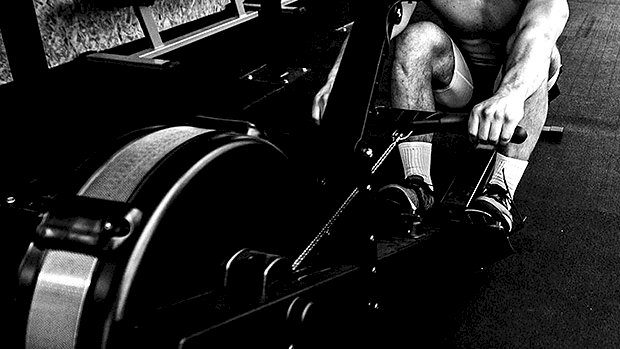 Conditioning Matters Even More Now I realize there are some differences between 25 and 40, and probably a lot of differences between 25 and 50, but not as many as you might think, especially if you have at least 10 years’ worth of training experience. But you can’t train hard if merely pulling your pants on makes you wheeze. You need to do cardio or metabolic conditioning or whatever term you feel comfortable with. How do you expect to work hard if your lungs don’t have the sass to carry on? Moreover, your cellular batteries – the mitochondria – start to wear out, get lazy, take extended vacations in Cabo, or die as you get older. They need a kick in the pants so they get to multiplying, and that’s what intense exercise provides. Fear not, though, because you don’t have to devote hours and hours to all that tedious, conventional aerobic training stuff where you sit on a stationary bike for an hour as your panini-ed prostate swells up to the size of one of those sand-filled Bulgarian bags. Options That Don’t Suck At least three times a week, get on the treadmill, rower, or yes, stationary bike for a measly 10 minutes for some HIIT-style training. Focus on all-out efforts of 20 seconds, followed by 60 seconds of “active recovery.” On a treadmill, that might mean setting the speed at a leisurely 3 miles per hour and then cranking it up as fast as your little stubby legs allow for about 20 seconds, after which you’d drop the level back down to 3 again for a minute or two before you do another round. You could do the same thing on a stationary bike or rower, or you might prefer short sprints followed by walking-recovery periods. Alternately, you can crank up the incline on the treadmill to the Himalaya setting, or as high as it goes, and trudge uphill, Sherpa like, for 30 to 60 seconds before zeroing out again. This type of training has been shown to increase mitochondria. That, coupled with the increase in endurance you’ll experience, will allow you to lift as hard as you need
Origin: Tip: Over 40? Build Your Work Capacity
Tip: How to Make the Step-Up Work Better
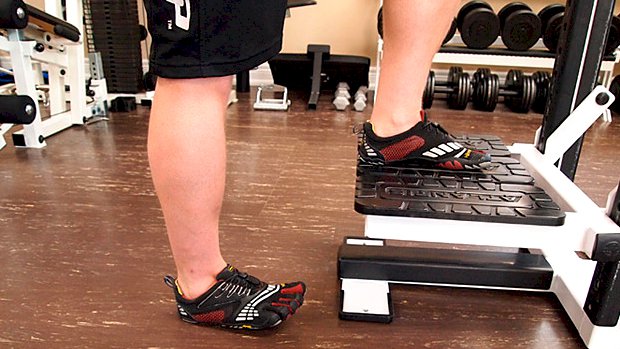 The Step-Up: You’re Doing It Wrong You don’t see a lot people doing the step-up. They probably tried it at one time but decided it just didn’t work. The problem is, most people don’t do it correctly. Most lifters unknowingly cheat on the step-up by leaning forward too much and pushing off the bottom leg. When you push off the floor leg, the leg on top of the box or bench isn’t doing much work. Make It Work: Curl Up Your Toes To keep from cheating on the step-up, curl up the toes of the foot that’s on the floor. Keep them curled up during the movement. This keeps you from being able to push off from the bottom leg so easily, because in order to push off you have to keep the toes down. As for bench or step height, you can go very high. The highest you can go is when the bench is so tall you’re up on your toes. It’s called the triple-jumper’s step-up and it involves the VMO and hamstrings more. It’s basically just a super high step-up. The key is that your knee shouldn’t buckle in as you step up. You can alternate legs or keep one foot statically on the bench until you do the desired number of reps. If you want more time under tension, use the static method where the foot up on the bench is kept in place. You can do step-ups using a barbell or dumbbells. They’re all good variations. Just keep your toes
Origin: Tip: How to Make the Step-Up Work Better
Tip: Does Compression Gear Really Work?
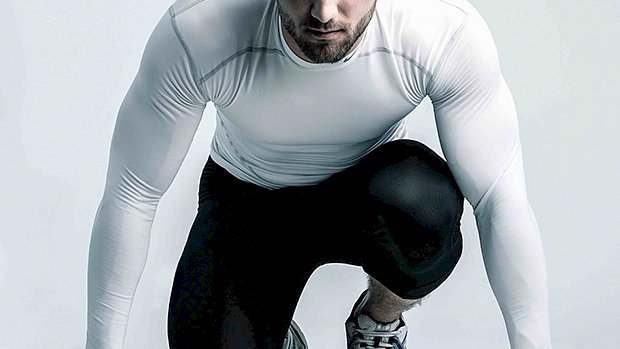 Is compression gear worth wearing during strength or cardio workouts? The short answer is… sort of. It depends on the activity and your goal. Multiple studies have examined the effect of compression clothing on endurance, strength and power, motor control, and post-exercise recovery. Let’s go through it. Endurance This one is a little hazy. What we’re looking for here is some impact of compression on physiological markers such as oxygen uptake, blood lactate concentration during continuous exercise, blood gases, and cardiac parameters. The majority of research in this area is inconclusive on the impact of compression on these physiological markers. Note that while there seems to be plenty of anecdotal evidence supporting the use of compression wear during endurance exercise, the studies have been unable to consistently show a correlation. People may THINK they’re benefitting, which may in fact create a psychological and even an actualized benefit. But it’s impossible to isolate the psychological effect without using a placebo condition in a study. Strength and Power Exercise Research is mixed in this area as well. Some small positive effects have been observed on sprint performance and vertical jumping, but these benefits seem to be almost negligible. However, here’s where we get to some real potential benefits of compression gear: studies have shown positive effects on the removal of lactate (H+ buffering) during short rests between sets of High Intensity Interval Training (HIIT). Without getting into too much detail about hemodynamics, it makes sense that tight compression gear may enhance local blood flow and improve oxygen delivery, and additionally, may enhance arterial blood flow, which in turn will facilitate more efficient clearing of metabolites, the aforementioned H+ buffering, and distribution of nutrients. Proprioception and Neural Mechanics Research on compression gear has shown some improvements in proprioception and sensory feedback. As a reminder, proprioception is the body’s ability to know where it’s located in space. These improvements also may help explain the strength and power benefits during HIIT exercise. Muscle Recovery We know that compression will increase arterial blood flow and venous return. We can say that it will also increase clearing of cellular waste products, which may result in quicker recovery after an intense bout of high intensity exercise. Thermoregulation Clothing generally provides a barrier to heat transfer and thus slows sweat evaporation. Compression clothing may inhibit this natural process of heat transfer even more, which would IMPAIR performance in the short term (during exercise), even while potentially improving muscle repair and recovery times (post-exercise). Research is lacking on the effect of compression gear on sweat evaporation in cold weather temperatures. However, in theory, inhibited sweat evaporation would be less important in cold weather environments, so the negative impact of compression gear may be lessened, while the potential performance and recovery enhancements would remain. Summary It’s important to understand that compression may have benefits to exercise performance and recovery, particularly during and after high intensity interval training, but it may also have negative impacts on overall exercise performance in others areas such as the inhibiting of sweat evaporation. Hey, maybe you just wear it because it makes you look jacked, but it’s always a good idea to get the facts
Origin: Tip: Does Compression Gear Really Work?
 All about sport xlsport.club