
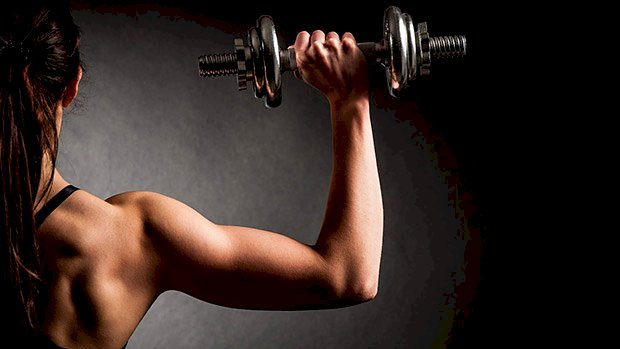
 Although great strides have been made in the war against female fear of muscle, or myophobia (CrossFit deserves much of the credit), muscle is still often regarded with curious suspicion and sometimes outright distrust in female fitness circles. Sure, on some level, most women these days understand that muscle can have value, but there’s still a significant amount of (unnecessary) trepidation about becoming overly muscular. On a certain level, women’s mistrust of muscle makes sense. After all, one of the most immediately recognizable masculine traits is conspicuous muscularity, a trait most women want to avoid. But muscle is certainly not a universally masculine feature. Beyond that, the inescapable truth is that women with the most admired physiques also tend to be significantly more muscular than the average woman. So let’s clear up the misconceptions and concerns that women often have about building muscle. 5 Things Some Women Don’t Understand Muscle is very difficult for women to acquire. This is especially true for women who are older and/or dieting. Any muscle you do gain is acquired very gradually – there will always be plenty of time to apply the brakes if you feel you’re becoming too muscular. Most women find that if and when they do build new muscle, they like it much more than they imagined. But, if they end up not liking it, no problem! It’s very easy to lose. Muscle is what gets (and keeps) you lean. It’s commonly known that men can eat more than women without consequence, even if you match them for bodyweight. More muscle is the main reason why. Muscle and Metabolism Interestingly, many people tend to think of metabolism as a mysterious external force, kinda like gravity – you can’t touch it, you can’t see it, but darn it, it sure comes to a screeching halt right after your 40th birthday, doesn’t it? (Your metabolism, not gravity.) Mmm, not really. “Metabolism” simply refers mainly to your energy expenditure. There are four primary categories: “Basal” metabolism:This is the amount of energy you need to survive. You need a minimal amount of energy to keep all of your organs functioning and to maintain key survival functions such as consciousness, respiration, temperature maintenance, and so on. Non-Exercise Activity Thermogenesis (N.E.A.T.):This is the additional energy you need to perform any and all activity excluding formal exercise. This includes walking, work activities (from relatively sedentary work to manual labor), sitting and rising from chairs, pacing, fidgeting, household chores, literally any activity that isn’t “exercise.” Exercise Activity:The energy you need to perform, and recover from, any type of formal exercise. Thermic Effect Of Food (T.E.F):Whenever you eat food, it requires a certain amount of energy to process (digest, absorb, eliminate) that food. It takes between 5 and 15% of the calories in carbs and fats to process them. Protein requires a bit more work to process, requiring between 20 and 35% of its calories. All that being said, muscle beneficially affects total metabolic rate in three different ways: The training required to build additional muscle requires energy, both to perform, and also to recover from. Once acquired, this new muscle requires you to expend additional energy on a daily basis simply to maintain the new muscle. Both basal metabolism and NEAT increase. When you have more muscle, all activities are easier to perform, making it likely that you’ll do more of these activities, which of course, requires additional energy. So, gaining as much muscle as possible has a powerful impact on metabolic rate. Still, some women might have some psychological barriers to overcome. Why Women Think They’re Getting Too Big When They’re Not The Thanksgiving Dinner Effect Have you ever felt disgustingly fat after a huge holiday feast? Of course you have, but you haven’t gained ANY measurable fat after a single meal, no matter how gluttonous it may have been. But your attention has been diverted to your stomach, because it’s stuffed full of food. So you feel fat. The same phenomenon applies to lifting weights. Both during and after a workout, your muscles will burn from lactic acid accumulation and swell with blood. Both of these phenomenon focus your attention to your working muscles, which are now temporarily bigger due to being pumped. The Knee Surgery Effect I never noticed knee scars until I had knee surgery. But, the very day I got out of the hospital, amazingly, everyone suddenly had knee scars. Well, not really, but it’s just that I suddenly started thinking a lot about knees and knee surgery, which caused me to start noticing people’s knees and their scars. Similarly, when women start training, say, their legs, they often start feeling, noticing, and observing their legs, and often with the suspicion that muscle is being gained. And, needless to say, if a woman experiences a pump for the first time ever, she’s likely to mistake it for
Origin: Fear of Muscle: What Women Need to Know
Tag: Women
Tip: How To Meet Women At The Gym
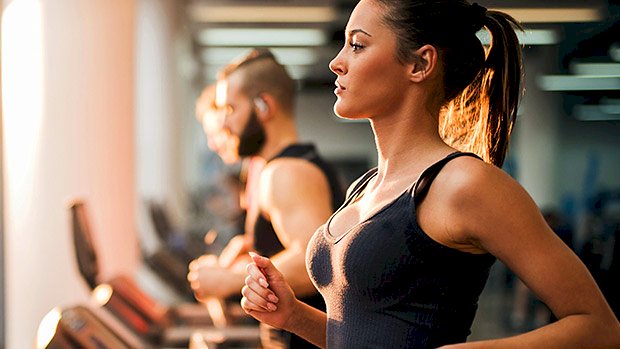 A lot of lifters say the gym isn’t the place to meet people. But if you’re single, wouldn’t you want to find someone with your shared interests and healthier lifestyle? The main problem for women? Guys at the gym can be creepy. They’ll stare for too long, interrupt our sets, or flirt in a way that holds us up from getting on with our workout. So here’s a short guide to increase your chances of success and save us ladies a lot of wasted time and discomfort. 1. Pick the Right Girl Here’s a list of women you should probably leave alone: The Cardio Girl: Women don’t generally want to stop their treadmills to chat. So unless you’re going to do what she’s doing and chat her up, don’t bother. The Hideaway Girl: She’s the one who drags a yoga mat and some dumbbells into a corner. She’s hiding for a reason. Don’t invade her space. The Bandit: If she’s wearing headphones, a baseball cap, and a hoodie, she doesn’t want to talk to you. I don’t care how ripped your abs are and neither does she. The Front Desk Girl: She has to be there no matter what, so don’t make it weird. Plus, if things go wrong, you’re both screwed. And not in a fun way. Here are some better options: The Girl Who Lifts Like You: She’s a woman you see regularly and who seems to be integrated in the community. She’s probably your best bet since you’ll share common interests and she values lifting the way you do. The New-ish Girl: She might hang around the weights but doesn’t seem as comfortable as the first girl on this list. She might welcome a wave or a quick, “Can I help you find something?” The Group Fitness Girl: She takes classes and hangs around talking to staff after. She’s there regularly and is probably looking for people who share her love of fitness. Note: Even if her idea of fitness is group fitness, which you think is stupid, suppress the urge to share this with her. Notice the thing all these girls have in common? You’ve seen them before. It’s probably not a great idea to approach a girl you’re seeing for the first time, unless there’s a very clear opening. A girl who goes to the gym as regularly as you do probably kinda-sorta knows who you are. I get a lot less of that stranger-danger feeling when I get a hello from a guy I’ve seen around than from a guy who appeared out of nowhere. 2. Looks for the Signs (Good Ones and Bad Ones) She’ll make eye contact. Do you guys make eye contact a lot unintentionally? Then she’s probably been sneaking glances at you, too. It’s a good sign. If she seems like she’s avoiding your eyes, she’s either uninterested or shy. She’ll smile. This one’s obvious, but if she smiles or says hello, it probably means she’s at least down to chat. If she starts a conversation, don’t be an idiot and cower away; she might not give you another chance.If you greet her and she doesn’t say “hi” back (and she definitely heard you) then leave her alone. Just because she says “hey” to you regularly doesn’t mean she’s definitely DTF. It’s just a signal that she’s open to communication. She’ll keep physical proximity. If she hangs around after finishing up an exercise when you’re nearby, she might be trying to give you an opening. If she takes her earphones off and then hangs around, she’s trying to be even clearer. But if you move to a machine near her and she very obviously moves away, that’s not such a great sign. 3. Break the Ice (The Right Way) Don’t correct her form. You don’t know what she’s trying to accomplish and people don’t like to be corrected by strangers. Don’t comment on her appearance. Giving a girl a compliment on her appearance, even a tasteful one, can come off as sleazy. You can pull this move after she agrees to go out with you. Don’t ask her out for drinks immediately. It reeks of desperation. Get to know her and keep the conversation centered on gym stuff at first. It’s possible she’s not even into drinking. Here are some better introductions: Ask about her workout. Ask the same way you might ask a dude who’s moving a ton of weight or working on a program similar to yours. This is a great way to get the conversation rolling. It shows respect and gives the conversation direction. Ask about her shoes. Any apparel will do actually. It’s kind of stupid, but her sneakers, belt, knees sleeves etc. can provide an easy way to pick up a conversation. When I was running marathons, I’d see someone wearing the same shoes as me and always comment. I even picked up some new clients this way. Just say hi. This isn’t the best method because it leaves her to do most the work, but if she’s already interested then she might be willing to pick up some of the slack. At least you’ll have initiated contact and can come up with something more creative next time. Nothing wrong with being friendly. Bottom Line A lot of the females are fed up. They don’t want to be approached by guys at the gym anymore because they’ve spent too many hours indulging some dude’s awkward come-on when they’d rather be
Origin: Tip: How To Meet Women At The Gym
Hard Body Training for Women
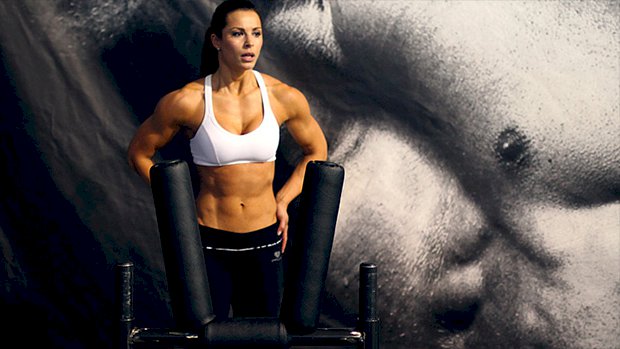 Here’s what you need to know… Women tend to have a higher pain tolerance when it comes to training, can recover faster between sets, and are able to sustain a higher volume of work. Men are welcome to try the program, but they may not be able to hang! This program has you training the same muscles two days in a row: heavy lifting the first day and pump work for the same muscles the next day. Training the same muscles two days in a row facilitates recovery and lengthens the duration of the anabolic phase. The workout plan calls for five mandatory training days per week with an optional sixth day. That extra day will help you get leaner super fast, but you’ll get amazing results with just the five main workouts. What To Expect This program will be uncomfortable at times, painful at others. It will force you to focus on performance. You’ll get stronger, faster, more powerful, and more resilient. The end result will be fat loss, more muscle in the right places, and a strong body. This is the type of training I used with one of my clients who won her first two physique competitions this year, training without drugs, while having two kids and a full time job working construction. Can Men Do It? Maybe, If They’re Woman Enough Can guys do this program? Sure, they can try. Muscle is muscle and we’re all the same species, but women don’t have the same needs when it comes to building an aesthetic physique. They don’t need to emphasize building the pecs. Instead, they need more focus on the glutes. And since they need muscular but not massive arms, tons of direct arm work isn’t necessary. Women also tend to have a higher pain tolerance when it comes to training. Females can recover faster between sets, and are able to sustain a higher volume of work during a session. So if you’re a guy, you’re welcome to try the program, but it will be even more uncomfortable for you! The Basic Structure The program calls for five mandatory training days per week with an optional sixth day. That extra day will help you get lean faster, but you’ll get amazing results with just the five main workouts. This program uses a cool concept: train the same muscles two days in a row. You hit them hard with heavy lifting the first day and then you do pump work for the same muscles the next day. This actually facilitates recovery and lengthens the duration of the anabolic phase. Protein synthesis stays elevated for 24 hours post-training, but by having a second session the next day that’s less traumatic, you extend protein synthesis significantly, thus building more muscle. It’s important that the second session is pump work and not heavy lifting, though. We don’t want to cause any muscle damage on that second day. We only want to activate the cell signaling responsible for stimulating hypertrophy and pumping nutrients into the muscles. I also include metabolic conditioning (metcon) to get you lean fast without risking the loss of muscle mass. The metcon will actually help you build more muscle while getting leaner. Explosive work also plays a big role in the program. It increases the insulin sensitivity of muscle, making you more prone to storing ingested nutrients in the muscles instead of the fat cells. Additionally, explosive work gives the body a harder, more sculpted look by improving myogenic tone. The schedule looks like this: Monday: Lower body strength/hypertrophy work Tuesday: Lower body pump complex/lower body metcon Wednesday: Upper body strength/hypertrophy work Thursday: Upper body pump complex/upper body metcon Friday: Optional sprint/energy systems session Saturday: Whole body explosive work Sunday: OFF Load Progression The program uses two main systems of progression: programmed progression and double progression. Programmed progression refers to a cycle where the weights are planned in advance based on your 1RM. So you’ll need to establish your maximum load for one technically solid rep on the back squat, push press, and power clean from the hang. The percentages used during this whole program are all based on that 1RM. Double progression is a system where you have a target rep range instead of a precise number of reps to do, 6 to 8, for example. You will use the same weight for all your work sets. The goal is to be able to do all the work sets with the upper limit of the range (8 in our example) with the same weight. When you’re able to do that, you increase the weight at your next session. If you can’t get 8 reps for all of your work sets, that’s fine, but it means that you’ll keep the same weight during next week’s workout. So when you see a percentage given for an exercise below, it uses the planned progression. When you don’t see a percentage, it means you’ll use the double progression approach. The Program Monday Exercise Wk Sets x Reps %1RM Rest A Box Jump 3 x 10 B Back Squat 1 2 3 4 5 6 7 8 9 10 5 x 4 5 x 5 5 x 6 3 x 3 5 x 3 6 x 3 3 x 3 3 x 2 3 x 3 Test Max 80% 80% 80% 90% 90% 90% 95%
Origin: Hard Body Training for Women
 All about sport xlsport.club