
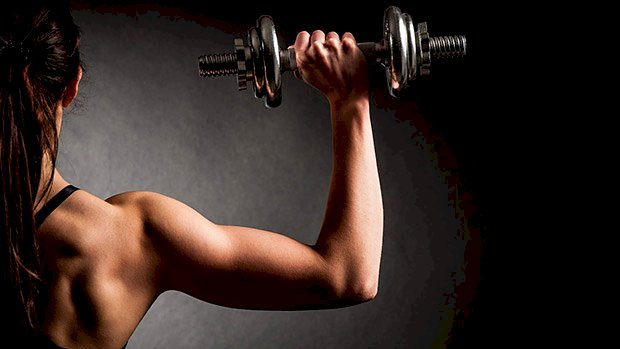
 Although great strides have been made in the war against female fear of muscle, or myophobia (CrossFit deserves much of the credit), muscle is still often regarded with curious suspicion and sometimes outright distrust in female fitness circles. Sure, on some level, most women these days understand that muscle can have value, but there’s still a significant amount of (unnecessary) trepidation about becoming overly muscular. On a certain level, women’s mistrust of muscle makes sense. After all, one of the most immediately recognizable masculine traits is conspicuous muscularity, a trait most women want to avoid. But muscle is certainly not a universally masculine feature. Beyond that, the inescapable truth is that women with the most admired physiques also tend to be significantly more muscular than the average woman. So let’s clear up the misconceptions and concerns that women often have about building muscle. 5 Things Some Women Don’t Understand Muscle is very difficult for women to acquire. This is especially true for women who are older and/or dieting. Any muscle you do gain is acquired very gradually – there will always be plenty of time to apply the brakes if you feel you’re becoming too muscular. Most women find that if and when they do build new muscle, they like it much more than they imagined. But, if they end up not liking it, no problem! It’s very easy to lose. Muscle is what gets (and keeps) you lean. It’s commonly known that men can eat more than women without consequence, even if you match them for bodyweight. More muscle is the main reason why. Muscle and Metabolism Interestingly, many people tend to think of metabolism as a mysterious external force, kinda like gravity – you can’t touch it, you can’t see it, but darn it, it sure comes to a screeching halt right after your 40th birthday, doesn’t it? (Your metabolism, not gravity.) Mmm, not really. “Metabolism” simply refers mainly to your energy expenditure. There are four primary categories: “Basal” metabolism:This is the amount of energy you need to survive. You need a minimal amount of energy to keep all of your organs functioning and to maintain key survival functions such as consciousness, respiration, temperature maintenance, and so on. Non-Exercise Activity Thermogenesis (N.E.A.T.):This is the additional energy you need to perform any and all activity excluding formal exercise. This includes walking, work activities (from relatively sedentary work to manual labor), sitting and rising from chairs, pacing, fidgeting, household chores, literally any activity that isn’t “exercise.” Exercise Activity:The energy you need to perform, and recover from, any type of formal exercise. Thermic Effect Of Food (T.E.F):Whenever you eat food, it requires a certain amount of energy to process (digest, absorb, eliminate) that food. It takes between 5 and 15% of the calories in carbs and fats to process them. Protein requires a bit more work to process, requiring between 20 and 35% of its calories. All that being said, muscle beneficially affects total metabolic rate in three different ways: The training required to build additional muscle requires energy, both to perform, and also to recover from. Once acquired, this new muscle requires you to expend additional energy on a daily basis simply to maintain the new muscle. Both basal metabolism and NEAT increase. When you have more muscle, all activities are easier to perform, making it likely that you’ll do more of these activities, which of course, requires additional energy. So, gaining as much muscle as possible has a powerful impact on metabolic rate. Still, some women might have some psychological barriers to overcome. Why Women Think They’re Getting Too Big When They’re Not The Thanksgiving Dinner Effect Have you ever felt disgustingly fat after a huge holiday feast? Of course you have, but you haven’t gained ANY measurable fat after a single meal, no matter how gluttonous it may have been. But your attention has been diverted to your stomach, because it’s stuffed full of food. So you feel fat. The same phenomenon applies to lifting weights. Both during and after a workout, your muscles will burn from lactic acid accumulation and swell with blood. Both of these phenomenon focus your attention to your working muscles, which are now temporarily bigger due to being pumped. The Knee Surgery Effect I never noticed knee scars until I had knee surgery. But, the very day I got out of the hospital, amazingly, everyone suddenly had knee scars. Well, not really, but it’s just that I suddenly started thinking a lot about knees and knee surgery, which caused me to start noticing people’s knees and their scars. Similarly, when women start training, say, their legs, they often start feeling, noticing, and observing their legs, and often with the suspicion that muscle is being gained. And, needless to say, if a woman experiences a pump for the first time ever, she’s likely to mistake it for
Origin: Fear of Muscle: What Women Need to Know
Tag: What
Tip: What Powerlifters Can Learn From Bodybuilders
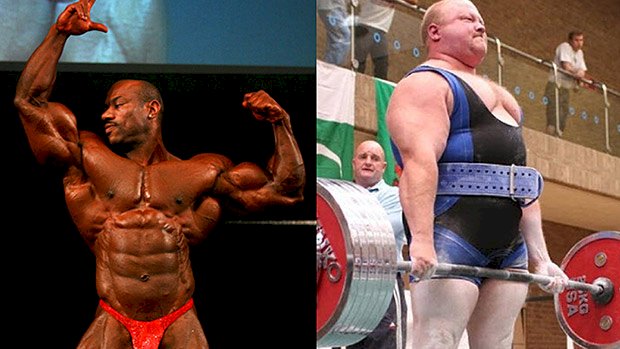 The Tale of Two Pauls I’ve competed in both powerlifting and bodybuilding, and each endeavor taught me a lot about the other. One thing that Powerlifting Paul learned from Bodybuilding Paul was how important it is to train muscles and not just movements. That was a huge lesson. Once I left powerlifting behind and dove back into bodybuilding, I really saw the vast differences in the two. Outside of the fact that you’re using barbells in both, they couldn’t be any more dissimilar. With powerlifting you want to put the body in the most mechanically advantageous position as possible to move the greatest amount of weight. It’s actually quite counterproductive, and I see a litany of competitive powerlifters show up on social media each week with new tears and strains. Powerlifters should have some periods where they think and train like bodybuilders. More muscle means better leverages, and more muscle increases maximum strength potential. When you’re trying to focus on muscular development (bodybuilding), you actually want to put that muscle into the least advantageous position so that it has to work much harder during the movement, i.e locking down the joints in a way that reduces the involvement of other muscle groups. Problem is, most powerlifters become very one-dimensional in their training thoughts. I fell into the same trap. I forgot that despite the fact that maximal strength is largely neural based, the muscles are still moving the weight. Newsflash, right? I continued to suffer from adductor strains when my squat would begin to climb. Simply training the adductors on the “good girl machine” rectified that problem. I had a similar problem later with my quads. Weight would go up, quads would sustain a strain. I knew my quads needed to get stronger, but I was already doing high-bar paused squats with over 600 pounds, and front squats with 455 for reps. Surely I had strong quads. Wrong! Due to years of perfecting my squat for my leverages, I’d really learned how to load up the hips and rely on them to do the brunt of the work. This meant my hips were capable of squatting 635 pounds, but my quads were capable of, well, far less. Which is why anything in that range often resulted in me straining a quad. I decided one day to rectify this and remove my superlative birth-giving hips from the equation. This meant hack squats, where the hips couldn’t contribute as much, and my quads would be forced to bear the brunt of the load. It wasn’t much of a load. I struggled with three plates for a set of ten on hacks. That was a very humbling day. But it also let me know I was on the right track. I knew that if I got strong as hell on hacks, then my quads would be able to contribute to my squat and not be the weak link. I followed up all of my squats with 1-2 sets of hack squats for 10-15 reps. I was living in the “anything over 5 reps is cardio” mantra at that time, so I can’t explain in words how awful this was. After a few months of being diligent with this plan, both my hacks and my barbell squats ascended. I hit a gym-best 660 pound raw squat with good speed months later. My quads stayed attached to the bone, thankfully. 12 Weeks a Year All powerlifters should be training for muscle growth and bringing up weak muscle groups for at least one twelve-week training cycle during the year. I believe both powerlifters and bodybuilders can benefit from having training cycles where they focus on the other objective: Powerlifters should have some pure hypertrophy training cycles to shore up weak links. Bodybuilders should do some training cycles where they focus on getting stronger on a few basic lifts. Doing so will carry over into moving heavier loads in the traditional bodybuilder rep ranges, which should manifest into more muscle
Origin: Tip: What Powerlifters Can Learn From Bodybuilders
Tip: What a Bug Can Teach You About Diet
 Beware of Supernormal Stimuli Foods High reward foods are very calorie dense and often very tasty. They’re generally high in added fats and/or sugar, and the reward properties of these foods may also be enhanced through the use of salt or monosodium glutamate (MSG). High reward foods are “supernormal stimuli,” sometimes called a supernormal releaser. The term, which is from ethology (the study of animal behavior), refers to a behavioral phenomenon whereby animals respond more intensely to stimuli that are exaggerated versions of the normal stimuli with which they evolved (1,2,3). Here’s a fun example. The Australian jewel beetle has a body that’s big, long, and brown. The males are hard-wired to like certain features of the female, namely largeness, brownness, and shininess. So what’s really large, brown, and shiny? A beer bottle. That’s right, the males attempt to copulate with a type of discarded brown beer bottles called “stubbies.” Just as animals respond more strongly, and often preferentially, to the exaggerated (supernormal) stimuli, humans can respond similarly to exaggerated versions of foods. This isn’t to suggest you might mate with a pork chop. It just means these high-reward foods can act as supernormal stimuli and can lead to maladaptive eating behaviors that hinder fat loss and promote fat gain. Here are two of them: Consistent and continued consumption of high-reward foods (the supernormal stimulus) can render whole foods (a normal stimulus) less appealing or unappealing. The influence of supernormal stimuli has changed what people think is a “large” portion size for a single meal. Research in 2006 replicated a study that was done in 1984 in which participants were asked to serve themselves an amount they considered to be a typical portion of each item on a buffet table (4). The 2006 study found that peoples’ perceptions of what they consider to be normal portion sizes have changed in the past 20 years. As you might guess, they’ve grown larger. Much larger. The researchers called this “portion distortion” (5). Exaggerated portion sizes can serve as a supernormal stimulus that distorts your perception of appropriate amounts to eat at a single meal. How to Use This Info Keeping the above two points in mind, not only can high-reward foods cause you to be less satisfied by whole foods (and therefore make adherence to a diet that emphasizes whole foods more difficult), but also more likely to eat larger portion-size meals. Given this phenomenon, it makes sense to minimize exposure to high-reward foods, or at least be continually aware of portion
Origin: Tip: What a Bug Can Teach You About Diet
 All about sport xlsport.club