
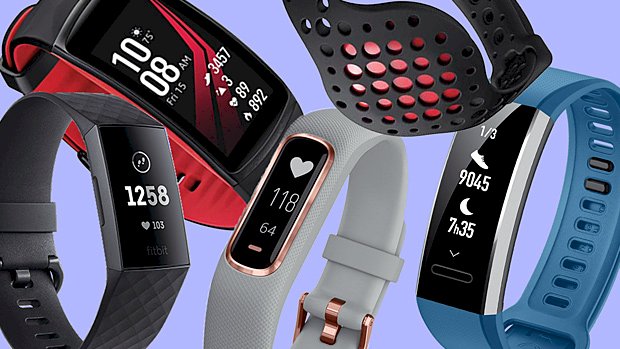
 How accurate are those watches that tell you how many calories you burned during a workout? Well, not really accurate. A friend of mine recently told me that she did a lifting workout that burned 960 calories. And while I’d like to believe that – because it would make lifting the best fat loss tool known to man – it’s simply not realistic. It’s hard to know exactly how many calories you burned during a workout. It depends on the exercises (a squat uses more fuel than a curl), the number of reps completed, the training methods used, and how much muscle you recruited during each rep. For upper body lifts, a hypertrophy set lasting 40-60 seconds might expend 7-10 calories while it can get as high as 40 calories for a set of squats lasting one minute (Victor M. Reis, R. S. 2011. Energy Cost of Resistance Exercises: J Hum Kinet. 29A: 33–39). If you do 4 work sets like that, we’re talking about 160 calories. If you have another big lift in your workout, done with the same parameters, that could add another 160 calories. Then if you have four smaller exercises it could add 350-400 calories. Such a workout would expend 650-700 calories and it’d be one helluva workload. A hypertrophy workout for the upper body could expend 250-400 calories more than your normal caloric expenditure for the duration of the workout. For the lower body, it could burn up to 500-700 calories more than your normal caloric expenditure, and a whole-body workout could be in the 300-500 calorie range. I believe that the caloric expenditure estimated by those watches/apps use mostly heart rate as the measure for energy expenditure. These formulas were developed with cardiovascular exercise in mind. In that type of exercise, the heart rate is directly proportional to the rate of energy expenditure because the heart rate increases only in response to the need of the heart to pump blood to the muscles to supply oxygen to produce fuel. However, with resistance training the increase in heart rate can also be due to a high release of adrenaline. Furthermore, heart rate might spike for the duration of the set and stay elevated because of the adrenaline/neural activation during the rest periods, despite no work being done. As a result, these instruments will dramatically overestimate how many calories you’re burning during a lifting workout. Why Is That a Problem? By giving the impression that you’re burning a metric ton of calories, it might lead you to overeat or overindulge. “I just burned 1200 calories in my lifting workout! I can eat that burger since it only has 600 calories!” No, you can’t. In the grand scheme of things it’s not the end of the world, but it’s still
Origin: Tip: Is Your Tracker Making You Fat?
Tag: Tracker
Tip: Your Fitness Tracker Sucks
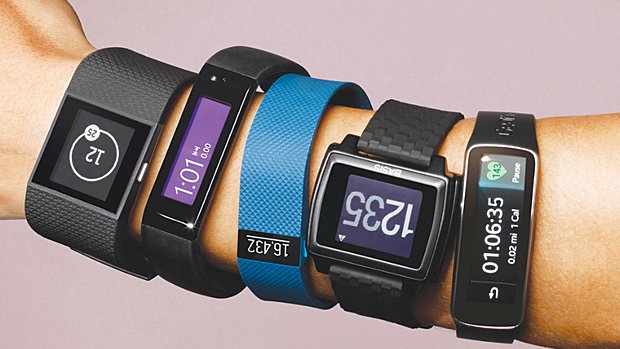 Since fitness trackers and smart watches have become popular, several bloggers have attempted to test their accuracy. Most have noticed the same thing: these suckers just aren’t very accurate. When the bloggers wore several of the gadgets at once, the devices all gave them different readings when it came to heart rate, steps taken, calories burned and other metrics. Not good. These were just regular folks doing the testing, but now science has stepped up to really put these devices through their paces when it comes to two important metrics: heart rate and energy expenditure (calories burned.) The Study In a Stanford University Medical Center study, researchers recruited 60 volunteers to test out several devices in a lab setting. The subjects wore up to four devices at the same time and did various activities such as walking, running, cycling and even just sitting. They were also hooked up to “gold standard” lab instruments that measure heart rate and energy expenditure. The idea was to compare the mass market gadgets to the super-accurate lab instruments. The Results For heart rate, most of the fitness trackers did okay. The Apple Watch had the lowest error rate (2%) while the Samsung Gear S2 had the highest error rate (6.8%). But that’s close enough for non-medical purposes. The problem was in the “calories burned” or energy expenditure readings. They all sucked: No device achieved an error rate in energy expenditure below 20%. The most “accurate” device was off by an average of 27%. The least accurate was off by 93%. The error rate was worse for males and those with darker skin tones. The Apple Watch had the most favorable overall error profile while the PulseOn had the least favorable overall error profile. Here’s an overview: Apple Watch: Not as shitty Basis Peak: Still kinda shitty Fitbit Surge: Pretty darn shitty Microsoft Band: Super shitty PulseOn: The shittiest How to Use This Info Whatever you do, don’t adjust your training or diet based solely on what a wearable fitness gadget is telling you. When it comes to “calories burned” measurements, they’re grossly inaccurate. The algorithms stink and what you’re basically getting is a broad, educated guess. But if you’re absolutely determined to buy one, the Apple Watch looks like the best bet based on this study. Or you could use that inexpensive, highly-accurate fitness assessment tool you already own: a
Origin: Tip: Your Fitness Tracker Sucks
 All about sport xlsport.club