
 Women with higher levels of Vitamin D3 enjoy sex more than women who are low in Vitamin D3. They experience more desire and more intense orgasms. (Insert your own joke here about how D makes women want “the D.” I will not be doing that. That’s tacky.) But what about dudes? Can we do anything to have better glute-clenching orgasms? Yep. According to a new study, we can eat half a cup of walnuts, hazelnuts, and almonds every day. The Study Researchers gathered up 83 men between the ages of 18 and 35 who were eating the typical Western diet. The men were divided into two groups for this randomized, controlled, parallel feeding trial. Group 1, the control group, didn’t change anything about their diets. Group 2 consumed 60 grams of mixed nuts every day for 14 weeks. In a nutshell (see what I did there?) the men who ate nuts every day reported improved orgasmic function and sexual desire. Although the researchers tested peripheral levels of nitric oxide (NO) and E-selectin (surrogated markers of erectile endothelial function), there were no significant differences between the two groups. So basically, the researchers weren’t exactly sure why eating nuts helped with sexual function, but it certainly did. How to Use This Info Sixty grams of nuts is about half a cup. That’s pretty easy to slip into your diet. Just remember to eat mainly walnuts, hazelnuts, and almonds, and try to buy them raw, not cooked in junky oils. (More info: Nuts – You’re Eating Them
Origin: Tip: The Food That Intensifies Male Orgasms
Tag: Tip:
Tip: Make This Healthy Banana Bread
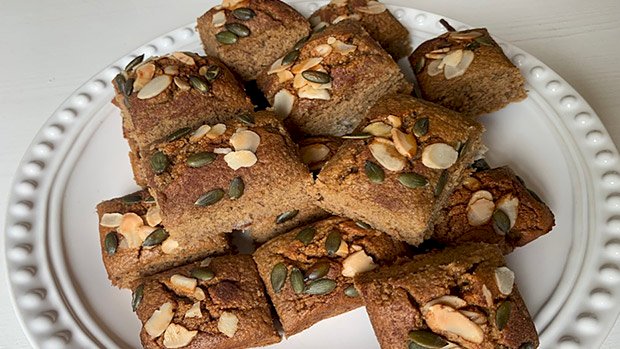 These banana bread “bites” are foolproof. They’re also more physique-friendly than the banana bread you see at the counter at your local coffee shop. This recipe is designed to keep preparation and baking time to a minimum without sacrificing taste and texture. That’s not even the best news though. These are made with simple, healthy ingredients you’ll probably already have in your kitchen. They’re lower sugar, higher fiber, gluten free, and powered by Metabolic Drive® Protein. Ingredients 8 Ounces (220g) rolled oats 2.5 Scoops (75g) vanilla Metabolic Drive® Protein. (chocolate will also work) 1/3 Cup extra-virgin olive oil 1/2 Cup honey or maple syrup 2 Medium eggs 2 Large ripe bananas 1/3 Cup fat-free Greek yogurt 1 Teaspoon baking soda (not baking powder!) 1 Teaspoon vanilla extract 1/2 Teaspoon salt 1/2 Teaspoon ground cinnamon Optional: Half a cup of mix-ins like chopped nuts, chocolate chips, seeds, dried fruit, or fresh banana slices. Instructions Preheat the oven to 350 Fahrenheit (180 Celsius). Prepare a 12×8 baking tray with baking/parchment paper. A brownie tin with dividers can also come in useful here. In a blender or food processor, blitz the oats to a fine oat four. Alternatively, you can use pre-bought oat flour. Pour the oat flour in a large mixing bowl, then add in the rest of the dry ingredients: Metabolic Drive® Protein, baking soda, salt, and cinnamon. Mix together the wet ingredients using a blender or food processor: olive oil, honey, bananas, Greek yogurt, and vanilla extract. Pour the wet mix into the bowl with the dry ingredients and combine well. Fold in any extras such as chopped banana, nuts, chocolate chips, or whatever you fancy. Bear in mind, these will change the macros. Pour the mix into the tray. Add further toppings for extra social media likes and follows (essential!) Bake for approximately 20 minutes on the top shelf of the oven. Once done, a toothpick should come out clean or with a few moist crumbs. If you prefer to bake this in a loaf tin, then aim for 325 Fahrenheit (165 Celsius) for around 50 minutes. Allow to cool for at least 10 minutes in the tray before taking out to slice. Enjoy on its own or as a vehicle for your favorite toppings. Macros Per Square (Makes 18) Calories: 142 Carbs: 19 grams Fat: 6 grams Protein: 5 grams Fiber: 2
Origin: Tip: Make This Healthy Banana Bread
Tip: Easy Ways to Do the Hardest Ham Exercise
 Notorious Nordics Build larger, stronger, and more injury-resilient hamstrings with Nordic hamstring curls. People who perform Nordics experience fewer hamstring strains and other injuries, making this movement a valuable part of an athlete’s program. Be warned: Nordics cause serious muscle damage and deep soreness. Nordics are usually performed with a partner holding your ankles, but here are some alternatives when working out solo. A leg extension or hamstring machine will work well if there’s adequate space in front of the machine. The padded roller offers a perfect resting point for your heels. A Smith machine works great too if the bar can lower to the ground. Use a foam pad on the bar to rest your calves against. Load the bar with enough weight to hold it in place. How to Do Nordics Begin in an upright position with knees flexed to 90 degrees and heels or base of calves resting against the padded machine. Bret Contreras recommends dorsiflexing your ankles (raising the foot upwards towards the shin) to place the calves in an elongated position. Maintain neutral hips throughout the movement. Place your hands in front, ready to catch your body at the bottom position. Slowly lower yourself through the eccentric (negative) phase of the movement until you can no longer maintain control. Emphasize tension through your hamstrings during the slow negative. Absorb the bottom of the movement by decelerating your momentum in the push-up negative, then quickly transition into an explosive push-up. Re-engage your hamstrings by curling yourself upward as the push-up momentum brings you high enough to safely load the hamstrings with your bodyweight. Begin the negative portion of the next rep. If you don’t yet have the upper-body pushing power to propel the explosive push-up, decelerate the negative portion carefully and pause. Hand walk yourself back into the starting position and repeat negative-only reps. Take into consideration your bodyweight and torso length. Heavier and longer lifters will find this more challenging. Not strong enough yet? You can use a band to help out: A few individuals will possess the strength-to-bodyweight ratio to perform a full range of motion positive and negative. Use a weighted vest if you’re a bad-ass. Sets, Reps, and Sore Knees Aim for 3-4 sets of 5-8 reps. Begin conservatively to get comfortable and avoid disabling soreness. (After your first workout with these, you’re probably screwed regardless.) Increase as you tolerate more volume. Perform Nordics later in your workout to avoid massively fatiguing your hamstrings before lower-body compound movements. Don’t be afraid to use some padding for your knees. Focus on the pain in your hamstrings, not the pain in your
Origin: Tip: Easy Ways to Do the Hardest Ham Exercise
Tip: Master the J-Row
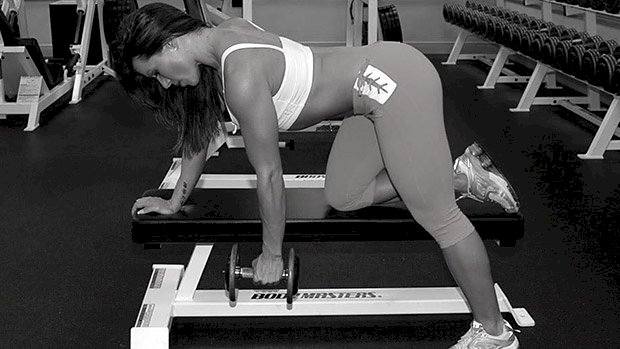 The one-arm row is a classic exercise, but it can usually be performed better by pulling with a J-shaped trajectory. One concept in muscular anatomy that’s often overlooked is the direction that fibers run. Muscles contract along the lines of fibers within them. So, muscles only contract in the direction those fibers run. In the case of the lats, the fibers run a bit diagonally from the shoulder joint down towards the lumbar spine. So it’s important to use those fibers that are high up in the back (and diving into the shoulder joint) by letting a weight travel in front of us during rows. How to Do It Get one knee on a bench with the same-side arm directly underneath the shoulder joint. Your off-bench leg should shoot out wide to “get out of the way” and create a pocket for the elbow. Engage your core and brace to keep your spine level (tabletop back). Let the dumbbell begin underneath your forehead/eye region and pull it towards your hip. Move it back towards the hips, up towards the ceiling, and then in towards the spine. Slowly control the weight back into that stretched lat position.
Origin: Tip: Master the J-Row
Tip: Eat These for Big Sex Drive
 Spanish scientists just published a report that found that adding nuts to a regular diet improves orgasmic intensity and sexual desire in men. What’s particularly notable about this study is that it wasn’t like most of the studies on erectile function in that it didn’t involve flaccid old coots who became only slightly less flaccid after undergoing some dietary or lifestyle change. Instead, this study involved young guys who already possessed the unassailable erections and volcanic orgasmic function of youth before taking part in the study. What They Did Spanish scientists, led by Dr. Albert Salas-Huetos of the University Rovira i Virgili, recruited 98 healthy men between the ages of 18 and 35 for a 14-week, randomized controlled study on the effects of mixed nuts on male sexual function. Half of the men were assigned to consume a typical Western-style diet while the other half was assigned to eat that same diet but with the addition of 60 grams per day of raw, mixed nuts (walnuts, almonds, and hazelnuts). What They Found The primary outcome seen in the nut-diet group was improved sperm count and sperm quality, but the researchers then asked the participants to supply answers to the 15-question International Index of Erectile Function (IIEF). Eighty-three of the subjects (43 in the nut group and 40 in the control group) complied. Compared to the control group, the nut-diet group reported a significant increase in orgasmic function and sexual desire. Oddly enough, the researchers couldn’t figure out why the nut group experienced an improvement in sexual function because the usual biochemical suspects didn’t appear to play a part. For instance, increased erectile function usually corresponds and correlates with an increase in nitric oxide (NO), which improves endothelial function and allows more blood to flow into the penis. But for some reason the scientists didn’t see an increase in NO production, even though nuts are high in arginine, an amino acid precursor of NO. And neither did the scientists note an increase in concentration of E-selectin, another molecule indirectly involved in healthy erections. In fact, they couldn’t figure out why nuts had the effect the did, but they rightly concluded that, “an absence of evidence does not mean evidence of no effect,” which is probably another way of saying that you shouldn’t look either a gift horse or gift erection in the mouth. How to Use This Info It’s easy to test out the findings of this study. All you’ve got to do is start eating 60 grams of mixed nuts a day and take your penis out for an occasional spin to see how the old boy handles some curves. While the study used a blend of walnuts, almonds, and hazelnuts, you could probably get away with sticking to one or two of the listed varieties instead of an equally proportioned blend of all three. Likewise, you could probably opt for other types of nuts. A previous study found that eating 100 grams of pistachios every day for three weeks had similar effects on sexual function. (That particular study was done with men who had erectile dysfunction at the outset, so given that the pistachios literally had a heavier load to lift, it could mean that larger amounts of nuts are even more potent than the 60 grams used in the Spanish study.) Here’s a breakdown of approximately how many nuts you’d have to eat to get 60 grams: 20 Walnuts, or… 40 Almonds, or… 40 Hazelnuts, or … 20 Brazil nuts, or… 30 Cashews, or… 30 Pecans, or… 4 Tablespoons of pine nuts, or… A blend of different nuts totaling 60 grams. So if you wanted to duplicate the protocol used in the Spanish study, you could eat a 60-gram blend consisting of about 10 walnuts (30 grams), 10 almonds (15 grams), and 10 hazelnuts (15 grams). However you do it, keep in mind that 60 grams of nuts is between 350 and 400 calories, so make dietary adjustments accordingly so you don’t gradually pork out your waistline. Of course, 60 grams is a damn lot of nuts to eat in general, so let’s get practical. The pro-sexual effects of nuts are likely due to their anti-inflammatory, anti-oxidant properties (courtesy of their inherent polyphenols), and eating just 30 grams of them a day instead of 60 is probably more than enough to help you get the desired sexual effects and the desired health effects, especially if you’re young and already turgid a good amount of the
Origin: Tip: Eat These for Big Sex Drive
Tip: Replace the Rear-Delt Raise
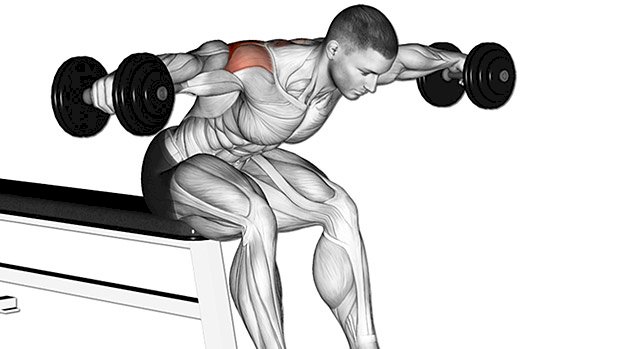 I’ve done my fair share of bent-over lateral raises (rear delt raises), but the truth is that they fall short. With a bent-over lateral raise, the rear delts never actually get fully shortened. A key component in maximizing an exercise is to get the target muscle fully lengthened and then fully shortened within a movement. But some exercises don’t do that as well as others. Here’s a better option: Rear Delt Row with Supination Row to bring the elbow behind the body as far as possible, which will shorten the rear delt. Add a twist, literally, by supinating as you perform the row. Why the twist? Because it’ll bring about a certain amount of external rotation in the shoulder, which is one of the components of the rear delt. Supination at the forearm is actively linked with external rotation of the shoulder, just like pronation is linked with internal rotation. This isn’t an exercise you’ll go super heavy on, but you won’t need to so long as you’re using the appropriate resistance with it for the mechanics, and making sure to get the rear delt fully
Origin: Tip: Replace the Rear-Delt Raise
Tip: Mix This Into Your Food to Get Super Healthy
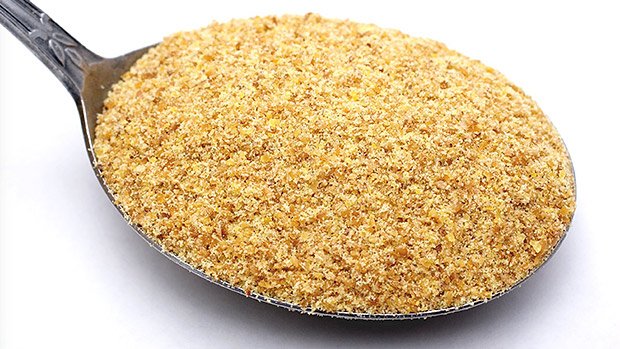 Flaxseed: The Comeback Poor old flaxseed was once a rising star in the nutritional world. It was touted as being the highest non-ocean source of omega-3 fatty acids, so if you didn’t like to eat mackerel, herring, or oysters every day, flaxseed was your girl. But then people found out that flaxseed came with an omega-3 catch: It didn’t actually contain DHA or EPA, the omega-3s the human body needs. Instead, it contained alpha linolenic acid, which the body has to convert to DHA and EPA. That might not sound like a big deal, but it turns out the conversion process is kind of a heavy enzymatic lift for the body, so much so that only 10 to 15% of the linolenic acid gets converted into DHA and EPA (the rest is burned as energy). So flaxseed fell out of favor. It was left to molder on the shelves at Whole Foods, passed over for the younger and prettier chia seeds, but don’t worry, flaxseed isn’t vindictive like your ex. She’ll take you back, because that’s just the kind of big-hearted seed she is. And while she may not have the omega-3 horsepower of her fishy friends, adding a daily teaspoon or two to your diet could improve your health considerably in the following categories: 1. Cardiovascular Disease Flaxseed, at least in animal studies, has proven to be effective in slowing the build-up of plaque induced by high-cholesterol and high-fat diets, in addition to lowering circulating levels of trans fats. As far as human trials, flaxseed has been shown to significantly decrease systolic and diastolic blood pressure, so much so that it led to a prediction of a 50% decrease in the incidence of heart attack and stroke. 2. Diabetes Dietary flaxseed reduced blood glucose in people with Type 2 diabetes, along with lowering blood sugar in people with prediabetes. 3. Cancer A review of ten human trials led to the conclusion that flaxseed reduced the rate of tumor growth in women with breast cancer. Cancers of the prostate, lung, colon, ovary, endometrium, liver, and cervix have also been inhibited by flaxseed. 4. Skin Health Women involved in a 12-week, randomized study found that dietary flaxseed oil led to a significant decrease in trans-epidermal water loss, skin roughness, and scaling, with an increase in skin hydration and fullness. 5. Gastrointestinal Health Because of its high fiber content, flaxseed has shown a lot of promise in giving relief from constipation, in addition to reducing symptoms of irritable bowel syndrome (IBS). It also appears that it’s fermented in the gut and leads to the formation of short-chain fatty acids, which may favorably alter the microbial microenvironment. Forms of Flaxseed While we generally think of flaxseed in its whole-seed form, it’s also available in ground form, as flaxseed oil, and as partially defatted flaxseed meal. More recently, a “milk” form has entered the market to compete with almond and oatmeal milk. The latter iteration is fast gaining popularity as it contains no cholesterol or lactose, is suitable for people with soy, nut, or gluten allergies, and is more healthful than almond milk. I prefer the ground form, though, as it adds a slightly nutty flavor to foods. Crushing the outer seed also makes both the ALA and the ecoisolariciresinol diglucoside (SDG), flax’s predominant antioxidant polyphenol, more bioavailable. However, crushing the seed through grinding also exposes these chemicals to oxidation, so ground flaxseed needs to be kept in the freezer to preserve its magic. What are the Naysayers Going to Point Out? Every nutrient or food seems to have its detractors, and flaxseed is no exception. They’ll tell you that the protease inhibitors, phytic acids, linantine, and cyanogenic glycosides found in flax make it impossible or unlikely that the body will be able to absorb and benefit from it. They’re right in theory, but wrong in practice, as several studies have reported no deleterious effects from these flax components. Other party poops will complain about the cyanide formed in the gut when flax is ingested, like cyanide ever killed anybody. Okay, it has, but this isn’t an issue here. Taking one to two teaspoons of flax will result in about 5-10 mg. of hydrogen cyanide being manufactured, but the human body can easily detoxify up to 100 mg. of cynanide a day. Just keep your flax consumption down to less than a kilogram a day (2.2 pounds), which I wouldn’t think would be an issue. Just the Flax, Ma’am To reap the benefits of flaxseed, add a teaspoon or two a day to anything that might benefit from its texture or taste, from oatmeal to salad or yogurt to soups. Start slow, though, as your gut may rebel against such a big dose of fiber if it isn’t used to
Origin: Tip: Mix This Into Your Food to Get Super Healthy
Tip: The 5-Minute Upper Body Finisher
 Hit this quick workout for a super pump at the end of your training sessions. Yes, it’s short, but aim for controlled reps with minimal rest. The routine consists of these three simple exercises: 1. TRX Bicep Curl Lean back away from the anchor point and have your elbows about shoulder height, palms facing up. Keep your shoulders back and down and curl from the elbow. Just pull to beside your head without letting the elbows drop. Avoid lifting from the shoulders and pulling behind yourself. Keep these slow and controlled and really focus on isolating the biceps while maintaining posture. 2. TRX Row Turn your palms so they face each other. Fully lock out the arms and think about engaging the lats before you pull. When you reach your chest to the handles, squeeze your shoulder blades together as much as you can before slowly returning to the start position. 3. The Push-Up Move to the floor. Place your hands shoulder distance apart, keep your belly tight, and push your feet into the ground. Fully extend the elbows at the top – no half reps. If you need to regress to your knees that would be better to maintain a full range of motion. The Rep Scheme 5 TRX bicep curls 8 TRX rows 10 push-ups Do 5 full rounds If don’t struggle with the exercises and your form stays strong throughout, then aim to go unbroken (no resting) between all five rounds. If you’re fairly new and your arms burn out quickly, take 30 seconds of rest between rounds. Remember the aim is quality movement with good tension. If you feel like you’re able to relax too much at the top of the rows or curls then walk your feet forward to put yourself more toward horizontal. This workout should take you around five minutes. If you can do it in 3 or 4 minutes, you’ve performed the exercises too
Origin: Tip: The 5-Minute Upper Body Finisher
Tip: How To Meet Women At The Gym
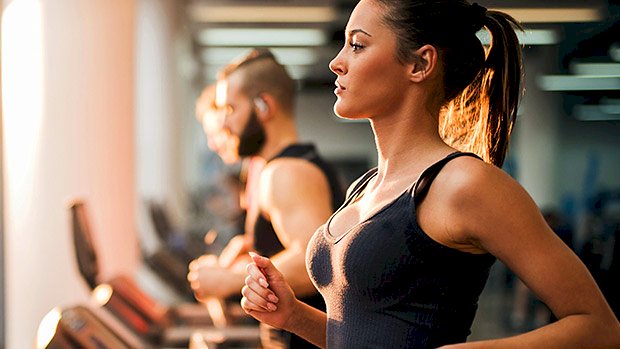 A lot of lifters say the gym isn’t the place to meet people. But if you’re single, wouldn’t you want to find someone with your shared interests and healthier lifestyle? The main problem for women? Guys at the gym can be creepy. They’ll stare for too long, interrupt our sets, or flirt in a way that holds us up from getting on with our workout. So here’s a short guide to increase your chances of success and save us ladies a lot of wasted time and discomfort. 1. Pick the Right Girl Here’s a list of women you should probably leave alone: The Cardio Girl: Women don’t generally want to stop their treadmills to chat. So unless you’re going to do what she’s doing and chat her up, don’t bother. The Hideaway Girl: She’s the one who drags a yoga mat and some dumbbells into a corner. She’s hiding for a reason. Don’t invade her space. The Bandit: If she’s wearing headphones, a baseball cap, and a hoodie, she doesn’t want to talk to you. I don’t care how ripped your abs are and neither does she. The Front Desk Girl: She has to be there no matter what, so don’t make it weird. Plus, if things go wrong, you’re both screwed. And not in a fun way. Here are some better options: The Girl Who Lifts Like You: She’s a woman you see regularly and who seems to be integrated in the community. She’s probably your best bet since you’ll share common interests and she values lifting the way you do. The New-ish Girl: She might hang around the weights but doesn’t seem as comfortable as the first girl on this list. She might welcome a wave or a quick, “Can I help you find something?” The Group Fitness Girl: She takes classes and hangs around talking to staff after. She’s there regularly and is probably looking for people who share her love of fitness. Note: Even if her idea of fitness is group fitness, which you think is stupid, suppress the urge to share this with her. Notice the thing all these girls have in common? You’ve seen them before. It’s probably not a great idea to approach a girl you’re seeing for the first time, unless there’s a very clear opening. A girl who goes to the gym as regularly as you do probably kinda-sorta knows who you are. I get a lot less of that stranger-danger feeling when I get a hello from a guy I’ve seen around than from a guy who appeared out of nowhere. 2. Looks for the Signs (Good Ones and Bad Ones) She’ll make eye contact. Do you guys make eye contact a lot unintentionally? Then she’s probably been sneaking glances at you, too. It’s a good sign. If she seems like she’s avoiding your eyes, she’s either uninterested or shy. She’ll smile. This one’s obvious, but if she smiles or says hello, it probably means she’s at least down to chat. If she starts a conversation, don’t be an idiot and cower away; she might not give you another chance.If you greet her and she doesn’t say “hi” back (and she definitely heard you) then leave her alone. Just because she says “hey” to you regularly doesn’t mean she’s definitely DTF. It’s just a signal that she’s open to communication. She’ll keep physical proximity. If she hangs around after finishing up an exercise when you’re nearby, she might be trying to give you an opening. If she takes her earphones off and then hangs around, she’s trying to be even clearer. But if you move to a machine near her and she very obviously moves away, that’s not such a great sign. 3. Break the Ice (The Right Way) Don’t correct her form. You don’t know what she’s trying to accomplish and people don’t like to be corrected by strangers. Don’t comment on her appearance. Giving a girl a compliment on her appearance, even a tasteful one, can come off as sleazy. You can pull this move after she agrees to go out with you. Don’t ask her out for drinks immediately. It reeks of desperation. Get to know her and keep the conversation centered on gym stuff at first. It’s possible she’s not even into drinking. Here are some better introductions: Ask about her workout. Ask the same way you might ask a dude who’s moving a ton of weight or working on a program similar to yours. This is a great way to get the conversation rolling. It shows respect and gives the conversation direction. Ask about her shoes. Any apparel will do actually. It’s kind of stupid, but her sneakers, belt, knees sleeves etc. can provide an easy way to pick up a conversation. When I was running marathons, I’d see someone wearing the same shoes as me and always comment. I even picked up some new clients this way. Just say hi. This isn’t the best method because it leaves her to do most the work, but if she’s already interested then she might be willing to pick up some of the slack. At least you’ll have initiated contact and can come up with something more creative next time. Nothing wrong with being friendly. Bottom Line A lot of the females are fed up. They don’t want to be approached by guys at the gym anymore because they’ve spent too many hours indulging some dude’s awkward come-on when they’d rather be
Origin: Tip: How To Meet Women At The Gym
Tip: Not Probiotics, Not Prebiotics, but Postbiotics
 In the beginning there were probiotics – foods that contain bacteria that are thought to have beneficial effects on the human body. They were implicated in helping us digest foods, increasing nitrogen retention, controlling our mood and body fat levels, and even increasing the size of testicles (at least in mice). Scientists began isolating these healthful bacteria in the hope that we could scoop millions of them up into capsules and put them on drugstore shelves, where they’d patiently wait for some person with grumbly bowels to buy them up and give them a new home in their gut. But for some reason, the bacteria we ingested usually didn’t take. They’d either die or take the next poop train out of intestinal Dodge. After a while, scientists figured out that unleashing a bunch of bacteria in our gut wasn’t much different than filling a barn with a bunch of farm animals and then leaving them to fend for themselves. In other words, the farm animals need to be fed, and so do any farm animals let loose in our guts. The Care and Feeding of Wee Little Beasties Figuring out what foods help cultivate bacteria became the science of prebiotics. From it, people learned to chomp down on vegetable fibers from woody vegetables and grains so they could grow enormous colonies of good bacteria that would earn them a blue ribbon at the bacterial 4H club. People also began eating foods that combined prebiotics with probiotics, simultaneously supplying the gut with healthful bacteria and food to feed them with. These combined foods are known as “synbiotics,” of which foods like sauerkraut and kimchi are examples. But lately, food scientists have taken their research a step further by asking what exactly is it about these bacteria that benefit humans? The answer was found in the metabolic byproducts of these bacteria. That’s right, the stuff that bacteria leave in their tiny toilets is the stuff that’s having all these beneficial effects on humans and they’re collectively known as postbiotics. By ingesting postbiotics instead of probiotics or even prebiotics, we wouldn’t, at least theoretically, have to worry about whether or not bacteria got a foothold in our guts and started growing. Instead, we could just ingest these probiotics themselves and reap all the supposed benefits of the actual bacteria without having to worry about whether or not they thrived in our guts. What Are These Bacterial Waste Products Good For? Postbiotics, as a class, are thought to have the following beneficial effects on humans: They fight the growth of harmful pathogens (better gut health in general) They reduce inflammation They lower blood sugar They lower blood pressure They treat IBS or leaky gut syndrome They reduce oxidative stress They foster the growth of good bacteria There are no doubt plenty of specific postbiotic end products, but the science is still in its infancy and there’s lots of exploring to be done. However, we’re currently aware of at least a few postbiotic end products that influence human health: Short-chain fatty acids: End products like acetic acid and butyric acid that help modulate blood sugar levels. Indole: This chemical is largely responsible for the characteristic smell of feces, but it’s recently been found to help animals retain a youthful gene expression, theoretically leading to extended life spans. Hydrogen peroxide: Production of this well-known chemical can thwart the rise of salmonella and other pathogenic bacterial bad guys. Muramyl peptide: This protein can help regulate human sleep. p40: This protein is a key driver of cell-mediated immunity. Nutrients: Bacteria produce several B vitamins, vitamin K, and even some amino acids. Sources of Postbiotics There are currently a number of postbiotic supplements available, but I don’t think they’ve quite got it nailed down yet as to which ones, in what amounts, and in what combinations, are best for human health. The current best option is to increase the production of postbiotics by including some of the foods listed below in your diet. That’ll allow your native bacteria to produce more postbiotics than they might ordinarily: Apple cider vinegar Butyrate (through eating butter and cheese) Spirulina (yeah, that algae stuff we all used to laugh at) Grape pomace (the solid remains of grapes, olives, or other fruit; stuff like pulp and skins) Mushrooms (specifically, the mycelium they’re made of) There’s also some overlap between probiotic and postbiotic foods in that you can increase the production of the latter by eating more of the former, things like the following traditional probiotic foods: Kefir Pickled vegetables Sauerkraut Kombucha Take-Home Points Despite these revelations about postbiotics, pre and probiotics are by no means a waste of time. It’s conceivable, though, that there might come a point when we don’t have to agonize about them so much. For the time being, continue to eat your prebiotic fibers and your probiotic fermented
Origin: Tip: Not Probiotics, Not Prebiotics, but Postbiotics
 All about sport xlsport.club