
 Strength isn’t a great indicator that someone will have visible abs, and while diet can play a role, there are people who have ab definition even when they’re not dieting. The truth is, abs can be a sign of multiple things. Here are six variables that affect their visibility: 1 – Genetics The science of abs is pretty cool. Christian Thibaudeau has explained how some people – even when they get lean – won’t be able to see their abs because their abdominal muscle bellies aren’t naturally thick. (See: Abs Are Built in the Gym, Not the Kitchen.) He’s also explained tendinous attachments (they’re what create the lines between abs) and how they can play a role in the amount of separation you see between abdominal muscles. In short, they determine whether you’ll have a 4-pack, 6-pack, or 8-pack, no matter how lean and muscular you are. It’s genetic. 2 – Training Those who don’t genetically have thicker ab muscles will need to do more work to hypertrophy theirs. Diet alone won’t cut it. The abs are a muscle group, so this shouldn’t come as a surprise. Train them directly with resistance. The big lifts alone won’t cut it. 3 – Body Fat There’s a point when, even if you DO have developed abs, they won’t be visible if you’re carrying too much body fat. No amount of ab training will make them visible if they’re underneath several inches of adipose tissue. You knew that, right? 4 – Digestion Some people say chronic digestive distress can lead to increased body fat around the midsection. I’m not sure I buy that. But I will say that stomach distension and pressure in the gut (from gas, constipation, undigested food sitting in the stomach, etc.) can make your belly protrude. And extreme protrusion alone will make ab separation less visible, unless you flex hard. So even if you’re someone who’s lean enough to have abs, slow motility and poor digestion can simply make it harder to display them. 5 – Water Retention Ask any fit woman when she wants to get professional photos taken and there’s a good chance she’ll schedule it around her period. Why? Because there are a handful of days every month when we retain more water than usual, and it can affect the appearance of our midsection. But even men experience water retention for various reasons. Sometimes both males and females will use diuretics before big events in order to manipulate water and increase definition all over, including the abs. 6 – Skin Tone Ab definition is slightly more visible when you have a tan. It just makes what you have easier to see. This is especially true if you’re lean enough to have ab definition, but you haven’t been able to build much muscle thickness there. So if you’re pale skinned and you have a shadow of an ab or two, try slapping some fake tanner on and see if that makes them a bit more visible. To recap, having visible abs mainly depends on what your mom and dad gave you, how much muscle you’ve built in the midsection, and how lean you are. Contributing factors may include digestion, water retention, and skin
Origin: Tip: 6 Things That Affect Ab Visibility
Tag: Things
5 Things You Can Train Everyday
 I’m a firm believer in frequency when it comes to strength and size gains. It’s not surprising when you look at my personal training background. I started out training for football and our strength coach was a big believer in hitting the big basics three days a week. Our program was essentially the power clean, squat, bench, and pull-up three days a week. After football I transitioned to Olympic lifting where I’d squat, clean, and snatch pretty much every day. The higher frequency regimen worked for those exercises too. The truth is, you can train pretty much everything with a high frequency once technical mastery is accomplished. Of course, you need to plan volume and intensity properly, but it’s possible. Not sold on the idea of squatting every day or snatching every workout? No worries. There are a few things that are less complicated than others to train every day. And they’ll make it pretty easy to fix some of your weak links too. Here are five of them. 1 – Forearms Forearm exercises don’t cause much, if any, muscle damage, especially for exercises with less eccentric loading like the wrist roller or Thor’s hammer (see video). But even wrist flexion and wrist extension will cause little damage. Furthermore, these exercises have a very small impact on the nervous system because they’re very simple and done with light weights. Energy expenditure is low too since it’s a short range of motion and smaller muscles are involved. None of the factors requiring more recovery time are present with forearm training. Unless you go absolutely crazy with the volume there’s no reason you can’t train forearms every day. Why would you want to do that? Because big forearms look cool. Hey, they’re the only thing that’s 100-percent showing in a T-shirt! But having well-developed forearms will do more for you than simply attracting admiration. Bigger and stronger forearms make it easier to build bigger biceps. Coach Charles Poliquin wrote about this phenomenon 20 years ago. The body hasn’t changed since that was written. By building bigger, stronger forearms you’ll be able to handle more weight in both curling and pulling exercises, which will increase the stimulation on the biceps and back muscles. Bigger forearms and a stronger grip also help the bench press. Look at the top bench pressers in the world; they all have thick forearms. To bench heavy weight you need a strong grip. The harder you can squeeze the bar, the less the wrist will tend to cock and get the bar misaligned. (The bar should be directly above the wrist joint. If the wrist is cocked, the bar moves away from that alignment.) On top of that, big forearms create a bigger “body” on which to spread the load of the bar. This can decrease stress on the shoulder joint. There is one caveat: You shouldn’t overdevelop one part of the forearms. For example, the wrist flexors tend to be trained a lot more than the wrist extensors (the flexors are involved a lot when curling and pulling) and the forearms supinators are often dominant over the pronators. Just like any other muscle imbalances in the body, this can lead to problems like tendonitis. So if you want to jack up your forearms and train them every workout (or every day) then work on flexion/extension one workout, do supination/pronation on the next, and do grip work on the third. Then just rotate through that. Since forearm exercises have a short range of motion, you’ll need to do either higher reps or use a slower tempo to create enough fatigue and trigger growth. Sets lasting 30-60 seconds should be your target. I actually don’t count reps when doing forearm work. I put a timer on and keep working until I’ve achieved failure or close to it in the 30-60 second range. But I’ll prescribe a number of reps in a couple of the examples below for the sake of simplicity. Workout A – Flexion/Extension Exercise Sets Reps Rest A1 Wrist Roller 3-4 30-60 sec. 1 min. A2 Wrist Curl 3-4 10-12 90 sec. Workout B – Supination/Pronation Exercise Sets Reps Rest A1 Thor’s Hammer Pronation (4 second negative) 3-4 10-12 1 min. A2 Thor’s Hammer Supination (4 second negative) 3-4 10-12 1 min. Workout C – Grip Exercise Sets Reps Rest A Pinch-Grip Deadlift (Hold 30-60 sec.) 3 90-120 sec. B Fat-Grip Hold (Hold 30-60 sec.) 3 90-120 sec. You can use other exercises if you prefer, but you get the idea. 2 – Abs My strategy for ab training? Using blocks of intense abdominal training where I hit them every day for 4-6 weeks. You can recover rapidly from pretty much any abdominal exercises except those full range GHD sit-ups you see in CrossFit. (This movement creates a powerful stretch of the rectus abdominis – especially when done with the speed they use – which will cause a lot of muscle damage, and require more recovery time.) Daily ab training at an adequate level of intensity is one of the fastest ways of improving abdominal aesthetics, provided you’re lean enough to show them. The “abs
Origin: 5 Things You Can Train Everyday
7 Things No One Tells You Before You Start Lifting
 All of us who lift weights or bodybuild know things, painful things, about lifting that we normally don’t share with beginners because, frankly, no one ever filled us in on these secrets beforehand and we’re all still pretty chafed about it. But I’m feeling uncharacteristically nice today, so if any of you out there are thinking about taking up lifting, here are a few of the distressing truths you’ll soon come to realize. 1 – You’ll only really look good for a month or two a year… probably in summer. No one ever bothers to tell you that the guys pictured on bodybuilding websites don’t normally look all ripped. Most of the time, they look like Fat Thor, or that their high school nickname was Billy Bob and Coach Kilmer wanted them to play in the big game for West Canaan, even though Billy Bob has a concussion. It’s only when they get ready for a contest or, if they’re amateurs, when they get ready for summer that they start to get the body of pre-Thanos Thor. That’ll probably be you too, because walking around all year-round with body fat in the single digits is about as easy as running a marathon every day while wearing one of those goofy T-Rex suits and carrying a serving set of tea cups. But hey, two months of looking good is better than zero months of looking good. 2 – You’ll get to know what being old feels like, years before it actually happens. Let me clarify this a bit. You’ll feel fine, even great, once you’ve been lifting weights for a while… as long as you’re sitting perfectly still. If you are moving, well hello old guy who does commercials for those walk-in bathtubs! You won’t just “get up” in the morning. You’ll be so achy from lifting that you’ll actually have to unfurl yourself out of bed, once piece at a time like some cheap piece of mass-produced furniture from IKEA. Some parts will wake up faster than others, but until all your decrepit joints are in sync, you’ll do a kind of an answering-the-phone-with-your-pants-around-your-ankles walk that would cause an Elementary school administrator to pull over and offer you the custodial job recently vacated by the passing of Dale, the funny-in-the-head janitor who died last Tuesday. But it’s all worth it, of course. 3 – People will assume you’re stupid. Once you start filling out your T-shirt with muscle, people will assume your brain is inversely proportional to your degree of muscle. You’ll be regarded much the same way as Fran, the squeaky voiced, large-breasted but dim-witted hooker in that 80’s movie, The Man With Two Brains: Dr. Michael Hfuhruhurr (Steve Martin):I can’t. Fran:Can’t what? Dr. Michael Hfuhruhurr:I can’t inject you with window cleaner. Fran:I don’t mind. Hey, what does it do anyway? Dr. Michael Hfuhruhurr:It causes your brain to die. Fran: I don’t mind. No one will take you seriously about anything, unless it has to do with the bench press or protein requirements. And if you do say something smart, people will be thunderstruck. They’ll regard you the same they would if they met a chimp who learned how to use the toilet, or some four-year old who learned the lyrics to Itsy-Bitsy Spider. It’ll all feel pretty demeaning. 4 – You’ll start looking for any excuse to take off your shirt. There’ll come a time – probably a few months after you start training – that you’ll start feeling a little cocky about your new body. You’ll be like some fool who learned a few words of Spanish and then looks for any excuse to go to a Mexican restaurant to proudly exclaim “Muy bueno!” when the doesn’t-give-a-shit waitress comes to clear his plate away. But instead of showing off your linguistic aptitude, you’ll start showing off your torso by taking off your shirt in front of an audience whenever there’s any excuse to do so, whether the thermometer inched up to a sweltering 71 degrees or you just need to push the trash dumpster out to the street. It’ll take all your restraint not to strip off your suit jacket and shirt at a funeral because carrying that casket would really make your delts pop. Likewise, you’ll never again pass a mirror, window, or back of a shiny spoon without catching an admiring glimpse of your wonderfulness. It’s pretty sad, but like I said, it’s all worth it. 5 – You’ll never again eat anything that tastes good. You poor bastard. You’re now going to eat for both muscular size AND fat loss, a Houdini-like nutritional trick that, while not impossible, is kind of like going camping and trying to start a campfire underwater on the bottom of Lake Winnibigoshish. Besides that, your diet isn’t going to have a lot of variety. Let’s put it this way: You know how you’ve been feeding the family dog the same kibble every day for his whole life? Well, next to your new, bodybuilding diet, the dog’s diet is a wild, gastro-fusional delight that does the cha-cha on the tongue. Everything you eat from now on until you set down your last dumbbell is going to be from a painfully short list of standard high protein, low-carb,
Origin: 7 Things No One Tells You Before You Start Lifting
5 Things to Stop Doing in the Gym
 1 – Setting the Shoulders and Leaving Them There When it comes to pulldowns, chin-ups, rows, or any other upper back dominant movement, you first engage your back muscles by drawing the shoulders away from the load. That’s like, rudimentary. The mistake is in the details: So, holding a set shoulder position places the rhomboids and lower traps in a long isometric hold that’s sure to fade as the set progresses. Give your muscles the chance to reset in-between reps to allow them to relax, get circulation, and re-contract, which will sustain your efforts. Resetting in-between reps will also help you to develop some much needed scapular mobility. 2 – Freaking Out About Spinal Flexion The idea that all hell breaks loose the second your spine bears load in anything but mild extension is ridiculous. There are entire competition events (think about tire flips in CrossFit or the Atlas stones in strongman) that hinge on a lifter’s strength while in spine flexion. We talk so much about a neutral or slightly extended spine that it can actually cause a bit of harm to a well-intended lifter. To lift the most possible weight, many powerlifters actually find a stronger pulling position when setting up with a rounded thoracic spine. It reduces the amount of horizontal space needed for a lockout and finishing strength, which can prove advantageous in competition under the heaviest loads. None of this is to say that missing deadlifts by using unfavorable form is something I endorse to the general public. Sure, keep a neutral spine when possible, but the phobic resistance to any exercise that may involve spinal flexion – like sit-ups or crunches – needs to die as soon as a lifter has reached a decent level of competency and athleticism. You won’t crash and burn the second you do a trunk flexion. It may even do fairly well in strengthening your anterior chain. Just don’t be stupid about it. The same thing applies to squats. Take a good, deep squat as an example. We may be so concerned with our spine staying flat when doing a bodyweight squat that we contort our body through bottom end ranges to respect this “rule.” The result is a high butt and a torso that’s pitched way too far forward. Forget about the hips and back for a minute; this flat-spine obsession ignores the fact that the knee joint literally never gets exposure to the deep flexion necessary to get a full ROM. The result is extreme weakness in squats, other loaded movements, and even in day-to-day life. No one wants that. 3 – Adding Weight to Pull-Ups We strength coaches and experienced lifters all shake our heads when we see a poor quality squat or deadlift, but we never even flinch when we see rotten pull-ups. If I had a Bitcoin for every time I saw a pull-up with excessive body English, thoracic spine flexion, shoulder glide, and knee tuck, I’d be a very rich man. The kicker is that these same people progress this movement by adding significant loads. Who are they kidding? Chances are your bodyweight, especially if you weigh over 200 pounds, is more than enough to create an ample challenge for pull-ups and chins, provided you’re doing them with good form: You’re hardly training your back anymore if your shoulders aren’t able to depress during the movement, your chin “reaches” for the bar, and your range of motion is compromised. I can’t say this enough: Check your ego at the door and stop doing weighted pull-ups. They’re hardly a progression if you can’t make them look like their bodyweight counterparts. 4 – Playing Mr. Natural, Ignoring Proper Footwear/Gear The idea that you’ll always be able to create the perfect tripod position with your feet (where the foot creates an arch and the heel, ball of the foot, and toes are firmly planted on the ground) when squatting or deadlifting with load is something that’s more applicable in theory than it is in practice. There just aren’t many coaches who have the stones to say it. Anyone can assume the right foot position when unloaded, and that mistakenly gives many coaches the idea that clients can do their whole workout in socks. Things change when you’re trying to move hundreds of pounds, though. Under challenging loads, the body will start succumbing to its habits and predispositions. If you’re someone with foot pronation or fallen arches, that probably means they’ll show up to torment you at some point in your ramp toward a heavy squat or pull. So we can stupidly try to cling to the idea that a shoeless squat is exactly the training tool you need to get better, or we can give our feet the support they need for more stability. We have to decide whether the goal of our workout is to have the best performance by the numbers, or to have a performance that actually addresses our weak links. Decide and adjust accordingly. The same rings true when discussing the use of belts. First, they’re not an accessory. They create a surface for the trunk muscles to brace against, thus helping protect the spine. Wearing a
Origin: 5 Things to Stop Doing in the Gym
Tip: 7 Things Smart Lifters Know
 If you’ve been training for a decent amount of time, you’ve made some mistakes. It’s part of the process. But doing your homework can definitely save you some time and energy. It would be nice if there existed a simple answer or method to get us to our goals in the shortest possible time, but in reality we have to spend time under the bar and learn what makes our unique profile tick. With that in mind, here are some things to avoid, some things to think about, and some ideas to try out. 1 – Sometimes less is more. Try time-capping your training sessions at 60 minutes. Training for longer than 60 minutes might decrease serum testosterone levels and increase cortisol, at least if you’re hitting it hard and not taking 20-minute rest breaks between sets. 2 – Identify and stick to a goal. If you have training ADD then you’ve probably felt like your goals change biweekly. Avoiding this mistake is important if you’re ever going to make progress. Pick your goal and stick to it for at least 12 weeks and then reassess. The same goes for programs. It’s easy to get distracted by the “next best thing,” but that can lead to never knowing if a program is actually the right fit for you. Within 3-4 weeks you should be able to tell if that’s the case, but rotating programs weekly or biweekly won’t serve this purpose. 3 – Narrow your exercise choices. Today we have access to a lot of info, and that can be a handicap. We overthink what exercises to perform. Your workout will be much more efficient if you narrow it down to 4-5 movements and call it day. Your session should consist of a core lift, two to three accessory movements, and some direct ab work. 4 – Realize that not all experts are really experts. Access to information comes very easily on the internet, and if you have a great physique you’re an “expert.” Do your homework on the people you’re taking advice from. Having a great physique doesn’t mean you’re qualified to write individual training programs. 5 – Avoid the “one size fits all” approach. Having a one-size-fits-all program would make life easier, but unfortunately this just isn’t the case. Even if you have a coach, you have to experiment and find out where you’re weakest. Even the best coach may not be able to figure that out. Trying a program you found online is okay, but remember that just because a program worked for your friend doesn’t mean it’ll be the right fit for you. 6 – Do the boring work. Many lifters avoid the work they need the most because it doesn’t look cool on paper. That could be unilateral work, sled work, or weighted carries. This work goes a long way for everyone, regardless of your current level of experience. You’re only as good as your weakest link. If you don’t spend time building your base and bringing up your lagging muscle groups, you run the risk of injury. This work should be as high of a priority as anything else you do. 7 – Always be a student. We’re never done learning. As much as we know, there will always be people that know more. Find experts that know more than you do. Study their work, read their books, and experiment. Successful lifters know that they don’t know
Origin: Tip: 7 Things Smart Lifters Know
5 Things Natural Lifters Can Learn From Pros
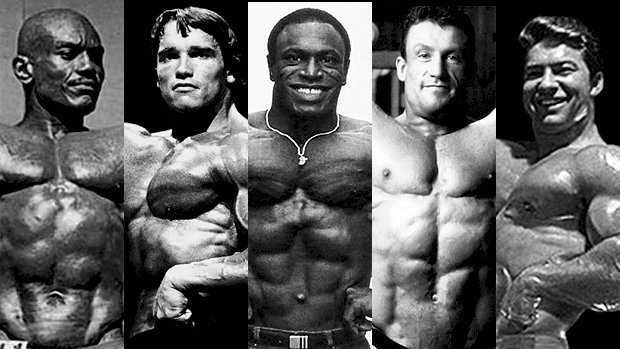 Should You Train Like a Pro Bodybuilder? Yes… and no. Blindly following the training of top bodybuilders might not work well for an average person training naturally. The physiology of both types of athletes just isn’t the same: Bodybuilders that use performance enhancing drugs have an elevated level of protein synthesis. Not so with natural lifters. The natural guy has to trigger protein synthesis with his workout, while the enhanced bodybuilder uses his workout mostly to drive nutrients to the muscles to take advantage of the elevated protein synthesis. The high level of anabolic hormones used by the pros can counterbalance an excessive increase in cortisol. In the natural bodybuilder, excessive cortisol release will not only kill protein synthesis, but will also trigger the expression of the myostatin gene, either of which will halt any possible muscle growth. Anabolic steroids increase glycogen storage and thus negate or prevent glycogen depletion. Glycogen depletion in itself is very catabolic and natural trainees are more at risk. Because of these differences, enhanced bodybuilders (especially if they have good genetics on top of all that) can tolerate more volume and can respond better to lighter “pump” work. They can also train a body part less frequently. But despite these differences, the top bodybuilders often come up with important parts of the muscle growth puzzle, and these elements can and should be used by natural lifters. Here’s what you can take away from some of the top Mr. Olympia champions: 1 – Larry Scott, Training Density Scott was the pupil of the great Vince Gironda, a man who was decades ahead of his time. Both Gironda and Scott were true thinkers and tinkerers, inventing several variations of exercises to make them more effective at isolating the desired muscle. However, their most important contribution was the emphasis on training density – doing hard work with very short rest periods. Having a high density of training (short rest periods) while still lifting heavy is one of the most powerful growth triggers. That’s one of the reasons why I like clusters, multi-rep clusters (2-2-2-2-2-2 or 3-3-3-3-3-3) and rest/pause sets. At first your performance will drop, but you can train yourself to be more resilient and stay strong even with short rests. The benefits of high density training (while staying with reasonably heavy weights) are mostly in the body composition department – it will help you get leaner while adding on muscle. The benefits to the cardiovascular system are also important, since good health is actually the cornerstone of muscle growth and fat loss. If you want to make crops grow, you can have the best fertilizers and use the best farming methods, but if the soil is poor you’ll have lousy growth. It’s the same with muscle. A healthier body will progress faster. As an example, adding muscle (naturally) without a healthy cardiovascular system to support it is virtually impossible because the added muscle poses a threat to survival! 2 – Sergio Oliva, Explosive Lifting Before being the first truly freaky bodybuilder, Oliva was an international level Olympic lifter for Cuba. His upper back and forearms can certainly attest to that. Much of his physical foundation was built on the Olympic lifts and heavy pulls. While you might not have to learn the Olympic lifts to benefit from them, explosive pulls like snatch-grip high pulls, push presses, and heavy Olympic deadlifts will really help a natural lifter build a thick back and shoulders. Other great bodybuilders enjoyed doing the Olympic lifts from time to time, Robbie Robinson and Mike Mentzer being two of them. The benefit of explosive pulls is an improved neural efficiency that will translate into better/earlier fast twitch muscle fiber recruitment. If you develop the capacity to recruit the fast twitch fibers earlier in the set, it means that you’ll fatigue/stimulate them sooner and with fewer reps. Additionally, you’ll burn less glycogen to get the job done. That means more glycogen for more growth. On a side note, the more efficient you are at recruiting the fast twitch fibers, the fewer reps you can do at a given percentage of your max. But that isn’t a bad thing. Quite the contrary! It simply means that by being better at hitting the money fibers, you provide the same stimulation without causing as much fatigue (glycogen and neurotransmitter depletion). These big explosive lifts also have the benefit of increasing muscle hardness and density. 3 – Arnold Schwarzenegger, Training Frequency Arnold was known for burying his training partners. He’s one of the rare exceptions that possessed an extremely resilient nervous system and a fiber type that allowed him to be really strong, yet have amazing set-to-set endurance. He also had a pain threshold second to none. Arnold was one of the rare people who could hit failure on 2 or 3 sets of an exercise and then proceed to make his fifth set the best one. He
Origin: 5 Things Natural Lifters Can Learn From Pros
 All about sport xlsport.club