
 Combination exercises have a bad reputation among serious lifters, but not all of them suck. The good ones hit more muscles, make you train at a higher heart rate, and force you to expend more calories. Why Most Combos Don’t Work Think of the lunge with a bicep curl: a popular combination exercise featured in every mommy-blogger routine. Sure, it’ll help burn some calories, but since when should the weight you use for bicep curls be the same as it is for a lunge? Common combination exercises attempt to kill two birds with one stone. But in reality, all they do is kill one bird and partially wound another. Effective combo exercises do a better job at matching exercises so that each one is more evenly stimulated by the same weight. They also add variety and help you build some athleticism while keeping your heart rate up. Hit your muscles efficiently and burn more body fat with these smart combination exercises: 1 – Deficit Reverse Lunge + Single-Leg RDL If your single-leg strength and stability need some work, then combining reverse lunges with a single-leg RDL would be a great way to start. Adding a deficit to the reverse lunge upgrades the difficulty, but you can always start without one. You can also go the other route and use the deficit for the deadlift component too, if you have the range of motion. The horizontal nature of this exercise can help you develop athletic speed and help you prevent hamstring injuries. If you’re just after aesthetics though, this has you covered too. Develop that glute and upper hamstring area (some call it the “glute-ham tie in”) and get a great butt pump with this killer exercise. 2 – Landmine Lawnmower This one has many names, but we’ll call it a “lawnmower” since it loosely resembles starting up an old lawnmower… albeit one that needs some forceful encouragement to get it going. The combo is highly transferable to athletic movements too, teaching an efficient lower to upper body power transfer. You’ll recognize the hip snap on the back leg in many power-based sports. To nail this lift, think of it kind of like a sumo deadlift mixed with a high-pull that goes into a rotational press. You’ll burn a ton of calories while satisfying your inner athlete. 3 – Split Squat + Iso Split Squat Row Both reverse lunges and split squats work similar muscles, but the joint loading mechanics differ. During reverse lunges, the hamstring of the lead leg also contributes to a “braking” effect. In general, split squats are a regression of reverse lunges, since you have a better opportunity to reinforce hip, knee, and ankle mechanics in a more controllable position. Combining a split squat with a cable or band row increases the quad loading on the lead leg since the force is pulling you forward. The row is also a good opportunity to hit your back without adding too much complexity. You can add the row in at the top of the movement or, for more difficulty, add it while holding the bottom position. You’ll get a lot out of these if your job requires you to sit all day. While the split squat will help open your tight hips, the row will combat hunched-over shoulders. Try these to combat your gorilla posture while smoking your quads. 4 – Reaching Rear-Foot Elevated Split Squat + Row Split squats can be progressed into rear-foot elevated split squats (RFESS), emphasizing greater load on the lead leg. Kind of like in the previous exercise, you simply add a horizontal row. But on this one, you reach forward and add more load through the hips, which is somewhat of a deadlift-squat hybrid. The reach forward will also load your lats more in their lengthened position. So as you hit the bottom and reach, you’ll be emphasizing hip engagement and a stretch of the lats. As you come up, you’ll be targeting mid-back and quads. The height of the cable can change the feel of the exercise too, so feel free to play with it. This exercise is the definition of “bang for your buck.” It’s got a moderate-high complexity, but with a high return. If you’re looking to hit it all, then grab a cable or band and give them a go. 5 – Rear-Foot Elevated Split Squat + Foot-Elevated RDL Staying with the RFESS theme, here’s another way to use them to hit your entire lower body. This one is starting to make its rounds in corrective exercise circles as a more complex rehab progression. As a combination exercise to hit your quads and hamstrings, it’ll really light up some weaknesses. 6 – Box Step-Off + Deficit Reverse Lunge Box step-offs are a good way to load a squat pattern while moving in the frontal plane. There are many options too. You can use a landmine, dumbbells, kettlebells, or a goblet position. And, of course, you can use them to build big legs. Combining box step-offs with another deficit exercise – a reverse lunge – will hammer your lower body even harder. Granted, in our “killing two birds” analogy you’re really just killing the same bird twice here. But if you’re looking to add
Origin: 10 Combo Exercises That Aren’t Stupid
Tag: that
You Can’t Prove That!
 The Question In-the-trenches experience often beats research to the punch. What training or nutrition theories do you have that haven’t been proven yet? Nick Tumminello – Strength Coach and Author I have two: 1. People who train two to three times per week don’t need to ever take a regularly scheduled “deload” or “rest week” every few months if they prefer not to. Even if they’re training hard they’re resting more than half of the week. Even if they’re doing less intense recreational activity on “off days” they’re still getting plenty of recovery time as it is. The only hindrance to their recovery would be poor nutrition or sleep habits. But taking a regularly scheduled deload or rest week is unlikely to change that. 2. Female figure competitors and male bodybuilders respond well to high-volume power-endurance complexes that are usually used to condition athletes to go the distance. You can’t spot reduce with exercise, but you can spot enhance. And every figure or fitness competitor I’ve trained has said the high-volume phase where we did leg complexes like these “brought out” their legs better than any other training protocol. For the male bodybuilding competitors, it’s was the high-volume upper-body complexes, mainly the push-up complexes like the one at the end of this article that they said brought out their chest and shoulders better than any training protocol. We know that high-volume training works for hypertrophy. However, these complexes are unique since they’re not only very high volume, they also involve explosive exercises like a plyo push-up or a squat jump. How high is the volume? Like 70-80 reps per set of a few different exercises done back-to-back for the same muscle group. But think about it: Explosive training using momentum is usually not what’s recommend for physique purposes because it doesn’t keep constant mechanical tension on the working muscles. Maybe it’s just the new challenge to the body, and the fact that they tend to perform the reps fast since the complexes use light loads that gives them a crazy pump. All I know is that these types of complexes were the most requested by both male and female competitors to use in the final 4-8 week training phase leading up to them getting on stage. – Nick Tumminello Chris Shugart – T Nation CCO Eat a little more on your off days… or just as much as you do on training days. “Eat for what you’re about to do,” the old nutrition adage goes. Here’s a related one: “Eat fewer carbs on your days off from the gym because you’re not spending as much energy and you don’t need that extra fuel for training.” Well, I suspect this isn’t true for hard-lifting athletes and bodybuilders. I began to suspect this by simply being what I call “body aware.” That just means being really tuned in to your body and the messages it’s sending you. The message my body sends me on my first off day after four straight days of training is, “Hey, you could really use a big-ass, carby bowl of oatmeal.” That goes against the rules we’ve always gone by… but does it really? Eat for what you’re about to do? Well, if you’re consistently training hard, then what you’re “about to do” on off days is recover and grow. And your body needs fuel for that. Yes, even carbs. So while it hasn’t been proven yet, I think the idea of eating less on off days will go the way of Swiss ball squats in the future. A couple of caveats: If you’re in a fat loss stage, then yeah, you’re going to be a little hungry. But don’t lower your calories even further on off days just because you’re not training. Don’t use this as an excuse to eat like a fat kid at grandma’s house. Eating more (or just as much) on off days doesn’t mean to bathe in soft serve ice cream. It just means to listen to your body and give it what it needs to recover. – Chris Shugart Christian Thibaudeau – Strength Coach and Performance Expert For intermediate and advanced lifters, changing the loading from set to set works better for getting stronger than doing all of your work sets with the same weight and reps. I’ll give you three examples: Waves A wave normally has three sets and most of the time you do two waves in a workout. The first wave is more conservative, around an 8/10 on the RPE scale (leaving 1-2 reps in the tank) and the second wave is all-out or close to it. Within a wave, the reps and load also change. From set to set the reps decrease and the load increases. For example: Wave 1 Work Set 1:3 reps at 200 pounds Work Set 2:2 reps at 210 pounds Work Set 3:1 rep at 220 pounds Wave 2 Work Set 4:3 reps at 210 pounds Work Set 5:2 reps at 220 pounds Work Set 6:1 rep at 230 pounds My three favorite wave loading schemes are 3/2/1 waves, 5/3/1 waves, and 6/4/2 waves. Low Rep Pyramid For strength, this is one of my favorites. It’s the cornerstone of my Built for Bad and Built for Battle programs. You perform 4-6 work sets. With each set you decrease the reps and increase the load. For example: Work Set 1:5
Origin: You Can’t Prove That!
Tip: 6 Things That Affect Ab Visibility
 Strength isn’t a great indicator that someone will have visible abs, and while diet can play a role, there are people who have ab definition even when they’re not dieting. The truth is, abs can be a sign of multiple things. Here are six variables that affect their visibility: 1 – Genetics The science of abs is pretty cool. Christian Thibaudeau has explained how some people – even when they get lean – won’t be able to see their abs because their abdominal muscle bellies aren’t naturally thick. (See: Abs Are Built in the Gym, Not the Kitchen.) He’s also explained tendinous attachments (they’re what create the lines between abs) and how they can play a role in the amount of separation you see between abdominal muscles. In short, they determine whether you’ll have a 4-pack, 6-pack, or 8-pack, no matter how lean and muscular you are. It’s genetic. 2 – Training Those who don’t genetically have thicker ab muscles will need to do more work to hypertrophy theirs. Diet alone won’t cut it. The abs are a muscle group, so this shouldn’t come as a surprise. Train them directly with resistance. The big lifts alone won’t cut it. 3 – Body Fat There’s a point when, even if you DO have developed abs, they won’t be visible if you’re carrying too much body fat. No amount of ab training will make them visible if they’re underneath several inches of adipose tissue. You knew that, right? 4 – Digestion Some people say chronic digestive distress can lead to increased body fat around the midsection. I’m not sure I buy that. But I will say that stomach distension and pressure in the gut (from gas, constipation, undigested food sitting in the stomach, etc.) can make your belly protrude. And extreme protrusion alone will make ab separation less visible, unless you flex hard. So even if you’re someone who’s lean enough to have abs, slow motility and poor digestion can simply make it harder to display them. 5 – Water Retention Ask any fit woman when she wants to get professional photos taken and there’s a good chance she’ll schedule it around her period. Why? Because there are a handful of days every month when we retain more water than usual, and it can affect the appearance of our midsection. But even men experience water retention for various reasons. Sometimes both males and females will use diuretics before big events in order to manipulate water and increase definition all over, including the abs. 6 – Skin Tone Ab definition is slightly more visible when you have a tan. It just makes what you have easier to see. This is especially true if you’re lean enough to have ab definition, but you haven’t been able to build much muscle thickness there. So if you’re pale skinned and you have a shadow of an ab or two, try slapping some fake tanner on and see if that makes them a bit more visible. To recap, having visible abs mainly depends on what your mom and dad gave you, how much muscle you’ve built in the midsection, and how lean you are. Contributing factors may include digestion, water retention, and skin
Origin: Tip: 6 Things That Affect Ab Visibility
Tip: The Stretch That Accelerates Gains
 Can stretching help you build muscle faster? Yes, if you use a certain type of stretching. What type? Weighted stretching. You’ve probably read about how loaded stretching increases activation of the anabolic mTor pathway, increases your active range of motion, and creates an occlusion effect that promotes increased blood flow and delivery of nutrients to muscle cells. So let’s take a look at one more benefit. Pre-Set Antagonist Weighted Stretching Most of the benefits of weighted stretching focus on the target muscle. For example, performing a bottom-range dumbbell press hold at the end of a chest workout. But what if we were to stretch the pecs right before doing a set of, say, rear-delt rows? What you get is increased active range of motion of your row, along with higher output and better quality muscle contractions. How does this work? It’s based on the agonist-antagonist relationship: For a muscle to shorten to the desired range, its antagonist must be able to lengthen to accommodate. Taking the example of the row, the pec minor has to lengthen to allow the rear delts to shorten. The rear delts are the agonist; the pecs are the antagonist. When the agonist shortens and contracts, the antagonist lengthens and relaxes. This is a slight oversimplification, given that the antagonist doesn’t always relax, at least not fully, but you get the idea. The exercise combos below have been thoroughly tested and work very well: 6 Ways to Apply This Method Clavicular Pec Weighted Stretch – Rear Delt Row Cue:Actively pull or “row” into the stretched position. Tip:If you’re not confident with a heavier loaded hold, do a wide flye stretch with a submaximal load. Sternocostal Pec Stretch – Lat Focused Pulldown Cue:Cue the elbows towards the base of the spine to keep them tight during the stretch. Tip:If you can knock out dips comfortably, you could also hold an isometric stretch at the bottom of a dip. Mid-Trap and Rhomboid Stretch – Pec Dec Flye Cue:Think about getting your shoulder blades to your pecs. Tip:Use a long rope in a seated cable machine or sit on the floor. Keeping the lumbar as neutral as possible, allow the T-spine to flex while simultaneously protracting as much as you can. Couch Stretch – Hamstring Curl Cue:Actively drive the stretching knee through the floor. Tip:If you want to intensify the stretch, reach the arm on the same side overhead and side-bend away from the stretching leg. Want to take it up a notch again? Do it under a squat rack and use a band to further increase the lengthening of the hip flexors. Weighted Biceps Stretch – Triceps Extension Cue:Think of pushing your elbow through your elbow “pit,” fully flexing the triceps. Tip:Set up the bench at an angle where you can get your elbows behind your torso without the shoulders rounding forward. A 40-50% incline is usually best. Anterior Tibialis Stretch – Calf Raise Cue:Simultaneously push your toes away from you while pulling your heels towards you. Think about creating a straight line with the top of your feet and shin bones. Tip:If you have bum knees, then an option is to use a rear-foot elevated split squat with active plantar flexion. Putting These Stretches Into Action These stretches are performed in one of two ways: A constant isometric contraction in the lengthened position of the antagonist with a moderate load. Multiple smaller holds of 3-5 seconds with submaximal loads. Use either method and allow 20-30 seconds between the weighted stretch and performing your working set. You should be able to shorten the target muscle to a significantly greater degree than normal, thus increasing your ability to maximally contract the muscle. Increased stimulus equals increased
Origin: Tip: The Stretch That Accelerates Gains
Tip: The Food That Fights Depression
 Is She Crazy? Nah, She Just Needs a Steak. Harvard Health Publishing estimates that 1 in 10 adult women in America are taking antidepressants. They’re the pumpkin spice lattes of the drug world – women just love them. Or at least their docs just love prescribing them. Maybe women are more prone to depression. Or maybe men are just too macho to admit they’re having mental health issues. Or maybe (just maybe) women are being prescribed powerful and often unpredictable drugs to combat what could just be a common nutritional deficiency. For example, could some depressive symptoms be “treated” with a couple of juicy sirloin steaks every week? The findings of a new study out of Australia point in that direction. The Study Researchers at Deakin University had themselves a little theory. They believed red meat might be associated with mental health problems, so they conducted a little study to prove it. Boy, were they surprised. They gathered up 1000 Aussie Sheilas (women-folk) and evaluated their mental health and red meat consumption. It’s was all very thorough and utterly boring, so let’s skip to the their conclusion: red meat HALVES the risk of depression in women. The Important Details The women who didn’t eat red meat were twice as likely to have a diagnosed depressive or anxiety disorder. Now, only a few were full-blown vegetarians and some of them didn’t even avoid red meat; they just didn’t eat very much of it. Most of the study participants ate plenty of chicken, fish, pork, and turkey. Now, remember, this was an Australian study. And Down Under the recommended intake of red meat (beef and lamb) is three to four small servings a week. They used that guideline to establish low, normal, and high red meat intake. Another consideration: Most Australian beef and lamb is grass-fed. It’s certainly not the same stuff you’re getting in your Taco Hell Burrito Gordito. The researchers (surprising even themselves) ended up recommending a few servings of lean red meat a week to stave off depression and anxiety. They guessed that the sad, anxious women just weren’t getting enough omega-3 fatty acids, which are important for mental health. On the flip side, they also suggested that eating too much red meat (more than the Aussie standard of 3-4 servings a week) may also lead to mental health issues, though they didn’t explain why. Wait! Did They Miss Something? It’s true that the anti-inflammatory actions of omega-3s may help relieve depression. Grass-fed red meat contains more good-for-ya fatty acids than grain-fed red meat. But is something else going on here? I think so. What the beef-denying women were also missing was IRON. The symptoms of low iron overlap remarkably with some of the common symptoms of depression. Regardless of whether it’s inadequate iron or low omega-3s, it’s clear that women need to be eating red meat, up to a few times per week. Just make some of that grass-fed if you can. If that’s not possible, go the supplement route for both iron and omega-3s. Look, depression can have many causes, and we still don’t understand everything about it. But let’s make damn sure we take care of the nutritional aspects first before we start popping questionable prescription
Origin: Tip: The Food That Fights Depression
Tip: The Food That Intensifies Male Orgasms
 Women with higher levels of Vitamin D3 enjoy sex more than women who are low in Vitamin D3. They experience more desire and more intense orgasms. (Insert your own joke here about how D makes women want “the D.” I will not be doing that. That’s tacky.) But what about dudes? Can we do anything to have better glute-clenching orgasms? Yep. According to a new study, we can eat half a cup of walnuts, hazelnuts, and almonds every day. The Study Researchers gathered up 83 men between the ages of 18 and 35 who were eating the typical Western diet. The men were divided into two groups for this randomized, controlled, parallel feeding trial. Group 1, the control group, didn’t change anything about their diets. Group 2 consumed 60 grams of mixed nuts every day for 14 weeks. In a nutshell (see what I did there?) the men who ate nuts every day reported improved orgasmic function and sexual desire. Although the researchers tested peripheral levels of nitric oxide (NO) and E-selectin (surrogated markers of erectile endothelial function), there were no significant differences between the two groups. So basically, the researchers weren’t exactly sure why eating nuts helped with sexual function, but it certainly did. How to Use This Info Sixty grams of nuts is about half a cup. That’s pretty easy to slip into your diet. Just remember to eat mainly walnuts, hazelnuts, and almonds, and try to buy them raw, not cooked in junky oils. (More info: Nuts – You’re Eating Them
Origin: Tip: The Food That Intensifies Male Orgasms
Tip: Foods and Supplements That Control Cortisol
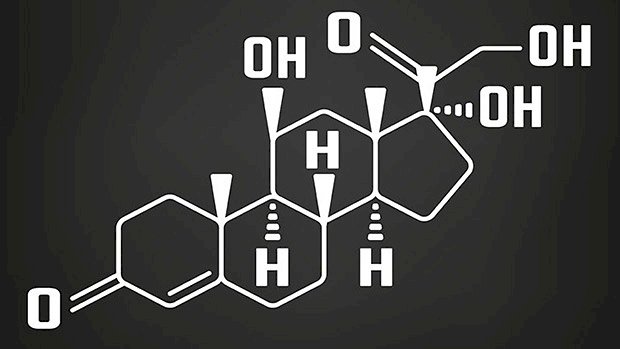 Nutrition One of the functions of cortisol is to maintain a stable blood sugar level – cortisol increases it when it’s too low. One way of minimizing cortisol is… eating carbs! Or more specifically, maintaining a normal blood sugar level. That’s why I don’t like very low-carb diets for people who are chronically stressed. It can easily lead to chronic cortisol production. Sure, you can create glucose from amino acids to maintain a stable blood sugar level. Just because you go keto doesn’t mean you’ll be flooded with excess cortisol. But eating next to no carbs, especially if you’re very active, is likely to lead to higher cortisol levels. A super high-carb diet isn’t better though. It can lead to greater blood sugar swings. But certainly, consuming around 30% of your caloric intake from carbs, ideally low glycemic ones, will help keep cortisol under control. I especially like having carbs around workouts and in the evening to decrease cortisol (and adrenaline). You want to lower cortisol in the evening to facilitate sleep and recovery. Supplements There are many strategies you can use to keep cortisol at bay. You don’t want to completely kill it; you actually need it to train hard. But you must be able to bring it back down when needed. Use workout nutrition. Easily-absorbed carbs during workouts can reduce cortisol by providing fuel. If you have carbs already available, you won’t need to mobilize as much, which will mean there’s less of a need to produce cortisol.This is especially effective when you’re doing a higher volume training plan. Plazma™ is your best option here although Surge® Workout Fuel will also work, though it has fewer of the anabolic amino acids to fuel muscle growth. Use vitamin D. This is especially important during periods of high stress. Vitamin D reduces the impact cortisol has on the conversion of noradrenaline to adrenaline. While it might not directly decrease cortisol, it prevents excessive adrenaline production, which can help prevent CNS fatigue (dopamine or noradrenaline depletion or adrenergic desensitization). Take magnesium post-workout and in the evening. Magnesium decreases the binding of adrenaline to the adrenergic receptors and can help you calm down while protecting your beta-adrenergic receptors (keeping them sensitive). Use rhodiola in the morning. Rhodiola helps keep the stimulatory and inhibitory neurotransmitters in balance and can lower cortisol. I like glycine post-workout and in the evening. Glycine is a neurological inhibitor. It slows the nervous system down when it’s too amped up, which by extension decreases cortisol and adrenaline. Furthermore, glycine increases circulating serotonin (the feel-good neurotransmitter and the mood balancer) and activates mTOR, which will increase the protein synthesis from the workout. For sleep, use Z-12™. It increases serotonin and GABA (gamma-Aminobutyric acid). These two inhibitory neurotransmitters will allow you to have a more restful night, allowing you to restore a more normal cortisol circadian rhythm, dropping it low when it’s needed most.
Origin: Tip: Foods and Supplements That Control Cortisol
16 Unstable Exercises That Actually Work
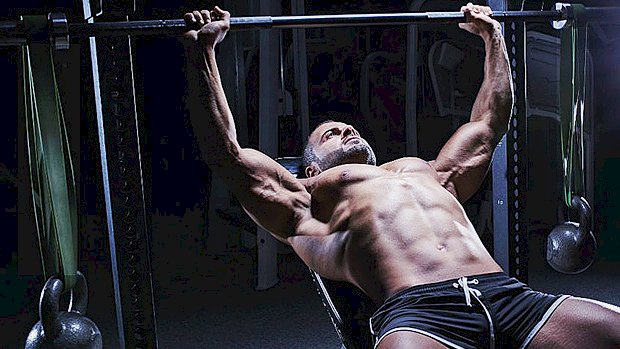 From Rehab Clinic to Your Gym If you mention “unstable” and “training” in the same sentence, there’s a good chance some knowledgeable meathead will stuff you into a locker. And for the most part, doing so is warranted. BOSU balls, wobble boards, and other unstable shenanigans belong in a physical therapy office, not a gym – and therein lies the problem. The unstable surface training (UST) craze began in clinical rehab settings after showing some promise in treating particular ankle issues. As is often the case, though, something that was useful within a single context took off and weaseled its way into the mainstream. Hipsters doubling as personal trainers began putting their clients on balance boards and Swiss balls while they juggled kettlebells and talked trash about egg yolks. The problem is, UST doesn’t hold any water outside of the physical therapy realm. As a matter of fact, multiple studies chastise its use for injury prevention as a whole, limiting its efficacy to individuals with a history of ankle sprains. Other studies have found that people who train on unstable surfaces are more likely to experience significant injuries. Does that mean that UST is more likely to contribute to injuries? You can be the judge. If there’s one thing that the research undoubtedly proves, though, it’s that training on a STABLE surface is the clear king for getting bigger, stronger, and more athletic. But not all unstable training is created equal. Some unstable training methods and exercises can provide unique benefits that, when implemented properly, can stimulate newfound gains in strength, hypertrophy, and performance. To reap the unique benefits that certain forms of instability can provide, give the following methods and exercises a go. 1 – Use Unstable Exercises as Primers in a Warm-Up To get bigger and stronger, your training should be centered around exercises that can be sufficiently loaded and progressed over time. For the most part, exercises that fail to meet these two criteria serve little to no purpose for gains in strength and size. But there are a number of unstable exercises that can be valuable when used as “primers” prior to your regular training. Why? When performing certain exercises with slight instability, each rep reinforces proper movement mechanics, improves intra- and inter-muscular coordination, forces joint stabilization, and grooves stability. By checking these boxes, your muscles and nervous system get to a place where they’re better equipped to handle heavy loads with pristine technique. Here’s a few examples of how to get primed to lift using unstable surfaces: Chaos Push-Up One of the recurring themes of intelligent unstable training is a constant demand for core stability and control, and the chaos push-up is no exception. On top of pushing the anterior core to the max, it targets the entire musculature of the upper body while strengthening the scapula and shoulder stabilizers. Since the oscillations are significant, chaos push-ups require a slow tempo and perfect mechanics, which translates to increased shoulder stability and better pressing mechanics. Half-Kneeling Bottoms Up Kettlebell Press Who said unstable training has to involve fancy equipment? By nature, holding a kettlebell in a bottoms-up position is inherently unstable. This will improve your pressing mechanics, help you build healthier shoulders, and get a slight pump. And as an added bonus, the half-kneeling position requires full-body tension in order to resist extension, rotation, and lateral flexion at the spine. The only bad news is, you’re going to have to check your ego and use lighter weights. Because of the movement’s unstable nature, a high demand is placed on maintaining stability in the shoulders, forearms, and hips. Single-Leg Stability Ball Hamstring Curl Relax, tough guy. The stability ball isn’t completely worthless. The benefits of these curls are two-fold: First, they train knee flexion (working leg) and hip extension (elevated leg) simultaneously, unlike most hamstring exercises that focus on one or the other. Second, the unilateral aspect of the movement requires balance, stability, and control. Plus, you’ll elicit a brutal hamstring pump that will prime your knees and low back for optimal function prior to squatting. Rear-Foot Elevated Split Squat With this variation, you’ll place your back foot on a band. Why the band? Well, when doing rear-foot elevated split squats, most lifters allow their back leg to take on a large part of the work. While that isn’t necessarily bad when the goal is overall load, using a band to elevate the back foot forces the front leg to work in isolation. At the same time, the band necessitates tri-planar balance and hip stability, similar to a pistol squat or one-leg squat to bench/box. Unlike those two movements, though, the rear-foot elevated split squat actively engages the hip flexors and forces a deep stretch. The result: healthy hips,
Origin: 16 Unstable Exercises That Actually Work
Tip: 3 Exercises That Beat Boring Planks
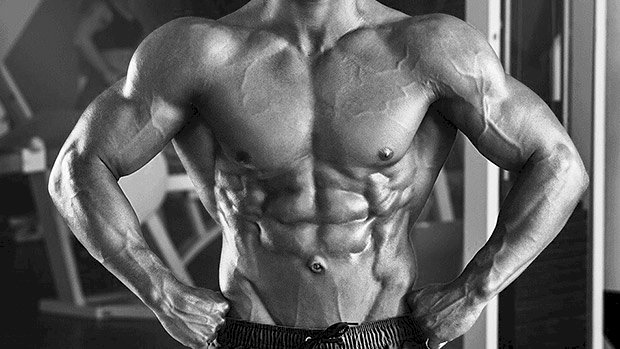 The front plank is a popular exercise to promote core stability. Fair enough. It has some benefits and there certainly are ways to make it more difficult. The problem is, holding any static position for more than ten seconds is boring and most guys avoid doing them. There’s a better option – something that’s much more challenging. You could hold a plank for just 10 seconds (or less) and then do several more holds interspersed with very short rest periods in-between so that the total time under tension adds up to a minute or longer. That’s where the exercises below come in to play. They provide a more intense static contraction than the standard front plank, and you don’t need to hold each rep for any more seconds than you have fingers on both hands. 1. Ab 45s I first came across this exercise in the book, “Underground Secrets to Faster Running,” by Barry Ross. No matter how strong you think your core is, Ab 45s will humble you! Here’s how you do it. Lie on your back with your knees bent and hook your feet under something stable, like a machine or two heavy dumbbells. Or get a training partner to hold your feet down. Scoot your butt as close to your heels as possible. Extend your arms out fully overhead and keep them in line with your torso throughout the set. Raise your head and trunk up to a 45-degree angle. Make sure to bring your arms along with you, keeping them fully extended and in line with your torso. Hold that position for a solid 5-second count and then lower your head and trunk back to the floor. Take a breath at the bottom and repeat the process. Build up to 5 sets of 5 reps with 5-second holds, and gradually work your way up to holding each rep for 10 seconds. 2. Reclining Field Goals If starting from the bottom-up is too tough, try going from the top-down with this exercise. I discovered this one in Nelson Montana’s e-book, “The Bodybuilding Truth.” According to Montana, abdominal development is genetically determined and classic movements such as sit-ups and leg raises are ineffective for the abs but extremely effective for the psoas (hip flexor) muscles. Montana believes that the abs respond best to contraction, not movement, and are stressed to a much greater degree when attempting to stabilize the core. You’ll understand what “attempting to stabilize” means once you try the exercise. Sit on the ground with your legs bent to about 90 degrees and your feet flat on the floor. Tuck your chin into your chest, round your back, and grasp the outside of your knees. Now lean back until your arms, still holding your knees, are straight. Make sure to keep your chin tucked in and back rounded. Once your arms are fully extended, slowly raise them up until they’re pointed directly overhead. If you find it difficult to maintain balance, you can move your feet out a bit to make it easier. The closer your feet are to your hips, the more challenging the exercise is, and vice versa. Hold the contraction for 5-10 seconds and repeat. Work up to the point where you can do 10-12 reps. This exercise requires no equipment and can be performed anywhere. Drop to the floor right now and give it a shot. You’ll be surprised at how challenging it is. A word of caution: It’s not uncommon to cramp on these isometric exercises. Make sure you’re well hydrated and once you start to struggle, stop. Listen to your body. If you try to push on, you’ll cramp, which is your body’s way of forcing you to stop. Take it slow and gradually ramp it up over time. 3. Superman Back Extensions This is a great antagonist movement for the above moves. Do it on a back hyperextension or glute-ham raise machine. Extend your arms fully overhead and keep them in-line with your torso throughout the set. Raise your upper body up until it’s parallel to the ground and hold that position for a strict 5-count. Then lower back down and repeat. Build up to 5 sets of 5 reps with 5-second holds, and gradually work your way up to holding each rep for 10 seconds. Programming All of these exercises make for great finishers. You can pair the ab exercises with the back extension in a superset fashion, or you can alternate between doing an ab exercise at the end of one workout and the back extension at the end of the next
Origin: Tip: 3 Exercises That Beat Boring Planks
Tip: The Push-Up That Prevents Injuries
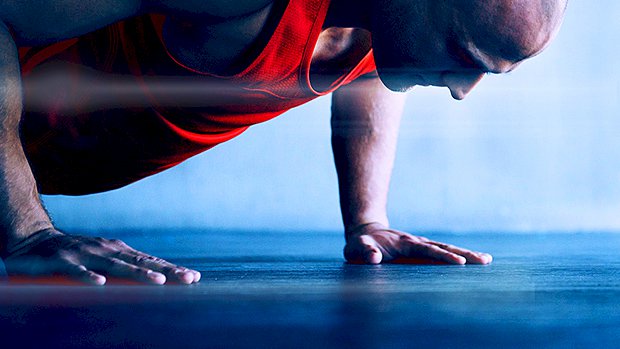 Rotation-Focused Push-Ups Strong and explosive athletes have a tendency to get locked in the sagittal plane (driven into extension). If this becomes excessive, they lose access to their frontal and transverse planes, which can cause injuries up and down the kinetic chain. To remedy this, offset push-up variations can be crucial in getting trunk rotation back. Push-ups in this category can include offset variations off a box (see video) and offset variations with one hand on a medicine ball. Based on your needs and goals there are tons of different options at your disposal. And if you want the best of all worlds, simply rotate your emphasis every 2-3 months to help build a strong, well-balanced, and bulletproof
Origin: Tip: The Push-Up That Prevents Injuries
 All about sport xlsport.club