
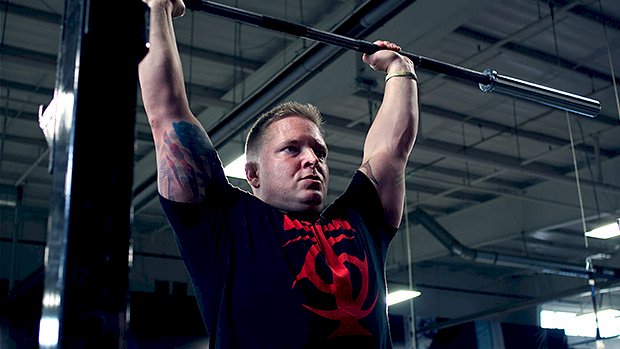
 Pain and injury from shoulder pressing are generally caused by not having the requisite flexibility to do the movement safely, such as: Limited shoulder flexion. This causes you to press the weight too far forward, or to have an arch in your lower back to compensate. Limited thoracic/upper back mobility. This restricts scapula movement, again causing the barbell to travel forward. One shoulder has more mobility than the other. This can cause anything from a subtle imbalance to a major twist during pressing. Assess and Fix It One of the most effective ways to test the flexibility required for an overhead press is with this lat stretch variation. Not only does it tell us a lot about our overhead mobility, it’s also one of the most effective ways to achieve a better position. We want to see a straight line through the hands, elbows, and shoulders that continues down the spine when the ribs are tucked down and the abs are engaged. This shouldn’t be uncomfortable and there should be no nipping sensation in either shoulder. Video yourself while you do the test and watch your back to assess your mobility. Here are a few things to look out for: The arms not being in line with the spine: This means limited shoulder flexion. It will hinder your ability to do all overhead movements. An arch in the lower back: This is a common compensation and can make your overhead presses look more like an incline bench press. Generally, this will come down to a bad habit or a lack of thoracic mobility. One arm lower than the other: This indicates that one shoulder is too tight or overused, OR one shoulder has been over-stretched and made too mobile. This is very common for people with past injuries that have gone too far with self-massage. You can now use the assessment exercise as a drill to help fix the problem! Using very light fractional plates, go back into the same position with your arms above your head until you feel a stretch, then maintain it (but don’t force it). If you can manage 30 seconds, that’s great. It’s okay if you need to break sooner; the more you practice the drill the easier it’ll get. Aim for 3-5 sets for 30 seconds at a time. Over the 30 seconds, your shoulders will fatigue, relax, and start to give up that extra range. It’s important to do some light barbell presses right after this drill. Once you’ve created new range it’s more likely to “stay” if you then strengthen it. However, if you know you’re really far off from a good overhead position, just stretching for now is fine. If one shoulder happens to be lower or higher than the other, you need to even those up during this exercise or you could make the problem worse. Ideally, have someone with you to tell you when your shoulders are wonky or uneven. If you have one shoulder that’s too high it might take a while to loosen up, but you can try adjusting your shoulder position to see if that helps. If you have one shoulder that’s too loose, you need to actively lift it up to the straight position and try to maintain it to build stability. For the drill, aim for 10 reps for 3-5 sets. If you find this really challenging, then definitely practice and don’t forget to integrate it into your overhead press afterwards. As with any good mobility drill, once you can do this well and not find it challenging, the frequency you need to use it will dramatically decrease. When your arms are even – with no compensations – then a quick run-through once a month is more than enough. Don’t settle for having bad shoulder flexibility. Take the time to fix it, then you can enjoy your training knowing you have the best possible
Origin: Tip: How to Test & Improve Overhead Flexibility
Tag: Test
Can YOU Pass the New Army Fitness Test?
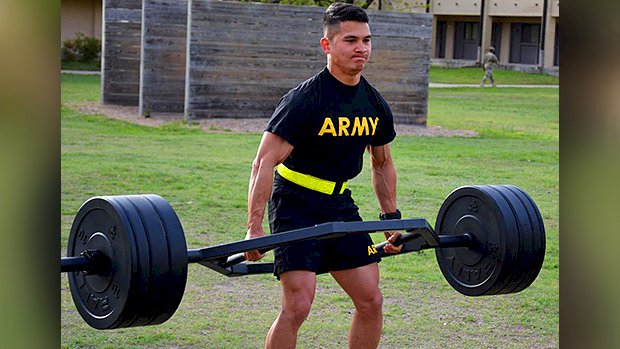 APFT vs. ACFT Since the early 1980s, the United States Army has been measuring the American soldier’s physical readiness with the Army Physical Fitness Test (APFT). This test consists of a two-mile run for time, maximum number of push-ups completed in two minutes, and maximum number of sit-ups completed in two minutes. The APFT is conducted during the soldier’s initial entry/basic training and then at their unit every six months. The soldiers do this test collectively, usually at the platoon level (that’s a team of about 30-50 soldiers). Diagnostic testing may also occur during deployments to combat zones and other countries, but these don’t involve testing “for record.” The trouble is, the modern soldier needs to train and develop multiple aspects of fitness and performance, and the APFT doesn’t reflect that. To be frank, the APFT doesn’t reflect much of anything, but beginning in October, 2020, soldiers will instead be required to take the new Army Combat Fitness Test (ACFT). This new test is a huge step in the right direction. The old APFT may have been logistically simpler to implement, but it lacked the testing of critical physical skills that the new ACFT measures: power, absolute strength, and anaerobic conditioning. Also, unlike the old APFT, the ACFT is gender neutral – there won’t be different minimum standards for females or males. Understanding specifically what the ACFT is testing will help soldiers understand how to train for it. And if you’re not planning on enlisting, it would still be a “fun” way to test your readiness. The New Test The ACFT has six events. The ACFT has six events. Let’s use the requirements for soldiers in “heavy” physically demanding units or jobs, which may be more interesting to T Nation readers and lifters. To max the test, you have to score 100. To minimally pass the test, you have to score 70. Here’s how to train for them: 1 – Three-Rep Maximum Trap-Bar Deadlift: 2 attempts to establish a 3RM To score 100:340 pounds x 3 To score 70:180 pounds x 3 This test is a display of your absolute strength. Bodyweight circuit training isn’t going to cut it for this one! Being absolutely strong is a practical thing – picking up heavy artillery shells, throwing an M2 .50 caliber machine gun over your shoulder, or climbing over a wall while wearing 100 pounds of kit and body armor isn’t going to happen without some raw strength. You’re going to need to spend time in the gym lifting weights… heavy weights. 2 – Standing Power Throw: 10-pound medicine ball thrown over and behind the head To score 100:13.5 meters To score 70:8.5 meters Throwing a grenade, jumping over a ditch, tossing an ammo can to the gunner, kicking down a door – all of this requires the ability to generate force with high velocities. You need to be explosive and violent. Sharpening your reflexes and focusing on plyometrics and a few weighted movements are going to be your best bet – things like different varieties of jumps, throws, slams, swings, and Olympic lifts. 3 – Hand-Release Push-Ups: as many as possible in two minutes To score 100:70 To score 70:30 If the soldier already has a level of general, absolute strength, then this event will be a test of muscular endurance. However, when a soldier is extremely weak, this becomes a test of their strength, and soldiers need to train accordingly. 4 – Sprint, Drag, Carry: Sprint 25 meters, drag a 90-pound sled 25 meters, side shuffle 50 meters, and carry two 40-pound kettlebells 25 meters, all for time To score 100:1:40 min. To score 70:2:09 min. This is a new form of conditioning for the Army, yet it’s the most representative of what soldiers might see on a battlefield: sprinting to cover, dragging your buddy to safety, carrying ammunition 50 meters to the front. This test requires anaerobic conditioning, so being a good distance runner isn’t going to cut it. You need lots of muscle and lots of stored glycogen. Development of this type of conditioning requires a combination of “resisted” training like farmers walks, yoke carries, sled drags/pushes, and buddy/log carries, along with “unresisted” training like various sprints and bear crawls. 5 – Leg Tuck: Hanging From Pull-Up Bar (knees to elbows) To score 100:20 reps To score 70:5 reps Like the hand-release push-up, the leg tuck is going to be an endurance test for some and a strength test for others. Generally speaking, the smaller guys are going to see this as endurance training whereas the big boys will have to look at this as part of their strength training. 6 – Two-Mile Run for Time To score 100:12:45 min. To score 70:18:00 min. Everyone who hates to run pulls the old “I’ll never need to run for two miles in combat” card, but they’re missing the point. This test evaluates aerobic capacity: overheat and seize up, or run cool and efficient under high stress and nasty hot weather. I’ve seen plenty of big boys drop out as heat casualties while their weaker, yet
Origin: Can YOU Pass the New Army Fitness Test?
The Yearly Test: 5 Ways to Access Real Progress
 Once you’re a seasoned lifter, tracking your progress can be challenging. It’s not as simple as adding 5 more pounds on the bar every week anymore, and odds are, you cycle through your lifts to help avoid overuse injuries and keep fresh. So monitoring progress from lift to lift is like comparing apples to oranges, which can make it difficult to know if you’re truly getting better. The solution? Test yourself periodically with a variety of markers comprehensive enough to give you feedback that matters. You likely want to build muscle and strength while being fit and healthy. This means there are more factors to consider than just one-rep maxes on the big three. Sure, if you’re a competitive powerlifter, then your absolute strength on those matter most. For everyone else, there are other qualities to measure and see where they stack up from one year to the next. What Qualities Should You Test? Strength It can be broken down into absolute and relative categories. Absolute strength is going to be the maximum amount of force you can apply, like a max lift. Relative strength is your strength compared to your size, like what you’d demonstrate during pull-ups or any bodyweight exercise. Muscle How much muscle are you carrying in relation to your bodyweight? This is as simple as getting a body fat test using calipers, bioelectrical impedance, Bodpod, or hydrostatic weighing. While they all have varying degrees of reliability, you’re looking for trends, so just use whichever tool is most readily available to you and stick with that to see how your body composition might be changing. Health Health means the absence of disease, and since we know keeping a relatively lean physique reduces disease risks, this gets covered to a large degree in the body fat test. Yearly blood work is also a good idea, but that’s outside our scope here. Fitness This is a term more open to interpretation. You could think of it as your ability to perform specific physical tasks. Michael Phelps was fit to swim but not to win the Tour de France. For our purposes, let’s think of it more in terms of conditioning. The specific activities you like to do could influence the way you test your conditioning and determine what events you’re fit for. But I’m a big fan of the 10/10 test (we’ll get into the details in a bit). It isn’t a sprint and it’s not a pure endurance event, but falls somewhere in the middle, making it a good bet for most people. The Five Tests Here are the tests you should give yourself each year (the week of your birthday is a good time) to know whether your training is yielding real results or if you just spent the whole year spinning your wheels. You can do them all on the same day if you’d like, or just do them all within the same week. Keep track of your results so you have something to compare to next year. 1 – Bench Press: Bodyweight x Max Reps One-rep maxes are great, but if you gain a bunch of weight, even if it’s not all lean mass, you’re also likely to increase your bench. If you gain 20 pounds and bench 10 more pounds than you did when you were lighter, does that really make you better? A better way to look at this is by taking your current bodyweight and lifting it for max reps on the bench. This will help you do a better job of assessing your relative strength, and you can make sure any mass you gain (or lose) positively impacts your performance. 2 – Chin-Up: Bodyweight x Max Reps Strength relative to your bodyweight wins out here. If you get too fat, your chin-up numbers are going to drop. If you add lean mass, it shouldn’t negatively impact your chins. In a perfect world, your number of bodyweight chin-ups would exceed the number of bodyweight bench presses you could do. This would help with shoulder health and indicate an adequate strength balance. If your chin-up numbers are less than your bench numbers, it’s a sign you need to focus more on pulling than pressing and/or review your diet and lose some fat. 3 – Front Squat: 3RM No battery of tests would be complete without a max strength test. You could make an argument that this should be a deadlift or back squat, but here’s why the front squat is a better option: Front squats are self-limiting; you either nail it or you dump the bar. When it comes to testing your back squat and deadlift, you can still complete less than perfect reps, which can skew your comparison from one year’s test to the next. You’re looking for real improvement, not how much you can cheat to improve your numbers. If you’re on the platform in competition, it’s all about winning, so hell yeah, do what you need to complete the lift. When it comes to testing yourself to see if your training has been productive, there’s no room for risk. Besides being self-limiting, you need a lot to go right to front squat heavy: ankle mobility plus a strong lower body, trunk, and upper body to keep tension and maintain a clean front rack. It checks a lot of boxes, which makes this the best
Origin: The Yearly Test: 5 Ways to Access Real Progress
Tip: Test Your Stability in One Minute
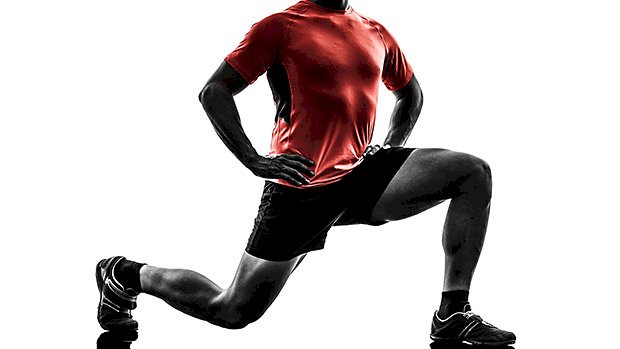 There are three things you need to know: Most lifters skip crucial developmental exercises. Having range of motion doesn’t matter if you can’t control it. Chasing numbers before stability is a fast track to injury. I’ve lost count of the number of lifters I’ve met over the years with back and knee problems. Why so many? Because people can’t control themselves without using weight. Wait, what does that even mean? It means that most lifters get so caught up with increasing their numbers and getting stronger on paper, that they completely neglect the strength it takes to control their own body weight. This takes stability, and they have no idea they lack it because they never test it, which isn’t that hard to do. The Lunge Test Now, I’m not inventing some new-fangled “one exercise to fix all” here. This is a lunge, done slowly. So what’s the significance? All the lifters that come to me with long-term back or knee issues can’t do it. Even with impressive totals on their main lifts, they struggle to do one controlled rep on each leg. Can you do it? The Steps Set up by doing a lunge first so you know where to comfortably keep your feet. Extend both your knees so your legs are straight. Over 30 seconds, lower yourself down to the bottom of the lunge, keeping a consistent speed. Tap your knee gently to the ground while maintaining tension. Rise up slowly, taking another 30 seconds until your legs are straight again. Repeat on the other side. Tips and Reminders If it’s not challenging, increase the range of motion required by elevating both feet on plates or boxes. Remember, the purpose of this exercise is to have full control through complete range of motion. If you suddenly speed up a bit to avoid a certain position then that’s where your weakness lies. You may not completely lose balance or drop all the way to the floor, but if at any point you lose the consistent slow speed you can’t count that as a completed rep. Now take it a step further. Aim for 5 reps minimum on each side with no problems. If you can’t complete them, you’ve got your work cut out for you. Just add it to your warm-ups for a while and you’ll master it. Advanced Version The elevated version isn’t essential but it’s a nice way to improve your overall hip mobility and push that stability further. Don’t be afraid to push your body with more stability exercises. You’ll get that same satisfaction of being able to do something a lot of others
Origin: Tip: Test Your Stability in One Minute
Tip: The Strength Test Real Lifters Can Pass
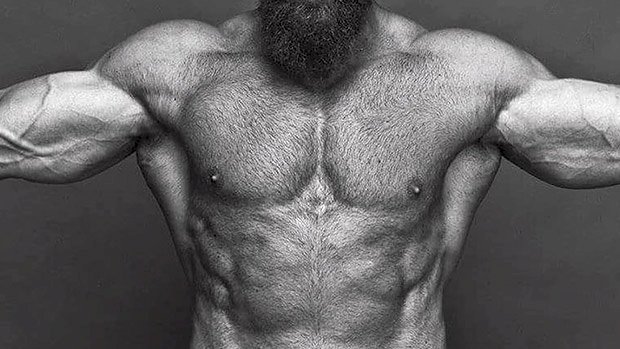 Lead Photo Credit: Daniel Bernhardt The 1RM Trap-Bar Deadlift Test As a serious lifter, you should be able to pass this test: Set up a trap bar with 2.5 times your bodyweight. Now, get one good rep. That’s it. So, a 200 pound man should try to hit a 500 pound trap-bar deadlift. Trap-bar deadlifts aren’t inherently “better” for testing strength than traditional squats or deadlifts, but they have a number of unique benefits. Squats are mostly knee-dominant, with some help from the posterior chain. Deadlifts are mostly hip-dominant, with some help from the anterior chain. There’s definitely overlap between the two, but it’s hard to determine who’s stronger: a guy with a 500 pound squat and a 400 pound deadlift, or a guy with a 400 pound squat and a 500 pound deadlift. A trap-bar deadlift can settle the debate. It’s a hybrid movement that combines the best of the squat pattern with the best of the hinge pattern. Rather than focusing on one side of the body, it requires a great deal of strength from both the posterior and anterior chain. On top of recruiting the entire musculature of the lower half, trap-bar deadlifts require significant upper back and grip strength. Plus, no lift translates more directly to overall athleticism and performance like the trap-bar deadlift. For example, a vertical jump requires exerting maximum force into the ground, which is exactly what it takes to lift a maximally loaded trap bar off the floor. Can’t Do It? Make trap-bar deadlifts your primary strength focus on lower-body days. Squats and conventional deadlifts obviously help, but nothing boosts your trap-bar deadlift more than the lift itself. Heavy singles, sets of 3-5 reps, and dynamic effort sets with bands or chains will go a long
Origin: Tip: The Strength Test Real Lifters Can Pass
Tip: The Best Power and Conditioning Test
 The Test Hop on a stationary bicycle, like an Assault or Airdyne bike, and go hard for 1.5 miles. To pass the test, you need to finish in 3:30 or less. The Reasoning If your anaerobic power is lacking, you’re going to have a tough time pushing through multiple hard sets of a lift, let alone an entire training session. If your aerobic capacity is non-existent, you’re going to have a hard time recovering in both the short-term (between sets/exercises) and the long-term (between training days). Since the test is short, yet long enough to tap into the aerobic system, you’re simultaneously testing both qualities. As a refresher, anaerobic power is the ability to exert maximal power in the presence of fatigue while sustaining high levels of metabolic stress. Aerobic capacity is the ability to be maximally efficient with the entire body while feeling like you have a flamethrower going off inside your lungs. If you lack either quality, the 1.5-mile bike test will humble you in a matter of minutes. The positive is, you’ll find out which area you need to focus on: If you were able to maintain a solid pace but still didn’t beat 3 minutes and 30 seconds, your anaerobic power needs work. If you shot out of the gates but burned out within the first minute, you need to build up your aerobic
Origin: Tip: The Best Power and Conditioning Test
Tip: Take the Hang Pull-Up Test
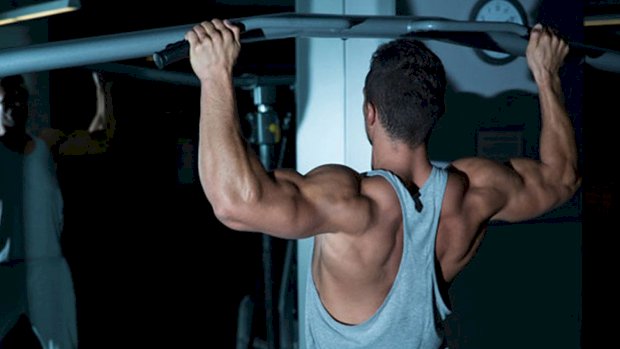 Every lifter should be able to hang from a pull-up bar for 30 seconds. If you can’t then you need to work on grip strength… and maybe lose some of that useless dead weight. (That would be fat). Aside from grip strength, the hanging test might highlight some shoulder and spinal issues. Can you do that easily? Good. Now try this: Hang from the bar for thirty seconds. When the timer rings, do a pull-up. If you can do that, you’re not too bad. Now let’s ramp it up. Without letting go, drop back down and hang for another thirty seconds and do a second pull-up. For the true crazies, let’s see who can do 10 of these 30-second hang pull-ups. Few can “hang” for over five minutes. Can
Origin: Tip: Take the Hang Pull-Up Test
 All about sport xlsport.club