
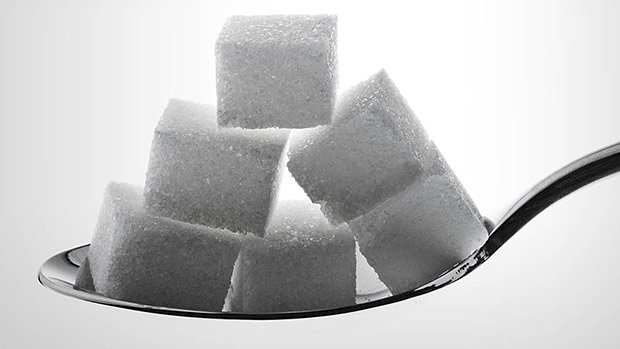
 Sugar Made Me Do It! Pssst. Yeah, I’m talking to you. Have you ever, maybe after walking out of one of those Lululemon stores and seeing all those gluteally endowed sales people (and maybe mannequins, too), gone home and engaged in a little, you know, solitary sin? If you have, it’s not your fault. You’re no pervert. It’s the sugar that made you do it. At least that’s what they used to think. In the 18th century, British author Jonas Hanway wrote that sugar created “fantastic desires and bad habits in which nature has no part,” which is a polite, English, high-society way of saying that sugar makes you want to rub one out. The demonization of sugar continued on into the next century, when, in 1852, physician James Redfield argued that sugar, processed sugar in particular, was responsible for all kinds of moral failings. He thought each phase of sugar processing was a “stage in the downhill course of deception and mockery, of cowardice, cruelty, and degradation.” As such, he concluded that animals that lived on honey, like the bee, hummingbird, or bear, were brave and cautious, while those that preferred sugar lacked integrity, “as, for example, the housefly and the ant that lives in the sugar bowl.” Thirty years after Redfield made his candied zoological observations, John Harvey Kellog, the guy responsible for the grrreat Frosted Flakes in your cupboard, was back to linking sugar with improper thoughts and desires, insisting that sugar excited the genital organs. But that was then. We’re far more scientifically sophisticated nowadays. Sure. No longer do we link sugar with the impulse to pleasure yourself. Instead, we link it to the criminal mind, murder, and maybe even Nazism (Jerome Rodale, 1968). We think it’s toxic, evil, poisonous, even addictive – brother to alcohol, tobacco, cocaine, and heroin (Robert Lustig, 2013). Sugar is even believed to cause hyperactivity in children, along with diabetes and cancer. So afraid are we of sugar in general that some otherwise reasonable people now tend to avoid fruit, lest the sweet demon possess them and bring them to physical ruin. What in the world of sweet-tasting carbohydrates is going on? Sugar doesn’t lead to, or cause, any of the things listed above. In moderation, it’s a fairly innocuous and downright pleasurable foodstuff. Let’s look at each of these more modern accusations and see if there’s even a shred of merit to them, but first, let’s define exactly what we’re talking about when the topic is sugar. A Sugar by Any Other Name Much the same as 19th century physician James Redfield, we tend to ascribe different levels of evilness to different kinds of sugar, with white, refined sugar (sucrose) being regarded as the worst. What we need to remember is that all carbohydrates are sugar and that all carbohydrates, whether they be oatmeal, sweet potato, or table sugar, get broken down (hydrolyzed) in the digestive tract into the same three molecules: Glucose Fructose Galactose The only difference, as far as your body is concerned, are 1) that some carbs are more easily digested while others (fiber) resist digestion, and 2) fructose is metabolized almost solely by the liver, while glucose is dumped directly into the bloodstream and transported directly to all tissues. About 41% of fructose is also converted into glucose within 3-6 hours. The rest of it is oxidized, converted to lactate, or converted to glycogen and stored. Less than 1% is converted to plasma triglycerides, or fat. And all those fructose studies that cited liver damage and fatness? Most of them used amounts as high as 315 grams of fructose a day, which is equal to about 45 bananas. But the important point remains: All carbs, in the end, are pretty much equal; their digestive end products are the same. Table sugar is no more “evil” than any other type of carbohydrate; it’s just more concentrated and easier to digest. Sugar Isn’t Responsible for Diabetes Despite the widespread belief that sugar causes diabetes, there’s no one-to-one correlation between sugar and diabetes. Even The American Diabetes Association agrees. Sure, they recommend that you avoid marinating yourself with Mountain Dew all day, but there’s little evidence to prove that moderate amounts of sugar will cause diabetes. That being said, a diet high in simple sugars and simple carbs can reduce insulin resistance over time, thus leading to Type 2 diabetes, but that’s entirely different than the direct cause/effect pattern touted by most decriers of sugar. Additionally, brand-spanking new research has shown that high-fat, high-carb, high-calorie meals (junk food) can have an inflammatory effect on the gut, allowing proteases (protein-eating enzymes) to leak through, enter the bloodstream, and “digest” insulin receptors on blood cells. This effect, if repeated often enough by continuing to eat poorly, could then result in Type 2 diabetes, but again, the culprit isn’t specifically sugar. No, Sugar Doesn’t “Feed” Cancer
Origin: Everything You Heard About Sugar is Wrong
 All about sport xlsport.club