
 Combination exercises have a bad reputation among serious lifters, but not all of them suck. The good ones hit more muscles, make you train at a higher heart rate, and force you to expend more calories. Why Most Combos Don’t Work Think of the lunge with a bicep curl: a popular combination exercise featured in every mommy-blogger routine. Sure, it’ll help burn some calories, but since when should the weight you use for bicep curls be the same as it is for a lunge? Common combination exercises attempt to kill two birds with one stone. But in reality, all they do is kill one bird and partially wound another. Effective combo exercises do a better job at matching exercises so that each one is more evenly stimulated by the same weight. They also add variety and help you build some athleticism while keeping your heart rate up. Hit your muscles efficiently and burn more body fat with these smart combination exercises: 1 – Deficit Reverse Lunge + Single-Leg RDL If your single-leg strength and stability need some work, then combining reverse lunges with a single-leg RDL would be a great way to start. Adding a deficit to the reverse lunge upgrades the difficulty, but you can always start without one. You can also go the other route and use the deficit for the deadlift component too, if you have the range of motion. The horizontal nature of this exercise can help you develop athletic speed and help you prevent hamstring injuries. If you’re just after aesthetics though, this has you covered too. Develop that glute and upper hamstring area (some call it the “glute-ham tie in”) and get a great butt pump with this killer exercise. 2 – Landmine Lawnmower This one has many names, but we’ll call it a “lawnmower” since it loosely resembles starting up an old lawnmower… albeit one that needs some forceful encouragement to get it going. The combo is highly transferable to athletic movements too, teaching an efficient lower to upper body power transfer. You’ll recognize the hip snap on the back leg in many power-based sports. To nail this lift, think of it kind of like a sumo deadlift mixed with a high-pull that goes into a rotational press. You’ll burn a ton of calories while satisfying your inner athlete. 3 – Split Squat + Iso Split Squat Row Both reverse lunges and split squats work similar muscles, but the joint loading mechanics differ. During reverse lunges, the hamstring of the lead leg also contributes to a “braking” effect. In general, split squats are a regression of reverse lunges, since you have a better opportunity to reinforce hip, knee, and ankle mechanics in a more controllable position. Combining a split squat with a cable or band row increases the quad loading on the lead leg since the force is pulling you forward. The row is also a good opportunity to hit your back without adding too much complexity. You can add the row in at the top of the movement or, for more difficulty, add it while holding the bottom position. You’ll get a lot out of these if your job requires you to sit all day. While the split squat will help open your tight hips, the row will combat hunched-over shoulders. Try these to combat your gorilla posture while smoking your quads. 4 – Reaching Rear-Foot Elevated Split Squat + Row Split squats can be progressed into rear-foot elevated split squats (RFESS), emphasizing greater load on the lead leg. Kind of like in the previous exercise, you simply add a horizontal row. But on this one, you reach forward and add more load through the hips, which is somewhat of a deadlift-squat hybrid. The reach forward will also load your lats more in their lengthened position. So as you hit the bottom and reach, you’ll be emphasizing hip engagement and a stretch of the lats. As you come up, you’ll be targeting mid-back and quads. The height of the cable can change the feel of the exercise too, so feel free to play with it. This exercise is the definition of “bang for your buck.” It’s got a moderate-high complexity, but with a high return. If you’re looking to hit it all, then grab a cable or band and give them a go. 5 – Rear-Foot Elevated Split Squat + Foot-Elevated RDL Staying with the RFESS theme, here’s another way to use them to hit your entire lower body. This one is starting to make its rounds in corrective exercise circles as a more complex rehab progression. As a combination exercise to hit your quads and hamstrings, it’ll really light up some weaknesses. 6 – Box Step-Off + Deficit Reverse Lunge Box step-offs are a good way to load a squat pattern while moving in the frontal plane. There are many options too. You can use a landmine, dumbbells, kettlebells, or a goblet position. And, of course, you can use them to build big legs. Combining box step-offs with another deficit exercise – a reverse lunge – will hammer your lower body even harder. Granted, in our “killing two birds” analogy you’re really just killing the same bird twice here. But if you’re looking to add
Origin: 10 Combo Exercises That Aren’t Stupid
Tag: Stupid
Tip: Soylent Is Way Stupid
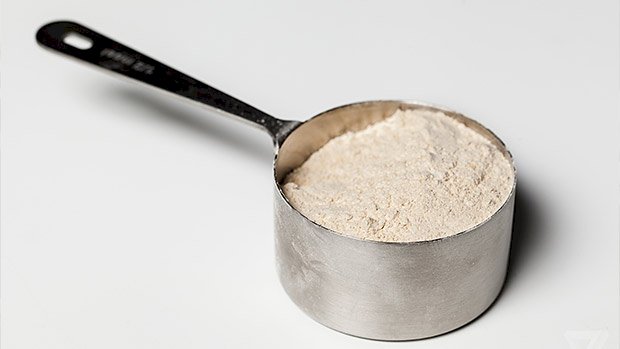 Techies, gamers, Hollywood types, and stockbrokers have embraced Soylent, the new high-tech meal replacement that’s supposed to free busy people from the horrible drudgery of eating. Unfortunately, none of them seem to realize that Soylent is essentially just SlimFast for geeks, nerds, and hipsters, but of course a diet food for fatties just isn’t as cool as a meal replacement for over-achievers who don’t have time for all that dreary cutting and spooning and chewing. Whatever you call it, it’s a piss-poor substitute for food and any techie who’s subsisting on Soylent powders, drinks, or bars for any length of time is introducing nutritional malware into their system. How This Particular Shit Hit the National Fan In January, 2013, Rob Rhinehart was a simple software engineer working in San Francisco’s tech scene, struggling to make his monthly nut. One thing stuck out as he looked at his expenses – the bulk of his paycheck was going to groceries. Goddam food. This bothered him because, like lots of bloodshot-eyed programmers and obsessive types in general, he thought food was a thief of time. “I resented the time, money, and effort the purchase, preparation, consumption, and clean-up of food was consuming… I hypothesized that the body doesn’t need food itself, merely the chemicals and elements it contains. So I resolved to embark on an experiment. What if I consumed only the raw ingredients the body uses for energy?” So Rhineheart flipped through a biochemistry textbook and scanned some U.S. government websites to learn what he thought he needed to know about human nutrition. Based on his brief studies, he purchased 35 chemical ingredients that he deemed necessary for survival. He glopped all the stuff together in water and lived off it for 30 days, after which he reported a host of health benefits, in addition to a much-reduced grocery bill. Jazzed by his concoction, he raised a ton of money through a crowd-funding campaign. By April of 2014, Soylent – named after the all-nutritive wafer made from dried-up dead people in the science fiction movie, Soylent Green – was in full-scale production. The original product was a powder but it’s since branched out to pre-made drinks, bars, and wafers. The product is the darling of the tech industry, having freed workers of what they think of as their whole-food and mealtime prison. It’s since been adopted by the aforementioned Hollywood types, Wall Street masters of the universe, and assorted trend setters and trend followers who yearn to be on the cutting edge of the latest nutrition trend, yet tragically know little about nutrition. And now it’s infiltrated the domains of the common man. Wal-Mart now carries Soylent products, as does 7-Eleven. Well-meaning mothers will soon dole it out to innocent children and mentally pat themselves on the back for being a good parent. Hell, I Wish Soylent Really Was People Companies that made supplements for bodybuilders used to be guilty of the same hubris as Rhineheart, but that was 30 years ago. High-protein meal replacements were incredibly popular, but we soon learned that it took a lot more to make an all-encompassing pre-packaged meal than some protein, a single source of carbohydrate (maltodextrin), and a few vitamins and minerals. Soylent has admittedly improved on the products of the 1990’s by adding fiber and healthy fats, but most of the first few ingredients on the label read like any meal replacement from that era, or really any candy bar or “weight loss” shake you can find in the grocery store: Soy protein isolate High oleic canola oil Maltodextrin Isomaltulose Soluble corn fiber Modified food starch Each powdered packet contains 20 grams of fat, 20 grams of protein, and 39 grams of carbs (of which 15 grams are sugars) for a total of 400 calories. One Soylent bar contains roughly one-fourth of the number of macronutrients of the powder, but they’re intended to be eaten individually as snacks or, alternately, in bulk (4 of them) to make a “complete” meal. If you’re an average sized man, you’d have to down 5 of these shakes a day to give you 2,400 calories. That equates to about 100 grams of fat, 100 grams of protein, and close to 200 grams of carbs, 75 of them from sugar. That’s not an entirely horrible macronutrient comp… for computer programmers and stockbrokers, but it sucks for most athletes. Never mind that its protein source is soy, which is problematic all on its own, but what’s missing from the formulation is more important than what it contains. Soylent’s formula doesn’t have any phytonutrients or antioxidants from plants in it, which, as more and more evidence suggests, form the backbone of real health. It also doesn’t contain anywhere near the amount of essential fatty acids you’d want to see. Furthermore, we only have a basic idea as to how many vitamins and minerals we truly need as a species, let alone as individuals, so making a one-size-fits-alls prescription is just nuts. To be
Origin: Tip: Soylent Is Way Stupid
 All about sport xlsport.club