
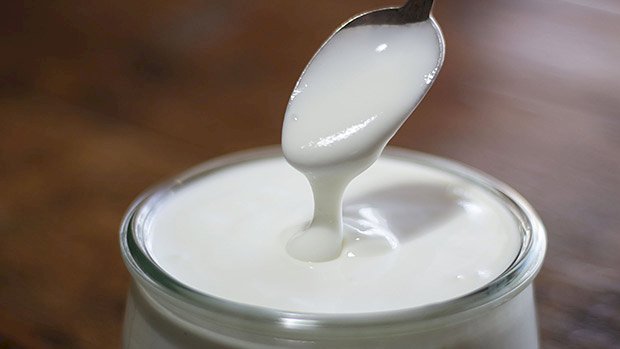
 Yogurt’s been using me for years. She seduced me with her smooth, milky white body and delectably fruity bottom, whispering in my ear how good it’s gonna be, baby, when she fills me up with all her beneficial bacteria. I always end up letting her have her way with me and when I wake up in the morning, she’s gone. No note, nothing. I feel so cheap. And what’s worse, the bacteria she gave me are all gone too. That’s the thing with yogurt. Her supposedly beneficial bacteria are more or less transient. They hit our gut, hang around a bit, and then get bored. Then they take the next poop-Uber out of colon town. That’s why I’ve dumped yogurt’s fermented ass and found someone more faithful, someone who gives me a lot more beneficial bacteria than she ever did; bacteria that are faithful and are more likely to stick around. Her name is kefir, and I want to introduce her to both mom and you, in that order. What the Hell is Kefir? Kefir is a milk product made from starter grains of bacteria and yeast. The end product is a slightly sour, slightly fermented beverage that even most lactose intolerant people can drink. While it’s traditionally made from cow, goat, or sheep milk, you can make it from any type of plant-based milk (soy, rice). It can even be made from coconut milk or water to make coconut kefir, which should not be confused with the name of the stripper who lives below you in apartment 2B. The word itself comes from a Turkish word that means “feeling good,” and was traditionally made in skin bags and hung above doorways. Every time someone came through the doorway, they’d make like the bag was an annoying striker from an opposing soccer team and they’d throw a shoulder into it, thereby jostling the contents of the bag and ensuring efficient fermentation. What’s particularly cool about kefir is that it contains between 10 and 34 strains of probiotic, “good” bacteria, whereas yogurt contains only 2 to 7 strains. More importantly, as mentioned, some studies have shown that the kefir bacteria attach to the lining of the gut and form colonies instead of dying off or being excreted. That allows the kefir to change your microbiome for the better and affect all kinds of beneficial changes to your digestion and overall health. What Kefir Can Do For You While kefir doesn’t have a standardized nutritional profile, it’s safe to say that any kefir product is going to be high in calcium, magnesium, potassium, vitamin B12, vitamin A, biotin, folate, and lots of enzymes. Macronutrient-wise, a typical 8-ounce serving contains roughly the following: 160 calories 10 grams of protein 12 grams of carbs 8 grams of fat This is essentially the same as you’d find in an 8-ounce glass of whole milk, although kefir has a little bit more protein (about 2 grams). Aside from providing you with those nutrients and populating your gut with beneficial bacteria, kefir has the following superpowers: It builds a stronger immune system:Kefir contains an insoluble polysaccharide called kefiran that’s been shown to have antimicrobial properties, in addition to supposedly lowering cholesterol and blood pressure. It builds stronger bones:Okay, any milk product will do this as they all provide calcium and vitamin K2 (which aids in calcium absorption), but it’s worth noting nonetheless. It fights bowel problems and supports digestion in general:Kefir’s friendly and helpful bacteria have been shown to combat Crohn’s disease and irritable bowel syndrome (IBS). Likewise, taking it during and after antibiotic therapy can go a long way in preventing the gastrointestinal havoc the drugs often cause. It can fight cancer:Admittedly, it seems that nearly everything falls into one of two camps: Either something causes cancer or it fights cancer, so it probably becomes hard nowadays to accept something as a cancer fighter. Even so, kefir appears to have some special gifts in this area. A study conducted at the School of Dietetics and Human Nutrition at McGill University found that kefir reduced breast cancer cells by 56 percent as opposed to yogurt’s meager 14 percent. What’s It Taste Like? Kefir, like most anything else nowadays, comes in a variety of fruit flavors sweetened with a metric f-ton of cane sugar, but drinking anything else but the plain, unsweetened stuff is for kefir sissies. Besides, you can sweeten it up at home with artificial sweeteners, but the plain, unsweetened kind is by no means unappealing. It’s sour, I’ll give you that, but I think any adult palate can handle it, if not downright appreciate it. When you drink it, it gives the sensation of coating your entire stomach in a soothing embrace. It kind of reminds me of the time Homer Simpson drank melted candle wax to coat his mouth, esophagus, and stomach so that he could win a chili-pepper eating contest, but more nutritious and a lot less dangerous. How to Best Use Kefir I drink one 8-ounce glass of kefir a day, either divided into two servings or all at once. I sometimes
Origin: Tip: Forget Yogurt – This Stuff is Better and Badder
Tag: Stuff
This Stuff is Better Than Whole Food
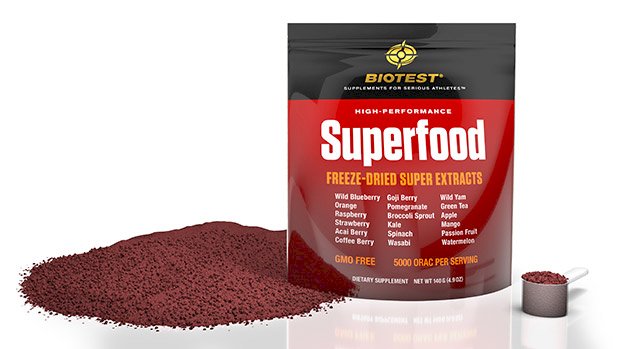 Nutritional Virtue Signaling You know what chafes me? It’s the mutts who are always tweeting about how they don’t need supplements and that we should instead get all our nutrition from “whole foods.” They think all “processed” things are bad. I’m guessing they also wear underpants made from the natural, un-dyed wool shorn of virgin yaks and their houses are constructed of organic hemp panels glued together with woodpecker spit. They’re paragons of wholesome naturalness. Yeah right. The “whole foods only” cliché is nutritional virtue signaling at its worst, a sad attempt to prove that the people who say it are more nutritionally pious than their peers, but let me smack them across the face with a cold, line-caught herring of truth: While there’s no shortage of crappy supplements and god-awful processed foods, some supplements are great and some processed foods are actually better than whole foods. Biotest’s Superfood is a great example. Granted, it’s only minimally processed – an array of 18 strategically chosen freeze-dried fruits and vegetables – but the whole-food absolutists still paint it with a horsehair brush as a processed food. Fine. Stick with your labels, but I’m here to tell you that Superfood is one food that every human being should be taking to improve their health, longevity, and, to those for who it matters, athletic ability. What’s In Superfood? Take a look at the ingredients: Berries Wild Blueberry (1.5% anthocyanin) Orange (40% vitamin C) Raspberry (20% ellagic acid, 0.7% anthocyanins) Strawberry Acai Berry (1.5% total phenolic acids, 1% anthocyanins) Coffee Berry (50% total phenolic acids) Goji Berry Pomegranate (40% ellagic acid) Vegetables Broccoli Sprout (5000 ppm sulforaphane) Kale Spinach (700 ppm lutein) Wasabi (20% glucosinolates) Wild Yam (20% diosgenin) Green Tea (95% total polyphenols, 65% total catechins, 40% EGCG) Other Fruits Apple Mango Passion fruit Watermelon (1000 ppm lycopene) What’s So Great About Superfood? One of the reasons I’m such a big fan of Superfood is because I’m high on the science of polyphenols, which are plant-derived, bioactive compounds that can repress inflammation by inhibiting damage from free radicals and interacting with the immune system, thereby conveying such health benefits as lowered blood pressure, lessened endothelial dysfunction, reduced cholesterol, lowered risk of type 2 diabetes, lowered risk of cancer, and even improved recovery from training. You know how nearly every other article you read says you should eat, I don’t know, yams or some other vegetable or fruit for this or that benefit? Despite what most novice nutritionists think, it’s not because they contain riboflavin or some other vitamin or mineral. Don’t get me wrong, those vitamins and minerals are super important, but the real magic of vegetables and fruits are in the polyphenols they contain and Superfood is possibly the richest, most diverse, and most condensed source of polyphenols on the planet. There are two really broad classes of these polyphenols – flavonoids and nonflavonoids. The flavonoid group can further be broken down into six dietary groups: Flavones:Found in abundance in citrus fruits, celery, and parsley. Flavonols:Rich sources include broccoli, blueberries, and kale. Flavanones:These are found in citrus fruit and mint, among other places. Isoflavones:Commonly found in vegetables and fruits in general. Flavanols:Apples, grapes, teas, and cocoa are rich sources. Anthocyanidins:Found in abundance in blueberries, blackberries, and eggplant. The non-flavonoid group can also be broken down into three different classes: Stilbenes:The well-known compound resveratrol is a stilbene. It and its cousins are commonly found in red wines, apples, pears, plums, peaches, and other foods. Phenolic Acids:These are found in coffee, teas, cherries, blueberries, and a bunch of other fruits. Lignans:Rich sources include kale, broccoli, berries, and whole grains. All of these classes of polyphenols are present in Superfood. The Biological Effects of Polyphenols Polyphenols are most famous for being general antioxidants. Got a free radical spillage on aisle 3? Send in the polyphenols to mop things up. We measure how potent an antioxidant is by something called the ORAC scale, which is a standardized test used by the USDA to measure the Total Antioxidant Potency of foods and nutritional supplements. The term stands for “Oxygen Radical Absorbance Capacity,” and the measurement is expressed as ORAC units per 100 grams of a given compound. For instance, the USDA determined an “average serving of fruits and vegetables” has an ORAC rating of between 400 and 500. But all fruits and vegetables aren’t created equal. Some, like coffee berry, acai berry, and goji berry (all of which are in Superfood) are off the chart on the ORAC scale. So just what is the ORAC rating of just one serving (two scoops) of Superfood? 5,315. That means just one teaspoon of Superfood has the
Origin: This Stuff is Better Than Whole Food
This Stuff is Rocket Fuel for the Mind & Body
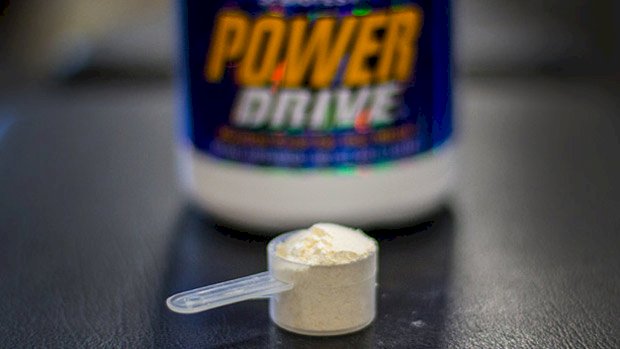 Increased muscle-fiber recruitment and strength Enhanced neural recovery Heightened and focused concentration Accelerated training progress and muscular gains Boosted motivation and mood Higher and sustained energy levels A mental edge during competition Enhanced performance in studies or exams A reduction in social anxiety And all that is exactly what Power Drive® was designed for. How Does Power Drive® Do All These Things? Power Drive®’s active ingredients are known as nootropics – substances that give cognitive benefits to the brain that often translate to physical benefits. In order to qualify as a nootropic, a substance has to meet five criteria set by Dr. Corneliu E. Giurgea, the man who coined the term: It has to enhance memory and the ability to learn. It has to increase the efficacy of neuronal firing mechanisms (which is where the physical benefits of nootropics kick in). It has to help the brain function under stressful or disruptive conditions. It has to protect the brain from chemical or physical assaults. It has to have few or no side effects and be virtually non-toxic. There are about 85 known nootropics, each of which has slightly different capabilities, mechanisms of action, and strengths. Three of them were chosen to form the backbone of the Power Drive® formulation. They are: L-Tyrosine Phosphatidylcholine DMAE Here’s a short rundown of the attributes of each: L-Tyrosine This amino acid is known as the “master precursor” because it’s required to form the stimulatory neurotransmitters dopamine, norepinephrine, and epinephrine, known collectively as catecholamines. Back in early 1980’s, an MIT scientist named Richard Wurtman discovered that when combined with a catalyst, tyrosine “Enhances performance, improves subjective vigor, decreases fatigue, diminishes subjective confusion, and decreases anxiety and tension.” And a little over a decade later, Dr. Jeffrey Stout, then of the University of Nebraska, found that tyrosine, when given an hour before exercise, increased peak bench press torque by 283% during a set of 15 reps. L-tyrosine, along with boosting cognitive function, also stimulates the production of the fat-burning thyroid hormones T3 and T4. Phosphatidylcholine Forbes magazine called this nootropic a “wonder drug.” They’re not wrong. The mag was mostly intrigued by its potential in slowing down mental decline and staving off Alzhemer’s because it’s been shown to stimulate the growth of new brain cells and neural connections – a process once thought to be impossible. But phosphatidylcholine also leads to an increase in another vital neurotransmitter known as acetylcholine, which helps control motor unit recruitment, along with reflexes and reaction times. Here’s the thing: Muscles are made of individual motor units and if you can recruit more of them, courtesy of acetylcholine, you experience an almost immediate gain in strength, power, and endurance. Over the long run, this enhanced ability to kick in more motor units will likely result in more muscle mass. DMAE Dimethylaminoethanol, or DMAE, is an amino acid naturally produced in the brain, but supplying additional amounts through the diet has some interesting effects. It, like phosphatidylcholine, helps increase levels of the neurotransmitter acetylcholine, but it’s also thought to increase blood flow to the brain, which results in improved oxygen and glucose uptake and manifests itself through increased focus and increased mental stamina. It also has some unique abilities to elevate mood, address certain symptoms of depression, and increase athletic performance. (It may even have some life extension effects as one early study showed that mice lived an unheard of 50% longer when they were given DMAE.) Does Power Drive® Have Any Negative Side Effects? Power Drive® is remarkably free of any negative side effects. Perhaps paradoxically, it doesn’t even seem to effect sleep patterns negatively. While it brings you mentally up, it’s not the skin-on-fire type of energy enhancement sometimes felt with cruder stimulants. It just makes the brain work better at everything it does, and if the brain decides it’s time to go to sleep, it actually helps with that too. Neither is Power Drive® addictive, at least not in any clinical sense. However, it might be “addictive” in the way that any pleasurable experience is, in that you’ll likely want to try it again and again when circumstances call for it. How Do I Use Power Drive®? Power Drive® is an orange-flavored, pleasant tasting powder that mixes easily in your protein drink or water. Take 1 scoop 30 to 60 minutes before workouts, athletic events, exams, or any event where you want to think or perform better, or even just to feel more mentally alert and even
Origin: This Stuff is Rocket Fuel for the Mind & Body
 All about sport xlsport.club