
 All of us who lift weights or bodybuild know things, painful things, about lifting that we normally don’t share with beginners because, frankly, no one ever filled us in on these secrets beforehand and we’re all still pretty chafed about it. But I’m feeling uncharacteristically nice today, so if any of you out there are thinking about taking up lifting, here are a few of the distressing truths you’ll soon come to realize. 1 – You’ll only really look good for a month or two a year… probably in summer. No one ever bothers to tell you that the guys pictured on bodybuilding websites don’t normally look all ripped. Most of the time, they look like Fat Thor, or that their high school nickname was Billy Bob and Coach Kilmer wanted them to play in the big game for West Canaan, even though Billy Bob has a concussion. It’s only when they get ready for a contest or, if they’re amateurs, when they get ready for summer that they start to get the body of pre-Thanos Thor. That’ll probably be you too, because walking around all year-round with body fat in the single digits is about as easy as running a marathon every day while wearing one of those goofy T-Rex suits and carrying a serving set of tea cups. But hey, two months of looking good is better than zero months of looking good. 2 – You’ll get to know what being old feels like, years before it actually happens. Let me clarify this a bit. You’ll feel fine, even great, once you’ve been lifting weights for a while… as long as you’re sitting perfectly still. If you are moving, well hello old guy who does commercials for those walk-in bathtubs! You won’t just “get up” in the morning. You’ll be so achy from lifting that you’ll actually have to unfurl yourself out of bed, once piece at a time like some cheap piece of mass-produced furniture from IKEA. Some parts will wake up faster than others, but until all your decrepit joints are in sync, you’ll do a kind of an answering-the-phone-with-your-pants-around-your-ankles walk that would cause an Elementary school administrator to pull over and offer you the custodial job recently vacated by the passing of Dale, the funny-in-the-head janitor who died last Tuesday. But it’s all worth it, of course. 3 – People will assume you’re stupid. Once you start filling out your T-shirt with muscle, people will assume your brain is inversely proportional to your degree of muscle. You’ll be regarded much the same way as Fran, the squeaky voiced, large-breasted but dim-witted hooker in that 80’s movie, The Man With Two Brains: Dr. Michael Hfuhruhurr (Steve Martin):I can’t. Fran:Can’t what? Dr. Michael Hfuhruhurr:I can’t inject you with window cleaner. Fran:I don’t mind. Hey, what does it do anyway? Dr. Michael Hfuhruhurr:It causes your brain to die. Fran: I don’t mind. No one will take you seriously about anything, unless it has to do with the bench press or protein requirements. And if you do say something smart, people will be thunderstruck. They’ll regard you the same they would if they met a chimp who learned how to use the toilet, or some four-year old who learned the lyrics to Itsy-Bitsy Spider. It’ll all feel pretty demeaning. 4 – You’ll start looking for any excuse to take off your shirt. There’ll come a time – probably a few months after you start training – that you’ll start feeling a little cocky about your new body. You’ll be like some fool who learned a few words of Spanish and then looks for any excuse to go to a Mexican restaurant to proudly exclaim “Muy bueno!” when the doesn’t-give-a-shit waitress comes to clear his plate away. But instead of showing off your linguistic aptitude, you’ll start showing off your torso by taking off your shirt in front of an audience whenever there’s any excuse to do so, whether the thermometer inched up to a sweltering 71 degrees or you just need to push the trash dumpster out to the street. It’ll take all your restraint not to strip off your suit jacket and shirt at a funeral because carrying that casket would really make your delts pop. Likewise, you’ll never again pass a mirror, window, or back of a shiny spoon without catching an admiring glimpse of your wonderfulness. It’s pretty sad, but like I said, it’s all worth it. 5 – You’ll never again eat anything that tastes good. You poor bastard. You’re now going to eat for both muscular size AND fat loss, a Houdini-like nutritional trick that, while not impossible, is kind of like going camping and trying to start a campfire underwater on the bottom of Lake Winnibigoshish. Besides that, your diet isn’t going to have a lot of variety. Let’s put it this way: You know how you’ve been feeding the family dog the same kibble every day for his whole life? Well, next to your new, bodybuilding diet, the dog’s diet is a wild, gastro-fusional delight that does the cha-cha on the tongue. Everything you eat from now on until you set down your last dumbbell is going to be from a painfully short list of standard high protein, low-carb,
Origin: 7 Things No One Tells You Before You Start Lifting
Tag: Start
Stop Stretching, Start Lifting
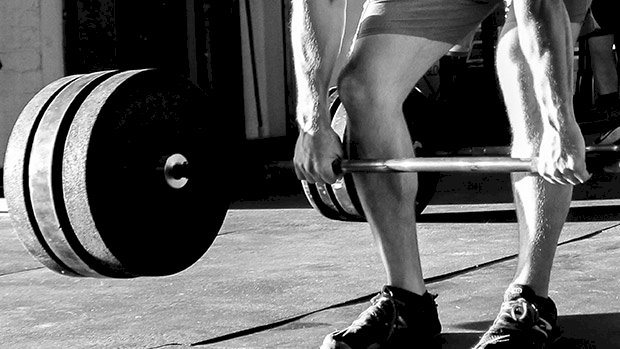 Mobility matters. As many experienced lifters have learned, mobility restrictions have harmful repercussions when neglected. But remember when “functional training” began to take off? What started off as a good thing quickly became a circus act. Unfortunately, a similar trend is emerging alongside the rise of mobility training. It’s getting a bit goofy. Your goals are probably simple: you want to build muscle, lose fat, get stronger, improve performance, and feel better. Unless you’re trying to become a yoga instructor or make it as a contortionist, you aren’t going to the gym with the sole intent of moving like Gumby. Within the context of training and performance, the only “mobility” that matters is that which has a direct transfer to what you do in the gym, on the field, or throughout daily life. If your mobility enables you to move well and stay healthy while getting stronger, it doesn’t matter if you can touch your toes or do the splits. Stretching and mobility drills have their place, but there’s more to it. The reality is, if you want to improve your mobility and overall function, strength training reigns supreme. Without it, any transient changes that coincide with other modalities won’t “stick.” Let’s Look at the Facts Strength training is superior to static stretching for improving mobility and flexibility. Don’t fall for the antiquated notion that strength training will make you stiff. The research is clear: stretching is not superior to lifting in terms of improving mobility and flexibility. A plethora of studies show that lifting heavy loads through a full range of motion (ROM) is more effective than any other modality for increasing “functional” ROM in the hips, shoulders, hamstrings, ankles, lats, pecs, etc. One study compared the effects of strength training to static stretching in relation to mobility/flexibility in the hamstrings, hips, shoulders, and knees. The researchers concluded that lifting exercises performed through a full range of motion “can improve flexibility as well as, or better than, typical static stretching regimens.” (1) Another study conducted on a group of elite judo athletes looked at the effects of a 12-week strength training program on ROM. It concluded that lifting weights led to significant improvements in mobility/flexibility at the shoulders, trunk, and hips. (2) Greek researchers looked at a group of men who trained with loads at 40, 60, or 80% of their 1RM or one-rep max. The results showed that higher intensities were linked with greater improvements in mobility/flexibility. That is, the men who trained at 80% of their 1RM were the ones who saw the greatest improvements. (3) Strength training improves your ability to stabilize and control newfound mobility. A dead man can do the splits. Flexibility isn’t a physical limitation; it’s a neuromuscular state that helps limit your movement to prevent injury. The feeling of being “tight” when you stretch doesn’t necessarily mean you need to work on your flexibility. In reality, the “tightness” is a byproduct of your nervous system interpreting the stretch as a potential injury, thus shutting the muscle down. When you perform loaded exercises through a full ROM with a controlled eccentric descent (the “negative”), you’re getting a functional stretch within a stable position. At the bottom of a squat, for example, the muscles of the lower body are lengthened to their most optimal position while tension is maintained. Unlike static stretching, which is often performed with shoddy technique and compensatory movement patterns, a loaded exercise forces you to control the entire movement without exceeding your body’s natural range of motion. When you increase passive flexibility via stretching without being able to stabilize or control that extra ROM, you’re risking instability at the joints and increasing your likelihood of injury. If a lack of mobility is problematic, hypermobility paired with instability is catastrophic. Individuals with hypermobile joints are better off taking a jackhammer to their knees than they are getting under a heavy bar. Strength training, especially when performed with an eccentric focus, allows your body to find the ideal balance of stiffness, stability, and mobility. Strength training increases muscle length. Stretching doesn’t. The mechanisms that improve mobility and flexibility as a result of strength training are vastly different than they are for stretching. The notion that stretching increases a muscle’s length is completely false. Stretching is akin to pulling on a rubber band. Sure, it lengthens when you apply tension, but it returns to its normal length when you let go. During a stretch, temporary improvements in flexibility occur primarily due to an increased stretch tolerance and a decreased pain signal associated with reaching a specific muscle length. It’s a neurological process. Nothing within the structure of the muscle actually changes. You’re simply able to stretch
Origin: Stop Stretching, Start Lifting
 All about sport xlsport.club