
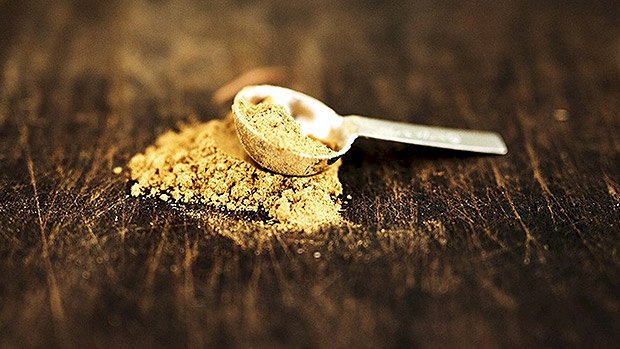
 You could give a carton of malted milk balls to somebody with bad knees and just tell them that it’ll make them feel better and it’ll do more to relieve them of their pain than taking glucosamine and chondritin. That’s because multiple studies show that the much-vaunted and much used joint pain/joint reconditioning supplements either fare worse than placebo in treating joint pain, or maybe/kinda might help just a teeny-tiny bit with joint pain, but they’re not really sure. Not really a full-throated endorsement, is it? Fortunately, there’s likely a couple of things in your kitchen right now that, when combined, can double the amount of a collagen propeptide (indicating increased collagen synthesis) in your blood in less than an hour – at least that’s what a recent study out of New Zealand shows. All you’ve got to do is combine a small amount of gelatin (the processed form of collagen) from that moldering box of lime Jell-O in the back of your cupboard with a few tablets from that bottle of vitamin C you bought that time you had a cold. What They Did Scientists recruited 8 healthy males and ran them through the usual randomized, double-blinded, crossover design protocols that are emblematic of a decent study. Subjects consumed either 5 or 15 grams of a vitamin-C enriched gelatin or placebo control. One hour after drinking the stuff, the subjects performed 6 minutes of rope skipping to stimulate collagen synthesis. Blood samples were drawn before ingesting the drinks and multiple times after to determine amino acid levels in the blood. The protocol was repeated 3 times a day at approximately 6-hour intervals for 3 days. What They Found “Supplementation with increasing amounts of vitamin C enriched gelatin increased circulating glycine, proline, hydroxyproline, and hydroxylysine, peaking 1 hour after the supplement was given.” “Engineered ligaments treated for 6 days with serum from samples collected before or 1 hour after subjects consumed a placebo or 5 or 15 grams gelatin showed increased collagen content and improved mechanics.” “Subjects who took 15 grams of gelatin 1 hour before exercise showed double the amino-terminal propeptide of collagen 1 in their blood, indicating increased collagen synthesis.” How to Use This Info Ditch the glucosamine and chondritin and start using gelatin and vitamin C instead. The effects seen in the study were clearly dose-dependent, with the 15-gram drinks synthesizing more collagen than the 5-gram drinks. Just take at least 50 mg. of vitamin C with 15 grams of gelatin powder, which you can easily mix into water or any other liquid, about an hour before you work out. (There aren’t many 50mg. tabs of vitamin C on the market and rather than divvy up a 500mg. pill with an X-Acto knife or a hammer, just swallow the whole tablet. Using more than what’s recommended shouldn’t be a problem in this case.) Hell, you can even make Jell-O shots (using plain, unflavored gelatin or the actual stuff that was endorsed by the Fat Albert, he-whose-name-shall-not-be-mentioned guy). Just mix about 120 grams of gelatin with 2 cups of water and about 600 mg. of vitamin C powder, boil, and divide into 8 shots using an ice-cube tray. Refrigerate and serve. Alternately, you could probably get away with just taking three to five 500-mg. glycine capsules with a vitamin C tab an hour before you work out. (Glycine is the predominant amino acid in collagen and the one thought to be the most influential in collagen synthesis.) It’s probably a good idea to also take the vitamin C/gelatin combo on non-workout days, too, as increased collagen intake may also have the following benefits to general health: Accelerated weight loss (by regulating blood sugar) Improved hair quality Improved sleep quality Improved wound healing Reduced
Origin: Tip: A Cheap, Simple Stack for Healing Injuries
Tag: Simple
Tip: Simple Power Training for Muscle
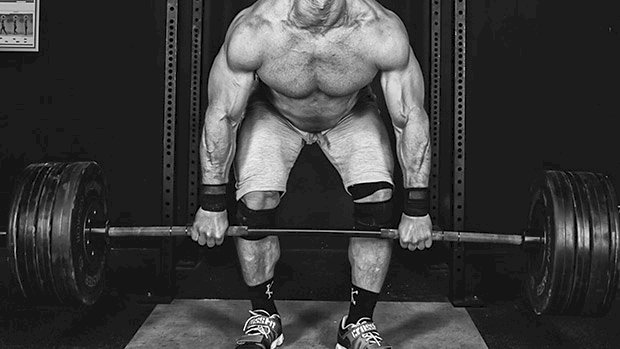 How many lifters train to become more powerful? Do YOU make power training part of your program? Well, you should consider it. You’ll unlock more strength, more athleticism, and more muscle. How’s That Work? Power is the ability to produce force quickly. And remember, as you age you lose power twice as fast as strength. But a recent study by Franchi et al. showed that plyometric training is an effective intervention. It produces a rapid increase in muscle mass and power, no matter your age. Jumping, throwing, sprinting, and the Olympic lifts will heavily recruit fast twitch muscle fibers (which have the highest propensity for growth) as well as help improve your athleticism and prime your nervous system for the heavier strength training that follows. Luckily, this doesn’t require a complete program overhaul, just a few extra minutes and a bit of planning. Looking at the force velocity curve, the far left is max strength. This is the heavy stuff, and of course the loads don’t move very fast. This is where most lifters spend the majority of their time, and rightfully so. However, if you never venture outside of that, you’re leaving a lot of progress on the table. As you slide down the curve, the loads will lighten up and the speed of movement will increase. Knowing what you’re trying to accomplish will help you pick the right tools at the right loads for the task at hand. For example, if you’re performing 10 reps of hang cleans, you’re not really training strength-speed like you might think. The speed of the reps isn’t fast enough to be improving speed-strength either. You end up in a middle ground: doing things that make you tired, but don’t make you more powerful. Or maybe you’re using a medicine ball that’s far too heavy to throw fast enough to make any improvement in the speed-strength area, or “sprinting” for a minute or so. Again, the tools aren’t the issue, but the application of them needs to be better. How To Do It Better Before your strength training sessions, pick one or two movements from various sections on the force velocity curve that match up with the main movement pattern you’ll be tackling in your lifting. Here are some ideas: Squat Olympic lifts Box jumps Loaded squat jumps Heavy sled marches (10 yards) Sled sprints (10-20 yards) Single-leg hurdles Short sprints Deadlift Olympic lifts Heavy sled marches (10 yards) Sled sprints (10-20 yards) Loaded trap bar jumps Broad jumps Kettlebell swings Short sprints Upper Body Days Medicine ball throws: chest passes, lateral throws, overhead soccer throws, slams Keep your reps on the low end. Make sure the last rep of each set is just as explosive as the first. As a rule of thumb, do 2-4 sets of 3-10 reps. The lighter the implement, generally the higher the rep range (8 medicine ball throws isn’t the same as 8 dumbbell snatches). The trickiest part of training for power is figuring out how much weight to use on things like sled sprints and loaded jumps. Remember, moving with speed is the goal, not loading the movements up so heavy that you hardly leave the ground or are moving at the speed of smell. And don’t get caught up in the “more is better” game. More just means slower, and slower doesn’t equate to more
Origin: Tip: Simple Power Training for Muscle
Tip: Increase Pull-Up Power With This Simple Plan
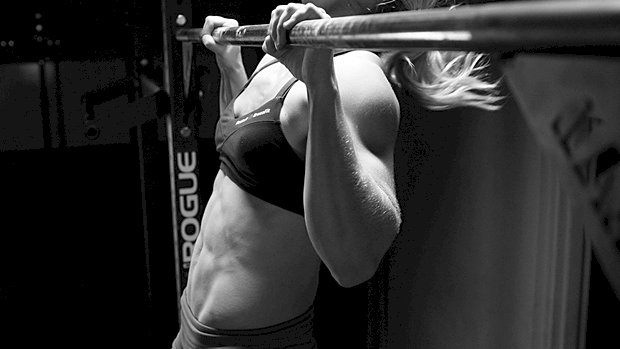 Mini-Sets for Maximum Gains Suck at pull-ups? You need to work them with frequent training. Start every workout with a total of 20 pull-ups done in as little time as possible using “mini-sets” of half your current max effort. Use a clock to track how long it takes and try to beat that time each session. The best strategy is to NOT hit failure on any of the mini-sets since it would require too much rest between sets and thus would take longer to complete. Here’s How It Looks Let’s say your current max is 4 or 5 pull-ups. Start with mini-sets of 2, resting as little as possible between each set – about 20 seconds rest is plenty. When doing the second rep becomes a grind, extend the rest to 30 seconds. When the second rep becomes tough again even with the longer rest, move down to doing sets of 1 with 15-20 seconds of rest until you hit your total (20 reps) for the day. As you get stronger, you’ll be able to use more than two reps for your mini-sets, but be very gradual about increasing them. Monitor the time it takes you to complete 20 reps to gauge if your strategy is adequate. When you increase the reps per set, your total time should continue decreasing. Ideally, in 8 to 10 weeks you’d end up hitting the 20 reps in just two sets of 10 with about 20 seconds of rest. When that happens, you’ll likely be able to hit 15 good pull-ups in a row. Progression Method: 30 Total Reps, Then Add Weight Once you can complete 20 total reps in just two mini-sets with no more than 30 seconds rest, increase the target total to 30 reps and resume the progression. Eventually, when you can hit the 30 reps in just two sets with less than 20 seconds of rest, go back down to 20 total reps, but here’s the killer… add 15 pounds to your waist and resume the progression all over
Origin: Tip: Increase Pull-Up Power With This Simple Plan
 All about sport xlsport.club