
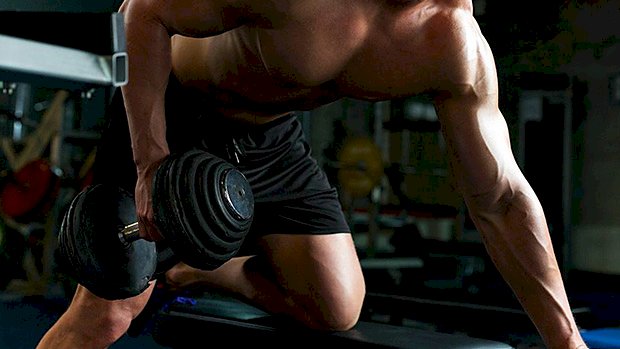
 Dumbbell rows are a staple in many programs for unilateral pulling strength and development of the lats. Unfortunately, there are plenty of people who might not have the right conditioning to use the classic single-arm dumbbell row without risk, and others who just plain struggle to get a handle on proper form and technique. For lifters with a history of lumbar issues, the last thing they need is a one-sided load combined with an uneven hip position, which is what happens when they place one leg up on a bench while the other stays grounded. Moreover, finding the right places to put your hands and feet to promote a level hip position to avoid the pitfalls can be frustrating. Even healthy lifters can have trouble finding a position that gives the proper amount of emphasis to the right areas. Solution? Do the fisherman row: The major difference you’ll see right off the bat is the fact that both legs are mounted on the bench, not just one. This immediately stabilizes the pelvis so you don’t have to spend time trying to finding the least objectionable hand, foot, and knee position. Make sure to set up on an angle to the bench so the dumbbell’s path isn’t impeded. Since this setup places the arm a bit farther away from the bench, it also allows you to use a greater rotation at the wrist, which allows you to hit the upper back and lats from a slightly different angle while staying
Origin: Tip: Isolate with Fisherman Rows
Tag: Rows
Tip: A New Variation on Seated Rows
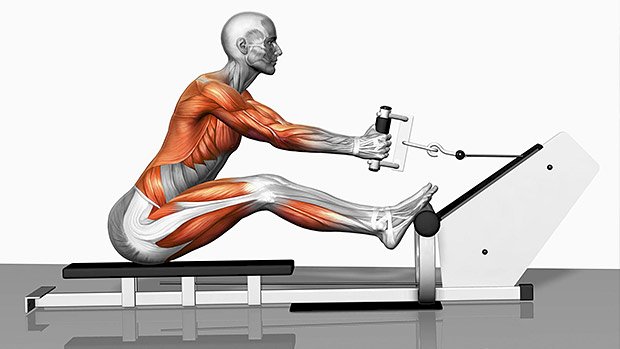 Simply adding a forward lean during seated rows is a great way to target the lats rather than the upper back muscles. The reason? Physics. Leaning your torso forward creates a de facto inverted lat pulldown position, only with stricter form. Leaning back for a standard pulldown – the way it’s normally done – can cause plenty of lumbar and thoracic overextension, which, beyond a certain point, doesn’t do much for back activation. That’s why this seated row modification will isolate the lats a lot more, using much less weight to get there. Since you’re leaning IN and not BACK, you have no room to extend the torso and can focus more on the pump. Get a good stretch after each rep to optimize the length-tension ratio. Chasing volume is the way to go – sets of at least 10-12 reps is
Origin: Tip: A New Variation on Seated Rows
 All about sport xlsport.club