
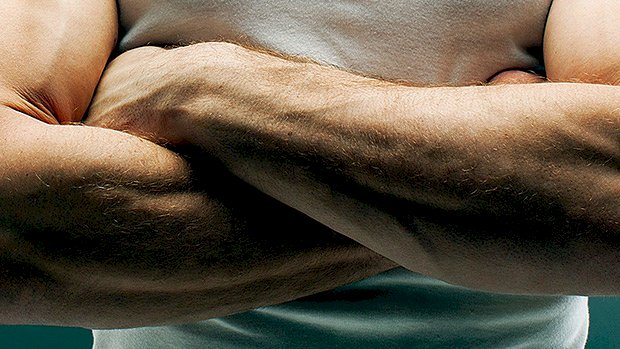
 High-Frequency Forearms Want bigger, stronger forearms? Train them often. Forearm exercises don’t cause much, if any, muscle damage, especially for exercises with less eccentric loading like the wrist roller or Thor’s hammer (see video). But even wrist flexion and wrist extension will cause little damage. Furthermore, these exercises have a very small impact on the nervous system because they’re very simple and done with light weights. Energy expenditure is low too since it’s a short range of motion and smaller muscles are involved. None of the factors requiring more recovery time are present with forearm training. Unless you go absolutely crazy with the volume there’s no reason you can’t train forearms every day. Why Do I Want Big Forearms? Because big forearms look cool. Hey, they’re the only thing that’s 100-percent showing in a T-shirt! Having well-developed forearms will do more for you than simply attracting admiration. Bigger and stronger forearms make it easier to build bigger biceps. Coach Charles Poliquin wrote about this phenomenon 20 years ago. The body hasn’t changed since that was written. By building bigger, stronger forearms you’ll be able to handle more weight in both curling and pulling exercises, which will increase the stimulation on the biceps and back muscles. Bigger forearms and a stronger grip also help the bench press. Look at the top bench pressers in the world; they all have thick forearms. To bench heavy weight you need a strong grip. The harder you can squeeze the bar, the less the wrist will tend to cock and get the bar misaligned. (The bar should be directly above the wrist joint. If the wrist is cocked, the bar moves away from that alignment.) On top of that, big forearms create a bigger “body” on which to spread the load of the bar. This can decrease stress on the shoulder joint. One Caveat and a Program You shouldn’t overdevelop one part of the forearms. For example, the wrist flexors tend to be trained a lot more than the wrist extensors (the flexors are involved a lot when curling and pulling) and the forearms supinators are often dominant over the pronators. Just like any other muscle imbalances in the body, this can lead to problems like tendonitis. So if you want to jack up your forearms and train them every workout (or every day) then work on flexion/extension one workout, do supination/pronation on the next, and do grip work on the third. Then just rotate through that. Since forearm exercises have a short range of motion, you’ll need to do either higher reps or use a slower tempo to create enough fatigue and trigger growth. Sets lasting 30-60 seconds should be your target. I actually don’t count reps when doing forearm work. I put a timer on and keep working until I’ve achieved failure or close to it in the 30-60 second range. But I’ll prescribe a number of reps in a couple of the examples below for the sake of simplicity. Workout A – Flexion/Extension Exercise Sets Reps Rest A1 Wrist Roller 3-4 30-60 sec. 1 min. A2 Wrist Curl 3-4 10-12 90 sec. Workout B – Supination/Pronation Exercise Sets Reps Rest A1 Thor’s Hammer Pronation (4 second negative) 3-4 10-12 1 min. A2 Thor’s Hammer Supination (4 second negative) 3-4 10-12 1 min. Workout C – Grip Exercise Sets Reps Rest A1 Pinch-Grip Deadlift (Hold 30-60 sec.) 3 2 min. A2 Fat-Grip Hold (Hold 30-60 sec.) 3 2 min. You can use other exercises if you prefer, but you get the
Origin: Tip: How to Really Train Your Forearms
Tag: Really
Tip: Are Protein Shakes Really Bad For You?
 There it was, on news app after news app on my iPhone, the report about how “drinking muscle-building protein shakes” could threaten your health and reduce your life span. That kind of news gets your attention, especially if you’ve spent a good part of your adult life tapping on the bottom of a protein shake, trying to give gravity an assist in draining the last few rivulets of protein into your mouth. I looked up the study and sure enough, there it was. Scientists from the University of Fredonia recruited 12 bodybuilders. Six were designated as the control group and the other 6 were force-fed 12 gallons of protein shakes, causing all 6 to explode. No, no, no. That wasn’t the real study. I made that up. But the real study, or at least the way the real study was interpreted by the lay press, is just as ridiculous. What The Silly Monkeys Did I won’t bother going into all the minute details of the study that was so widely mischaracterized. What you need to know, though, is that Australian scientists gave several groups of mice a diet of which 18% was protein from casein. One group of mice, however, had about a third of their whole protein replaced with free-form branched-chain amino acids (BCAA). That group started to eat more than the other groups, got fatter, and then died earlier than the other groups. What probably happened is that the large amount of BCAAs in their diet caused a decrease in serotonin production, thereby increasing their appetites and compelling them to overeat. That’s it. You’re probably wondering how the hell anyone could make the deductive leap from mice that overdosed on BCAAs to humans dying from protein shakes. The answer is in the press release from the University of Sydney where the research took place. It made the observation that “BCAAs are included in all sorts of supplements for athletes,” including protein drinks. Got that? Since some protein drinks contain additional BCAAs, then protein drinks in general can supposedly damage an athlete’s health. Never mind that the study itself never said anything at all about protein supplements. Never mind that no human is going to replace about a third of his daily whole-protein intake with BCAAs. Besides, there’s nothing inherently dangerous about BCAAs. The mice were just fed a stupid amount of them and it caused them to overeat. What This Means To You What does this mean to you? Absolutely nothing. Ignore it. Ignore all the articles about it that keep popping up in your health news apps. The truth is, a good protein shake, made from a high-quality protein powder and not made in bargain-basement manufacturing companies in China from ingredients you don’t want to know about, used as a supplement instead of a meal replacement, can do some great things for a body, like: Increase lean body mass (muscle!) Increase levels of growth hormone Increase serum levels of testosterone Reduce body fat percentages Greatly increase insulin sensitivity Improve cholesterol ratios (higher HDL levels). As far as manufacturers adding BCAAs to their general-usage protein powders, it’s often unnecessary except in peri-workout situations, but it certainly won’t shorten your lifespan. Likewise, BCAAs, taken by themselves, can be tremendously effective in building muscle, as long as you don’t replace a good part of your whole protein intake with
Origin: Tip: Are Protein Shakes Really Bad For You?
Tip: Does Compression Gear Really Work?
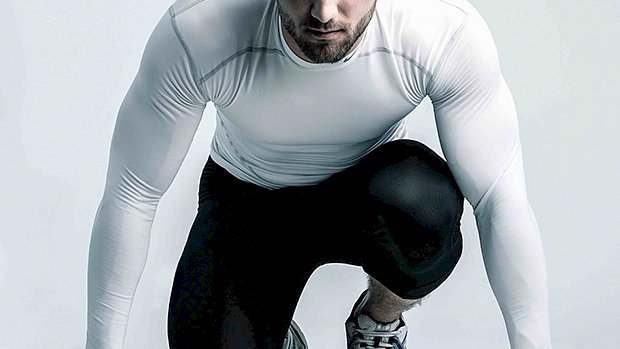 Is compression gear worth wearing during strength or cardio workouts? The short answer is… sort of. It depends on the activity and your goal. Multiple studies have examined the effect of compression clothing on endurance, strength and power, motor control, and post-exercise recovery. Let’s go through it. Endurance This one is a little hazy. What we’re looking for here is some impact of compression on physiological markers such as oxygen uptake, blood lactate concentration during continuous exercise, blood gases, and cardiac parameters. The majority of research in this area is inconclusive on the impact of compression on these physiological markers. Note that while there seems to be plenty of anecdotal evidence supporting the use of compression wear during endurance exercise, the studies have been unable to consistently show a correlation. People may THINK they’re benefitting, which may in fact create a psychological and even an actualized benefit. But it’s impossible to isolate the psychological effect without using a placebo condition in a study. Strength and Power Exercise Research is mixed in this area as well. Some small positive effects have been observed on sprint performance and vertical jumping, but these benefits seem to be almost negligible. However, here’s where we get to some real potential benefits of compression gear: studies have shown positive effects on the removal of lactate (H+ buffering) during short rests between sets of High Intensity Interval Training (HIIT). Without getting into too much detail about hemodynamics, it makes sense that tight compression gear may enhance local blood flow and improve oxygen delivery, and additionally, may enhance arterial blood flow, which in turn will facilitate more efficient clearing of metabolites, the aforementioned H+ buffering, and distribution of nutrients. Proprioception and Neural Mechanics Research on compression gear has shown some improvements in proprioception and sensory feedback. As a reminder, proprioception is the body’s ability to know where it’s located in space. These improvements also may help explain the strength and power benefits during HIIT exercise. Muscle Recovery We know that compression will increase arterial blood flow and venous return. We can say that it will also increase clearing of cellular waste products, which may result in quicker recovery after an intense bout of high intensity exercise. Thermoregulation Clothing generally provides a barrier to heat transfer and thus slows sweat evaporation. Compression clothing may inhibit this natural process of heat transfer even more, which would IMPAIR performance in the short term (during exercise), even while potentially improving muscle repair and recovery times (post-exercise). Research is lacking on the effect of compression gear on sweat evaporation in cold weather temperatures. However, in theory, inhibited sweat evaporation would be less important in cold weather environments, so the negative impact of compression gear may be lessened, while the potential performance and recovery enhancements would remain. Summary It’s important to understand that compression may have benefits to exercise performance and recovery, particularly during and after high intensity interval training, but it may also have negative impacts on overall exercise performance in others areas such as the inhibiting of sweat evaporation. Hey, maybe you just wear it because it makes you look jacked, but it’s always a good idea to get the facts
Origin: Tip: Does Compression Gear Really Work?
 All about sport xlsport.club