
 Let me throw this hypothetical at you: How would you know if the protein powder you’re using is any good? It’s not like poor quality stuff would make you feel any worse, and if you didn’t add any muscle during the time you were using it, you’d likely blame it on your diet, your training program, or even your mom and pop for passing on some rotten genes. Your protein powder is probably the last thing you’d blame, but unfortunately, that’s exactly what some scurrilous protein manufacturers are counting on. Your Honor, Let Me Present My Case I’ve been involved at some level in the design, manufacture, or marketing of various high-quality protein powders for almost 30 years. While making good protein powders was a moral imperative, it was also a selfish endeavor because I wanted to personally use protein powder that works as advertised. I’m a lifter and I want to be healthier, so there’s no way in hell I’d want to contribute my efforts or expertise to something that didn’t meet my needs. But I’ve seen some things, ugly things, along the way. Below are a few of them and I’ve broken these various tactics down into two categories: “misdemeanors” and downright “crimes.” The misdemeanors are things that weren’t exactly dishonest, but end up costing you extra money for no reason, while the crimes I describe are exactly that – crimes – done with nothing but profit in mind and no regard for the consumer. Hopefully, this info will help protect you from making poor protein powder purchases in the future. Fair warning, though: At the end of the article, I’m going to act in a self-serving manner and tell you that the protein powder you should use is the one made by Biotest, the company I work for, but I’ll do it in good conscience because I know it’s a terrific, honest product. Misdemeanor – Ready-to-Drink (RTD) Protein Products The idea of grabbing a cold can of a pre-prepared protein drink out of the gym cooler as you head out the door is hugely appealing, but these drinks pose a couple of problems. First of all is the high price, but you’re not really paying for any exotic, muscle-building proteins contained in the formulation. Instead, you’re paying for water. Let me explain. The main ingredient in these products, by necessity, is water. Water weighs a lot. Water costs a lot to ship. What you’re paying for is directly related to what UPS or the USPS or Fed-Ex charges for shipping heavy items. Gasoline costs money. Jet fuel costs money. The meth long-distance truckers use to stay awake costs money. The herniated discs the workers suffer from having to hoist the heavy boxes and pallets on and off trucks costs money. To make up for those added expenses, manufacturers are forced to use lower-quality proteins. Additionally, the FDA requires that RTDs be pasteurized, so it’d be of little use to include expensive proteins in the first place because the heat from pasteurization would destroy a lot of the delicate peptides, glycomacro- and otherwise, that make certain proteins highly desirable. Don’t get me wrong, you’re still getting protein from these drinks, but as far as nitrogen-retention and all that other good, muscle-building stuff, it’s not much better than the protein in your nana’s SlimFast. Crime – Using Chinese Proteins China has long been a place where you can buy really cheap protein powder. They pay their workers really poorly and they don’t have to conform to any of those pesky regulations that plague American companies, so manufacturers can charge low prices and still make big profits. The trouble is, the lack of regulations allows them to cut a lot of corners. A few years ago, Consumer Reports did a study on 15 popular whey protein powders – several of which originated in China – and found that regular use of these products could expose their consumers to toxic levels of heavy metals including arsenic, cadmium, and lead. Not all of that contamination was intentional, though, as at least one-fifth of all farmland in China is contaminated with these aforementioned heavy metals and the cows can’t help but turn into walking chemical waste dumps. What appears to be intentional, though, is the other contaminants routinely found in Chinese protein powders, among them melamine, a chemical compound used in the production of glues, laminates, adhesives, and flame-retardants. It does not grow muscle. While this problem was supposedly taken care of after a huge, stateside ruckus, no one’s recently bothered to see if the use of melamine has resumed. It’s a mess. Then there’s the specter of other contaminants. Various non-protein “health” products from China have also been found to contain heavy metals, pharmaceutical drugs, and even DNA from endangered species like snow leopards. I can’t even venture a guess as the reason for that last one. Of course, with the advent of the trade war and the imposition of a 25% tariff on Chinese whey proteins, American manufacturers might soon be seeking alternative sources to
Origin: Protein Powder Crimes and Misdemeanors
Tag: Protein
A New Protein, A Designer Carbohydrate
 Nutritional Evolution People who want to build a lean, muscular physique go through a kind of nutritional evolution: Stage 1 First, they start to actually pay attention to nutrition. After the newbie gains fizzle out, they realize they need to improve their diet strategy… or, you know, actually have one. They learn that things like protein and carbohydrates are pretty darn important for fueling workouts, recovering from workouts, and ultimately building the body they’re after. They improve their food choices. Maybe they’ll even pick up a bucket of whey protein at the grocery store. Sadly, many folks stop right there. Then they assume they’ve reached their “genetic limits” and may even lose some of their enthusiasm for training. That’s too bad, because there’s one more step they could take. Stage 2 They could begin to fine-tune their protein and carb choices. They could learn how nutrient timing is important, and they could learn that different types of protein and carbs have different tactical effects on performance and body composition. These lifters and athletes who enter stage two put on their lab coats and increase the magnification of their nutritional microscopes. They discover that specialized proteins and designer carbs exist, and these bespoke macros were created for the sole purpose of building muscle faster, protecting muscle, and making workouts more productive. In short, they discover Mag-10®. A New Kind of Protein You’ve heard of the super protein, micellar casein, but there’s another form of casein with its own unique set of benefits: casein hydrolysate. Unlike micellar caseins, hydrolysates are heavily processed… and that’s a good thing. The goal is to get a complex mixture of two and three amino acid (di- and tri-peptide) chains that have unique biochemical properties and that are absorbed intact, not requiring any further digestion. Casein hydrolysates are at least 30% more effective in stimulating muscle protein synthesis (read: gains, bro) than intact casein. These rapidly-absorbed casein hydrolysates are ideal for peri- or intra-workout consumption. Casein hydrolysates also have another unique mode of action: they’re more insulinogenic than whey proteins. “Insulinogenic” means they elicit a rise in insulin, which is exactly what you want in a protein during the peri-workout period because insulin shuttles amino acids to working muscles. In short, a dose of a good casein hydrolysate, as found in Mag-10®, stimulates muscle protein synthesis to a much greater degree than a much larger dose of conventional proteins. And whole foods can’t even come close. A Specialized Carbohydrate Along with isomaltulose, Mag-10® contains just the right amount of cyclic dextrin, a nutrient-partitioning, functional carbohydrate. Cyclic dextrin: Acts as a powerful anti-catabolic agent (controls cortisol). Pulls fluids into muscle cells. Potentiates glucose transport into muscle. Delays fatigue so you can train harder, longer. This special carbohydrate mixture, in addition to increasing metabolic rate, drives supraphysiologic levels of Mag-10®’s di- and tripeptides, as well as other vital nutrients, into the muscle cell. Five Ways to Use Mag-10® 1 – Protein Pulsing How your body utilizes protein can have a powerful impact on how fast you gain muscle mass. Simply put, the greater the body’s response to protein utilization, the greater the muscle gains achieved. Unfortunately, the standard advice has been to “consume a big dose of protein every couple of hours,” which is too often and actually causes the body to become unresponsive to protein. Science and experience now tell us that we actually should’ve been doing something called “protein pulsing.” Protein pulsing is a science-based dosing strategy for making the body hyper-responsive to high-protein utilization and producing the maximum anabolic effect. For protein pulsing to be effective, you have to achieve three or four sizable amino-acid “spikes” per day, and allow the body’s amino-acid levels to return to baseline after each spike. In order to do that, you have to use a fast-acting protein formulation that’s designed specifically for maximum pulsing effect. Optimal times for pulses are 30 minutes prior to meals, between meals that are six hours apart (or longer), and post-workout, when the body is already in a hyper-responsive state and needs the additional protein. Mag-10® is the only formula in the world designed specifically to deliver the maximum pulse effect. 2 – During Cardio or Metcon Many physique competitors use fasted cardio (doing cardio on an empty stomach first thing in the morning) for fat loss. The hope is that body fat is vulnerable in this state and can be better oxidized and burned. But there’s a problem. Two, in fact. First, the extra fat burning is minimal. Second, muscle is also vulnerable, and that means your metabolism is at risk. If you like fasted cardio – because you’ve seen some benefits or it’s just
Origin: A New Protein, A Designer Carbohydrate
Tip: Sweet Potato Protein Brownies
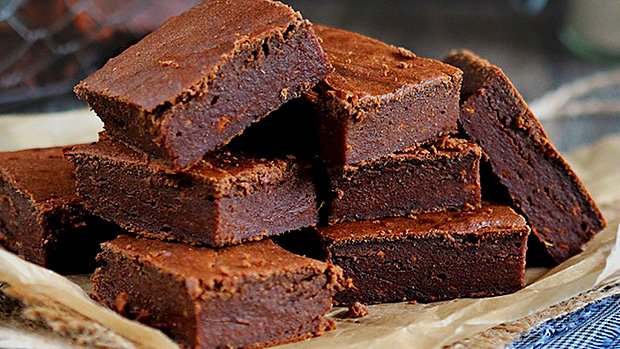 The typical brownie might make you go weak at the knees, but there’s always a cost. After all, it’s a devilish mixture of fat and sugar. The good news is, you can make a more macro-friendly brownie that won’t sacrifice on flavor or fudginess. These are made with a sweet potato base for good carbs without the sugar crash. There’s zero gluten and lots of fiber. They also have a Metabolic Drive® Protein kick, with 6 grams per brownie. Here’s the best thing about them though: At just 95 calories per generously-sized brownie, zero added sugar, and only 3 grams of fat, you wouldn’t be pushing it if you had more than one at a time. Ready to make them yourself? Here are the ingredients you’ll need and the directions. Brownie Ingredients 2 Baked medium (about 16 ounces) sweet potatoes, skins removed 3 Scoops (90 grams) chocolate Metabolic Drive® Protein 3 Whole eggs 1/2 Cup unsweetened cocoa powder 2 Tablespoons olive oil, or macadamia nut oil if available 2 Tablespoons any milk 1/4 Cup semi-sweet chocolate chips Optional Icing Ingredients 1/2 Cup powdered erythritol (not granulated) 1/4 Cup PB2 powdered peanut butter Directions Bake your sweet potatoes and let cool before beginning. Then scoop out the insides. (Don’t waste the skins; they’re great in stews and one-pot meals for extra texture and fiber.) Preheat your oven to 350 degrees Fahrenheit or 180 degrees Celsius. Line a brownie tin or deep baking tray with baking or parchment paper. Use a food processor or immersion blender to blitz the sweet potato into a smooth mash. Add the rest of the ingredients except the chocolate chips. Blend until a thick batter is formed. Scrape the sides of your food processor a few times to ensure it’s well-combined. Fold in the chocolate chips, then pour into your pre-prepared tin. Spread evenly. Top with a few extra chocolate chips if you’re going for the fancy finish (add macros accordingly). Bake on the top shelf of your oven for around 14-16 minutes – a shorter bake time will produce a more gooey brownie. Let it cool a little, then cut into 18 squares. These brownies are good warm, but if you can resist the temptation and allow them to refrigerate overnight, they’ll transform into the fudge-like brownie you’ve been waiting for. For Icing (Optional) Mix together equal portions of PB2 peanut butter powder with powdered erythritol. Add a little water at a time to get your desired texture. This creates a peanut-butter-flavored icing that makes for an extra decadent topping with very few calories. Nutrition Info Per Brownie Recipe makes 18 servings. Calories:95 Carbs:17 grams Fat:3 grams Protein:6 grams Fiber:7 grams
Origin: Tip: Sweet Potato Protein Brownies
How to Evaluate Your Protein Powder
 When it comes to evaluating the quality of a protein, it all comes down to bioavailability and amino acid profile. Bioavailability simply refers to how much of a particular protein people absorb. To figure this out, scientists give test subjects carefully measured amounts of protein to ingest. The scientists then play cards until the test subjects’ poop hits the Tupperware container, at which point they measure how much nitrogen is in it. They then use the amount of nitrogen detected to calculate how much protein was in the feces and compare it to how much was ingested. The final number is referred to as the BV, or biological value. Is the BV of a Protein Worth a Shit (Literally)? The trouble is, the calculation wasn’t very good from the get go because it neglects some basic human dietary mechanics. First of all, if the protein is “fast acting,” like whey, some of it can be converted to glucose, particularly if the person is a keto madman and is chronically low on carbs (and ipso facto, glycogen). Secondly, bacteria in the gut tend to filch some of the protein. While BV is kind of outdated, protein manufacturers still use it occasionally to play the “our protein is better than yours” game. The current accepted protein evaluation standard, used by the FDA, is the PDCAAS, or Protein Digestibility Corrected Amino Acid Score, which combines biological value with a protein’s amino acid profile. Some proteins have practically everything a human needs to sustain tissue growth. We call them “complete” proteins. They have a nearly perfect blend of essential amino acids (those we can’t make ourselves) and branched chain amino acids (BCAAs), which are particularly important to muscle growth. Other proteins are missing certain amino acids or have lousy amounts of BCAAs, so much so that their amino acid profile wouldn’t support the growth of a banana slug. Unfortunately, the PDCAAS isn’t the best way to gauge a protein’s quality, either. To calculate it, the scientists again measure and calculate excreted nitrogen, but the PDCAAS, like the BV, doesn’t take into account any protein that was eaten up by the bacteria in the gut. It also requires that test subjects have an empty stomach, which exposes the test to all kinds of inaccuracies. In real life, you might quaff a protein shake, but there’d probably still be a slab of lasagna down there to slow down the protein’s absorption. Equally likely is that there might be some Wheat Chex floating around your stomach like inflatable pool toys that might bind up some of that protein because of their high-fiber content. That leaves a relatively new scale, the Digestible Indispensable Amino Acid Score, or DIAAS. It measures the nitrogen content of the ileum, or small intestine, instead of the nitrogen in the feces. This allows researchers to get a more realistic evaluation of a protein’s bioavailability because the measurement occurs before all those bacteria were able to munch up a lot of the ingested protein. It also takes into account the digestibility of each amino acid instead of the overall protein. It’s currently the best scoring system in use. Got all that? If not, it doesn’t matter so much. What’s important is to just choose the best protein source based on your needs and our current best guesses as to which support muscle and tissue growth the best. So, How do the Various Proteins Rate? Plant-derived proteins are probably the fastest growing sector in the protein business. At first glance, it makes sense they’d be doing fairly well. Anything associated with plants is instinctively thought to be healthier, but the thinking is a bit two-dimensional in that these plant-protein fans aren’t actually eating plants, but the amino acids that are left over when the water, fiber, chlorophyll, polyphenols, vitamins, and minerals – just about everything else in the plant – is extracted. My Hanes cotton underwear are probably closer in composition to an actual plant in nature than a pile of plant-derived protein. But there remains another truth, this one particularly inconvenient: the amino acid profile of plants is not the same as what you’d find in human muscle. Sure, most of the amino acids are there, but usually not in the amounts you’d need to support optimal growth of muscle. That being said, there are a couple of plant proteins that come close to being complete: pea protein and soy protein. The PDCAAS shows pea protein at an impressive 0.893, while soy proteins rates from 0.95 to 1.00, depending on how they were processed. That means that pea protein is damn close to the highly desirable 1.0 score that most animal proteins come close to, while soy protein is neck-and-neck with them. That’s a little misleading, though. The PDCAAS must grade on a curve or something so animal-derived proteins don’t get swelled heads because they actually truncate the numbers. If they didn’t do that, whey protein isolate would score 1.2 on the scale and milk protein a tad higher,
Origin: How to Evaluate Your Protein Powder
Tip: Are Protein Shakes Really Bad For You?
 There it was, on news app after news app on my iPhone, the report about how “drinking muscle-building protein shakes” could threaten your health and reduce your life span. That kind of news gets your attention, especially if you’ve spent a good part of your adult life tapping on the bottom of a protein shake, trying to give gravity an assist in draining the last few rivulets of protein into your mouth. I looked up the study and sure enough, there it was. Scientists from the University of Fredonia recruited 12 bodybuilders. Six were designated as the control group and the other 6 were force-fed 12 gallons of protein shakes, causing all 6 to explode. No, no, no. That wasn’t the real study. I made that up. But the real study, or at least the way the real study was interpreted by the lay press, is just as ridiculous. What The Silly Monkeys Did I won’t bother going into all the minute details of the study that was so widely mischaracterized. What you need to know, though, is that Australian scientists gave several groups of mice a diet of which 18% was protein from casein. One group of mice, however, had about a third of their whole protein replaced with free-form branched-chain amino acids (BCAA). That group started to eat more than the other groups, got fatter, and then died earlier than the other groups. What probably happened is that the large amount of BCAAs in their diet caused a decrease in serotonin production, thereby increasing their appetites and compelling them to overeat. That’s it. You’re probably wondering how the hell anyone could make the deductive leap from mice that overdosed on BCAAs to humans dying from protein shakes. The answer is in the press release from the University of Sydney where the research took place. It made the observation that “BCAAs are included in all sorts of supplements for athletes,” including protein drinks. Got that? Since some protein drinks contain additional BCAAs, then protein drinks in general can supposedly damage an athlete’s health. Never mind that the study itself never said anything at all about protein supplements. Never mind that no human is going to replace about a third of his daily whole-protein intake with BCAAs. Besides, there’s nothing inherently dangerous about BCAAs. The mice were just fed a stupid amount of them and it caused them to overeat. What This Means To You What does this mean to you? Absolutely nothing. Ignore it. Ignore all the articles about it that keep popping up in your health news apps. The truth is, a good protein shake, made from a high-quality protein powder and not made in bargain-basement manufacturing companies in China from ingredients you don’t want to know about, used as a supplement instead of a meal replacement, can do some great things for a body, like: Increase lean body mass (muscle!) Increase levels of growth hormone Increase serum levels of testosterone Reduce body fat percentages Greatly increase insulin sensitivity Improve cholesterol ratios (higher HDL levels). As far as manufacturers adding BCAAs to their general-usage protein powders, it’s often unnecessary except in peri-workout situations, but it certainly won’t shorten your lifespan. Likewise, BCAAs, taken by themselves, can be tremendously effective in building muscle, as long as you don’t replace a good part of your whole protein intake with
Origin: Tip: Are Protein Shakes Really Bad For You?
Does Soy and Soy Protein Feminize You?
 Back in 1999, I got an email from someone who said he was a scientist that worked for Archer Daniels Midland, the giant global food-processing corporation whose mission it is to sprinkle the world knee deep in soybeans. He wrote to tell me about how some of his research had shown that soy contained chemicals that acted like estrogen and could affect the reproductive systems of human males, thereby reducing sperm counts and reducing testosterone levels. As is commonly done by evil corporations everywhere, Archer Daniels Midland squelched the research. Whether he really worked at the conglomerate and whether ADM really did suppress his research, I don’t know, but regardless, he wasn’t the first scientist to report that soy had negative effects on mammalian reproductive systems. Prompted by his email, I wrote Bad Protein, probably one of the first mass market articles to talk about any possible adverse effects to men from eating soy. Since then, as you’d expect, the bodybuilding subculture, along with bio-hackers, nutritional chemists, and enlightened nutritionists, have long debated the health effects of soy, especially soy protein. Most of the former are at least suspicious, if not downright terrified, of soy, while most of the lay public, thanks in large part to the marketing strength of ADM and other companies in the soybean business, continues to regard all-things-soy as synonymous with health. But it’s been almost 20 years since I wrote that groundbreaking article and a lot of the people who used to condemn soy have forgotten what it was about the grain that got everyone so lathered up in the first place. In fact, most modern-day articles don’t even mention the possibility of an association between soy and male reproductive health. So is soy still “bad protein”? It’s time to take another look at it and see if it deserves a second chance. Someone’s In My Parking Spot The concern with soy is that it contains plant chemicals known as isoflavones that function as endocrine disrupters. These isoflavones are genistein, daidzein, and glycetein. There’s also a fourth – equol – but it doesn’t occur naturally in soy; instead, it’s a particularly potent metabolite of daidzein that only shows up in 33 to 50% of humans who possess the particular bacterial strain necessary for its conversion (1). These isoflavones can affect mammalian cells in two ways. They can either bind to high-affinity, highly specific cell receptors in the cell nucleus, which in turn attach to DNA that leads to protein transcription. In effect, they act just like estrogen, albeit a weaker version. Alternately, they can simply bind to these receptor sites and sit there, preventing real estrogen from getting its normal “parking spot,” thereby preventing it from initiating protein transcription. You don’t want the first scenario to happen, particularly if you’re a male. At least that’s the theory. The thinking is that estrogen, or something that acts just like a weaker version, can be responsible for a host of “feminizing” effects. It can also make it harder to put on muscle. Of course, if you’re a male who has high levels of estrogen in the first place, you wouldn’t mind if any of these isoflavones stole estrogen’s parking spot because they’re weaker than real estrogen. The isoflavone would prevent the real, stronger, estrogen from binding and initiating protein transcription and you’d miss out on possible side effects like additional body fat, gynecomastia, possible BPH, and reduced sperm counts and testosterone levels. If, however, you have a low level of estrogen in the first place, the comparatively anemic activity of the weak estrogen could nevertheless lead to some of this undesirable estrogenic activity. Does It Really Feminize You? What’s the Research Show? We’ve known that isoflavones can cause reproductive disturbances in mammals since 1946 when it was discovered that sheep that grazed on red clover (which is high in phyto, or plant, estrogens) were infertile. Scientists made a similar observation about 20 years later when cows that were stall-fed red clover were also found to be infertile. Soon after, captive cheetahs on a soy-based diet turned out to have the same problem. Fertility was restored in all three cases when the isoflavone intake was reduced. There have also been innumerable experiments on mice and rats, most if not all showing that dietary isoflavones led to reduced fertility, reduced sperm counts, and reduced testosterone levels. Granted, most of these studies involved amounts of genistein that were probably five times more than a human would get through food, but they need to be taken seriously because, as Heather Patisaul, a soy researcher at North Carolina State University, explains, “Our reproductive system and the rat reproductive system aren’t that different. The same hormones are involved.” Some of the human studies showed similar problems. In one study of 99 men, the men who’d eaten the most soy in the
Origin: Does Soy and Soy Protein Feminize You?
 All about sport xlsport.club