
 In Olympic weightlifting, the word “tonnage” is used to indicate how much total weight was lifted during the session. We also call it the “volume of work.” Tonnage is important, but when it comes to hypertrophy and the natural lifter, there’s an optimal dose. If a natural lifter goes overboard on volume, he or she will burn out their nervous system or skyrocket their cortisol – both of which will make gains stall. But I developed a system for natural lifters using high volume. Before we get to it, let’s take a look at who we’re talking about here and what their bodies do. 4 Kinds of Lifters Different people are stimulated by different types of training: 1 – Volume People Lifters who naturally prefer to perform a greater number of sets to achieve muscular stimulation. They normally don’t push each set as hard to be capable of doing the planned volume without crashing. If you follow the various experts, Dr. Mike Israetel, Pat Davidson, and John Meadows fall in that category. For them, gradually increasing volume over time is the main driver of hypertrophy. 2 – Intensity People These are people who prefer to do fewer work sets, but push these extra hard – to failure (or very close to it) or even beyond. Dr. Scott Stevenson, Dorian Yates, Mike Mentzer are good examples. Paul Carter’s preferred style is also more slanted toward intensity than volume. 3 – Load People These people are mostly about adding weight to the bar. We’ll find them more often among the powerlifting crowd, or they see themselves more as powerbuilders. In that category we can have a wide variety of approaches, from linear progression/progressive overload to the conjugate model. But they have one thing in common: strength is the number one goal. Think: Jim Wendler. 4 – Process People They’re all about precision. Perfecting their technique, writing down everything, analyzing data, and seeing a well-planned program deliver results is what they train for. They’re all about minutia and often suffer from paralysis by analysis. We don’t have that many of them among bodybuilders or strength athletes. Sure, many lifters love geeking out over technique and data, but it’s not their number one priority. Note: This type tends to be common among keyboard warriors who love to argue about everything and then need studies to allow themselves to try something new. When Hypertrophy Is The Main Goal Among those who are mostly interested by muscle gain, we have mainly the volume and intensity people. The intensity people tend to kill themselves and get worse results when they go higher volume because they can’t scale down their effort. They are all-out or nothing. And if they force themselves to “stop short” they don’t feel satisfied and it kills their motivation. The volume crowd often burn out on high intensity programs because of the high adrenaline/cortisol it produces. They’re often unable to reach the required level of intensity to make low volume work and, even if they do, the low volume is unsatisfactory and kills motivation. Cortisol – Enemy Number One Cortisol is the enemy of the natural lifter trying to get jacked. It can limit muscle growth, if chronically or excessively elevated, by: Making protein breakdown higher than protein synthesis Increasing myostatin levels (which inhibits muscle growth) Inhibiting the immune system (muscle damage repair is driven by the immune system) Reducing nutrient transport to muscles There’s a strong connection between training volume and cortisol production. One of the functions of cortisol when training is the mobilization of stored energy so that you have enough fuel for your workout. The more volume you do, the more fuel you require and this means more cortisol release. Understandably that’s one of the reasons why, if you reach a certain amount of volume in a workout, results will start to diminish. However, intensity (and load) can also increase cortisol. See, we often call cortisol the stress hormone, but “readiness hormone” would be more accurate. Basically, cortisol’s purpose is to put you in a physical and mental state to be able to fight or run away. It mobilizes energy so that you don’t run out of fuel in the middle of the fight, but it also increases mental alertness and focus, blood flow (to deliver oxygen to the muscles), and muscle contraction strength. The latter three are done indirectly via an increase in adrenaline levels. So let’s get into that. How Cortisol Increases Adrenaline It does so by increasing the amount of the enzyme responsible for converting noradrenaline into adrenaline (Phenylethanolamine N-methyltransferase). The more a situation requires alertness and drive, the more adrenaline you’ll produce which means that cortisol goes up too. In lifting, the more threatening a set is, or the closer to your limit you go, the more adrenaline/cortisol will be released. A “death set” will spike adrenaline a lot more than a set with 3-4 reps in the tank. A max effort lift will also
Origin: The Best Damn High Volume Workout Plan for Natties
Tag: Plan
Tip: Increase Pull-Up Power With This Simple Plan
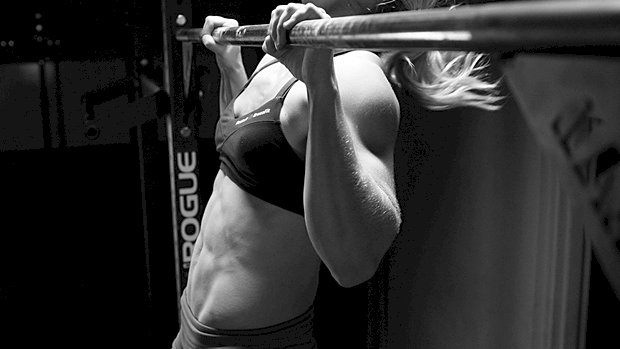 Mini-Sets for Maximum Gains Suck at pull-ups? You need to work them with frequent training. Start every workout with a total of 20 pull-ups done in as little time as possible using “mini-sets” of half your current max effort. Use a clock to track how long it takes and try to beat that time each session. The best strategy is to NOT hit failure on any of the mini-sets since it would require too much rest between sets and thus would take longer to complete. Here’s How It Looks Let’s say your current max is 4 or 5 pull-ups. Start with mini-sets of 2, resting as little as possible between each set – about 20 seconds rest is plenty. When doing the second rep becomes a grind, extend the rest to 30 seconds. When the second rep becomes tough again even with the longer rest, move down to doing sets of 1 with 15-20 seconds of rest until you hit your total (20 reps) for the day. As you get stronger, you’ll be able to use more than two reps for your mini-sets, but be very gradual about increasing them. Monitor the time it takes you to complete 20 reps to gauge if your strategy is adequate. When you increase the reps per set, your total time should continue decreasing. Ideally, in 8 to 10 weeks you’d end up hitting the 20 reps in just two sets of 10 with about 20 seconds of rest. When that happens, you’ll likely be able to hit 15 good pull-ups in a row. Progression Method: 30 Total Reps, Then Add Weight Once you can complete 20 total reps in just two mini-sets with no more than 30 seconds rest, increase the target total to 30 reps and resume the progression. Eventually, when you can hit the 30 reps in just two sets with less than 20 seconds of rest, go back down to 20 total reps, but here’s the killer… add 15 pounds to your waist and resume the progression all over
Origin: Tip: Increase Pull-Up Power With This Simple Plan
 All about sport xlsport.club