
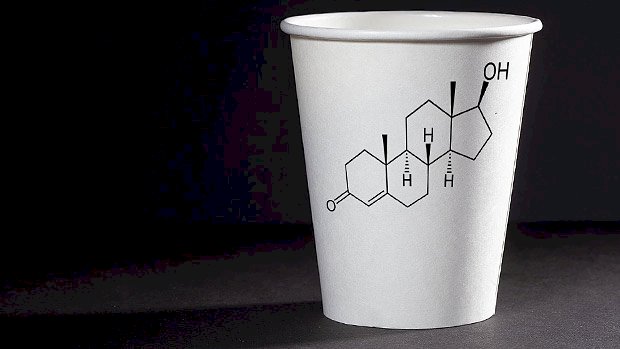
 The Healthiest Drink in the World That’s it. The contest is over. We knew coffee lowered the risk of heart disease, thwarted different types of cancer, protected your liver, lowered your risk of type 2 diabetes, and made you live longer in general, but the results of a new study cinch it. Coffee, I’m naming you the healthiest drink in the world. Granted, your previous accomplishments were all praiseworthy, but when the American Journal of Clinical Nutrition reported that drinking coffee has been found to elevate testosterone while simultaneously lowering estrogen in both men and women, I ordered the cake, rented out the local Moose Lodge, sent out all the invites, and blew up all the celebratory balloons for your coronation. What They Did Epidemiologists from Harvard University looked at data from 15,551 women and 7,397 men who’d participated in the Nurses’ Health Study and the Health Professionals Follow-Up study. They wanted to know how drinking coffee affected C-peptide levels, estrone, total and free estradiol, total and free testosterone, total adipokinectin, high-molecular-weight adipokinectin, leptin, C-reactive protein, interleukin 6, and soluble tumor necrosis factor receptor 2, among other things. What They Found Compared with non-drinkers, subjects who drank four or more cups of coffee a day had lower concentrations of estrone (-6.4%), total estradiol (-5.7%), and free estradiol (-8.1%), while displaying higher levels of free testosterone (7.3% in women and 3.6% in men), and total testosterone (9.3% in women and 5.3% in men). Levels of C-peptide, leptin, C-reactive protein, IL-6, and sTNFR-2 all went down too, while levels of the fat-burning hormome adipokinectin went up (9.3%). The effects were dose dependent, meaning that while one daily cup of coffee had some beneficial effects, two cups worked better and three worked better still, while four or more cups showed maximum benefits. Perhaps surprisingly, it didn’t seem to matter whether the participants were drinking caffeinated or decaffeinated coffee – the effects were largely similar. The researchers concluded the following: “Our data indicate that coffee consumption is associated with favorable profiles of numerous biomarkers in key metabolic and inflammatory pathways.” How to Use This Info So what is it about coffee that makes it so damn healthy to drink? It definitely has nothing to do with caffeine, as this study and numerous others – including at least one that measured the ergogenic benefits of coffee – found that the advantages were conveyed equally well by decaf coffees. Instead, it likely has something to do with the over 1,000 biologically active compounds found in the drink, but while many of them are highly anti-inflammatory and anti-oxidative, there’s one that appears to be particularly gifted in those areas. It’s known as chlorogenic acid, or CGA. Therefore it makes sense that we should seek out brews that are particularly rich in CGA. Here’s how to make sure you’re getting the stuff that raises testosterone and lowers estrogen the most: Opt for Kenyan, Ethiopian, or Columbian, because coffee beans grown at high altitudes and near the equator have the highest amount of CGA. If you’re buying grocery store brands, opt for Dunkin’ Donuts Original Blend and McCafe Premium Roast Decaf, medium roast. As far as general CGA guidelines, keep the following in mind: Flavored blends don’t usually have a high CGA content because they typically use low-quality, low CGA beans (the artificial flavor negates the need for good-tasting, high-CGA beans). Light and medium roast coffees preserve CGA, while dark roasts destroy them (along with generating undesirable byproducts like acrylamide, the carcinogen found in French fries and potato chips). Use fresh ground coffee beans when possible. Pre-ground versions usually lack flavor and are short on CGA. Very fine grinds are the most healthful, but also the most bitter. Medium grinds have an acceptable amount of
Origin: Tip: The Perfect Anabolic Drink
Tag: Perfect
3 Capsules for Perfect Sleep
 The Eggo Incident Want to gain weight and lose control of your appetite? Want to become forgetful, hypersensitive, unmotivated, cynical, and generally unpleasant to be around? Well, just lose sleep on a consistent basis. As a 24-year old, I remember feeling those feelings and watching myself expand. My circadian rhythm and appetite were so out of whack that I binged on a box of semi-frozen Eggo waffles between naps one afternoon. I didn’t own a toaster and didn’t want to take the time to put them in the microwave. With my first job straight out of college, I hadn’t figured out how to get adequate sleep. As a TV news producer, my alarm went off at 2AM. And ironically, in the evenings I was too stressed-out and anxious to fall asleep or stay asleep. If Z-12™ had been around back then, things would’ve been different. Yeah, this is a supplement article, but don’t freak out because it’s one you should consider using. And it’s not just for muscleheads. Your dad, mom, and next door neighbor could benefit from it. Bad Sleep = Fat Gain The fat you gain from losing sleep can be imperceptibly slow. It creeps up. And that’s the problem with it. Since you don’t see it immediately after one night of poor sleep, you likely won’t connect the dots after many poor nights of sleep. You might try dieting, skipping breakfast, and eating salads for lunch. And that’s fine. But when your sleep is subpar, you’re going to be swimming against the current. It’ll hurt your ability to comply with any diet. Don’t believe me? Then believe the European Journal of Clinical Nutrition, which published a meta analysis showing that after a poor night of sleep, people ate about 385 more calories the following day (1). This is likely caused by a disruption of leptin (the satiety hormone) and ghrelin (the hunger hormone), which ultimately leads to cravings. So if just one bad night can cause you to eat a few hundred extra calories the next day, you can imagine what weeks or months will do. And it’s worse for those with high-stress jobs. Researchers examined the eating and sleeping patterns of workers who had to deal with the public over the phone. They found that work stress was linked to unhealthy food choices at night. On the flip side, a good night of sleep had a “buffering effect” which led to better dietary choices (2) the next day. Sleep doesn’t just affect your appetite; it also affects the way your body stores fat. Researchers at the University of Chicago Research Center found that restricting the sleep of study participants caused their fat cells to become more insulin resistant (3). In short, sleep is an important regulator of energy metabolism. The Testosterone Thief Poor sleep is also tied to low testosterone, and those who don’t make enough are often depressed, tired, and overweight. So how badly does poor sleep affect testosterone? Well, in one study, after just a week of sleep restriction, healthy young men experienced a 10-15 percent decrease in testosterone (4). Researchers had them restrict their sleep to five hours per night. Sure, in the confines of an experiment, getting only five hours of sleep might seem severe. It is. But you have to wonder, what if their sleep was just restricted to six or even seven hours per night for several months? That would give them a little more sleep every night, but over a longer period of time. It’s not as severe as five hours, but it’s not an optimal amount either. Yet that’s the about how much sleep a lot of adults get. And they believe it’s normal. Would their testosterone be low as well? It’s possible. Perhaps “dad bod” is really just a low-T, sleep-deprived bod. The Sleep Strategy You Haven’t Tried You’ve already heard all the stuff about turning off the TV early, avoiding caffeine late in the day, and making your bedroom dark. If you haven’t read about these “innovative” sleep tips, just open a Reader’s Digest from 1999. The truth is, sometimes the obvious stuff doesn’t work. And to be completely honest, I want to punch anyone who tells me to stop watching Netflix at night. Especially since I can watch it and still get a full 8.5 hours of sleep. But maybe that’s because my main sleep strategy is taking Z-12™. It actually allows me to “turn off” the anxious part of my brain at night. It makes sleep so restful that I pop out of bed without an alarm. No grogginess in the morning. No racing thoughts in the middle of the night. Just rest. Feels Like Magic, But It’s Actually Just Science The body’s “chemical messengers” are neurotransmitters. When you’re working or working out, you want to produce neurotransmitters that stimulate or motivate. And when you’re winding down in the evening, you want to produce inhibitory ones. As their name implies, they inhibit excitatory neurotransmitters and help you relax. But if you’re still amped up after a stressful day of work (or arguing on the internet) your brain will continue to produce a flood of the stimulatory neurotransmitters. This
Origin: 3 Capsules for Perfect Sleep
 All about sport xlsport.club