
 Here’s what you need to know… Experts used to think that once-a-week, high-volume training for individual body parts was best. Science now shows that a higher frequency of training works better. In newbies, post-workout muscle protein synthesis (MPS) continues for upwards of 48 hours. But in experienced lifters, MPS only continues for about 16 hours, proving that training frequency needs to be increased. When you work a body part once a week, you spend almost 5 or 6 days not growing. Increasing training frequency to two times a week essentially doubles the amount of time you spend growing. When you increase frequency, you reduce the amount of work you do in a workout. In return, you get better recovery and an opportunity to use more exercise variety. Manipulate Frequency and Volume for Growth Strength How often you train and the total amount of work you do in the gym, otherwise known as frequency and volume, are two of the most important variables you can manipulate for improving muscle growth, strength, and performance. In the past, most experts thought that having once-per week, high-volume training workouts for a particular body part was optimal for growth. Now, science is beginning to reveal that spreading that volume over multiple workouts may be more advantageous for building muscle and improving strength. In fact, new research shows that increased training frequency is almost an imperative for anyone who’s not a rank newbie. Why? It starts with protein synthesis. Protein Synthesis and Muscle Growth In order to fully understand how training frequency influences muscle growth, you need to understand what drives muscle growth and how it changes over time. Currently, the leading theory behind how muscle actually grows is because of something called muscle protein synthesis. (1) When you work out and stress your muscles sufficiently, you up-regulate the process of protein synthesis, which allows the body to combine amino acids into new proteins, i.e., new muscle tissue. However, it’s important to recognize that the process is a rate that diminishes when you become experienced. As a beginner, the amount of time that protein synthesis is elevated in response to exercise is quite long, with some studies showing upwards of 48 hours. That means that as a beginner, your ability to grow new muscle from a single workout can last a few days. (2) New research, however, tells us that as you become more experienced and more resilient to stress, the amount of time the body spends growing muscle from a single workout decreases significantly. In fact, some research shows that for experienced lifters, this rate of muscle building can actually return to baseline within 16 measly hours. (3) This is one of the biggest reasons why it becomes increasingly more difficult to grow as you become more experienced, and all the more reason experienced lifters need to start training more frequently. Bottom Line: The body responds to exercise by increasing protein synthesis. As a beginner, this response is intense and lasts a long time. As you become more experienced, though, this growth response diminishes, making once-a-week single-body part workouts less and less effective. Start Increasing Training Frequency Increasing how often you train certain muscle groups means you’ll have less volume per workout, but you’ll also have the opportunity to incorporate greater volume overall. For example, let’s say you’re a newbie and you train legs once per week and do 8 sets of squats. That’s a lot of sets and chances are you’re exhausted and will remain sore for days afterwards. But if you’re experienced, the actual growth response to that session might be over with by the next day. This means that despite the difficulty of your workout, an experienced lifter might only be growing for a day or so in response. That leaves the rest of the week when those muscles aren’t growing. But let’s say you split the amount of work you did during that single workout over two training sessions. Now you’re doing 4 sets of squats, twice per week. When you make this change, a few things happen. First, you’re reducing the amount of work you’re doing per workout, but what you get in return is a better ability to recover and the opportunity to use more exercises. Consider that in the example you completed 8 sets of squats. By working legs twice a week, you have the opportunity to do 4 sets of squats and maybe 4 sets of leg press, for example. Second, you’re increasing the amount of time you spend growing. If you’re experienced and you hit a certain muscle group only once per week, it’s likely that you’re spending almost 5-6 days without growth. When you increase the frequency that you train certain muscle groups, you’re now essentially doubling the amount of time you spend growing. All together, the benefits of increased frequency means that you can do more work over time, while also spending significantly more time each week growing. Bottom Line:
Origin: Lifters Need to Lift More Often
Tag: Need?
Tip: The Main Stretch You Need to Move Better
 Stretching the hip flexors (the front or anterior hips) will help you move better. It’ll also remove the “extensor block” which happens when tight hip flexors act as a brake for hip extension. This stretch makes it easier to activate and train the glutes as well. It’ll help you increase mind-muscle connection with your glutes, especially if you’ve been sitting for a long time before your workout. How to Do It Start in a half-kneeling position with your left leg in front of you. Push your hips forward and activate your right glute. The knee should be directly over your heel. Grab the left knee with your right hand and slightly rotate the upper body and hip toward the left. This will place the hip flexors on a great stretch. The twist will also reduce the typical compensation of “rotating away from the stretch” as you might automatically start to do. You’ll see in the photo that my hips are pushed forward. That’s intentional. Some recommend staying completely vertical with the spine while bracing the abs and glutes in this position. That’s fine. However, I prefer a deeper stretch (more in the direction of doing front splits). Do what feels
Origin: Tip: The Main Stretch You Need to Move Better
How Many Carbs Do You Need?
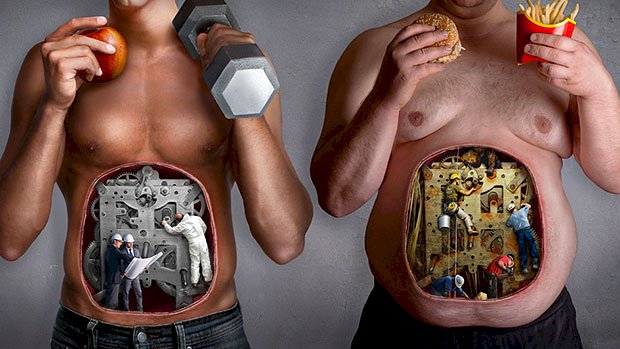 Here’s what you need to know… If you’re an athlete or a lifter trying to gain muscle and get strong, then you need carbs. Fat people have poor nutrient partitioning abilities. The carbs they eat are more likely to be stored as fat. If you’re relatively lean, your carb intake can be higher because leaner people have better nutrient partitioning abilities. People cling to the diets that initially gave them good results. Bad idea. Your metabolic condition changes. Lower-carb diets may be the best approach for improving body composition. Shoot for 100-125 grams per day. Serious lifters and athletes need 1-3 grams of carbs per pound. The Carb War The carb war has been raging in gyms, kitchens, classrooms, and nutrition conferences for decades, and will continue to do so in perpetuity. There’s religious-like passion and cult-like followings on both the low-carb and high-carb sides of the fence. The pendulum of popularity seems to swing back and forth between the two. Regardless, both sides of the battle can be right. Both approaches can work. The answer lies in this simple recommendation: Match your carbohydrate intake to your individual activity levels, metabolic condition, and physique or performance goals. It seems simple and logical enough, but it’s surprising how often that advice gets ignored when it’s applied to real-life diets, even when it comes to intelligent athletes and coaches. So how do you decide whether you should be following the food pyramid, the fitness freaks, or the paleo geeks? How about you stop following any dogmatic and inflexible system, and have the balls to find what works for you. There are four variables you should consider in your quest to customize your carb intake. 1 – High Intensity Activity Levels Carbs are the primary fuel for high-intensity activity. While the body can use fatty acids as fuel during rest, and even those who train only in the aerobic zone can become “fat adapted,” high intensity activity requires glucose. If you perform strength-training sessions on a regular basis, or compete in intermittent sprint sports, then you need carbohydrates. Perhaps you need a lot of carbohydrates. Those carbs will be used to optimally fuel your body and help you recover from your training sessions. This of course isn’t true for the sedentary individual. Muscle-energy reserves fuel muscular activity. If you’re not depleting muscle energy reserves through activity, you don’t need to refill them, thus you don’t need to consume a lot of carbs. The Car Analogy If your car has been sitting in the garage, it doesn’t need gas. Loading up on carbs is like trying to fill up a full tank. It just spills over the side. In the human body, that overspill equates to sugar backing up in the bloodstream (high blood glucose). This in turn leads to body fat storage and a host of other negative effects like elevated triglycerides and cholesterol, insulin resistance, and type II diabetes. However, if you drive your car around every day, sometimes for long mileage, you have to fill it up often. If you don’t, you’ll run out of gas. An empty tank in the human body equates with fatigue, depression, lethargy, impaired performance, muscle loss, stubborn fat, insomnia, low testosterone, impaired thyroid production and resting metabolic rate, foul mood, and frustration over your body not changing despite dieting and training. No diet is worth developing a lifeless noodle or its female equivalent, the dusty papaya, and then being an ass to everyone around you because of it. So give your body the fuel it needs when it needs it and you’ll be good to go. 2 – Current Shape We all have different physiological responses to food based on our individual metabolic condition, which is a combination of a couple of things. The first is just the general shape you’re in. If you’re overweight or are someone trying to go from out of shape to decent shape, your carbohydrate intake should lean towards the lower side. That’s because, in general, overweight individuals have poor nutrient partitioning abilities, meaning the carbs they eat are more likely to be stored as fat. At the very least, they have a damaged capacity to burn fat. If you’re normal weight, relatively leaner, or trying to go from good shape to great shape, your carb intake can be higher, or at least moderate, even in dieting phases because leaner individuals have better nutrient partitioning abilities. That means the carbs they eat are more likely to be stored as glycogen and less likely to be stored as fat. 3 – State of Insulin Sensitivity/Insulin Resistance The second side of the metabolic condition coin is your state of insulin sensitivity or insulin resistance. This is basically a term that describes how easy or difficult it is for your body to properly store nutrients (particularly carbs) in its cells. In an otherwise healthy person, your insulin sensitivity is related to the physical shape you’re in. Leaner individuals tend to have good
Origin: How Many Carbs Do You Need?
 All about sport xlsport.club