
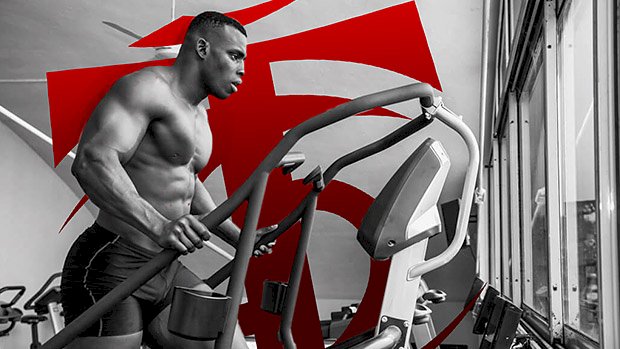
 Figuring out the best way to train for muscle growth and strength is already complex. And it gets even more complicated when you add cardio to the mix. You’ve probably heard or read statements like these before: “Fasted cardio will eat into muscles!” “Low intensity cardio will make you look like a marathon runner!” “Cardio after lifting will negate your gains!” We’ve reached a point where we’re almost scared of doing cardio. We’re afraid of losing our hard-earned muscle. Well, don’t look to “enhanced” bodybuilders for applicable advice. Their use of anabolic drugs counteracts any drawbacks that cardio could have on muscle mass. But don’t throw the baby out with the bath water either. Cardio remains a tool that can help us get leaner and healthier. Let’s look at the best and worst forms of cardio for the natural lifter. Cortisol is Key Cortisol has a significant correlation with muscle mass, albeit an inverse one: the higher someone’s cortisol production is, the harder time he’ll have building muscle and gaining strength. In fact, a higher cortisol level has been correlated with a drop in strength in older individuals (1). And while producing it is necessary for proper human function, too much can kill your gains. It may do so in a few different ways… It can increase muscle catabolism. Cortisol will lead to a breakdown of the tissue to make amino acids that can then be transformed into glucose to be used for energy (gluconeogenesis). That’s one of the main functions of cortisol. It’s not a self-destruct function, but rather, a function designed so that you’ll have fuel when you need it. It may inhibit the immune system. This is important because muscle damage repair (important for growth) is driven by the immune system. By inhibiting the immune system, cortisol can slow down muscle repair and impair growth. It can increase levels of myostatin. Myostatin plays a big role in how much muscle your body will allow you to build. The more myostatin you have, the harder it is to build new muscle. So that means, by increasing myostatin, cortisol can once again diminish muscle growth. An enhanced lifter can handle a lot more cortisol with less negative impact on muscle growth because of the exceedingly high levels of anabolic hormones in his body that can counteract (to an extent) excess cortisol production, at least when it comes to muscle growth. But a natural lifter wants to avoid producing too much cortisol from his cardio work. As such, the best damn cardio for the natural lifter is the one that can deliver results with the least amount of cortisol being released. Two Things Cortisol Does During Training Cortisol has many purposes during a workout. The most important are: It mobilizes energy. It will free up stored glycogen, fatty acids, and even break down muscle tissue to have energy available to fuel muscle contractions. The more energy you need to mobilize, the more cortisol you’ll release. Of course, since the goal of cardio is often to lose fat, you do need to force the body to mobilize some fuel. But too much might offset the fat-loss benefits. It gets us amped up. It increases adrenaline levels by increasing the conversion of noradrenaline into adrenaline. If you need to get amped up, motivated, or are facing something that’s perceived as stressful, you’ll produce cortisol. Doing a high volume of cardio will lead to high cortisol levels and so will pushing to an extremely high intensity level. It helps us maintain blood sugar levels. If blood sugar levels are too low, cortisol and glucagon are released to bring it back up. Why is that important? Because if you exercise in a fasted state, you’ll increase cortisol to a greater extent, especially if you need to mobilize a lot of fuel. “Yeah, but I train fasted and it energizes me!” Of course it does. Go back to what I just wrote – cortisol increases adrenaline levels. Feeling energized is the byproduct of jacking up adrenaline. And while it might make you feel good in the short term, it can do more harm than good if you stay like that for too long or produce it too often. So we have three elements that raise cortisol: Volume or burning a boatload of energy Pushing yourself to the limit Training fasted The Worst Types of Cardio for Natural Lifters The worst types are those that combine a high level of one element or a combination of elements, increasing cortisol above what’s necessary for fat mobilization. 1. Fasted Interval Training Why pick on fasting? Well, I’m not. Taking a 45-minute walk on an empty stomach in the morning is fine, but doing intense intervals fasted in the morning is not. In the first case, sure, you’re fasted (which is one factor to release cortisol) but the intensity is very low (taking a walk can even be calming) and the energy expenditure is low too. A 45-minute walk doesn’t require much glycogen mobilization and doesn’t have a big caloric expenditure. While it’s fasted, the total cortisol output will not be
Origin: The Best Damn Cardio for Natural Lifters
Tag: Natural
Natural Gains: The Proven Training Strategies
 Lead Photo Credit: Brad Neathery What’s the Best Training Program? Is it the workout plan used by the biggest and leanest pro bodybuilder? The strongest lifter with the most powerlifting records? Probably not. Their programs work for their (often drugged) bodies, not necessarily your (probably natural) body. Instead of getting lost searching for the perfect program, you need to adopt a set of strategies and methods that have been proven to work for everyone. You can then take this template of strategies and customize it by choosing the best exercises for your body and your goals. First, let’s review the strategies: Strategy 1 – Train Frequently Natural lifters often make two common mistakes. First, they try to specialize in building muscle too early. They never really build a base of strength to support more advanced, bodybuilding-style training. Second, they change exercises too often. This can even lead to program hopping: jumping from one plan to the next before they’ve even given the first plan a chance to work. This is a monkey-mind mentality. Increasing your workout or movement frequency – lifting 4-5 days a week – is a foundational strategy for building both strength and mass. Here’s what it’ll do for you: Increase your motor learning Motor learning is basically familiarizing yourself with a particular exercise until that movement becomes natural. It’s simple really. The more often you perform a movement, the more familiar your muscle memory becomes in performing that movement. Better motor learning will yield better long-term progress because you’ll be able to move more weight, improve muscle fiber recruitment, and create more mechanical tension directly in your muscles. Increase your protein synthesis The more often you train a muscle the more protein synthesis you’ll trigger. Protein synthesis is the fundamental biological process by which cells build their specific proteins – and your muscles grow through this process. High movement frequency is the key that unlocks the protein synthesis process for days on end. Studies have shown that protein synthesis responds to resistance training and lasts about 24-48 hours afterward. That’s one of the main reasons why training a muscle group frequently (verses once a week or so on “chest day”) is a crucial aspect of making strength and size gains – because it keeps protein synthesis at its peak. The more often you train the muscle the more consistent protein synthesis will be. Also, protein synthesis keeps you in an anabolic (muscle building) state and keeps your testosterone levels elevated. As a result, you can expect to make consistent gains in size and strength. Strategy 2 – Use Micro-Adjustments The smallest changes to your technique can be the key to busting through training plateaus. Here’s why: Micro-adjustments reduce injuries You can’t make regular gains if you’re always tweaking your shoulder or pulling a muscle. And that’s where the smallest adjustments can make the biggest difference – keeping you away from the injuries. By making small changes in bar position, foot placement, or grip, you can create enough variation to prevent overuse injuries (and boredom), without completely altering your workout. This works with just about every exercise. Here’s an example of a micro-adjustment: Your lower back is acting up when you squat. Instead of hurting yourself or tossing the squat out of your workout, make a small adjustment to where you position the bar on your back. Go from high-bar to low-bar squats to take some stress off your lower back and even decrease the range of motion in the movement. Micro-adjustments drive progress Sustainable systems are the key to gains. So when you hit a small bump in the road with your training, whether it’s an injury or simply feeling less motivated, don’t upend the entire system. A pothole on Gains Street doesn’t require ripping up the entire program. Just repair the pothole. Stay consistent. Push yourself and make small adjustments when necessary. Strategy 3 – Use Lower Volume, Heavy Strength Work Your goal when you walk into the gym is simple: get stronger. If getting stronger isn’t your goal, you’ll miss out on muscle gains as well as the obvious strength gains. Every muscle building and fat-burning technique is limited if you don’t start with a great strength base. Think of it like this: The person who trains to “build muscle” will do okay for himself and make modest gains for a while. But the person who trains to “get stronger first, then build muscle second” will make better gains and KEEP making them. Once you build your base of strength then other conditions, like improving your mind-muscle connection, become increasingly important. But with all other factors being equal, the stronger guy is going to be bigger. So increase the weight on the bar, even if it means lowering the amount of reps you do. Now, if you’re going to build the most strength and size, you need to put an emphasis on the
Origin: Natural Gains: The Proven Training Strategies
5 Things Natural Lifters Can Learn From Pros
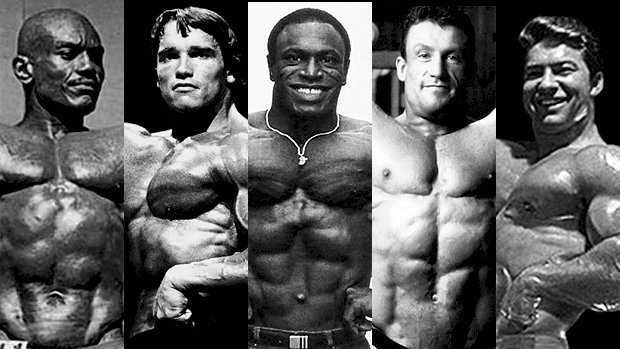 Should You Train Like a Pro Bodybuilder? Yes… and no. Blindly following the training of top bodybuilders might not work well for an average person training naturally. The physiology of both types of athletes just isn’t the same: Bodybuilders that use performance enhancing drugs have an elevated level of protein synthesis. Not so with natural lifters. The natural guy has to trigger protein synthesis with his workout, while the enhanced bodybuilder uses his workout mostly to drive nutrients to the muscles to take advantage of the elevated protein synthesis. The high level of anabolic hormones used by the pros can counterbalance an excessive increase in cortisol. In the natural bodybuilder, excessive cortisol release will not only kill protein synthesis, but will also trigger the expression of the myostatin gene, either of which will halt any possible muscle growth. Anabolic steroids increase glycogen storage and thus negate or prevent glycogen depletion. Glycogen depletion in itself is very catabolic and natural trainees are more at risk. Because of these differences, enhanced bodybuilders (especially if they have good genetics on top of all that) can tolerate more volume and can respond better to lighter “pump” work. They can also train a body part less frequently. But despite these differences, the top bodybuilders often come up with important parts of the muscle growth puzzle, and these elements can and should be used by natural lifters. Here’s what you can take away from some of the top Mr. Olympia champions: 1 – Larry Scott, Training Density Scott was the pupil of the great Vince Gironda, a man who was decades ahead of his time. Both Gironda and Scott were true thinkers and tinkerers, inventing several variations of exercises to make them more effective at isolating the desired muscle. However, their most important contribution was the emphasis on training density – doing hard work with very short rest periods. Having a high density of training (short rest periods) while still lifting heavy is one of the most powerful growth triggers. That’s one of the reasons why I like clusters, multi-rep clusters (2-2-2-2-2-2 or 3-3-3-3-3-3) and rest/pause sets. At first your performance will drop, but you can train yourself to be more resilient and stay strong even with short rests. The benefits of high density training (while staying with reasonably heavy weights) are mostly in the body composition department – it will help you get leaner while adding on muscle. The benefits to the cardiovascular system are also important, since good health is actually the cornerstone of muscle growth and fat loss. If you want to make crops grow, you can have the best fertilizers and use the best farming methods, but if the soil is poor you’ll have lousy growth. It’s the same with muscle. A healthier body will progress faster. As an example, adding muscle (naturally) without a healthy cardiovascular system to support it is virtually impossible because the added muscle poses a threat to survival! 2 – Sergio Oliva, Explosive Lifting Before being the first truly freaky bodybuilder, Oliva was an international level Olympic lifter for Cuba. His upper back and forearms can certainly attest to that. Much of his physical foundation was built on the Olympic lifts and heavy pulls. While you might not have to learn the Olympic lifts to benefit from them, explosive pulls like snatch-grip high pulls, push presses, and heavy Olympic deadlifts will really help a natural lifter build a thick back and shoulders. Other great bodybuilders enjoyed doing the Olympic lifts from time to time, Robbie Robinson and Mike Mentzer being two of them. The benefit of explosive pulls is an improved neural efficiency that will translate into better/earlier fast twitch muscle fiber recruitment. If you develop the capacity to recruit the fast twitch fibers earlier in the set, it means that you’ll fatigue/stimulate them sooner and with fewer reps. Additionally, you’ll burn less glycogen to get the job done. That means more glycogen for more growth. On a side note, the more efficient you are at recruiting the fast twitch fibers, the fewer reps you can do at a given percentage of your max. But that isn’t a bad thing. Quite the contrary! It simply means that by being better at hitting the money fibers, you provide the same stimulation without causing as much fatigue (glycogen and neurotransmitter depletion). These big explosive lifts also have the benefit of increasing muscle hardness and density. 3 – Arnold Schwarzenegger, Training Frequency Arnold was known for burying his training partners. He’s one of the rare exceptions that possessed an extremely resilient nervous system and a fiber type that allowed him to be really strong, yet have amazing set-to-set endurance. He also had a pain threshold second to none. Arnold was one of the rare people who could hit failure on 2 or 3 sets of an exercise and then proceed to make his fifth set the best one. He
Origin: 5 Things Natural Lifters Can Learn From Pros
Unlock Natural Gains: Neuro Type 1
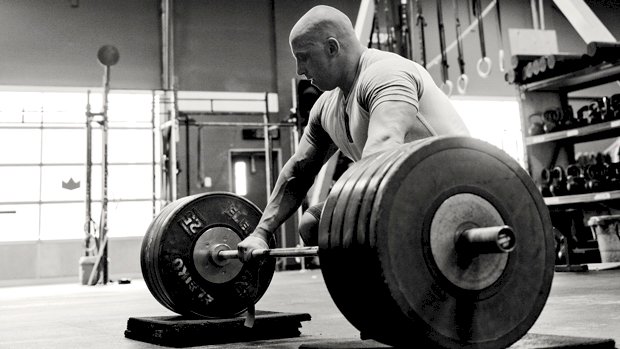 Part 1 – Nonstop Natural Gains: The Neuro Typing System Part 2 – Unlock Natural Gains: Neuro Type 1 Part 3 – Double Your Natural Gains: Neuro Type 2 Part 4 – Never-Ending Natural Gains: Neuro Type 3 Part 5 – The Neuro Type Workouts Part 1 of this series introduces you to neurological typing. In short, your baseline levels of three neurotransmitters (dopamine, serotonin and norepinephrine) strongly influence your personality and dictate your how you should train and eat for best results. Your personality profile is largely determined by three key neurotransmitters: dopamine, serotonin, and norepinephrine. Your baseline levels of these chemical messengers are determined by genetics. The three basic personality types are: Type 1: Novelty seeker Type 2: Reward dependant Type 3: Harm avoider Each has its positives and its negatives. If you adopt a training style that doesn’t match your psychological and neurological type, you simply won’t get results from it, no matter how well-designed the program is. In this series, we’ll go over each type and what type of training, nutrition and supplement plan is best for each. To determine your type, review Nonstop Natural Gains: The Neuro Typing System. Below we’ll cover the novelty seeker. This type has a low dopamine level, causing him or her to seek out new things to stimulate it. You could call them “adrenaline junkies.” Optimal Training for Type 1: Novelty Seekers 1 – Training Preparation Novelty seekers have less dopamine than serotonin. They must increase dopamine prior to starting the actual workout to have good motivation and work capacity. If they don’t, performance will suffer in the first part of the workout. For that reason, it’s very important for them to focus on activation drills prior to starting their workouts: jumps, throws, high speed movements, etc. The focus needs to be on speed – moving violently but without creating a lot of fatigue. Example: 3 sets of 5 vertical jumps. Or striking a tire with a sledgehammer for 3 sets of 12 seconds. When it comes to the main heavy lift of the day, they should ramp up to the working weight while doing gradually heavier sets and focus on compensatory acceleration (CAT). That’s where you accelerate the weight as fast as possible during the concentric or lifting phase of the rep. This acceleration will increase force production and will amp up the nervous system by increasing the release of dopamine. A ramp should start at around 60% of your max. Do around 5 ramp-up sets before doing the work sets. These ramp-up sets should only be done for the same number of reps that you plan to do on your work sets, or lower. You want to amp up the nervous system without creating fatigue. A ramp could look like this: Ramp-Up Sets: Set 0: bar x 10 Set 1: 165 x 3 Set 2: 195 x 3 Set 3: 215 x 3 Set 4: 235 x 3 Set 5: 255 x 3 Note: Use maximum concentric acceleration on sets 1-5. Work Sets: Set 6: 275 x 5 Set 7: 275 x 5 Set 8: 275 x 5 Set 9: 275 x 5 Remember that dopamine and adrenaline are connected. Dopamine is used to produce norepinephrine which is used to produce epinephrine/adrenaline. So anything that amps you up will raise dopamine levels. Just be careful not to overdo it. This type has a low baseline dopamine level and can produce spurts of it, but they crash if they have to produce too much. When that happens during a workout, their willpower and motivation goes down the drain. 2 – Training Variation Type 1 lifters need a lot of variation in their training. They’re your typical “I can’t follow a program” guys. They always want to try something new. If you put them on programs like 5/3/1 or The Power Look (programs based around doing the same stuff over and over) they’ll get de-motivated and won’t get results. We often say that we need to stick to a program to make progress, but in their case it’s not necessarily true. Remember, whatever helps you train the hardest will give you the best results. On a static program, novelty seekers get bored easily and will lose focus if the training is too repetitive. In their case, a lack of sufficient variety is actually a stressor. This neuro type… Can stay on a program for 2 weeks. Does better on multiple types of stimulation in a week. Does better when different types of stimulation are included within a workout. Cybernetic periodization (freedom within a structure) is a great approach for them. This refers to pre-planning the first big lift of the workout but selecting the assistance work based on the performance of the main lift. Surprisingly, a lot of powerlifters are novelty seekers. The Westside Barbell system is the perfect example. They vary the main lift every one to two weeks, they do three types of stimulation per week (four if you include conditioning), and they use cybernetic periodization by selecting their daily assistance exercises based on how they performed on the main lift. Oddly enough, CrossFit is also a perfect example, especially the shorter 8-15
Origin: Unlock Natural Gains: Neuro Type 1
 All about sport xlsport.club