
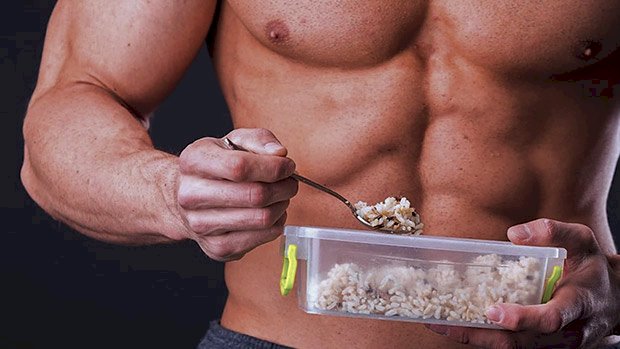
 Myth – Carbs at night will make you fat. Since your overall activity is low before bed, and then you go to sleep, the carbs you eat around that period will deposit themselves as fat cells and lead to fat gain. Truth – Carbs at night can expedite fat loss. In a study of 73 fat police officers, researchers found that shifting carb intake to the evening meal caused more fat loss compared to having carbs throughout the day. It also improved insulin sensitivity and lowered inflammation markers (1). One of the theories behind the study was that if insulin was kept low throughout the day, and limited to a single secretion in the evening, it would lead to higher relative concentrations of leptin starting 6–8 hours later (into the next morning and throughout the day). They believed this would lead to greater satiety and dietary compliance each day. The argument against carbs at night is a common one: People believe you’re not as insulin sensitive and thus you’ll be more likely to store excess carbs as fat while you’re at rest. However, if insulin is kept in check for the day, and you’ve spent the day being active, that’s not an issue. You’ll be insulin sensitive at the end of the day and should store those carbs as muscle glycogen. My Recommendation Front load protein, back load the carbs. If you struggle with binge eating in the evening and you’re front loading all of your carbs, or simply dispersing them throughout the day, then moving all of them to your last meal could lead to better dietary compliance the following day. If you want to use this approach, then front load most of your protein in the early part of the day, or even spread it out evenly over four to five meals, then shift all of your carbohydrate intake into the last meal of the day. This strategy can also help with sleep for those who have trouble relaxing in the evening. The influx of carbs can also spike serotonin. A good night’s sleep has also been proven to help increase fat oxidation compared to those who are sleep deprived. So it’s a win-win. Keep in mind, carb back-loading doesn’t mean it’s a free-for-all where you’re pounding down an entire bakery of croissants. Plenty of people do that and those people are fat. Myth – You don’t have to count calories on a keto diet. Keto fans say carbs are what make you fat, not excess calories. Their butter, bacon, and cheese-laden recommendations are often part of the idea that you’ve got to eat fat to burn fat, regardless of caloric intake. Truth – Caloric intake above maintenance will still cause fat gain. One of the most misleading statements about keto diets is that calories don’t matter if you’re not consuming carbs. This stems from the insulin-to-obesity theory. It goes something like this… Carbs cause insulin to be secreted. Insulin (the storage hormone) stores those carbs as fat. So, eliminate carbs and you’ll stop storing fat regardless of calories consumed. Become a fat-burning machine. It’s true that getting into a state of ketosis will increase fat oxidation. After all, fat and carbs are the main fuels used in the muscles for oxidation during exercise. If you eliminate carbs, then eventually the body is left with no choice except to use fat as the primary source for fuel. Boom: increased fat oxidation. But there’s a difference in fat oxidation and a reduction in fat mass, which can only happen in an energy deficit. And if you’re consuming an excess of calories from fat, then the body will do the same thing with those excess calories from fat as it does with carbs: it’ll store them for later use. The reason that a ketogenic diet works well for some people is that it can increase satiation or feeling of fullness. This higher degree of satiation can naturally cause some to eat fewer calories, which leads to fat loss despite the fact that they may not be counting calories. My Recommendation The ketogenic diet will work for fat loss in the same way that every other diet works for fat loss – by creating an energy deficit. You cannot eat “as much as you want” on a keto diet and still lose fat simply because you eliminated a macronutrient source. From the data we’ve seen, keto does appear to increase satiation better than most standard diets which can help with dietary compliance and naturally reducing caloric intake. However, when calories and protein are equal, it’s not a significant advantage for fat loss (2). And on the flip side, the keto diet falls flat on its face when it comes to increasing muscle (3) (4). Myth – Intermittent fasting (IF) works better than any traditional diet. IF has become all the rage again. Heck, I’ve used it. I can attest to the fact that there’s an upswing in mental acuity during extended fasts, and to the fact that I never experienced any muscle loss while doing it (sometimes up to 70 hours of fasting). These things are definitely advantages of fasting protocols. At least they were for me and seem to be for anyone who has done extended fasting. The
Origin: 5 Fat Loss Myths You Still Believe
Tag: Myths
6 Meathead Myths – Debunked
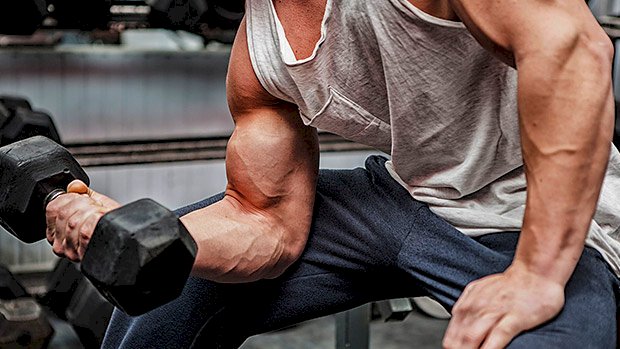 Before the digital age, the world of strength training was based on in-the-trenches experience. While many coaches and bodybuilders were spot-on with the training principles they developed, others pushed dogmatic beliefs that, somehow, still exist. Today their ideas are often treated like training mandates – as if they’re based on scientific fact. But ideas don’t become factual just because they’re peddled by a lot of people. Words don’t become truths just because they’re repeated over and over again. So let’s take a look at some common myths and set the record straight. Core Training Myth:Compound lifts, like squats and deadlifts, provide all the core training you need. Fact:Building a midsection that’s strong and aesthetic requires dedicated core/ab training. It’s a tough pill to swallow for many lifelong meatheads, but the reality is the compound lifts aren’t “all the core training you’ll ever need.” The fact is, most (if not all) lifters need dedicated core work to address weaknesses, imbalances, and postural issues to stay healthy and build strength over the long haul. Plus, carving out a set of abs that double as a cheese grater requires specific training that, like any other muscle group, aligns with the foundational principles of hypertrophy. There are two primary reasons why the compound lifts fall short: 1 – For Function The core should be trained to resist unwanted movement at the spine. A strong core creates a stable base that allows you to produce more force and, as a result, lift more weight. Likewise, core strength is crucial for training longevity. It plays a lead role in preventing the spine from folding up like an accordion. For these reasons, performing “anti-movement” exercises is pivotal for a strong and resilient core. Anti-extension exercises (planks, ab wheel rollouts) train the core to resist lumbar extension. Anti-rotation exercises (Pallof presses, chops/lifts) prevent unwanted rotation at the spine. Anti-lateral flexion exercises (suitcase carries) force the body to resist side-bending at the trunk. 2 – For Aesthetics The core should be trained with hypertrophy as the goal. Many lifters squat, deadlift, and press their hearts out, only to remain stuck with a midsection as soft as a stack of double-stuffed pancakes. The problem is, developing abs requires dedicated training that stimulates hypertrophy via mechanical tension, muscle damage, and metabolic stress. This calls for three things: Exercises that can be progressively loaded over time Exercises that facilitate a strong mind-muscle connection Slow reps within a controlled range of motion to emphasize time under tension Workout Time Myth:Don’t train for more than 60 minutes. Fact:Train as long as you need to attain the right results, regardless of time. Many old-school lifters used to train for 2-3 hours, venture off to do 6-8 hours of intense manual labor, and then top the night off with a ribeye and a couple of beers – all while maintaining impressive physiques. Somewhere down the line, though, a theory arose that the body releases a fatal amount of cortisol as soon as a workout exceeds 60 minutes, at which point the muscles disintegrate into an atrophied pile of dust. Even though research and anecdotal evidence show there’s no merit behind these claims, most lifters remain wary of staying in the gym for more than an hour, lest they start sweating out buckets of estrogen. Can you make progress if you only have 30-45 minutes to train? Definitely. Is it optimal? Probably not, especially if you’re a stronger lifter with more years of training under your belt. The reality is that you need more time to train. For example, let’s say there are two lifters who want to work up to a 3-RM. Lifter A has been training for a year and can deadlift 225 pounds, whereas Lifter B has been training for 20 years and can deadlift 600 pounds. Example ramp-up sets for Lifter A: 95×8, 135×5, 165×3, 185×1, top-end set at 205×3 Example ramp-up sets for Lifter B: 135×8, 225×5, 275×3, 315×1, 365×1, 405×1, 455×1, 495×1, 525×1, top-end set at 545×3 Lifter A can get to his top-end set after four ramp-up sets, whereas Lifter B needs nine ramp-up sets to accomplish the same task. Lifter B will also need longer rest periods between sets, additional ramp-up sets for accessory work, and will spend more time loading and unloading plates. Add in the fact that Lifter B (who’s likely older and more injury-prone) will need a more thorough warm-up, and that’s 30-40 minutes gone. Don’t waste time in the gym, but don’t race against the clock, either. Time is a guide – not a be-all and end-all. Doing quality work and eliciting a powerful training effect trumps all else. Exercise Order Myth:Do the compound lifts first, accessory work second, and isolation exercises last. Fact:Determine exercise order based on individual needs and goals. The compound lifts are the best bang-for-your-buck exercises, so doing them when you’re fresh makes
Origin: 6 Meathead Myths – Debunked
Tip: Two Sumo Deadlift Myths, Destroyed
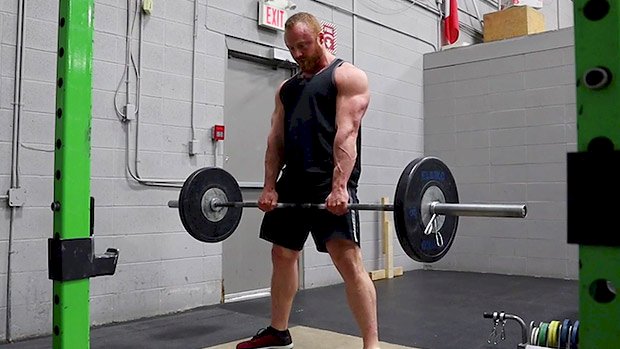 There are two big reasons to use sumo deadlifts: To build a powerful posterior chain and to lift as much as humanly possible. Training for the former means focusing on glutes and hamstrings, along with upper and lower back muscles. A good hinge pattern hits all of these. But let’s address the second reason. For high-level powerlifting competitors (those trying to lift as much as humanly possible), it’s fine to use any technique within the rules that’ll allow you to lift the most. If this means a squatty sumo, so be it. Adjustments made for a competition squat, bench, and deadlift are to maximize leverages to get the highest one-rep max total possible. But those adjustments are often different from proper training technique, and they’re even counterproductive to maximizing the training effect for strength and hypertrophy. They often create injury risk, accepted by competitors trying to win. Think exorcist-level bench arch or round-back deadlifts. For those of us sumo deadlifting for the other reason, let’s dispel the two biggest myths and fix the flaws in this lift to make it a safer training tool that’ll get us better results. Myth 1 – Your feet need to be as wide as possible. A lot of lifters think their feet need to be spread as wide as the plates will allow, but that’s a good way to drop a plate on your toes. Really, your feet just need to be outside of your arms and hands in order to be a sumo. Take a look. Granted, a wider stance feels great for some and has leverage advantages which shorten the distance from ground to lockout. But some people’s hips just aren’t mobile enough to get into a wider position. Wider isn’t necessarily better. If you get your legs just outside your arms, this is called the “hybrid sumo” or “semi-sumo” and it’s a perfect option to gain the benefits of deadlifting. Some clients I’ve worked with can’t get into a conventional stance (arms outside of legs) without rounding their lower back. This is caused by a limited hip flexion range in a narrow stance, which makes the semi-sumo a better solution. A semi-sumo stance can also prevent knee valgus or inward collapse. This is another common problem that arises when placing your feet too wide. In this case, your knees don’t remain stacked above your feet because your hips can’t externally rotate wide enough. Or it’s possible you aren’t focusing on creating torque with the hips to pull the knees into the wider position. This may lead to knee pain and injury over time if not addressed. Myth 2 – You need to sit low in a squat. Deadlifts are a hip hinge pattern. There will be some people who can squat their sumos and lift more weight while experiencing zero pain. For the rest of us, let’s make a simple adjustment and get a better effect. When lifters set up with low hips that jump up before the weight leaves the ground, this usually indicates a loss of back and core tightness. Your hips and hamstrings are seeking the tension you failed to create during the setup. There’s no problem with beginning in a squat position then pulling the hips high and getting wedged in before lifting, but issues arise when the hips jump in an uncontrolled manner as the lift is initiated. So, when setting up, firmly grasp the bar and pull it into your shins. Pull the shoulder blades together and create a flat neutral spine. Then elevate your hips until you feel coiled tension in your hamstrings. When you feel this tension, your hips are like a loaded spring ready to snap forward and generate more power. In a recent seminar, Tony Gentilcore described this process as creating a “lifter’s wedge.” A Recap and a Few Additions Your sumo deadlift shouldn’t look like a squat. Your hips shouldn’t drop to the level of your knees. Your feet don’t need to be as wide as possible, and your lower back and knees shouldn’t hurt as a result. Now that we’ve got those essentials out of the way, let’s tack on a few other notes: Pull the slack out of the bar. You can do so by pulling on it without enough power to lift it off the ground. This should create tension through your body and a stable spine. Then initiate a smooth but powerful push with your hips forward toward the bar. Lock out by squeezing your glutes under your ribcage and avoid hyperextending your lower back. Control the negative (lowering) portion. Just remember that heavy weight will come down quickly. Some lifters can touch-and-go smoothly between reps with tight form. Others need to reset every rep to maintain good form. Avoid bouncing the weight between reps. Use the style to best maintain excellent form, maximize training effect, and walk away healthy. Avoid rounding at the back. Some lifters argue that a rounded back is safe and makes them stronger. They’re usually referring to some roundness of the thoracic (mid-upper) spine, done by skilled and experienced powerlifters to lift more in training and competition. A practiced core brace with a rounded thoracic spine and flat lumbar is often a
Origin: Tip: Two Sumo Deadlift Myths, Destroyed
 All about sport xlsport.club