
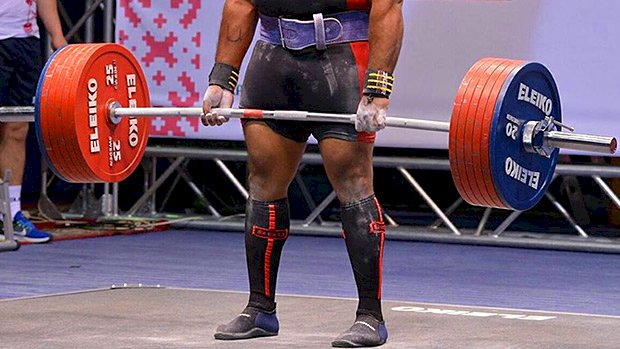
 Does Supercompensation Work? A lot of the information you read about peaking for a competition revolves around “supercompensation.” You dramatically increase training volume and intensity for 7-14 days then, one week out from the competition, you bring training stress way down and increase carbs to supercompensate. This leads to an increase in performance. Sounds sciency and smart. But does it really work? Well, it depends. If you’re an endurance athlete, it might. It seems to work pretty well for swimmers. But if you’re a strength athlete, it won’t do anything. It’ll give the illusion of working, but it really doesn’t. Here’s Why First, when we talk about supercompensation we’re really talking about increasing glycogen storage in the muscles. The theory? By dramatically increasing training volume and reducing carb intake, the body will upregulate the enzymes responsible for storing glucose. When you flood your body with tons of carbs and reduce volume for 3-7 days before an event, the body will store more glycogen than it normally would if you had not done things to “deplete” it. In theory, by storing more glycogen (supercompensation) you have more fuel available for your event and you’ll perform better. This can work if your sport is dependent on the amount of stored glycogen you have. Endurance sports might benefit from higher glycogen storages, and glycolytic sports certainly would. But strength sports like powerlifting and weightlifting are not at all dependant on glycogen stores for performance since the main fuel in these sports is ATP-CP. While glycogen supercompensation might help the bench press and possibly the squat by providing an increase in passive joint stability – as noted in Question of Strength 58 – it’s certainly not the main driver of performance. Does That Mean You Shouldn’t Deload? No, you should. But you must understand what the deload will do so you can plan it properly. It also means you shouldn’t do a stress week or two (7-14 days) prior to the deload to create a supercompensation effect. You can’t supercompensate the nervous system. You can’t supercompensate the endocrine or your muscle mass. Just because you’re trashing those systems by training too much for a short period of time, it doesn’t mean that these will rebound even higher. The nervous and endocrine systems don’t function like your glycogen storage. Here’s what happens during a deload and why it can give the illusion of supercompensation of neurological resources. First, You Need to Understand Two Things 1. The connection between cortisol and adrenaline Cortisol increases the conversion of noradrenaline into adrenaline. The more cortisol you produce, the more adrenaline will increase. Four main training variables can lead to an increase in cortisol (thus adrenaline) during training. Those are… Volume:The more energy you need, the more cortisol you release. Intensiveness:The closer to the limit you’re pushing your sets, the more cortisol you produce. Psychological stress:Mostly related to the amount you’re lifting. Neurological demands:Learning new exercises, using more complex movements, or doing a complicated workout structure. 2. Beta-adrenergic downregulation When you overstimulate the beta-adrenergic receptors, they downregulate. In layman’s terms, this means when you’re producing a boatload of adrenaline that connects to the beta-adrenergic receptors, these receptors can downregulate. As a result, you respond less and less to adrenaline. Since adrenaline increases strength, speed of contraction, and motivation (among other things), if you respond less to it, strength and power will go down. On the other hand, the more sensitive your receptors are, the more strongly you respond to adrenaline and the more force your muscles will be able to produce. Now Let’s Connect the Dots If you dramatically increase training intensity and volume (stress week), you produce more cortisol. This leads to a very high level of adrenaline. This high level of adrenaline can downregulate the beta-adrenergic receptors, decreasing strength potential. After that stress week, you feel like crap and your performance drops. Then you deload, reduce volume, intensity, and maybe even frequency. You drop assistance exercises, which decreases neurological demands too. This all leads to a decrease in cortisol levels, and in return, a much lower level of adrenaline. The beta-adrenergic receptors now become much less stimulated and they recover their original reactivity. Now you respond to your adrenaline again. You regain your strength and motivation. You think, “My deload worked, I supercompensated!” No, you didn’t. You just recovered the responsiveness to adrenaline that you lost by doing too much! A study by Fry et al. (2006) found a 37% downregulation of the beta-adrenergic receptors after only two weeks of very high intensity/high frequency work. By doing one or two weeks of high demand work prior to a competition, this
Origin: Tip: How to Peak for a Powerlifting Meet
Tag: Meet
Tip: How To Meet Women At The Gym
 A lot of lifters say the gym isn’t the place to meet people. But if you’re single, wouldn’t you want to find someone with your shared interests and healthier lifestyle? The main problem for women? Guys at the gym can be creepy. They’ll stare for too long, interrupt our sets, or flirt in a way that holds us up from getting on with our workout. So here’s a short guide to increase your chances of success and save us ladies a lot of wasted time and discomfort. 1. Pick the Right Girl Here’s a list of women you should probably leave alone: The Cardio Girl: Women don’t generally want to stop their treadmills to chat. So unless you’re going to do what she’s doing and chat her up, don’t bother. The Hideaway Girl: She’s the one who drags a yoga mat and some dumbbells into a corner. She’s hiding for a reason. Don’t invade her space. The Bandit: If she’s wearing headphones, a baseball cap, and a hoodie, she doesn’t want to talk to you. I don’t care how ripped your abs are and neither does she. The Front Desk Girl: She has to be there no matter what, so don’t make it weird. Plus, if things go wrong, you’re both screwed. And not in a fun way. Here are some better options: The Girl Who Lifts Like You: She’s a woman you see regularly and who seems to be integrated in the community. She’s probably your best bet since you’ll share common interests and she values lifting the way you do. The New-ish Girl: She might hang around the weights but doesn’t seem as comfortable as the first girl on this list. She might welcome a wave or a quick, “Can I help you find something?” The Group Fitness Girl: She takes classes and hangs around talking to staff after. She’s there regularly and is probably looking for people who share her love of fitness. Note: Even if her idea of fitness is group fitness, which you think is stupid, suppress the urge to share this with her. Notice the thing all these girls have in common? You’ve seen them before. It’s probably not a great idea to approach a girl you’re seeing for the first time, unless there’s a very clear opening. A girl who goes to the gym as regularly as you do probably kinda-sorta knows who you are. I get a lot less of that stranger-danger feeling when I get a hello from a guy I’ve seen around than from a guy who appeared out of nowhere. 2. Looks for the Signs (Good Ones and Bad Ones) She’ll make eye contact. Do you guys make eye contact a lot unintentionally? Then she’s probably been sneaking glances at you, too. It’s a good sign. If she seems like she’s avoiding your eyes, she’s either uninterested or shy. She’ll smile. This one’s obvious, but if she smiles or says hello, it probably means she’s at least down to chat. If she starts a conversation, don’t be an idiot and cower away; she might not give you another chance.If you greet her and she doesn’t say “hi” back (and she definitely heard you) then leave her alone. Just because she says “hey” to you regularly doesn’t mean she’s definitely DTF. It’s just a signal that she’s open to communication. She’ll keep physical proximity. If she hangs around after finishing up an exercise when you’re nearby, she might be trying to give you an opening. If she takes her earphones off and then hangs around, she’s trying to be even clearer. But if you move to a machine near her and she very obviously moves away, that’s not such a great sign. 3. Break the Ice (The Right Way) Don’t correct her form. You don’t know what she’s trying to accomplish and people don’t like to be corrected by strangers. Don’t comment on her appearance. Giving a girl a compliment on her appearance, even a tasteful one, can come off as sleazy. You can pull this move after she agrees to go out with you. Don’t ask her out for drinks immediately. It reeks of desperation. Get to know her and keep the conversation centered on gym stuff at first. It’s possible she’s not even into drinking. Here are some better introductions: Ask about her workout. Ask the same way you might ask a dude who’s moving a ton of weight or working on a program similar to yours. This is a great way to get the conversation rolling. It shows respect and gives the conversation direction. Ask about her shoes. Any apparel will do actually. It’s kind of stupid, but her sneakers, belt, knees sleeves etc. can provide an easy way to pick up a conversation. When I was running marathons, I’d see someone wearing the same shoes as me and always comment. I even picked up some new clients this way. Just say hi. This isn’t the best method because it leaves her to do most the work, but if she’s already interested then she might be willing to pick up some of the slack. At least you’ll have initiated contact and can come up with something more creative next time. Nothing wrong with being friendly. Bottom Line A lot of the females are fed up. They don’t want to be approached by guys at the gym anymore because they’ve spent too many hours indulging some dude’s awkward come-on when they’d rather be
Origin: Tip: How To Meet Women At The Gym
 All about sport xlsport.club