
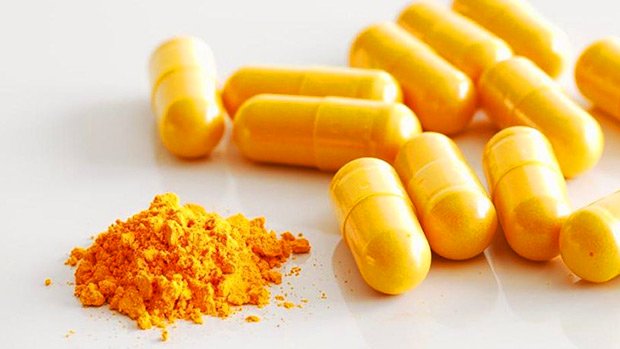
 The list of stuff curcumin does keeps growing. It started off as an effective pain reliever and anti-inflammatory, but then we found out it also fights cancer, blocks estrogen, boosts testosterone, improves heart health, makes you stronger, dissolves arterial plaques, stops your knees from aching, reduces the risk of diabetes, and even helps prevent mosquito-born malaria. And now there’s new research showing that curcumin causes fat cells to undergo apoptosis, which is the term for cellular suicide. When apoptosis begins, the surface of the cell starts to bubble and churn, almost like it’s boiling. Then, its nucleus starts to fragment. Eventually, the cell tears asunder, spilling its disassociated guts into the interstitial sea of fluid. A cellular clean-up crew of phagocytes, one accustomed to wet work, arrives to dispose of the corpses and there’s no investigation because they know curcumin was to blame. This new curcumin research also shows that curcumin prevents pre-adipocytes – baby fat cells – from developing into full-blown adipocytes. These baby fat cells are urged to go into a different profession… or else. The Study, Short and Sweet The Taiwanese researchers who conducted this study already knew from a few recent studies that curcumin supplementation reduces a high-fat diet-induced increase in body fat, but they didn’t know the mechanism behind curcumin’s hate for plumpness. To figure it out, they exposed mouse pre-adipocytes to varying concentrations of curcumin for varying time frames. They also exposed pre-adipocytes to a low dosage of curcumin for an hour, followed by a 24-hour incubation period. They found that curcumin inhibited adipocyte differentiation. In other words, the supplement prevents fat cells from maturing and fulfilling their ultimate function, which is to store fat. The high doses of curcumin actually caused fat cells to commit suicide, while the lower doses prevented the maturation of the baby fat cells. They suspect it had to do with curcumin’s modulating effects on something known as the Wnt/beta-catenin signaling pathway, which helps determine the fate of cells. The authors, despite seemingly being tight-lipped PhD guys, seemed pretty jazzed, writing: “These findings suggest that curcumin supplementation could be an effective strategy for treating or preventing development of obesity by a curcumin-induced reduction in the number or pre-adopocytes and the fat mass of adipocytes.” What to Do With This Info When you think about it, curcumin’s effects on fat cells may have something to do with many of the other benefits listed in the opening paragraph of this article. Collectively, our fat cells are considered to be a major endocrine organ with a powerful impact on things like the regulation of appetite, insulin sensitivity, immunological responses, and vascular disease, so if curcumin causes fewer fat cells to form while causing others to expire, it makes sense that it would have so many beneficial side effects. As far as how much curcumin to take to experience any reduction in fat mass, it’s difficult to say. The scientists exposed the fat cells to a concentration of up to 50 micrograms of curcumin to make them commit hari-kari, and 30 micrograms to keep pre-adipocytes from forming into full-fledged adipocytes, but given that the body weights of us human is so diverse, it’s hard to extrapolate a suitable dosage. But, given that 30 micrograms is awfully small (a thousand micrograms equals 1 milligram), I feel confident in suggesting that the standard Biotest dosage of curcumin (two 500-milligram capsules a day) would bring the average person into therapeutic range. Even so, this and other studies make me suspect that curcumin might be more useful in preventing further fat gain than reducing it, but that’s just a guess. Regardless, I don’t think you can go wrong taking curcumin, especially when you consider all its other healthful
Origin: Tip: Curcumin Makes Fat Cells Kill Themselves
Tag: Makes
Tip: Age Makes No Difference in Recovery Rates
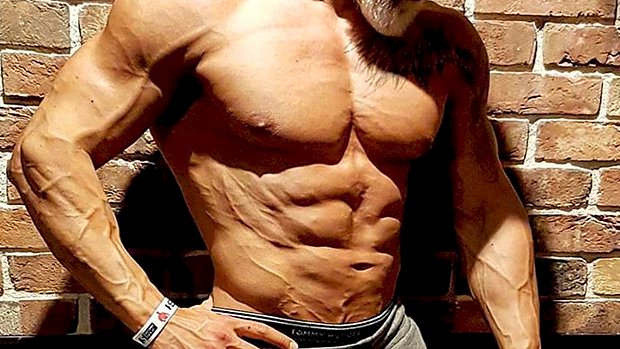 The Middle-Age Stereotype? A lot of unfortunate things happen when a man hits his forties or fifties. His skin starts to resemble distressed leather and he leaves behind a winter storm of dead skin flakes whenever he gets up off the sofa. Stiff hairs and strange growths start to sprout from his body, making him look more like a potato that’s been stored under the sink too long than a man. He also finds himself giving up on colorful, presumably flattering underwear and gravitating towards the same, 5 in-a-bag discount, asexual, tightie-whities his mom used to buy for him when he was 10 years old because, realistically, there’s no scenario where any woman aside from an emergency room nurse is going to see him with his pants off. On the weightlifting front, he finds his progress slowing. Muscle comes hard while fat comes easy. His joints and muscles ache so bad in the morning that he wishes he could just call an Uber to take him straight to the can. But maybe all these age-related assumptions are just stereotypes, especially the ones related to weight lifting, because American researchers have discovered that as far as recovery rates, there’s no real difference between men in their 20’s and men in their 40’s or 50’s. What They Did The scientists recruited 19 recreationally trained men and split them into two groups, a “young adult” group (21.8 years old, plus or minus 2 years) and a “mature adult” group (47.0 years old, plus or minus 4.4 years). The men were asked to train one leg on an “isokinetic dynamometer,” which is a kind of glorified leg extension machine with electronic readouts. Their training protocol consisted of 8 sets of 10 reps with 60 seconds of rest between sets. The scientists measured max voluntary isometric contractions and isokinetic peak torque, along with blood values to determine levels of inflammation. Blood samples were taken before lifting and immediately after lifting and were repeated 30, 60, 120 minutes, 24 hours, and 48 hours post-exercise. What They Found The results revealed no differences between max voluntary isometric contractions and isokinetic torque. More importantly, there were no between-group differences between myoglobin, creatine kinase, C-reactive protein, or interleukin-6, all markers of recovery or inflammation. What This Means to You The researchers concluded that, “…this study indicated no differences in the recovery response between young adults and middle-aged adults for any of the performance measures, nor in subjective levels of muscle pain or soreness. Furthermore, no between-group differences were observed in the inflammatory or muscle damage response to the exercise protocol.” So maybe this study will help put to bed some of the misconceptions about age and lifting. Too many people have it in their minds that 40 or beyond is some sort of real, tangible barrier to progress. Granted, older lifters need to stay mobile and flexible, because that’s where real aging will manifest itself if you’re not diligent with your stretching, mobility drills, yoga, Kama Sutra sex, or whatever you do that keeps you from turning into a human floorboard. Other than that, older lifters shouldn’t necessarily temper their training or their goals because of fears they’re in the throes of codgerdom. Progress should continue just fine, thank
Origin: Tip: Age Makes No Difference in Recovery Rates
 All about sport xlsport.club