
 Can You Maintain Strength While Cutting? Many things can contribute to strength. As such, you can lose strength for many reasons while dieting down. The two main reasons you lose strength when trying to get lean are: 1. You’re losing muscle. This is the most obvious one. But it should never happen unless you get down to lower than a real 8 percent body fat. If you keep training hard (but smart), have a high protein intake (1.25 to 1.5 grams per pound of body weight) and an acceptable deficit (not losing more than two pounds per week) you won’t lose muscle. 2. You’re losing tightness. This is the most common reason for losing strength. Normally what happens is that you get weaker on the big basic lifts (bench, overhead press, and squat) but your strength on isolation exercises for the muscles involved will be the same or even higher. By losing muscle glycogen, intramuscular fat, water, and fat, your strength leverage becomes worse and the joints are less “compressed.” If you accumulate a lot of glycogen, water, and fat inside the muscle and water/fat outside the muscle, you’re creating pressure around the joint which stabilizes it. This passive stabilization makes you stronger. When you lose it, the body feels less “safe” and force production is more easily inhibited as a protective mechanism. Let’s Address the Muscle-Loss Thing The reason why people lose muscle while dieting is NOT the caloric restriction. To maintain or even increase muscle, your body needs protein and enough calories to fuel the repair processes. “Yeah, but Thib, if I’m in a caloric deficit I don’t have enough calories to fuel the repair process!” Really? When you’re in a deficit you still walk, move around, and train, right? Of course! But you’re in a deficit… by definition you are not taking in enough energy to fuel all of that. How can you still function? Well, by using stored energy for fuel. And the same can be done to fuel the muscle repair and growth process. Even in a deficit, if protein intake is sufficient you should be able to repair and even grow some muscle by relying on stored energy and the ingested protein. I’m not saying you can build as much muscle on a deficit. When you eat less – especially when you go lower in carbs – you get a lower level of mTOR and IGF-1, which can make it harder to build muscle. But you should still easily be able to maintain what you have. So why then are people losing muscle while dieting down if it’s not because of the caloric deficit? Because they’re afraid of losing muscle. That fear leads to the fulfillment of that fear. So let’s say a dude decides to get shredded. He cuts calories and maybe starts doing cardio. But he heard that he’ll lose muscle when trying to get lean. At first, he feels smaller in his clothes and doesn’t look shredded yet. It’s even harder to get a pump (because of lowered carbs and sodium). So in his mind, it must be because he’s “losing muscle.” So what does he do? He trains with more volume and intensity. He goes to failure more often, uses a ton of set-extending techniques like drop sets, rest/pause, and supersets for 90-120 minutes sessions using short rest intervals. The higher volume and intensity both dramatically increase cortisol levels. Cortisol is already elevated more when you diet down (since it’s involved in energy mobilization). And this chronic output of cortisol greatly increases the risk of losing muscle since cortisol breaks down muscle tissue. You also create a lot more muscle damage. Under normal circumstances this would be fine since you need the damage to grow. But if you create so much damage that you can’t repair it all before protein synthesis comes back down (24-36 hours after your workout) you might lose muscle! When you’re dieting down, you shouldn’t try to use your lifting workout to burn more calories (by increasing volume), nor should you panic and jack up the volume. If anything, when you’re dieting your capacity to tolerate volume and adapt is lower. You need to do less, not more. Just make sure you push hard on those sets. The Loss of “Tightness” or Joint Stability This is likely the main cause of strength loss while dieting down, especially in the initial phase of dieting. The more stable a joint involved in a lift is, the stronger you’ll be. If the joint is more stable there’s less of a strength leak. Also, if the body feels “unsafe” it won’t allow you to use all of your strength potential. When you’re on a fat loss regimen you lose… Subcutaneous fat Intramuscular fat Muscle glycogen Intramuscular water Extracellular water When you lose intramuscular fat, muscle glycogen, and intramuscular water you “deflate” your muscles. As a result, these muscles aren’t pushing as much on the joints. The bigger the muscles are, the more “packed” the joint is, even passively. This makes the joint more stable. When that happens, you’ll lose strength on the multi-joint movements, mostly the pressing movements – the shoulder is an
Origin: Tip: Does Getting Ripped Make You a Weakling?
Tag: Make
Tip: This Hybrid Ab Exercise Will Make You Cry
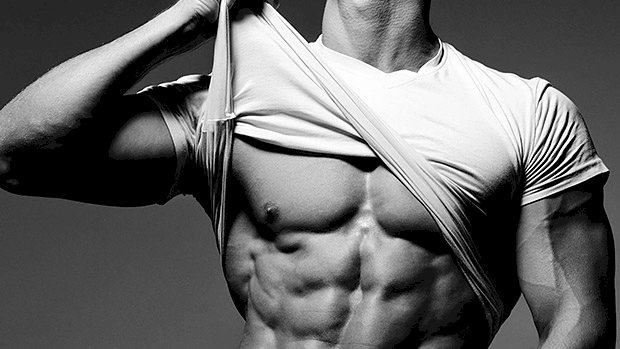 Eccentric training is an excellent way to tap into those neglected fast-twitch fibers. Using any cable crunch as an example, take the cable further away from your shoulders (overhead) to increase the load via a longer lever arm. To reduce the load, bring your arms closer so your shoulders will shorten the lever arm. By changing the cable position during a cable crunch (further from the torso on the way down) we can increase load in the eccentric or negative phase. A1. Decline Eccentric Cable Crunch: 6-10 A2. Decline Crunch: As many good reps as possible Do three rounds. There should be a “peeling” of your spine as you come up and an unrolling as you come down (almost a crunch/sit-up hybrid). If you’re not used to this type of training, your entire mid-section will feel these for days. You’re
Origin: Tip: This Hybrid Ab Exercise Will Make You Cry
Tip: A New Way to Make Overnight Oats
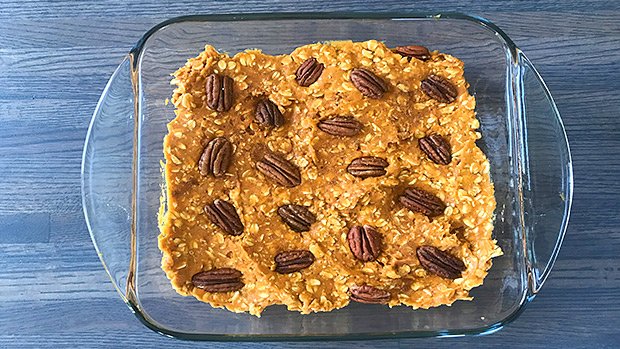 Oats Overnight Around twenty years ago, I stumbled upon something weird at a hotel’s breakfast buffet: a cold oatmeal dish. It was an odd mixture of old-fashioned oats, fruit cocktail, some type of cream, and probably a ton of added sugar. I had a feeling the hotel was just trying to get rid of their leftovers by combining them all into one dish, but I tried it. And it was pretty damn good. Then I fell into a sugar coma and was kicked out of the hotel for napping in a fern. Later, I started making a healthier version: oats, protein powder, and frozen berries. Mix it all up with water and let it soak overnight. Breakfast is served, no cooking required. It was delicious, so I threw the recipe onto the internet. Recently, “overnight oats” has been trending and there are a thousand variations out there… even a pre-made product, because apparently people are THAT damn lazy. I won’t say I invented it, but I think I helped popularize cold oats in the bodybuilding community. Well, here’s a new twist on the recipe. Overnight Pumpkin Oats Sorry to go all “basic white girl at Starbucks” on you, but yeah, this is a pumpkin spice recipe and, yes, my Uggs are super cute. Ingredients 1 Can pure pumpkin, 15 ounces (not pumpkin fie filling) 2 Cups rolled oats 5 Scoops (150g) Metabolic Drive® Protein, vanilla Handful pecans (about one-fourth of a cup) Ground cinnamon, nutmeg, ginger, cloves or allspice – to taste Optional: Splenda or equivalent low-calorie sweetener – to taste Directions Dump the canned pumpkin into a big bowl and mix in all the ingredients except the pecans. You’re going to think the protein powder and oats aren’t going to incorporate into the thick pumpkin, but they will. Just keep stirring. For the spices, I suggest a lot of cinnamon and a dash of everything else, but it’s up to you. It’s pretty tasty with cinnamon alone. Make it a couple of times and you’ll figure out what you like. It’s also perfectly fine without additional sweetener, but add a bit if you want it sweeter. Transfer the mixture to a flat baking dish or a Tupperware-type container. Spread evenly. Top with pecans and another dash of cinnamon. Cover. Refrigerate overnight or at least 4 hours before digging in. Calories and Macros This stuff is extremely satiating. You’ll be full for hours and you won’t fall asleep in the nearest fern. You might get six servings out of this, but I’ll assume you’re a big eater. Divide the dish into four big-boy servings and each one contains: Calories:376 Protein:33 grams Carbs:42 grams (8 grams fiber) Fat:9 grams
Origin: Tip: A New Way to Make Overnight Oats
Tip: Make This Healthy Banana Bread
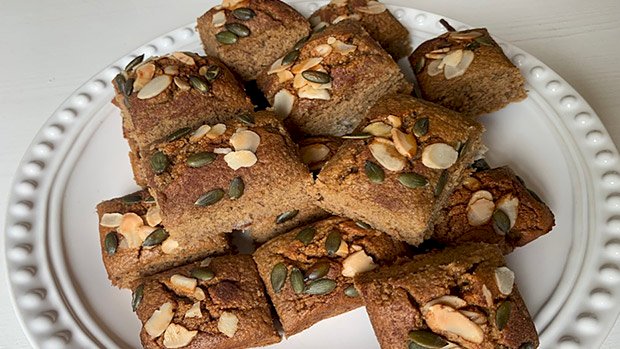 These banana bread “bites” are foolproof. They’re also more physique-friendly than the banana bread you see at the counter at your local coffee shop. This recipe is designed to keep preparation and baking time to a minimum without sacrificing taste and texture. That’s not even the best news though. These are made with simple, healthy ingredients you’ll probably already have in your kitchen. They’re lower sugar, higher fiber, gluten free, and powered by Metabolic Drive® Protein. Ingredients 8 Ounces (220g) rolled oats 2.5 Scoops (75g) vanilla Metabolic Drive® Protein. (chocolate will also work) 1/3 Cup extra-virgin olive oil 1/2 Cup honey or maple syrup 2 Medium eggs 2 Large ripe bananas 1/3 Cup fat-free Greek yogurt 1 Teaspoon baking soda (not baking powder!) 1 Teaspoon vanilla extract 1/2 Teaspoon salt 1/2 Teaspoon ground cinnamon Optional: Half a cup of mix-ins like chopped nuts, chocolate chips, seeds, dried fruit, or fresh banana slices. Instructions Preheat the oven to 350 Fahrenheit (180 Celsius). Prepare a 12×8 baking tray with baking/parchment paper. A brownie tin with dividers can also come in useful here. In a blender or food processor, blitz the oats to a fine oat four. Alternatively, you can use pre-bought oat flour. Pour the oat flour in a large mixing bowl, then add in the rest of the dry ingredients: Metabolic Drive® Protein, baking soda, salt, and cinnamon. Mix together the wet ingredients using a blender or food processor: olive oil, honey, bananas, Greek yogurt, and vanilla extract. Pour the wet mix into the bowl with the dry ingredients and combine well. Fold in any extras such as chopped banana, nuts, chocolate chips, or whatever you fancy. Bear in mind, these will change the macros. Pour the mix into the tray. Add further toppings for extra social media likes and follows (essential!) Bake for approximately 20 minutes on the top shelf of the oven. Once done, a toothpick should come out clean or with a few moist crumbs. If you prefer to bake this in a loaf tin, then aim for 325 Fahrenheit (165 Celsius) for around 50 minutes. Allow to cool for at least 10 minutes in the tray before taking out to slice. Enjoy on its own or as a vehicle for your favorite toppings. Macros Per Square (Makes 18) Calories: 142 Carbs: 19 grams Fat: 6 grams Protein: 5 grams Fiber: 2
Origin: Tip: Make This Healthy Banana Bread
How To Make Any Diet Work
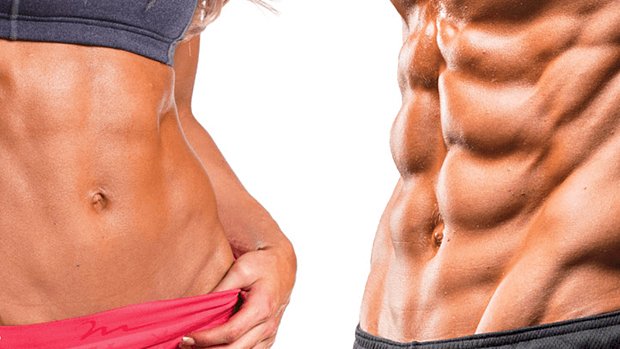 You’re probably not trying to get peeled like a stage-ready bodybuilder. That’s fine. But if you want to get relatively lean (something beyond seeing your top two abs), and you’ve had trouble doing it, then your dietary compliance probably sucks. You just can’t stick with the plan. But why? Let’s get into that, then talk about five proven ways to stay compliant. Compliance Matters Most “My diet is better than your diet!” You hear that a lot these days… and anyone who says it is probably wrong. Throughout the 1990s, bodybuilders used moderate protein, high carb, low fat diets to get ripped. But somewhere into the 2000s there was a shift where carbs suddenly became the enemy and were responsible for everything from cancer to Nickleback. Lately it’s become sugar. Just eliminate sugar and eat more fat and your jiggly tissue will fall off. None of that’s accurate, of course. But it hasn’t kept the masses from getting overzealous about high-fat, low-carb, n=1 anecdotes. Incidentally, they ignore mountains of research and discredit the anecdotes of those who didn’t use that approach. Here’s the truth: For the person who’s lifting weights and trying to lose fat, all diets that equate for caloric and protein intake work basically the same. When it comes to fat loss, no one type of diet is superior to any other when those factors – eating plenty of protein and being in a caloric deficit – are considered. What generally allows a person to get results from ANY diet is their degree of compliance. Ultimately, that ends up being the secret of why it worked. It’s not because removing carbs or reducing fat did something magical. Each diet just reduced caloric intake. Those who claim that their diet is superior basically just found a style of eating that was easier for them to adhere to. Because their diet was a nice fit for them, they were able to stay in a caloric deficit for enough time to lose fat. Period. Why is compliance a big deal? Because a consistent energy deficit is what has to happen to get lean, and you can’t maintain a consistent energy deficit if your diet is too hard to keep doing. The 5 Steps to Dietary Compliance 1 – Know Your Triggers All of us have trigger foods. These are foods that send us spiraling right into the seventh circle of gluttony hell. Those triggers vary greatly from person to person. This is one area where I’d define foods as being “good” or “bad” based on your reaction to eating them. Contextually, a bad food is one that meets the seventh circle criteria when you’re trying to get lean. It’s up to you to be aware of what foods cause you to eat more even after you’ve had your fill. For me, it’s basically anything that doesn’t fall under the bro-diet umbrella. So basically anything that’s not eggs, oatmeal, rice, chicken, etc. I don’t just eat a slice of pizza; I eat four pizzas. I don’t just eat one doughnut; I clean out the bakery. Some people CAN just have two Oreos. They’re called sociopaths and they feel nothing, have no emotions, and lack empathy. It’s up to you to identify your trigger foods and eliminate them during the time that you’re trying to have a high degree of compliance. No, this isn’t something you have to do forever. But if you’re wanting to shed fat and you don’t want to screw it up, then just eliminate the foods that cause those problems. Now, there’s one obstacle to look out for: the scarcity effect. It’s when we end up wanting something because of the perceived lack of availability. The less access we have to something, the more we tend to crave it. This can be a lethal combination when it comes to trigger foods. The solution to replace those trigger foods with foods that are “close enough.” If you love pizza, try a thin crust or cauliflower option using toppings that are higher in protein and lower in calories: grilled chicken instead of sausage, extra veggies, half the cheese, etc. If you love cookies and brownies, try the low fat and/or low carb recipes for those foods. If it’s easier for you to just abstain all together, then do that. But figure out what you need to do to stop short-circuiting the fat loss process by giving in to your trigger foods. 2 – Figure Out Your Ideal Meal Frequency For decades there was this belief that eating more often raised our metabolic rate causing us to lose more fat. You know, eat six small meals a day instead of three big ones. We know now this isn’t actually true and eating frequency has no major effect on metabolic rate. What most likely was happening was that frequent eating created a higher degree of satiety throughout the day, so people had a higher degree of compliance and didn’t feel the need to overeat at any one meal. From a muscle retention standpoint, it’s probably a good idea to have some protein coming in every four hours or so to stay highly anabolic and to keep muscle protein synthesis elevated. That usually means about four meals a day. Anecdotally, I’ve found this to work well for people who don’t
Origin: How To Make Any Diet Work
Tip: The Barbell Curl That’ll Make You Puke
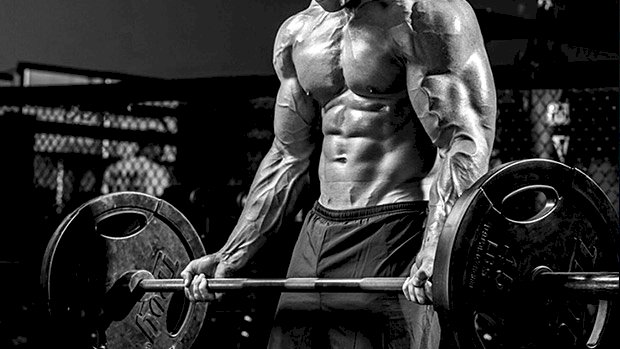 Arthur Jones (1926-2007) was the inventor of Nautilus machines in the 1970s, and MedX strength-training equipment in the 1990s. If you have read any of Jones’s one-set-to-failure bodybuilding material, you will probably remember his unique way of painting pictures with words. The following paragraphs were taken from his early writings – which detailed the proper way to perform a set of barbell curls. Note: When this material was written, Jones recommended two sets of most exercises. Even so, you will quickly get the feel of how Jones applied high-intensity training. Barbell Curls by Arthur Jones Select a weight on a barbell that you can curl in good form for 6 repetitions. Then, make yourself do 10 repetitions, or tear your arms off at the elbows trying. Keep the lifting strict and emphasize the lowering. Do not just drop the barbell to the bottom. Resist it the entire way. At the bottom, immediately begin another repetition, smoothly. Imagine from a side view, that during each repetition, your head, shoulders, and buttocks remain stable forming a vertical line. No leaning forward or backward, no arching of the lower back, no movement of the head and neck. Only your hands and forearms are tracking up and down. This set should be so hard that the last repetition requires from 3 to 4 seconds on the lifting and another 3 to 4 seconds on the lowering. Afterwards, you should be breathing like a steam engine, dark blue in the face, and so weak that you have to sit down to keep from passing out. The barbell curl is not an arm exercise. At least, it’s not an arm-only exercise – although it will soon give you biceps like a gorilla. Rather, it is an every-damned-thing exercise, if it’s performed properly. Done correctly, and heavily enough, the leverage is so great when the weight is in the halfway position, it works your back as much as a set of heavy deadlifts, and the pull downwards is so strong on your shoulders that it works the entire shoulder girdle intensely. The energy output is so great that it causes you to sound like a locomotive – thus building overall heart and lung efficiency and increasing the rib-cage size nearly as well as a set of breathing squats. Rest, just long enough to get your breathing close to normal and repeat a second set of 8 repetitions with the same resistance. King Kong could not do more than two sets during the same workout. Thus, if you can, then you are not doing them correctly. In fact, if you even consider doing a third set after finishing the second set, then you did not do those two sets properly. You should feel like puking after the second set – and a lot of serious guys do. If you do not, then give up. Get the hell out of the gym. You do not have what it takes to succeed in training. I am not joking about this, not even slightly. Throughout your overall-body routine you must constantly walk a very fine line. The line between sickness and collapse… and simple, but complete exhaustion. You must stay just on the far side of that line, constantly on the bare edge of being nauseated. This is especially true in regard to barbell curls. Outright hard work. That’s my summation of barbell
Origin: Tip: The Barbell Curl That’ll Make You Puke
Tip: Make Metabolic Drive Snickers Bars
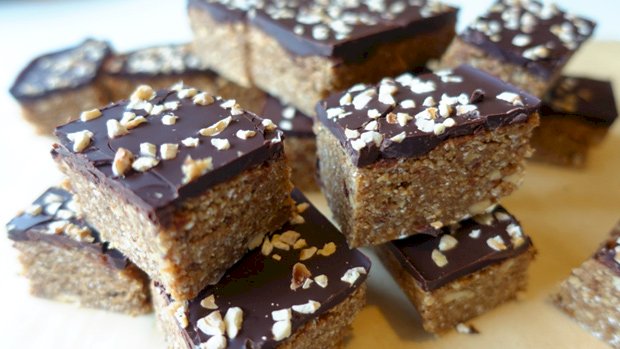 The perfect pre-workout snack should be easily digestible, have a good nutrient profile, and ideally promote vasodilation and blood flow. These bars have you covered in all departments. Any pre-exercise snack should also help trigger a positive feedback loop. Basically, the tastier it is, the more positive feelings you’ll associate with your workouts. Every time you eat it, you’ll know what’s about to go down. So let’s get to the recipe, then keep scrolling because I’ll tell you why these make an awesome pre-workout snack. Ingredients 18 Medjool dates, pitted 6 Ounces rolled oats 6 Ounces of dark chocolate bar (70% cocoa or higher) 6 Ounces crunchy peanut butter 3 Scoops (90 grams) vanilla Metabolic Drive® Protein 1/3 teaspoon salt Some chopped peanuts or hazelnuts for topping Directions Soak the dates in warm water for 10 minutes so they plump and soften. In a food processor or blender, mix the oats, salt, and protein powder together until fine. Drain the dates then add to the food processor and blitz until well combined. Save the water from the dates for later just in case. Pour the dry-ish dough into a bowl and mix by hand with the peanut butter. You’re welcome to use the processor for this, although this way keeps the crunchy peanut texture. You should find a dough has formed enough that you can easily roll it in your hands. If it’s a little wet, then add more oats. If it’s a little dry, add some of the drained date water you saved earlier. Get a small to medium cake pan ready. Don’t have one? Use a food prep container instead. Coat it with a little oil so the bars are easier to remove, or line with it with parchment paper. Press the dough to the corners of the container and give it an even thickness. Put the container in the freezer while you prepare the dark chocolate. Chop up the chocolate and melt gradually in the microwave, or if you’re fancy, do it in a glass bowl over boiling water. Bring out the container you just stuck in the freezer. Pour the chocolate evenly over the base, then add a sprinkle of chopped peanuts or hazelnuts over the top. Place in the refrigerator to set. Cut into 18 squares. Keep them stored in the fridge or at room temperature… if they last! Make Them A Pre-Workout Snack The natural caffeine and theobromine in dark chocolate act as mild stimulants, while the theobromine can also be a vasodilator. Dark chocolate also contains certain flavonoids that increase nitric oxide production. These convenient and tasty bars are perfect for any chocolate addict. Metabolic Drive® Protein is the primary source of protein, which you need training for amino acid availability. But what’s more important than the total protein content is the ratio of protein, carbs, and fats. Unlike post-workout where keeping fats to a minimum should be your goal, in the few hours leading to your workout some fats could be a good thing. A 2014 study by Yi et al. showed an almond-based snack actually beat a carbohydrate-heavy snack for maximizing exercise performance. The almonds allowed the subjects (cyclists) to sustain a higher intensity of exercise for longer. Theoretically this was due to the combination of protein and fat. The fat might allow people to sustain the energy obtained from carbs for a longer period of time – a drip-feed effect if you will. The peanuts in this recipe aid that process, whether you’re lifting, cross training, or cycling. The oats and medjool dates in these bars make for a great mix of sustainable energy too, with a little salt helping to maintain electrolyte balance. Calories and Macros Per Square 233 calories 9 grams fat 29 grams carbs 9 grams protein 4 grams
Origin: Tip: Make Metabolic Drive Snickers Bars
Tip: Make Room for Big-Bottomed Girls?
 I’ve judged NPC shows on the regional level in New England for approximately twenty years, as well as a few Fitness America shows and a few other now defunct organizations. Like most old-school purists, I didn’t love the inclusion of new divisions such as bikini and I got all grumpy about dudes wearing long, flamboyant surfer shorts in the Men’s Physique division. Still, while I may have had my issues with the inclusion of those divisions (where’s the muscle?!), I acknowledge that they were at least all based on the foundational concepts of physique sport: proportions, symmetry, and balance. Not so with the new “Wellness” division that makes room for women who have thick legs and glutes but a bikini competitor’s top half. I Like Big Butts But This I’m Not so Sure of Problematic name aside, the Wellness division is not actually new per se; it’s just new to the US. It’s popular in other parts of the world, and I even judged a show in Panama a few years ago that featured that division. While the gals who compete in the Wellness division are stunningly attractive – especially for those who like the look of thicker legs and glutes – it often looks like someone glued together the upper and lower bodies from separate people. It allows these leg/glute heavy women to compete where they may not have done well in say, bikini, figure, or physique. Sound like an unbalanced physique? It is! I’ve since labeled it the Thickness Division. These women don’t represent a proportional, balanced physique, which is the foundational focus of physique sports and what’s supposed to separate them from a basic beauty show or T&A extravaganza. While I, as a man with healthy, functioning sex organs, find thick legs and glutes terribly attractive, my judge brain just says “nope.” When I voiced my objections, one NPC judge responded, “That’s just it. This division is not about symmetry and balance. This division was made for the girls who are more muscular on their lower half. Brazilians, Colombians, and Venezuelans are the perfect athletes for this division.” Translated, that means to hell with proportions and balance. These women can’t fit into the other divisions because they don’t have either the genetics and/or the drive to fit into them, so let’s supply one they can compete in to be more inclusive. Okay. How about a wide-waisted division for guys like me? Or a division for pancake-butt women who can’t grow glutes at all, no matter how hard they try? Maybe even a Dad Bod division? Well truth, as they say, is stranger than fiction because one show has instituted a Dad Bod division. I shit you not. Sure, it’s all in good fun, but where does it stop? Of course, that show isn’t sanctioned by any major organization, but let’s say it was widely popular at that show and it caught on. With our all-inclusive, everyone should get a medal for just participating, striving for mediocrity society, could the Dad Bod division end up in more shows? A few years ago I would have said no, hell no. Today? I’m really not so sure. Heap Big Woman, You Made a Bad Boy Out of Me As far as the inclusion of the big-bottomed Wellness division in the NPC, I fully understand business is business and if they don’t fill seats and have competitors, there’s no NPC. The NPC, like all orgs, is stuck between a rock and a hard place on this type of issue, and this is in no way intended as a negative spotlight on the NPC or powers that be. But, if the essential aspects of the physique sports that have bodybuilding as their underpinning – which is a focus on proportions, symmetry, and overall balance – are abandoned in favor of being more inclusive, it’ll be a short-term gain but a long-term loss. In my admittedly jaded view, it’ll just be another victim of the current trend to allow everyone to compete in a given endeavor whether they should or shouldn’t. For this grumpy, old school purist, that’s truly where bodybuilding will have officially jumped the shark. Now if you’ll excuse me, I’m gonna go look at some more pictures of women from the Wellness
Origin: Tip: Make Room for Big-Bottomed Girls?
Tip: How to Make the Step-Up Work Better
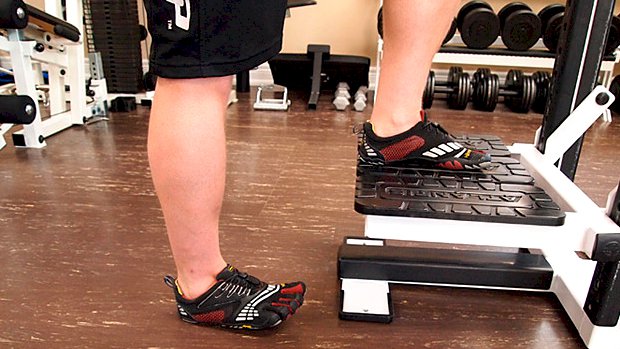 The Step-Up: You’re Doing It Wrong You don’t see a lot people doing the step-up. They probably tried it at one time but decided it just didn’t work. The problem is, most people don’t do it correctly. Most lifters unknowingly cheat on the step-up by leaning forward too much and pushing off the bottom leg. When you push off the floor leg, the leg on top of the box or bench isn’t doing much work. Make It Work: Curl Up Your Toes To keep from cheating on the step-up, curl up the toes of the foot that’s on the floor. Keep them curled up during the movement. This keeps you from being able to push off from the bottom leg so easily, because in order to push off you have to keep the toes down. As for bench or step height, you can go very high. The highest you can go is when the bench is so tall you’re up on your toes. It’s called the triple-jumper’s step-up and it involves the VMO and hamstrings more. It’s basically just a super high step-up. The key is that your knee shouldn’t buckle in as you step up. You can alternate legs or keep one foot statically on the bench until you do the desired number of reps. If you want more time under tension, use the static method where the foot up on the bench is kept in place. You can do step-ups using a barbell or dumbbells. They’re all good variations. Just keep your toes
Origin: Tip: How to Make the Step-Up Work Better
Tip: Avoid Labels that Make You a Victim
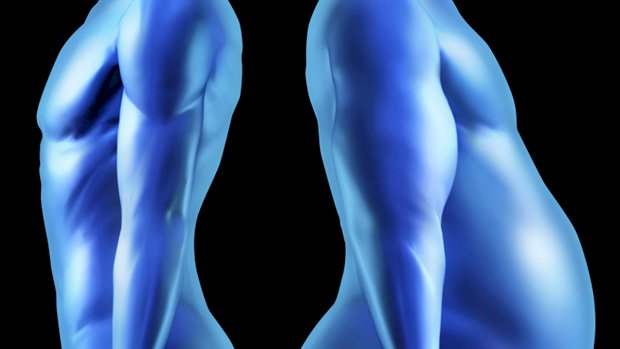 Want to get in shape? Develop a mindset of unshakable determination and a belief that you can change yourself. Want to stay shackled to your current circumstances? Develop the belief that you have an illness and it’s out of your control. The American Medical Association (AMA) may be helping the obese do the latter. The Study Researchers studied the behavior of obese people who read an article regarding the AMA’s decision to call obesity a “disease.” Those who read the article were more likely to choose high calorie foods and less likely to self-regulate than those who didn’t. According to the study, the only upshot in believing they had a disease was that test subjects exhibited more “body-love” as a result. What This Tells Us Believing that your weight problem is a disease will make you more likely to embrace it. On the flipside, believing you have a problem that’s manageable, reversible, preventable, and within your power to change, will make you more likely to self-regulate and take the onus to lose weight. The self-esteem of these study participants may have been cushioned by a word that improved their body image, but is that form of “body-love” worth Type II diabetes, dependency on prescription meds, and a shortened lifespan? Obesity will not be reduced by making people feel comfortable about being obese, nor will instilling a false sense of helplessness and contrived victimhood. What You Can Take Away The AMA’s verbiage keeps fat people fat. Perhaps a better message would be that while genetics or medical conditions may load the gun, it doesn’t mean you have to pull the trigger and reload twice. You are not helpless when it comes to your fitness level and quality of life. Accept that and you’ll realize that new, better behaviors can mitigate the problem. The first step is to stop thinking like a victim. Off The Record Even if you’re not obese, you may have labeled yourself with other “diseases” – things you’ve accepted as unavoidable and unchangeable. Maybe you’ve accepted your fate as being skinny-fat, or a non-athlete, a hard-gainer, a junk food addict, a weakling, a wallflower, or a person with no self-discipline. If you’ve embraced these or any other self-limiting labels, then realize that you’re living up to low expectations. Chances are, these things are under your control. You just need to drop the helpless sufferer status and do something about it. References Hoyt, Crystal L., Jeni L. Burnette, and Lisa Auster-Gussman. “Obesity Is a Disease” Psychological Science, 24 Jan. 2014. Web. 9 Dec. 2014. “Labeling obesity as a disease may have psychological costs – association for psychological science.” Association for Psychological Science. 28 Jan. 2014.
Origin: Tip: Avoid Labels that Make You a Victim
 All about sport xlsport.club