
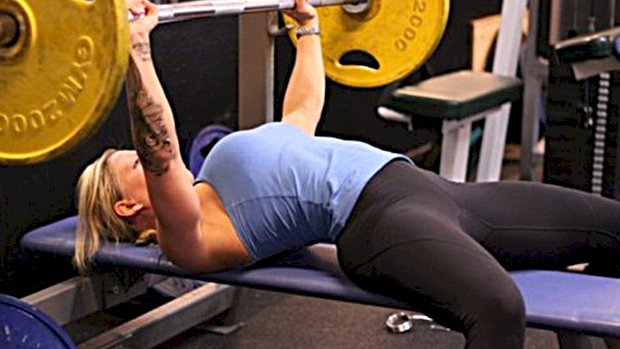
 Here’s what you need to know… The menstrual cycle has a huge influence on a female’s metabolic state and training results. The follicular phase is when women should focus on progress. It’s characterized by a higher tolerance for pain and increasing levels of endurance. Insulin sensitivity is higher during the follicular phase. Her body will be more prone to using carbs to fuel muscle gains. During ovulation, high estrogen levels can make women more prone to injury. During the luteal phase, the female body will rely more on fat as a fuel source. Your Hormones Control You You work hard each and every time you hit the gym. You give 100% effort and make sure that you eat right. You think you’re doing everything right, but could there be something you aren’t even aware of diminishing your results? Each and every day, your hormones control you. You’re well aware that testosterone, the male predominant sex hormone, is responsible for making men more muscular, strong, and aggressive. But what about your hormones? As a woman, each month your body goes through a series of events known as the female menstrual cycle. What most women don’t realize, however, is the influence this cycle can have on your metabolic state and training results. Let’s look more closely at this issue and explain what’s going on. The good news is once you understand the ramifications of these hormones, you can cater your program to overcome them and even take advantage of them to further your training results. Your Cycle: A Refresher First, keep in mind we’re talking about premenopausal women who aren’t using oral birth control. Now, the start of your cycle begins immediately after you finish menstruating with the follicular phase, lasting from day zero to 14. This phase is characterized by increasing estrogen, normal progesterone, and an average body temperature. From there, you move into ovulation, which takes place around day 14. When this occurs, your estrogen level peaks and progesterone starts to increase. You’ll also notice you start to feel warmer. From day 15 to 28 of your cycle, you’ll enter the luteal phase where estrogen is declining, progesterone is increasing, and your body temperature remains higher than baseline. Menstruation then follows to start things off all over again. Now let’s talk about what you go through during each phase. The Follicular Phase: Eat Carbs and Train Harder When it comes to your workout sessions, the follicular phase – including the ovulation period – is when you should focus on progress. This phase is characterized by a higher tolerance for pain, the highest maximum voluntary force generation capacity, as well as increasing levels of endurance. Your body will also be more prone to utilizing muscle glycogen to fuel exercise during this stage, making high-carb workout nutrition critical. To add to this, your insulin sensitivity levels will be higher during this phase, so focus on higher carb phases or refeeds during intense, carb-depleting workouts. Your body will be more prone to using those carbs to fuel muscle gains. These intense workouts, coupled with metabolism-enhancing refeeds, will also help to counteract the decline in your resting metabolic rate that takes place during this time. One study published in the American Journal of Clinical Nutrition noted that basal metabolic rate decreased during menstruation and then proceeded to decline to its lowest point one week before ovulation took place. The Ovulation Phase: Go for a PR! During ovulation, your strength levels will still be high and you may notice the highest sheer force generation capacity during this phase. If you want to set a PR, now is the time to try. One study published in the Journal of Physiology noted that ovulating women showed an 11% increase in both quadriceps as well as handgrip strength. Take note, though, that you may also be at a higher risk of injury. As estrogen skyrockets to its highest point during this phase, it can impact collagen metabolism and also influence your neuromuscular control. It was noted in the American Journal of Sports Medicine that anterior cruciate ligament injury rates are four to eight times higher during this point in the cycle than in all other phases. So train hard at this time, but be especially careful about using good form and being mindful of fatigue build-up. Your metabolism will also be starting to climb at this point, so if you’re feeling a little extra hungry, understand that this may very well be why. Consider adding a few more calories to your diet to fuel this increase, but get those calories from a balanced mix of proteins, carbs, and fats as your insulin sensitivity is starting to decline. The Luteal Phase: Back Off on Lifting Intensity and Lose Fat Ever have workouts where it seems your body is just fighting you every step of the way? If so, chances are good it’s happening during your luteal phase. During the luteal phase, with your body temperature higher than
Origin: The Hormone Cycle and Female Lifters
Tag: Lifters
5 Things Natural Lifters Can Learn From Pros
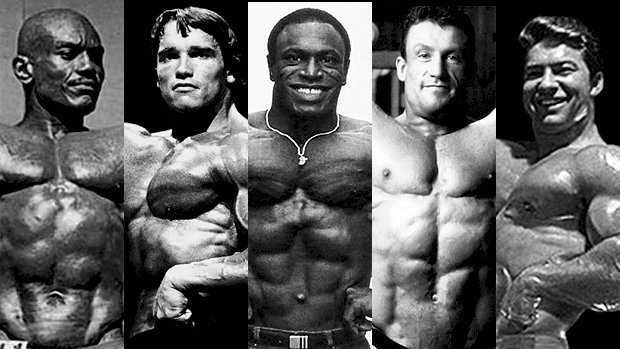 Should You Train Like a Pro Bodybuilder? Yes… and no. Blindly following the training of top bodybuilders might not work well for an average person training naturally. The physiology of both types of athletes just isn’t the same: Bodybuilders that use performance enhancing drugs have an elevated level of protein synthesis. Not so with natural lifters. The natural guy has to trigger protein synthesis with his workout, while the enhanced bodybuilder uses his workout mostly to drive nutrients to the muscles to take advantage of the elevated protein synthesis. The high level of anabolic hormones used by the pros can counterbalance an excessive increase in cortisol. In the natural bodybuilder, excessive cortisol release will not only kill protein synthesis, but will also trigger the expression of the myostatin gene, either of which will halt any possible muscle growth. Anabolic steroids increase glycogen storage and thus negate or prevent glycogen depletion. Glycogen depletion in itself is very catabolic and natural trainees are more at risk. Because of these differences, enhanced bodybuilders (especially if they have good genetics on top of all that) can tolerate more volume and can respond better to lighter “pump” work. They can also train a body part less frequently. But despite these differences, the top bodybuilders often come up with important parts of the muscle growth puzzle, and these elements can and should be used by natural lifters. Here’s what you can take away from some of the top Mr. Olympia champions: 1 – Larry Scott, Training Density Scott was the pupil of the great Vince Gironda, a man who was decades ahead of his time. Both Gironda and Scott were true thinkers and tinkerers, inventing several variations of exercises to make them more effective at isolating the desired muscle. However, their most important contribution was the emphasis on training density – doing hard work with very short rest periods. Having a high density of training (short rest periods) while still lifting heavy is one of the most powerful growth triggers. That’s one of the reasons why I like clusters, multi-rep clusters (2-2-2-2-2-2 or 3-3-3-3-3-3) and rest/pause sets. At first your performance will drop, but you can train yourself to be more resilient and stay strong even with short rests. The benefits of high density training (while staying with reasonably heavy weights) are mostly in the body composition department – it will help you get leaner while adding on muscle. The benefits to the cardiovascular system are also important, since good health is actually the cornerstone of muscle growth and fat loss. If you want to make crops grow, you can have the best fertilizers and use the best farming methods, but if the soil is poor you’ll have lousy growth. It’s the same with muscle. A healthier body will progress faster. As an example, adding muscle (naturally) without a healthy cardiovascular system to support it is virtually impossible because the added muscle poses a threat to survival! 2 – Sergio Oliva, Explosive Lifting Before being the first truly freaky bodybuilder, Oliva was an international level Olympic lifter for Cuba. His upper back and forearms can certainly attest to that. Much of his physical foundation was built on the Olympic lifts and heavy pulls. While you might not have to learn the Olympic lifts to benefit from them, explosive pulls like snatch-grip high pulls, push presses, and heavy Olympic deadlifts will really help a natural lifter build a thick back and shoulders. Other great bodybuilders enjoyed doing the Olympic lifts from time to time, Robbie Robinson and Mike Mentzer being two of them. The benefit of explosive pulls is an improved neural efficiency that will translate into better/earlier fast twitch muscle fiber recruitment. If you develop the capacity to recruit the fast twitch fibers earlier in the set, it means that you’ll fatigue/stimulate them sooner and with fewer reps. Additionally, you’ll burn less glycogen to get the job done. That means more glycogen for more growth. On a side note, the more efficient you are at recruiting the fast twitch fibers, the fewer reps you can do at a given percentage of your max. But that isn’t a bad thing. Quite the contrary! It simply means that by being better at hitting the money fibers, you provide the same stimulation without causing as much fatigue (glycogen and neurotransmitter depletion). These big explosive lifts also have the benefit of increasing muscle hardness and density. 3 – Arnold Schwarzenegger, Training Frequency Arnold was known for burying his training partners. He’s one of the rare exceptions that possessed an extremely resilient nervous system and a fiber type that allowed him to be really strong, yet have amazing set-to-set endurance. He also had a pain threshold second to none. Arnold was one of the rare people who could hit failure on 2 or 3 sets of an exercise and then proceed to make his fifth set the best one. He
Origin: 5 Things Natural Lifters Can Learn From Pros
5 Self-Improvement Tips for Lifters
 The Question How can T Nation readers improve their lifestyles to become even more awesome than they already are? Give them something to try for the next week. David Otey – Strength and Conditioning Specialist Shift your bedtime forward by an hour. Different hours of the day are more productive than others. A one-hour shift in your day can give you a more productive hour that normally would’ve been squandered watching TV, eating unwanted snacks, or trolling the internet. So try this: Move up your bedtime by 60 minutes, then wake up 60 minutes earlier. For example, if you usually go to bed at 10:30 PM and wake up at 6:00 AM, try going to bed at 9:30 PM and waking up at 5:00 AM. Here’s an example of how to use that time: Prepare healthy food for the day. Get to the gym before the rush. Get your ab work done if you don’t already do it. Add in that cardio work you’ve been putting off. Getting one hour back in your day means you’ll be getting 7 hours back over the course of the week. It’s a shift from wasting time to making time. – David Otey Dan John – Strength Coach and Performance Expert Seek the middle ground. Create a routine. Get organized. Seek the Middle Ground I used to work with a guy, Phil, who did something interesting. During Lent, he gave up his health. He was one of those guys who combined yoga with meditative movements from every corner of the world, drank cocktails made of frog bile and various magic herbs and oils, and spent lots of time on his little rug balancing rocks. But, every spring, he stopped all of it. He ate doughnuts, drank coffee, and smoked cigarettes. He stopped doing everything healthy. When Easter came around, he told me he couldn’t wait to get back to his ascetic lifestyle. It never made sense to me. But, like the Atkins Diet, spending a few weeks emphasizing one thing after years of doing the opposite seems to help. So, on some level, I understand it. The only issue is that it goes against the thousands of years of Western tradition. Achilles’ search for “Arete,” striving for virtue that will last well beyond your lifetime, is based on understanding that “somewhere in the middle” of the extremes is the road we seek. Many people I work with are actually just like Phil. They just live on another extreme. They focus on a thousand things at once, answer every ping from the phone, scroll through social media for hours, try every diet and supplement idea all at once and leave everything in life unfinished, cluttered, and messy. And that brings us to the next point. Get Organized I have a new piece of advice for personal trainers working with new clients trying to lose fat: Walk with him or her out to the parking lot and look in the backseat of their car. Nearly universally, the backseat is a mess. Fast food bags, clothes, crap, and God knows what cover most of the seating area. If the backseat is cluttered, the car is cluttered, and this person’s life is cluttered. And the car smells of old McDonald’s French fries. You know that smell. And, yes, this might sound simplistic but the secret to fat loss is cleaning the backseat of that car. Stick with me here. The mind will struggle to focus on something as difficult as fat loss if everything is a mess. Significant fat loss is one of the MOST difficult things you can do without surgery, and a chaotic environment will make it even harder. Set a Routine Establish a bedtime. Two hours before, set the coffee maker (or whatever) for half an hour before your alarm clock. Take your supplements and medications. I take fish oil, vitamin D, and magnesium. Make your “to do” list for the following day. If you can eliminate one or two items (fill out a form, send an email, etc.) do it. Then if you’re a messy car person, here’s what to do every day for the next week: Day 1:Clean and declutter the backseat of the car. Day 2:Clean and declutter the glove box, the little wells in the driver and passenger seats, and the general front area of the car. Day 3:Open the trunk, if you dare, and clean it up. Put away all the stuff you should have put away years ago. Day 4:Clean and declutter your bathroom. Day 5:Declutter your clothes. Donate things you don’t wear. Day 6:Clean and declutter your fridge. Day 7:Open your computer and reorganize your folders. Put things where they belong. Add new folders and clean up the mess. Every minute decluttering seems to clear the mind more and more. As I type this, I noticed that my desktop needs a quick sweep; thirty seconds later, my mind is clearer and more laser focused. To quote the greatest philosopher of our times, Barney Stinson: “Challenge accepted.” – Dan John Chris Albert – Trainer, Gym Founder, Marine Corps Vet Take gratitude to the extreme for one week. We hear about people keeping gratitude journals these days. In them they write down three things that they’re grateful for every morning. The idea there is that, if you reflect on gratitude, you’ll have a more positive mindset and it will carry
Origin: 5 Self-Improvement Tips for Lifters
 All about sport xlsport.club