
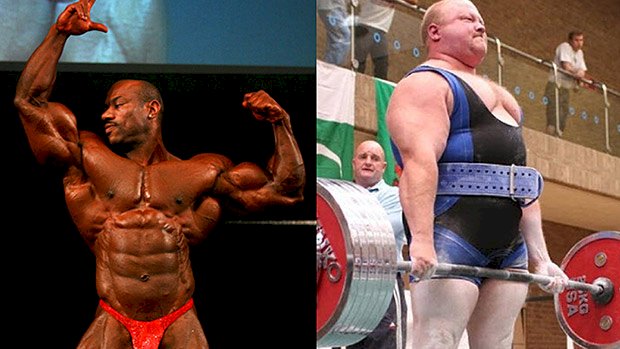
 The Tale of Two Pauls I’ve competed in both powerlifting and bodybuilding, and each endeavor taught me a lot about the other. One thing that Powerlifting Paul learned from Bodybuilding Paul was how important it is to train muscles and not just movements. That was a huge lesson. Once I left powerlifting behind and dove back into bodybuilding, I really saw the vast differences in the two. Outside of the fact that you’re using barbells in both, they couldn’t be any more dissimilar. With powerlifting you want to put the body in the most mechanically advantageous position as possible to move the greatest amount of weight. It’s actually quite counterproductive, and I see a litany of competitive powerlifters show up on social media each week with new tears and strains. Powerlifters should have some periods where they think and train like bodybuilders. More muscle means better leverages, and more muscle increases maximum strength potential. When you’re trying to focus on muscular development (bodybuilding), you actually want to put that muscle into the least advantageous position so that it has to work much harder during the movement, i.e locking down the joints in a way that reduces the involvement of other muscle groups. Problem is, most powerlifters become very one-dimensional in their training thoughts. I fell into the same trap. I forgot that despite the fact that maximal strength is largely neural based, the muscles are still moving the weight. Newsflash, right? I continued to suffer from adductor strains when my squat would begin to climb. Simply training the adductors on the “good girl machine” rectified that problem. I had a similar problem later with my quads. Weight would go up, quads would sustain a strain. I knew my quads needed to get stronger, but I was already doing high-bar paused squats with over 600 pounds, and front squats with 455 for reps. Surely I had strong quads. Wrong! Due to years of perfecting my squat for my leverages, I’d really learned how to load up the hips and rely on them to do the brunt of the work. This meant my hips were capable of squatting 635 pounds, but my quads were capable of, well, far less. Which is why anything in that range often resulted in me straining a quad. I decided one day to rectify this and remove my superlative birth-giving hips from the equation. This meant hack squats, where the hips couldn’t contribute as much, and my quads would be forced to bear the brunt of the load. It wasn’t much of a load. I struggled with three plates for a set of ten on hacks. That was a very humbling day. But it also let me know I was on the right track. I knew that if I got strong as hell on hacks, then my quads would be able to contribute to my squat and not be the weak link. I followed up all of my squats with 1-2 sets of hack squats for 10-15 reps. I was living in the “anything over 5 reps is cardio” mantra at that time, so I can’t explain in words how awful this was. After a few months of being diligent with this plan, both my hacks and my barbell squats ascended. I hit a gym-best 660 pound raw squat with good speed months later. My quads stayed attached to the bone, thankfully. 12 Weeks a Year All powerlifters should be training for muscle growth and bringing up weak muscle groups for at least one twelve-week training cycle during the year. I believe both powerlifters and bodybuilders can benefit from having training cycles where they focus on the other objective: Powerlifters should have some pure hypertrophy training cycles to shore up weak links. Bodybuilders should do some training cycles where they focus on getting stronger on a few basic lifts. Doing so will carry over into moving heavier loads in the traditional bodybuilder rep ranges, which should manifest into more muscle
Origin: Tip: What Powerlifters Can Learn From Bodybuilders
Tag: Learn
5 Things Natural Lifters Can Learn From Pros
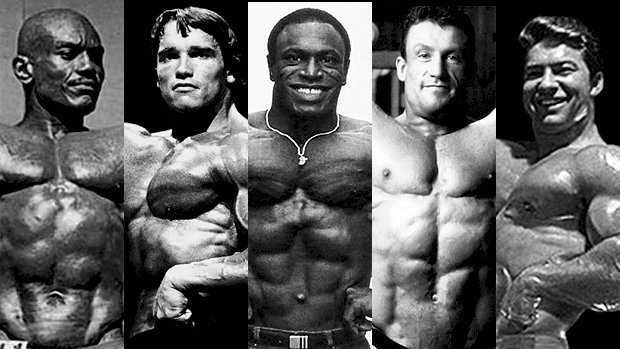 Should You Train Like a Pro Bodybuilder? Yes… and no. Blindly following the training of top bodybuilders might not work well for an average person training naturally. The physiology of both types of athletes just isn’t the same: Bodybuilders that use performance enhancing drugs have an elevated level of protein synthesis. Not so with natural lifters. The natural guy has to trigger protein synthesis with his workout, while the enhanced bodybuilder uses his workout mostly to drive nutrients to the muscles to take advantage of the elevated protein synthesis. The high level of anabolic hormones used by the pros can counterbalance an excessive increase in cortisol. In the natural bodybuilder, excessive cortisol release will not only kill protein synthesis, but will also trigger the expression of the myostatin gene, either of which will halt any possible muscle growth. Anabolic steroids increase glycogen storage and thus negate or prevent glycogen depletion. Glycogen depletion in itself is very catabolic and natural trainees are more at risk. Because of these differences, enhanced bodybuilders (especially if they have good genetics on top of all that) can tolerate more volume and can respond better to lighter “pump” work. They can also train a body part less frequently. But despite these differences, the top bodybuilders often come up with important parts of the muscle growth puzzle, and these elements can and should be used by natural lifters. Here’s what you can take away from some of the top Mr. Olympia champions: 1 – Larry Scott, Training Density Scott was the pupil of the great Vince Gironda, a man who was decades ahead of his time. Both Gironda and Scott were true thinkers and tinkerers, inventing several variations of exercises to make them more effective at isolating the desired muscle. However, their most important contribution was the emphasis on training density – doing hard work with very short rest periods. Having a high density of training (short rest periods) while still lifting heavy is one of the most powerful growth triggers. That’s one of the reasons why I like clusters, multi-rep clusters (2-2-2-2-2-2 or 3-3-3-3-3-3) and rest/pause sets. At first your performance will drop, but you can train yourself to be more resilient and stay strong even with short rests. The benefits of high density training (while staying with reasonably heavy weights) are mostly in the body composition department – it will help you get leaner while adding on muscle. The benefits to the cardiovascular system are also important, since good health is actually the cornerstone of muscle growth and fat loss. If you want to make crops grow, you can have the best fertilizers and use the best farming methods, but if the soil is poor you’ll have lousy growth. It’s the same with muscle. A healthier body will progress faster. As an example, adding muscle (naturally) without a healthy cardiovascular system to support it is virtually impossible because the added muscle poses a threat to survival! 2 – Sergio Oliva, Explosive Lifting Before being the first truly freaky bodybuilder, Oliva was an international level Olympic lifter for Cuba. His upper back and forearms can certainly attest to that. Much of his physical foundation was built on the Olympic lifts and heavy pulls. While you might not have to learn the Olympic lifts to benefit from them, explosive pulls like snatch-grip high pulls, push presses, and heavy Olympic deadlifts will really help a natural lifter build a thick back and shoulders. Other great bodybuilders enjoyed doing the Olympic lifts from time to time, Robbie Robinson and Mike Mentzer being two of them. The benefit of explosive pulls is an improved neural efficiency that will translate into better/earlier fast twitch muscle fiber recruitment. If you develop the capacity to recruit the fast twitch fibers earlier in the set, it means that you’ll fatigue/stimulate them sooner and with fewer reps. Additionally, you’ll burn less glycogen to get the job done. That means more glycogen for more growth. On a side note, the more efficient you are at recruiting the fast twitch fibers, the fewer reps you can do at a given percentage of your max. But that isn’t a bad thing. Quite the contrary! It simply means that by being better at hitting the money fibers, you provide the same stimulation without causing as much fatigue (glycogen and neurotransmitter depletion). These big explosive lifts also have the benefit of increasing muscle hardness and density. 3 – Arnold Schwarzenegger, Training Frequency Arnold was known for burying his training partners. He’s one of the rare exceptions that possessed an extremely resilient nervous system and a fiber type that allowed him to be really strong, yet have amazing set-to-set endurance. He also had a pain threshold second to none. Arnold was one of the rare people who could hit failure on 2 or 3 sets of an exercise and then proceed to make his fifth set the best one. He
Origin: 5 Things Natural Lifters Can Learn From Pros
 All about sport xlsport.club