
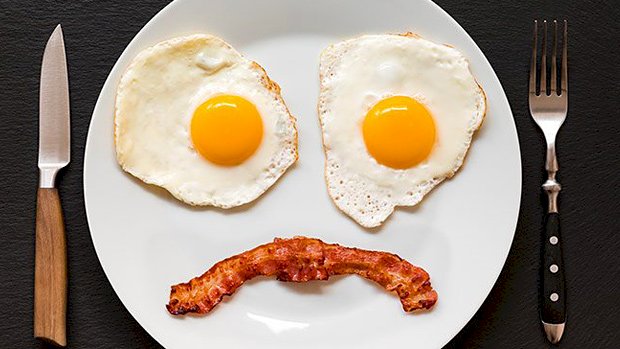
 “Calories Don’t Matter on Keto!” Wrong. Caloric intake above maintenance will still cause fat gain. One of the most misleading statements about keto diets is that calories don’t matter as long as you’re not consuming carbs. This stems from the insulin-to-obesity theory. It goes something like this… Carbs cause insulin to be secreted. Insulin (the storage hormone) stores those carbs as fat. Eliminate carbs and you’ll stop storing fat regardless of calories consumed. Become a fat-burning machine. It’s true that getting into a state of ketosis will increase fat oxidation. After all, fats and carbs are the main fuels used in the muscles for oxidation during exercise. If you eliminate carbs, then eventually the body is left with no choice but to use fat as the primary source for fuel. Boom! Increased fat oxidation, right? But there’s a difference in fat oxidation and a reduction in fat mass, which can only happen in an energy deficit. And if you’re consuming an excess of calories from fat, then the body will do the same thing with those excess calories from fat as it does with carbs: it’ll store them for later use. The reason that a ketogenic diet works well for some people is that it can increase satiation – the feeling of fullness. This higher degree of satiation can naturally cause some to eat fewer calories, which leads to fat loss despite the fact that they may not be counting calories. It’s Just an Energy Deficit The ketogenic diet will work for fat loss in the same way that every other diet works for fat loss – by creating an energy deficit. You cannot eat “as much as you want” on a keto diet and still lose fat simply because you eliminated a macronutrient source. From the data we’ve seen, keto does appear to increase satiation better than most standard diets, which can help with dietary compliance and naturally reducing caloric intake. However, when calories and protein are equal, it’s not a significant advantage for fat loss (1). On the flip side, the keto diet falls flat on its face when it comes to increasing muscle (2)
Origin: Tip: The Biggest Keto Myth
Tag: Keto
Killing Keto
 The ketogenic diet (keto) has many potential benefits ranging from preventing epileptic seizures to potentially “starving” cancer cells. Unfortunately, when it comes to transforming your body, it’s not the magic cure it’s made out to be. Can it help you lose fat? Sure, by satiating your hunger, helping you eat less, and creating a caloric deficit – just like any other diet. But when it comes to building muscle? It fails miserably. A Primer On the Keto Craze A real keto diet is high fat (75 percent of calories) with an extremely low carbohydrate intake (less than 5 percent of calories) and low-ish protein intake (15-20 percent). Ketosis occurs by depleting your body of stored glycogen and incoming glucose from carbs. As a result, your body breaks down fat, creating molecules called ketones to use as fuel. Okay For Fat Loss, Bad For Muscle Growth Can you lose fat while following the ketogenic diet? Of course. But can you build actual muscle on it? Well, it’s possible, but not easy, likely, or ideal. I could walk from my house (in Georgia) all the way to San Diego, but it would be much faster if I took a flight. Hypertrophy while on keto is kind of like that. When it comes to building muscle, carbs and a balanced diet are far superior because they give you adequate (and preferred) fuel for anaerobic performance. And above all else, they make it easier to consume enough calories to trigger muscle growth. Let’s take a look at the science while keeping our eye on the goal: more lean muscle mass. A 2018 study, published in the Journal of the International Society of Sports Nutrition, tested how the ketogenic diet affected the body mass index (BMI) of 24 healthy males over the course of eight weeks. All 24 men performed a resistance training program for the eight-week period. Nine of the men were assigned to the ketogenic diet. Ten were assigned a non-ketogenic diet, and five were told to eat like normal. The results? The keto group saw a significant reduction in fat mass, while the other two groups didn’t see a reduction in fat mass, but did see an increase in muscle gain. The researchers concluded that the keto diet might be an effective way to decrease fat mass without decreasing lean body mass. However, it’s probably not useful to increase muscle mass (1). The Fuel Source Argument There’s some evidence ketogenic diets can work for endurance and ultra-endurance athletes. But it’s been established that glucose is the optimal fuel for high velocity muscle contractions and anaerobic sports like weight lifting and sprinting. A 2019 study in the Journal of Sports Medicine and Physical Fitness took 16 men and women through a randomized, counterbalanced crossover study analyzing exercise testing under ketogenic diets versus higher-carb diets. The diets were matched for total caloric intake with carb intake being the difference in the subjects. After analyzing dietary compliance as well as urine pH and ketone levels, testers administrated the brutal Wingate anaerobic cycling test. Here’s what they found: Mean power, peak power, and recovery measurements were all significantly worse for the low-carb dieters. This lead researchers to conclude short-term ketogenic diets reduce exercise performance in activities heavily dependent on anaerobic energy systems (2). This means your ability to perform the types of exercise that are best for building muscle is impaired with low-carb diets. Keto Is Low Protein If your primary concern is building muscle, you need adequate protein to do so. Unfortunately, keto isn’t only a low-carb diet, it’s also a low-protein diet. Too much protein can prevent you from getting and staying in ketosis. In 2011 a study by Phillips and Van Loon found that .82 grams per pound of bodyweight is the upper limit of protein needed to derive maximum protein synthesis, (3) or slightly below one gram per pound of bodyweight. Obviously, yes, you can increase protein intake with your diet. But reaching adequate protein levels often dictates you’ll eat more protein than recommended in the ketogenic diet, pulling you out of ketosis. Therefore, you’re not really following a ketogenic diet – you’re following a low carb, moderate protein diet – a glorified Atkins diet basically, like your mom tried once. The Hormonal Argument For building muscle, testosterone is important. Fat intake is essential for healthy T levels since cholesterol, found primarily in animal products, serves as a precursor for testosterone production, among other things. But fat isn’t the only nutrient you need to maintain healthy testosterone levels. Carbs, specifically post-workout, have been shown to restore muscle glycogen, reduce cortisol levels, and improve testosterone levels. Going deeper, you need to understand the role of glucose. Glucose from carbohydrates plays an important role in GnRH (gonadotropin releasing hormone) levels. Its secretion leads to other vital hormonal functions in the body. GnRH leads to the release of
Origin: Killing Keto
Tip: Keto and Bodybuilding Don’t Mix
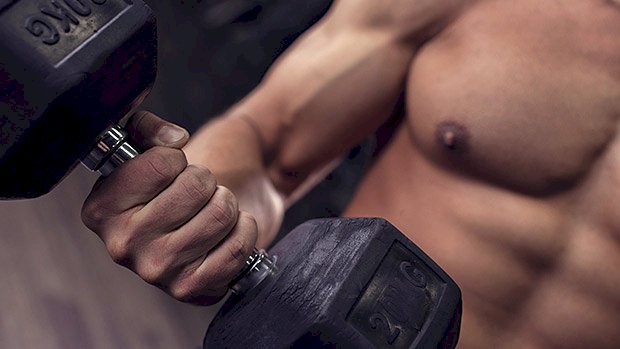 I’ve often written about how hard it is to really be in ketosis. It’s not a problem if you’re an epileptic in a hospital being fed a controlled diet by a team of white-gowned specialists who weigh all your food, along with all your doodie. But if you’re a regular Joe who isn’t in total command of his food chain – who doesn’t live on a farm and grow all his own food and make all his high fat, unsweetened, almond flour peach cobbler with no peaches – you’re liable to slip up sooner or later. All it takes is eating an apple that’s too big, a spoonful of hidden sugar in a sauce, or a morsel of matzo in a meat loaf. Beyond all that is a problem that’s probably unique to lifters: They eat an f-ton of protein. Every day. People who are truly in ketosis need to get 80 to 90 percent of their calories from fat, and that doesn’t leave much space for protein, which is the lifeblood of a lifter. Hell, lifters argue all the time about whether they need to eat one entire cow or two every day to best grow muscle, and most keto people, if you threaten to force-feed them a sugary churro, will admit that eating a lot of protein – more than, say, 20 percent of total calories – will take you out of ketosis. Twenty percent might be generous, though. Even if a generic keto-er could get away with eating a diet of 20% protein, eating such a relatively small amount of protein every day would cause the muscles of most bodybuilders and lifters to start to shrink. No One Guidelinend easily enough to Works for Everybody If you don’t give your body sugar, the body will break down protein to get it, and that protein will come mostly from muscle. Ketosis itself is your body’s way of trying to preserve that protein and ipso facto, your muscles. But take in a sufficient amount of carbs or protein and the body takes a pass on all that keto silliness and goes back to using sugar as its energy source. The trouble is, there’s no one guideline that works for everyone. One person might get knocked out of ketosis for having a diet that’s 20% protein, and another person might get booted out for eating a lot less. Lately, though, people who worship at the keto altar are low-carb waffling on this protein speed limit. They’re saying that worries about gluconeogenesis – the process by which amino acids are converted to sugar – are overblown and that it doesn’t really happen when keto dieters eat high-ish amounts of protein, at least not to the point where it knocks you out of keto. Others argue about the actual biochemistry of the phenomenon, saying that gluconeogenesis is a non-factor, and if protein does take you out of ketosis, it’s because the excess protein is donating oxaloacetate to acetyl-CoA in the Krebs cycle… but that’s getting pretty deep in the biochemical weeds. What matters is whether the amount of protein a bodybuilder or lifter needs to grow muscle – or even maintain it – is enough to take you out of ketosis, and I think it is, as do a lot of other biohackers, nutritionists, and keto autodidacts. But those who have financial interests in promoting a ketogenic diet disagree. Studies Aimed at Diabetics Don’t Fly Some of the keto revisionists point to studies (mostly published in diabetes journals) that showed gluconeogenesis does occur after a high protein meal, but under very unusual circumstances. Even so, they maintain the amount of sugar produced amounted to just a duck snort; not enough to knock a flour beetle out of ketosis. Granted, those studies do show that dietary proteins contribute very little to glucose production, but the test subjects weren’t in ketosis in the first place. Generally, the subjects were run-of-the-mill diabetics, or healthy people who’d just fasted overnight and were then given a high protein, zero-carb meal. Sure, gluconeogenesis occurred, but as keto apologizers claim, only to a minor degree. Fasting overnight, though, is hardly enough to deplete anyone of their glycogen reserves, so it’s not surprising that a significant amount of gluconeogenesis didn’t occur in these test subjects. Keto protein-deniers need to look at studies like the one performed by Veldhorst, et al where subjects were truly depleted of carbs – fed a low-carb diet (0% carbs, 30% protein, and 70% fat) and depleted of glycogen reserves through exercise. They found that the low-carb, high-protein diet led to an increase in energy expenditure, 42% of which was explained by an increase in gluconeogenesis. That’s significant, and ealy enough to knock anyone out of ketosis. If lifters or bodybuilders want to lose fat, they’d best do it the old-fashioned way: reduce caloric intake while eating modest amounts of functional carbs and fat and striving for protein intake of between 30 and 40% of total
Origin: Tip: Keto and Bodybuilding Don’t Mix
 All about sport xlsport.club