
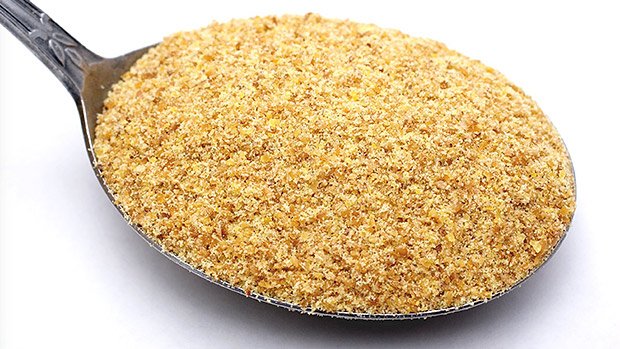
 Flaxseed: The Comeback Poor old flaxseed was once a rising star in the nutritional world. It was touted as being the highest non-ocean source of omega-3 fatty acids, so if you didn’t like to eat mackerel, herring, or oysters every day, flaxseed was your girl. But then people found out that flaxseed came with an omega-3 catch: It didn’t actually contain DHA or EPA, the omega-3s the human body needs. Instead, it contained alpha linolenic acid, which the body has to convert to DHA and EPA. That might not sound like a big deal, but it turns out the conversion process is kind of a heavy enzymatic lift for the body, so much so that only 10 to 15% of the linolenic acid gets converted into DHA and EPA (the rest is burned as energy). So flaxseed fell out of favor. It was left to molder on the shelves at Whole Foods, passed over for the younger and prettier chia seeds, but don’t worry, flaxseed isn’t vindictive like your ex. She’ll take you back, because that’s just the kind of big-hearted seed she is. And while she may not have the omega-3 horsepower of her fishy friends, adding a daily teaspoon or two to your diet could improve your health considerably in the following categories: 1. Cardiovascular Disease Flaxseed, at least in animal studies, has proven to be effective in slowing the build-up of plaque induced by high-cholesterol and high-fat diets, in addition to lowering circulating levels of trans fats. As far as human trials, flaxseed has been shown to significantly decrease systolic and diastolic blood pressure, so much so that it led to a prediction of a 50% decrease in the incidence of heart attack and stroke. 2. Diabetes Dietary flaxseed reduced blood glucose in people with Type 2 diabetes, along with lowering blood sugar in people with prediabetes. 3. Cancer A review of ten human trials led to the conclusion that flaxseed reduced the rate of tumor growth in women with breast cancer. Cancers of the prostate, lung, colon, ovary, endometrium, liver, and cervix have also been inhibited by flaxseed. 4. Skin Health Women involved in a 12-week, randomized study found that dietary flaxseed oil led to a significant decrease in trans-epidermal water loss, skin roughness, and scaling, with an increase in skin hydration and fullness. 5. Gastrointestinal Health Because of its high fiber content, flaxseed has shown a lot of promise in giving relief from constipation, in addition to reducing symptoms of irritable bowel syndrome (IBS). It also appears that it’s fermented in the gut and leads to the formation of short-chain fatty acids, which may favorably alter the microbial microenvironment. Forms of Flaxseed While we generally think of flaxseed in its whole-seed form, it’s also available in ground form, as flaxseed oil, and as partially defatted flaxseed meal. More recently, a “milk” form has entered the market to compete with almond and oatmeal milk. The latter iteration is fast gaining popularity as it contains no cholesterol or lactose, is suitable for people with soy, nut, or gluten allergies, and is more healthful than almond milk. I prefer the ground form, though, as it adds a slightly nutty flavor to foods. Crushing the outer seed also makes both the ALA and the ecoisolariciresinol diglucoside (SDG), flax’s predominant antioxidant polyphenol, more bioavailable. However, crushing the seed through grinding also exposes these chemicals to oxidation, so ground flaxseed needs to be kept in the freezer to preserve its magic. What are the Naysayers Going to Point Out? Every nutrient or food seems to have its detractors, and flaxseed is no exception. They’ll tell you that the protease inhibitors, phytic acids, linantine, and cyanogenic glycosides found in flax make it impossible or unlikely that the body will be able to absorb and benefit from it. They’re right in theory, but wrong in practice, as several studies have reported no deleterious effects from these flax components. Other party poops will complain about the cyanide formed in the gut when flax is ingested, like cyanide ever killed anybody. Okay, it has, but this isn’t an issue here. Taking one to two teaspoons of flax will result in about 5-10 mg. of hydrogen cyanide being manufactured, but the human body can easily detoxify up to 100 mg. of cynanide a day. Just keep your flax consumption down to less than a kilogram a day (2.2 pounds), which I wouldn’t think would be an issue. Just the Flax, Ma’am To reap the benefits of flaxseed, add a teaspoon or two a day to anything that might benefit from its texture or taste, from oatmeal to salad or yogurt to soups. Start slow, though, as your gut may rebel against such a big dose of fiber if it isn’t used to
Origin: Tip: Mix This Into Your Food to Get Super Healthy
Tag: Into
Turn Rest Days Into Growth Days
 The Reason You’re Not Getting Better The way you handle your off days can greatly affect your ability to build muscle and get stronger. For the dedicated lifter, the problem isn’t that you take an occasional rest day. The problem is that you don’t take ENOUGH rest days and you don’t time them wisely in your training week. Off days can be a torture for iron addicts. For many people, a rest day makes them feel like they’re slacking off, so they train six or even seven days per week. Yet when you look at the most successful strength athletes and bodybuilders, four training days a week, sometimes five, seems to be the most common frequency. Those training six or seven days a week tend to progress at a slower pace than those hitting the gym four to five days a week. There are of course exceptions, but unless you’re genetically gifted, you should base your training decisions on the most widely successful approach, not on the exception. It’s a Growth Day, Not An Off Day Change your thinking like this: Think “stimulation days” instead of training days. Think “growth days” instead of rest days. When you take a rest/growth day you build more muscle, replenish glycogen stores more easily, and let the nervous system get back to an optimal working state. This will help you grow faster, but it’ll also improve your performance on the day you get back to the gym. The truth is, during your off days crucial things happen that make it easier to grow and get stronger. Your body has limited resources. And if you invest more resources in a training session, rather than resting, you’ll have fewer available to fuel adaptation and growth. During rest days you devote more of your resources to growth and repair. Your nervous, immune, and hormonal systems also get back to a situation conducive to growth and performance. If you’re well rested you’ll be able to perform at a higher level and do more volume, both of which will make the session more effective. “Growth days” make you grow directly by allowing you to recover. They make you grow indirectly by allowing your to put a greater stimulation on your body during your lifting sessions. A Big Nutrition Mistake Ask people what they do for nutrition during their off days and most will tell you they lower calorie or carb intake. (Heck, I’ve even recommended it in the past.) It’s a common recommendation, but it’s wrong. People think that since they won’t be training and burning as much fuel, they shouldn’t consume the same amount of carbs or else they risk gaining fat. If your goal is STRICTLY fat loss there may be some value to this. But if you’re looking to build as much muscle and strength as possible, you should see your off days as days where you’re trying to do everything you can to maximize growth and performance, not days where you don’t do anything. Think of your time off as an investment. With this in mind, what should you do nutrition-wise? Cut carbs and calories, leaving you with muscles that aren’t fully replenished with muscle glycogen and leaving you unable to take advantage of the anabolic properties of insulin? No! Do the opposite. Accelerate Growth Day Gains Insulin is the most anabolic hormone in the body. It shuts down catabolism (protein breakdown or muscle wasting) and ramps up anabolism – protein synthesis or building muscle. It also activates mTor which triggers muscle growth and increases glucose storage inside the muscles. Muscles being full of glycogen is itself anabolic. As a bonus, a fuller muscle is a stronger muscle. If your goal is maximum muscle growth and strength gains, it’s important to consume plenty of quality carbs and protein during those off/growth days. See each growth day as the only day in the week where the body is allowed to build muscle. If that were the case, what would you do on that day to make sure that you get every possible ounce of muscle growth? Certainly not lower your calorie or carb intake! At the very least, keep calorie and carb intakes the same or increase them a bit. I’d also increase protein intake slightly to take advantage of the more anabolic state. Mag-10® pulsing would be perfect for this. I simply add three Mag-10® servings of “pulses” to my regular protein intake on these days. How Many Growth Days Per Week? Most people should train four days per week. For a normal person, four HARD sessions per week is about all that can be done. Sure, training more often is possible, but it would require the careful and precise use of training days with a much lower stress level. I don’t like these because I always feel like I have to restrain myself and “train with the brakes on.” If you like to go balls-out, four training days a week is the best option to start with. That leaves us with three rest/growth days per week. Occasionally doing five sessions per week is fine, which would leave us with two rest/growth days. But this isn’t the ideal long-term solution. Where Do You Place Growth Days? One rule: Avoid taking two
Origin: Turn Rest Days Into Growth Days
 All about sport xlsport.club