
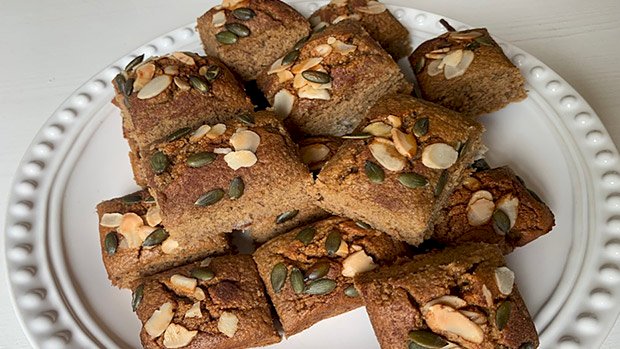
 These banana bread “bites” are foolproof. They’re also more physique-friendly than the banana bread you see at the counter at your local coffee shop. This recipe is designed to keep preparation and baking time to a minimum without sacrificing taste and texture. That’s not even the best news though. These are made with simple, healthy ingredients you’ll probably already have in your kitchen. They’re lower sugar, higher fiber, gluten free, and powered by Metabolic Drive® Protein. Ingredients 8 Ounces (220g) rolled oats 2.5 Scoops (75g) vanilla Metabolic Drive® Protein. (chocolate will also work) 1/3 Cup extra-virgin olive oil 1/2 Cup honey or maple syrup 2 Medium eggs 2 Large ripe bananas 1/3 Cup fat-free Greek yogurt 1 Teaspoon baking soda (not baking powder!) 1 Teaspoon vanilla extract 1/2 Teaspoon salt 1/2 Teaspoon ground cinnamon Optional: Half a cup of mix-ins like chopped nuts, chocolate chips, seeds, dried fruit, or fresh banana slices. Instructions Preheat the oven to 350 Fahrenheit (180 Celsius). Prepare a 12×8 baking tray with baking/parchment paper. A brownie tin with dividers can also come in useful here. In a blender or food processor, blitz the oats to a fine oat four. Alternatively, you can use pre-bought oat flour. Pour the oat flour in a large mixing bowl, then add in the rest of the dry ingredients: Metabolic Drive® Protein, baking soda, salt, and cinnamon. Mix together the wet ingredients using a blender or food processor: olive oil, honey, bananas, Greek yogurt, and vanilla extract. Pour the wet mix into the bowl with the dry ingredients and combine well. Fold in any extras such as chopped banana, nuts, chocolate chips, or whatever you fancy. Bear in mind, these will change the macros. Pour the mix into the tray. Add further toppings for extra social media likes and follows (essential!) Bake for approximately 20 minutes on the top shelf of the oven. Once done, a toothpick should come out clean or with a few moist crumbs. If you prefer to bake this in a loaf tin, then aim for 325 Fahrenheit (165 Celsius) for around 50 minutes. Allow to cool for at least 10 minutes in the tray before taking out to slice. Enjoy on its own or as a vehicle for your favorite toppings. Macros Per Square (Makes 18) Calories: 142 Carbs: 19 grams Fat: 6 grams Protein: 5 grams Fiber: 2
Origin: Tip: Make This Healthy Banana Bread
Tag: Healthy
Tip: Mix This Into Your Food to Get Super Healthy
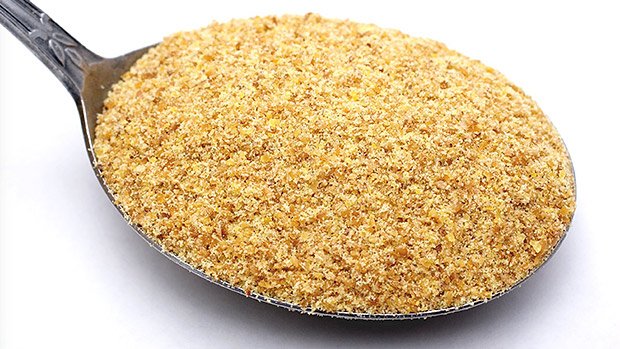 Flaxseed: The Comeback Poor old flaxseed was once a rising star in the nutritional world. It was touted as being the highest non-ocean source of omega-3 fatty acids, so if you didn’t like to eat mackerel, herring, or oysters every day, flaxseed was your girl. But then people found out that flaxseed came with an omega-3 catch: It didn’t actually contain DHA or EPA, the omega-3s the human body needs. Instead, it contained alpha linolenic acid, which the body has to convert to DHA and EPA. That might not sound like a big deal, but it turns out the conversion process is kind of a heavy enzymatic lift for the body, so much so that only 10 to 15% of the linolenic acid gets converted into DHA and EPA (the rest is burned as energy). So flaxseed fell out of favor. It was left to molder on the shelves at Whole Foods, passed over for the younger and prettier chia seeds, but don’t worry, flaxseed isn’t vindictive like your ex. She’ll take you back, because that’s just the kind of big-hearted seed she is. And while she may not have the omega-3 horsepower of her fishy friends, adding a daily teaspoon or two to your diet could improve your health considerably in the following categories: 1. Cardiovascular Disease Flaxseed, at least in animal studies, has proven to be effective in slowing the build-up of plaque induced by high-cholesterol and high-fat diets, in addition to lowering circulating levels of trans fats. As far as human trials, flaxseed has been shown to significantly decrease systolic and diastolic blood pressure, so much so that it led to a prediction of a 50% decrease in the incidence of heart attack and stroke. 2. Diabetes Dietary flaxseed reduced blood glucose in people with Type 2 diabetes, along with lowering blood sugar in people with prediabetes. 3. Cancer A review of ten human trials led to the conclusion that flaxseed reduced the rate of tumor growth in women with breast cancer. Cancers of the prostate, lung, colon, ovary, endometrium, liver, and cervix have also been inhibited by flaxseed. 4. Skin Health Women involved in a 12-week, randomized study found that dietary flaxseed oil led to a significant decrease in trans-epidermal water loss, skin roughness, and scaling, with an increase in skin hydration and fullness. 5. Gastrointestinal Health Because of its high fiber content, flaxseed has shown a lot of promise in giving relief from constipation, in addition to reducing symptoms of irritable bowel syndrome (IBS). It also appears that it’s fermented in the gut and leads to the formation of short-chain fatty acids, which may favorably alter the microbial microenvironment. Forms of Flaxseed While we generally think of flaxseed in its whole-seed form, it’s also available in ground form, as flaxseed oil, and as partially defatted flaxseed meal. More recently, a “milk” form has entered the market to compete with almond and oatmeal milk. The latter iteration is fast gaining popularity as it contains no cholesterol or lactose, is suitable for people with soy, nut, or gluten allergies, and is more healthful than almond milk. I prefer the ground form, though, as it adds a slightly nutty flavor to foods. Crushing the outer seed also makes both the ALA and the ecoisolariciresinol diglucoside (SDG), flax’s predominant antioxidant polyphenol, more bioavailable. However, crushing the seed through grinding also exposes these chemicals to oxidation, so ground flaxseed needs to be kept in the freezer to preserve its magic. What are the Naysayers Going to Point Out? Every nutrient or food seems to have its detractors, and flaxseed is no exception. They’ll tell you that the protease inhibitors, phytic acids, linantine, and cyanogenic glycosides found in flax make it impossible or unlikely that the body will be able to absorb and benefit from it. They’re right in theory, but wrong in practice, as several studies have reported no deleterious effects from these flax components. Other party poops will complain about the cyanide formed in the gut when flax is ingested, like cyanide ever killed anybody. Okay, it has, but this isn’t an issue here. Taking one to two teaspoons of flax will result in about 5-10 mg. of hydrogen cyanide being manufactured, but the human body can easily detoxify up to 100 mg. of cynanide a day. Just keep your flax consumption down to less than a kilogram a day (2.2 pounds), which I wouldn’t think would be an issue. Just the Flax, Ma’am To reap the benefits of flaxseed, add a teaspoon or two a day to anything that might benefit from its texture or taste, from oatmeal to salad or yogurt to soups. Start slow, though, as your gut may rebel against such a big dose of fiber if it isn’t used to
Origin: Tip: Mix This Into Your Food to Get Super Healthy
5 Foods For Better Erections & A Healthy Prostate
 You may be at an age where thoughts about the health of your prostate enter your mind once every never, but like a schnauzer nuzzling your pant leg for a Milk Bone, it’ll eventually get your attention one way or another. It may start to swell up as early as your forties, at which point you’ll say goodbye to sleeping the whole night through without getting up to go to the bathroom. But regardless of whether it gives you any problems or not, your doctor will at some point start to nag you about adding a PSA test to your blood work so he or she can begin to monitor it, in case, you know, the big C. The problem with that is, as I explained in The Truth About Prostate Testing, is that the PSA test itself is problematical. One task force concluded that you’re 120-240 times more likely to be misdiagnosed as having prostate cancer from a positive PSA test and 40-80 times more likely to get unnecessary surgery or radiation than you are of having your life saved (1). Another study concluded that, “Harms associated with PSA-based screening and subsequent diagnostic evaluations are frequent, and moderate in severity… Common major harms include over-diagnosis and overtreatment, including infection, blood loss requiring transfusion, pneumonia, erectile dysfunction, and incontinence (2).” Even the guy who discovered PSA, pathologist Richard J. Ablin, called the PSA test a “profit-driven public health disaster” because it’s led to approximately 30 million American men being tested every year at a cost of at least 3 billion dollars. Of course, these false positives, if they occur, are much more likely to happen when you’re an old or semi-old coot. Even so, it’d be a good idea to at least start taking a little bit of preemptive care of the organ when you’re still young. And for those who have already reached coot or semi-coot status, it’s imperative that you start giving your prostate a little love now, and by that I mean some sensible, prostate-friendly dietary strategies. Besides, most of the following foods also strengthen erections, so if prostate health isn’t a concern of yours, let carnal self-interests guide you. Prostate (and Erection) Supporting Foods Here are five foods that you should be eating on a regular basis, all of which have been found to be helpful in freezing or lowering PSA levels: 1 – Tomatoes Tomatoes contain lycopene, a powerful polyphenol that has, like all polyphenols, powerful anti-oxidant properties, but lycopene almost surely has some other potent, yet undiscovered mechanisms through which it lowers prostate cancer risk. We know that lycopene is more absorbable through cooked tomatoes and tomato products like pastes and sauces. We also know that eating them with a little fat, like olive oil, further helps absorption. But even raw tomatoes seem to help, as does pedestrian ketchup, regardless of whether it’s green, purple, or red tomato ketchup, although the dark red variety has been shown to contain the most lycopene. Try adding some sort of tomato product to your diet at least 4 to 5 times a week. Other than using a lot of ketchup, the easiest way to do this might be to just cut up a raw tomato into bite-size pieces, douse them with salt and olive oil, and munch on them as a pre-dinner appetizer. 2 – Carrots Chinese epidemiologists, after scanning ten studies, found a stunning correlation between eating carrots and the rate of prostate cancer (3). They found that the more often men ate carrots, and the greater the amount of carrots eaten (to a point), the less likely they were to get prostate cancer. They even came up with some definitive numbers: For every 10 grams of carrots consumed each day, men reduced their risk of developing prostate cancer by 5%. That means that if men had at least 50 grams of carrots a day, their chances of developing prostate cancer could be cut in half. The researchers think it has something to do with the large amount of cancer-fighting carotenoids (including lycopene) found in carrots. Sadly, doubling the amount of carrots eaten only goes so far. Increasing your carrot intake to 100 grams doesn’t drop the chances of getting prostate cancer to zero, so don’t suddenly think you figured out a way to cheat death. Anyhow, the average carrot weighs about 72 grams, and a cup of chopped carrots weighs around 122 grams, so eating 50 grams a day is about as easy a dietary task as you’ll ever get. 3 – Pomegranate Juice While the people who make POM Wonderful pomegranate juice have made claims about its efficacy in treating prostate cancer that were a little too bold for the FDA, there is some evidence that shows it can slow the rise of PSA levels in men who’ve been diagnosed with prostate cancer. Pomegranate may also juice up erections, so there’s that, too. Drink about 6 ounces of juice a day with or without meals. 4 – Green Tea This drink, made from the steeped leaves of camellia sinensis, allegedly benefits almost every organ system in the body. It
Origin: 5 Foods For Better Erections & A Healthy Prostate
 All about sport xlsport.club