
 What’s a “Pre-Workout” Anyway? It can mean a few things: A pure stimulant to jack you up before training, or a substance to get you mentally focused. A nutritional drink with the right carbs, proteins, and amino acids to fuel workout performance and subsequent recovery. A combination of one and two above. In short, pre-workout supplements are meant to enhance your performance in the gym. They can contain all sorts of ingredients that increase energy, improve blood flow to the muscles, or enhance focus. There are all sorts of formulations, but before you decide to buy a pre-workout supplement, you need to know the facts. Common Pre-Workout Ingredients Some pre-workout supplements are junk. The only legit way to know if a pre-workout is good or not is to simply look at the ingredient label. Marketers often lie, but the ingredients don’t (well, usually). Here are some common pre-workout ingredients: Beta Alanine Betaine Caffeine Creatine L-Citrulline L-Leucine Let’s go over the evidence and show what the clinical studies tell us about these ingredients. Beta Alanine Beta alanine is a naturally-occurring amino that’s responsible for giving you the “tingles” associated with some pre-workout formulations. Those tingles come from increased blood flow to the skin and muscles, which has an impact on performance. In one of the largest research papers published on beta alanine to date, researchers found that it could improve athletic performance by up to 10.49%. The research paper looked at dozens of clinical studies and found that simply taking two grams of beta alanine before a workout was enough to give users a boost in their athletic performance. According to researchers, beta alanine most likely works by increasing “intracellular pH buffering, as the result of increased muscle carnosine levels.” In layman’s terms, this means that beta alanine helps decrease cellular acidity levels from intense exercise. The bottom line is that beta alanine is a great ingredient to have in your pre-workouts, and it’s one of the best ingredients for getting a pump. Betaine Anhydrous This is a naturally-occurring chemical that’s produced by the body, but can also be found in foods such as spinach, beets, seafood, and wine. One study, cited by 70 other clinical research papers, found that supplementing with betaine anhydrous can improve muscle mass, endurance, and body composition. Specifically, the study found that the cross sectional area of the arms increased drastically when users supplemented with betaine. Bench press volume increased dramatically also, along with lean body mass. Caffeine Caffeine is, by far, the most common ingredient found in pre-workout supplements. The benefits of caffeine are very well studied. A meta-study of caffeine published in the British Journal of Sports found that caffeine consumption before a workout can help improve athletic performance by anywhere between 2% and 16%, which is a hell of a lot in the sports performance world. Creatine Creatine is naturally created in your body, and it’s essential to the production of adenosine triphosphate production (ATP). Your body needs ATP to create energy, and thankfully, creatine helps your body create more of the compound. One research paper, conducted at Baylor University and cited by 437 other clinical researchers, found that creatine drastically increased overall athletic performance: “Short-term creatine supplementation has been reported to improve maximal power/strength (5-15%), work performed during sets of maximal effort muscle contractions (5-15%), single-effort sprint performance (1-5%), and work performed during repetitive sprint performance (5-15%). Moreover, creatine supplementation during training has been reported to promote significantly greater gains in strength, fat free mass, and performance primarily of high intensity exercise tasks.” Creatine is especially known for its ability to help users gain muscle mass. Take a look at the following graph from the website Healthline: According to this graph, users can put on nearly twice as much muscle mass when training and taking creatine, as opposed to just training alone. L-Citrulline L-Citrulline, or citrulline malate, is known to enhance endurance and decrease muscle soreness both during and after your workouts. Citrulline also helps muscles recover faster. One study, conducted by the Department of Medicine at the University, found that supplementing with citrulline malate reduced muscle soreness by a whopping 40%, which is a huge deal because it allows athletes to get back into the gym a lot quicker. L-Leucine Among the amino acids, the one that has perhaps the biggest effect on regulating protein synthesis is leucine. It’s the main mTOR amplifier among amino acids. Although leucine is found in any whole protein source, some pre-workout blends add an extra amount of it for an added muscle protein synthesis punch. What’s the Best Pre-Workout Formula? So, what’s the best
Origin: Your Guide to Pre-Workout Supplements
Tag: Guide
Your Guide To Heavy-Light Training
 Look Great, Perform Even Better People that look and perform like muscular athletes usually do two things in the gym: They train to improve performance by driving up strength, speed, and conditioning. They use specific hypertrophy work to attack weak points and, ultimately, build a balanced physique. But the problem among most people is that they treat aesthetics (looking good) and athleticism (performing well) as mutually exclusive training goals. Fortunately, they don’t have to be – especially when you use and adjust the training methods of the late Olympic sprint coach, Charlie Francis. While Francis wasn’t programming workouts to help his athletes look better naked or bust a deadlift PR, his high-low principle is what kept them progressing without burning out. We can use the same idea to increase both performance and hypertrophy. Here’s an overview of what that looks like before I get into the details. Heavy-Light Training Overview It’s also called an “intensive-extensive” or a “high-low” training split. It bases workouts on the neurological demand of training. It places the highest-demand work on nonconsecutive days. The “heavy” or intensive days are when you do exercises that are more demanding on the central nervous system. For lifting, this can mean that the work is greater in complexity, has greater explosive demands, or requires max strength. The “light” or extensive training days are based on a higher volume and less weight. To keep the workout challenging without such extreme neural demands, this will mean creating more metabolic stress within your muscles. Four Benefits Of Heavy-Light Training 1. You get stronger and look better at the same time. This programming allows you to train muscles and movement patterns more frequently. For many lifters, this results in improved technique and, as a result, faster gains in strength compared to training a muscle or movement pattern once per week. You also get the bonus of consistency. Organizing workouts in a way that keeps you from digging yourself into a recovery hole will allow you to keep training and keep challenging your body without burning out. You can’t change your body composition or gain strength without consistent effort and that’s what this type of training guarantees. 2. You feel good and stay fresh from workout to workout. The reason this type of program works is because of its varying neurological demands, which keep systemic stress in check. You’ll be able to squat, deadlift, etc. more often, but you must vary the loading and volume to prevent excess fatigue. To understand it better you’ll need to know a couple things about the nervous system. Let’s cover that… Your nervous system has two parts: The central nervous system (CNS), composed of the brain and the spinal cord. The peripheral nervous system (PNS), all the remaining nerves and ganglia outside of the brain and spinal cord. Motor units consist of one motor neuron and all the muscle fibers it stimulates. When a signal is sent from the nervous system, it activates the motor unit. Then all the muscle fibers innervated by the motor unit are stimulated and contract. Each motor unit consists of a bundle of muscle fibers and a motor neuron. Small fibers are in small bundles and in control of smaller, finite movements. Large muscle fibers are in bigger bundles to generate maximum power and strength. So when you unrack a weight at 95% of your 1RM, your nervous system goes into overdrive, sending massive signals to your body to increase muscular recruitment. Motor neurons, and virtually every other nerve in your body, are constantly receiving information from other nerves. As a result, it becomes supercharged, recruiting more muscle fibers to execute the near-max squat, along with improving muscle fiber recruitment on subsequent exercises, making them more effective. That means lifting heavy all the time is best, right? Nope. If you lifted heavy every workout, your nervous system, joints, and tissues would start screaming at you before too long. That’s where this programming shines. It limits the overall stress you’re placing on your body by adjusting the demands on your CNS by varying load, speed, and intent of exercises. 3. You improve your technique. With heavy-light training you do each movement pattern more often than most training splits. When it comes to maximizing your performance, the more often you do a movement correctly, the more proficient you’ll become. Once a movement becomes more naturally and technically precise, your strength numbers can improve, driving up work capacity, which will lead to improvements in your physique. Remember when you first started deadlifting and you had to learn the mechanics of the movement? While you were deadlifting you’d think things like, “Don’t round your back and pull the slack out of the bar.” But with lots of repetition using good technique, you get the movement down pat. Reaching this state of “unconscious competence” in
Origin: Your Guide To Heavy-Light Training
Worthy vs. Worthless Vitamins: Your Guide
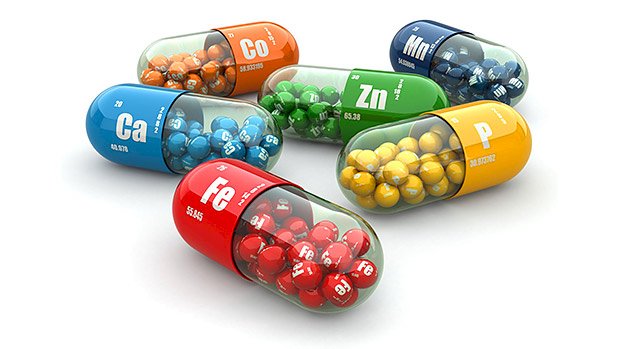 The 30-billion dollar a year vitamin industry is suffering from existential angst right now. Their collective stomachs are all aflutter because of the publication of a new study in the Annals of Internal Medicine that says vitamin or mineral supplements offer no discernible benefits; that they don’t reduce the risk of death from practically anything and they might, in fact, harm people. (1) Now all those supplement companies are wondering if they should instead start selling roofing materials or something else useful. I’ve got no solace to give. Unfortunately for the vitamin seller, yeah, most vitamins and mineral supplements are a waste of time. Some could actually harm you. And yeah, you’re often better off getting some vitamins, minerals, and other classes of supplements from whole foods. But there are notable exceptions. In those cases, it’s unrealistic or even plain daffy to rely on whole foods to fulfill all your supplement needs. Let’s take a look at some of the most common vitamins, minerals, and supplements and see if we can make some sense of it. Multivitamins – Forget About ‘Em I don’t think there’s a single reputable study that shows they’re effective, but we don’t need studies to come to this conclusion. There are just too many problems with multivitamins: The one-size-fits-all philosophy. The human need for the 24 vitamins identified by science is based on a bell curve and while it may hold true for a 150-pound municipal worker named Phil who lives in Akron, Ohio, they might not hold true for sweaty athletes, bigger (or smaller) people, or you. Giving the same vitamin combo to every man or woman alive is like making only one size of underwear for everybody – fine for some, but uncomfortable, unworkable, and in the case of vitamin-caused skin reactions, even unsightly for others. So many possible interactions. Vitamins A, D, E, and K are fat-soluble and, as such, are best taken with food. Iron shouldn’t be ingested with coffee or tea because the tannins in them interfere with absorption. Likewise, iron blocks the absorption of zinc and copper. Vitamins E and A can gang up on K. Cherry picking and not seeing the big picture. Maybe, just maybe, these nutrients aren’t supposed to be isolated and taken by themselves. Maybe they need to be taken in whole-food form to be truly effective. Maybe the nutrients need to work in conjunction with some (or maybe even all) of the micronutrients and phytochemicals intrinsic to the whole food source for them to work. Calcium – Forget About It Taking too much calcium (more than about 1,000 mg. a day) can be a huge problem. At worst, the calcium starts to accumulate on the linings of your heart and arteries so that they look like the tiled walls of a White Castle restaurant. The excess calcium might also form kidney stones or, on the less severe end of the spectrum, cause constipation. Calcium is one example where people really would be better off getting this crucial mineral from whole food. Here’s the thing: When you get too much calcium from foods (milk-based protein powders, dairy products), a fail-safe system kicks in and the intestines start limiting further absorption of the mineral. Not so with calcium supplements. They have no fail-safe system. The more you take, the more ends up in your urine, blood, kidneys, heart, and arteries. Vitamin D – Take It! The study from the Annals of Internal Medicine found that when people who weren’t deficient in vitamin D took vitamin D supplements, they had higher risks of death from all causes, particularly cancer. It’s important to realize that this study was based on people accurately remembering and reporting what they had eaten over a period of several years, so it’s easy to be skeptical, particularly when several other studies have shown that people who took vitamin D supplements lived longer, on average, than those that didn’t take it. Sure, ideally, we’d all lie naked in the sun like harp seals for at least 20 minutes a day so we could make our own vitamin D, but that just isn’t plausible for everybody, particularly if you live anywhere north of Memphis, Tennessee (about 2500 miles north of the equator) or, for that matter, anywhere south of Santiago, Chile. (2) The sun just doesn’t get high enough during winter months in those areas for all those vitamin-D generating UVB wavelengths to benefit us. Never mind persistent clouds. The Chippewa tribe of Michigan had an old saying: “If the shadow of a groundhog is longer than it is tall, its body isn’t making vitamin D.” Alright, the Chippewa didn’t say that, but if you apply the “longer than tall shadow” thing to yourself, the advice pretty much rings true. If you can’t regularly spend a few minutes in the sun, or you’re a mole-like gym person who rarely see any lights that aren’t fluorescent, you should probably take vitamin D year-round. Vitamin B3 (niacin) – It Depends If you’re over 40 or 50, or if you’ve got cholesterol issues, think about
Origin: Worthy vs. Worthless Vitamins: Your Guide
 All about sport xlsport.club