
 Progress After 40 for Advanced Lifters How much muscle can a natural, advanced lifter build in his 40s? Well, I’d love to tell you that an advanced lifter in his 40s can keep building tons of muscle… in part because I’m over 40 too. But it’d be a lie. It’s not even an age thing (although that plays a role), but a matter of training experience and adaptation. To me, “advanced lifter” means at least 15 years of hard training. That means you’ve gained quite a few pounds of muscle already. The human body has a limited capacity to build and keep muscle naturally. This is largely dependent on our genetics. The ACTN3 genotype, myostatin levels, body structure, and many more factors come into play. We don’t fully understand all the factors yet, but the fact is that the average human male can add 30-40 pounds of muscle above what his normal adult weight would be over the course of his training career. Of course, using anabolics will bypass many of the limiting factors that prevent a natural from growing to Mr. Olympia size. I’m also talking about pure muscle weight. With those 30-40 pounds you’d likely add some extra pounds in the form of glycogen, water, and collagen. Not to mention that you could add some fat and still look great. You might add 50-60 pounds of scale weight over your career, but only 30-40 pounds of that weight would be muscle. The closer you are to reaching those 30-40 pounds, the slower and harder your gains will be. So let’s take a 40-year old man who’s at a normal adult weight who would be around 175 pounds without lifting. And let’s say, after 15 years of training, he’s now 210 pounds with a similar or better body fat percentage. By lifting for all those years, he added around 30-35 pounds of muscle to his frame. Realistically, he can now hope to add 5-10 pounds of muscle at most. If a second 40-year-old man gained only 10 pounds over the course of his training career (because he hasn’t been training hard and smart consistently), he has the potential to gain more muscle than the first guy if he trains the right way. Why is the more dedicated and experienced lifter going to have a harder time building a lot of new muscle? First because of adaptation. His body is well adapted to lifting. It’s very hard at that point for training to represent a stress. If the training is no longer a stress, the body won’t change because extra muscle isn’t needed to do the work. If you want to increase the training stress you need to: Lift more weight or… Do more volume or… Push your sets harder But there’s the catch-22. All three of these things can jack up cortisol and might stop progression. Furthermore, you can’t always push them up. There will be a point where it’s hard to add 5 pounds per 6-8 weeks on a lift. And if you already train to failure or close to it, there isn’t much room to increase there either. And adding volume – especially in older lifters – is one of the best ways to halt progress. It’s also not very practical for the real world. A normal human being with a job and family can’t spend 2-3 hours in the gym every day. An advanced lifter needs an extremely high training stress to keep progressing, but doing just that might actually do more harm than good. Also, as you get older your physiology changes, and not for the best when it comes to building muscle: Testosterone levels tend to decrease. Growth hormone and IGF-1 can decrease. Stem cells decrease due to a lower IGF-1 level. Stem cells are required to repair muscle damage. Fewer stem cells means that you don’t repair and build muscle as easily. Your body likely has more chronic systemic inflammation. This can significantly decrease your capacity to build muscle (among other things) in part because it reduces insulin sensitivity. You lose nerve cells and have atrophy in others. This will decrease strength. And if strength goes down, it can be harder to maintain, much less add, more muscle tissue. The muscle tissue is adapted to a certain level of loading. If your nerves no longer allow you to produce as much force, the lower level of muscle tension produced when training might not be enough to fully stimulate growth. Finally, as you’re getting older, life tends to take over. If you have a full-time job and a family, you have a lot more stress. That can also impact your capacity to progress. Now The Good News Don’t stop trying to improve because it’s possible to surprise yourself and achieve more than you thought. I got into my best shape at 41 and I’m still able to improve a bit. Here are a few guidelines that tend to help older lifters keep making progress: 1. Don’t always train hard. I know this sounds counterintuitive, but periods of maintenance training can help re-sensitize your body to training. Call it “strategic deconditioning” if you want. For 3-5 weeks, do the minimum necessary to avoid losing muscle. If you’re a dedicated lifter, that’s going to be much less than you think. Do less volume, don’t push your sets
Origin: Tip: Realistic Gains After 40
Tag: Gains:
Tip: The Stretch That Accelerates Gains
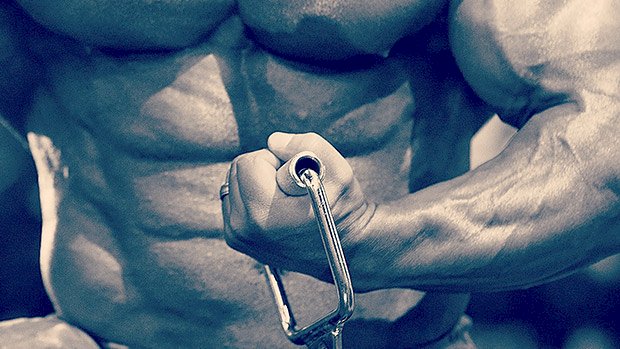 Can stretching help you build muscle faster? Yes, if you use a certain type of stretching. What type? Weighted stretching. You’ve probably read about how loaded stretching increases activation of the anabolic mTor pathway, increases your active range of motion, and creates an occlusion effect that promotes increased blood flow and delivery of nutrients to muscle cells. So let’s take a look at one more benefit. Pre-Set Antagonist Weighted Stretching Most of the benefits of weighted stretching focus on the target muscle. For example, performing a bottom-range dumbbell press hold at the end of a chest workout. But what if we were to stretch the pecs right before doing a set of, say, rear-delt rows? What you get is increased active range of motion of your row, along with higher output and better quality muscle contractions. How does this work? It’s based on the agonist-antagonist relationship: For a muscle to shorten to the desired range, its antagonist must be able to lengthen to accommodate. Taking the example of the row, the pec minor has to lengthen to allow the rear delts to shorten. The rear delts are the agonist; the pecs are the antagonist. When the agonist shortens and contracts, the antagonist lengthens and relaxes. This is a slight oversimplification, given that the antagonist doesn’t always relax, at least not fully, but you get the idea. The exercise combos below have been thoroughly tested and work very well: 6 Ways to Apply This Method Clavicular Pec Weighted Stretch – Rear Delt Row Cue:Actively pull or “row” into the stretched position. Tip:If you’re not confident with a heavier loaded hold, do a wide flye stretch with a submaximal load. Sternocostal Pec Stretch – Lat Focused Pulldown Cue:Cue the elbows towards the base of the spine to keep them tight during the stretch. Tip:If you can knock out dips comfortably, you could also hold an isometric stretch at the bottom of a dip. Mid-Trap and Rhomboid Stretch – Pec Dec Flye Cue:Think about getting your shoulder blades to your pecs. Tip:Use a long rope in a seated cable machine or sit on the floor. Keeping the lumbar as neutral as possible, allow the T-spine to flex while simultaneously protracting as much as you can. Couch Stretch – Hamstring Curl Cue:Actively drive the stretching knee through the floor. Tip:If you want to intensify the stretch, reach the arm on the same side overhead and side-bend away from the stretching leg. Want to take it up a notch again? Do it under a squat rack and use a band to further increase the lengthening of the hip flexors. Weighted Biceps Stretch – Triceps Extension Cue:Think of pushing your elbow through your elbow “pit,” fully flexing the triceps. Tip:Set up the bench at an angle where you can get your elbows behind your torso without the shoulders rounding forward. A 40-50% incline is usually best. Anterior Tibialis Stretch – Calf Raise Cue:Simultaneously push your toes away from you while pulling your heels towards you. Think about creating a straight line with the top of your feet and shin bones. Tip:If you have bum knees, then an option is to use a rear-foot elevated split squat with active plantar flexion. Putting These Stretches Into Action These stretches are performed in one of two ways: A constant isometric contraction in the lengthened position of the antagonist with a moderate load. Multiple smaller holds of 3-5 seconds with submaximal loads. Use either method and allow 20-30 seconds between the weighted stretch and performing your working set. You should be able to shorten the target muscle to a significantly greater degree than normal, thus increasing your ability to maximally contract the muscle. Increased stimulus equals increased
Origin: Tip: The Stretch That Accelerates Gains
More Gains in Less Time: 5 Pro Tips
 Building muscle and strength is closely tied to work output per unit of time – the more work you do in a week/month/year, the better results you’ll get. So, let’s review some proven time management and productivity strategies and apply them to weight training. Here are five methods, along with practical suggestions about how to apply them to your training routine. 1 – You Can’t Have Everything on the Menu Whenever I’m asked why I never use a certain exercise or training method, it’s rarely because that exercise or method doesn’t have value. Instead, it’s because I only have so much time and energy, so I’ve got to pick my battles. Pro Tip Although it’s not possible to utilize all beneficial methods simultaneously, you can incorporate a lot more of them by performing them sequentially. Here are a few quick examples: Let’s say you train legs twice per week and you’ve identified 16 exercises that work really well for you. If you wanted to run all 16 exercises within a weekly split, you’d need to do 8 exercises per session. Obviously, this isn’t practical. The solution is to run exercises 1-8 during one 6-week training block, followed by exercises 9-16 on the second 6-week cycle. Although it might seem like you’ll lose ground on an exercise that you haven’t done for 6 weeks, the exercise-specific strength you gain on one cycle will typically be enough to maintain or even improve your strength on the exercises that were put on the back burner. Rather than trying to improve strength and muscle mass simultaneously (within the same training cycle), train these adaptations sequentially, again using 6-week cycles: For 6 weeks use sets of between 6-12 reps, followed by a 6-week cycle where you train in the 3-5 rep bracket. This way, the muscle you gain on the first cycle will support and potentiate greater strength when you return to low-rep sets. Rather than trying to build muscle and lose body fat simultaneously – a physiological stunt that tends to work only for fat beginners taking PEDs – focus on these contradictory goals sequentially. First, you’ll do a “building” cycle where you slowly gain weight (mostly muscle) by lifting hard and elevating your calories. Later, you slowly lose body weight (mostly fat) by lifting hard and reducing your calories. Rinse and repeat. 2 – Do the Important Stuff First If you run your own business and today’s agenda includes a potentially lucrative new client consult and refilling the stapler, you’d tackle that first item when your energy is highest. The stapler could be refilled any time, regardless of your energy levels. Similarly, if your top training goal is bigger arms, you’d ideally train biceps and triceps first in the week or first in a workout. You might even train them by themselves as a separate workout. Additionally, you might consider putting your best muscle groups on maintenance mode by using the minimum amount of training volume required to maintain, but not advance, their current development. Pro Tip Do your most injury-prone exercises last in the workout, rather than first. Here’s why: When you do your most “iffy” exercises last, you’ll have less energy, and therefore you’re less likely to harm yourself further by doing them. Second, your most bitchy joints are usually related to your most well-developed body parts. Let’s say that you’ve got great pecs, but also painful shoulders, from benching. Given that your pecs are now your best-developed muscle, you can afford to back-burner that exercise, allowing your shoulders to heal up. 3 – Batching: Don’t Wash Just One Pair of Socks Batching is a very effective productivity tool that involves completing all similar tasks in a single block of time rather than performing different types of tasks in the same sitting. As Tim Ferris explains, “You wouldn’t do your laundry every time you have a new pair of dirty socks… you wait for a certain critical mass of dirty laundry to accumulate and then you do your laundry.” This is because the time and labor required to do a full load of laundry is the same as you’d need to wash a single pair of socks. Also, switching back and forth between similar tasks requires more time and focus than focusing on a single task. As you consider the best type of training split, think in terms of batching. Although I explained my love of whole-body training splits in The Single Most Effective Workout Split, I can’t dismiss one powerful benefit of bro splits, upper-lower splits, and push-pull-legs splits: they allow you to focus on related tasks during each workout. This type of focus allows you to minimize warm-up time since the warm-up sets you do for your first exercise tends to keep you warm for later exercises as well. You’re also likely to work with greater intensity since you won’t need to “save yourself’ for other body parts later in the workout. Pro Tip Busy trainers often use a related tactic known as “training in the margins.” Rather than completing traditional 60-90 minute
Origin: More Gains in Less Time: 5 Pro Tips
Natural Gains: The Proven Training Strategies
 Lead Photo Credit: Brad Neathery What’s the Best Training Program? Is it the workout plan used by the biggest and leanest pro bodybuilder? The strongest lifter with the most powerlifting records? Probably not. Their programs work for their (often drugged) bodies, not necessarily your (probably natural) body. Instead of getting lost searching for the perfect program, you need to adopt a set of strategies and methods that have been proven to work for everyone. You can then take this template of strategies and customize it by choosing the best exercises for your body and your goals. First, let’s review the strategies: Strategy 1 – Train Frequently Natural lifters often make two common mistakes. First, they try to specialize in building muscle too early. They never really build a base of strength to support more advanced, bodybuilding-style training. Second, they change exercises too often. This can even lead to program hopping: jumping from one plan to the next before they’ve even given the first plan a chance to work. This is a monkey-mind mentality. Increasing your workout or movement frequency – lifting 4-5 days a week – is a foundational strategy for building both strength and mass. Here’s what it’ll do for you: Increase your motor learning Motor learning is basically familiarizing yourself with a particular exercise until that movement becomes natural. It’s simple really. The more often you perform a movement, the more familiar your muscle memory becomes in performing that movement. Better motor learning will yield better long-term progress because you’ll be able to move more weight, improve muscle fiber recruitment, and create more mechanical tension directly in your muscles. Increase your protein synthesis The more often you train a muscle the more protein synthesis you’ll trigger. Protein synthesis is the fundamental biological process by which cells build their specific proteins – and your muscles grow through this process. High movement frequency is the key that unlocks the protein synthesis process for days on end. Studies have shown that protein synthesis responds to resistance training and lasts about 24-48 hours afterward. That’s one of the main reasons why training a muscle group frequently (verses once a week or so on “chest day”) is a crucial aspect of making strength and size gains – because it keeps protein synthesis at its peak. The more often you train the muscle the more consistent protein synthesis will be. Also, protein synthesis keeps you in an anabolic (muscle building) state and keeps your testosterone levels elevated. As a result, you can expect to make consistent gains in size and strength. Strategy 2 – Use Micro-Adjustments The smallest changes to your technique can be the key to busting through training plateaus. Here’s why: Micro-adjustments reduce injuries You can’t make regular gains if you’re always tweaking your shoulder or pulling a muscle. And that’s where the smallest adjustments can make the biggest difference – keeping you away from the injuries. By making small changes in bar position, foot placement, or grip, you can create enough variation to prevent overuse injuries (and boredom), without completely altering your workout. This works with just about every exercise. Here’s an example of a micro-adjustment: Your lower back is acting up when you squat. Instead of hurting yourself or tossing the squat out of your workout, make a small adjustment to where you position the bar on your back. Go from high-bar to low-bar squats to take some stress off your lower back and even decrease the range of motion in the movement. Micro-adjustments drive progress Sustainable systems are the key to gains. So when you hit a small bump in the road with your training, whether it’s an injury or simply feeling less motivated, don’t upend the entire system. A pothole on Gains Street doesn’t require ripping up the entire program. Just repair the pothole. Stay consistent. Push yourself and make small adjustments when necessary. Strategy 3 – Use Lower Volume, Heavy Strength Work Your goal when you walk into the gym is simple: get stronger. If getting stronger isn’t your goal, you’ll miss out on muscle gains as well as the obvious strength gains. Every muscle building and fat-burning technique is limited if you don’t start with a great strength base. Think of it like this: The person who trains to “build muscle” will do okay for himself and make modest gains for a while. But the person who trains to “get stronger first, then build muscle second” will make better gains and KEEP making them. Once you build your base of strength then other conditions, like improving your mind-muscle connection, become increasingly important. But with all other factors being equal, the stronger guy is going to be bigger. So increase the weight on the bar, even if it means lowering the amount of reps you do. Now, if you’re going to build the most strength and size, you need to put an emphasis on the
Origin: Natural Gains: The Proven Training Strategies
Unlock Natural Gains: Neuro Type 1
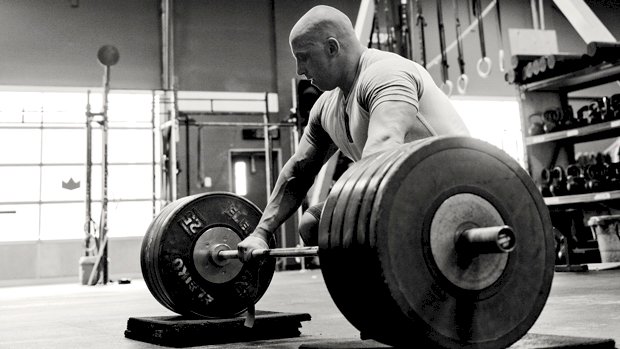 Part 1 – Nonstop Natural Gains: The Neuro Typing System Part 2 – Unlock Natural Gains: Neuro Type 1 Part 3 – Double Your Natural Gains: Neuro Type 2 Part 4 – Never-Ending Natural Gains: Neuro Type 3 Part 5 – The Neuro Type Workouts Part 1 of this series introduces you to neurological typing. In short, your baseline levels of three neurotransmitters (dopamine, serotonin and norepinephrine) strongly influence your personality and dictate your how you should train and eat for best results. Your personality profile is largely determined by three key neurotransmitters: dopamine, serotonin, and norepinephrine. Your baseline levels of these chemical messengers are determined by genetics. The three basic personality types are: Type 1: Novelty seeker Type 2: Reward dependant Type 3: Harm avoider Each has its positives and its negatives. If you adopt a training style that doesn’t match your psychological and neurological type, you simply won’t get results from it, no matter how well-designed the program is. In this series, we’ll go over each type and what type of training, nutrition and supplement plan is best for each. To determine your type, review Nonstop Natural Gains: The Neuro Typing System. Below we’ll cover the novelty seeker. This type has a low dopamine level, causing him or her to seek out new things to stimulate it. You could call them “adrenaline junkies.” Optimal Training for Type 1: Novelty Seekers 1 – Training Preparation Novelty seekers have less dopamine than serotonin. They must increase dopamine prior to starting the actual workout to have good motivation and work capacity. If they don’t, performance will suffer in the first part of the workout. For that reason, it’s very important for them to focus on activation drills prior to starting their workouts: jumps, throws, high speed movements, etc. The focus needs to be on speed – moving violently but without creating a lot of fatigue. Example: 3 sets of 5 vertical jumps. Or striking a tire with a sledgehammer for 3 sets of 12 seconds. When it comes to the main heavy lift of the day, they should ramp up to the working weight while doing gradually heavier sets and focus on compensatory acceleration (CAT). That’s where you accelerate the weight as fast as possible during the concentric or lifting phase of the rep. This acceleration will increase force production and will amp up the nervous system by increasing the release of dopamine. A ramp should start at around 60% of your max. Do around 5 ramp-up sets before doing the work sets. These ramp-up sets should only be done for the same number of reps that you plan to do on your work sets, or lower. You want to amp up the nervous system without creating fatigue. A ramp could look like this: Ramp-Up Sets: Set 0: bar x 10 Set 1: 165 x 3 Set 2: 195 x 3 Set 3: 215 x 3 Set 4: 235 x 3 Set 5: 255 x 3 Note: Use maximum concentric acceleration on sets 1-5. Work Sets: Set 6: 275 x 5 Set 7: 275 x 5 Set 8: 275 x 5 Set 9: 275 x 5 Remember that dopamine and adrenaline are connected. Dopamine is used to produce norepinephrine which is used to produce epinephrine/adrenaline. So anything that amps you up will raise dopamine levels. Just be careful not to overdo it. This type has a low baseline dopamine level and can produce spurts of it, but they crash if they have to produce too much. When that happens during a workout, their willpower and motivation goes down the drain. 2 – Training Variation Type 1 lifters need a lot of variation in their training. They’re your typical “I can’t follow a program” guys. They always want to try something new. If you put them on programs like 5/3/1 or The Power Look (programs based around doing the same stuff over and over) they’ll get de-motivated and won’t get results. We often say that we need to stick to a program to make progress, but in their case it’s not necessarily true. Remember, whatever helps you train the hardest will give you the best results. On a static program, novelty seekers get bored easily and will lose focus if the training is too repetitive. In their case, a lack of sufficient variety is actually a stressor. This neuro type… Can stay on a program for 2 weeks. Does better on multiple types of stimulation in a week. Does better when different types of stimulation are included within a workout. Cybernetic periodization (freedom within a structure) is a great approach for them. This refers to pre-planning the first big lift of the workout but selecting the assistance work based on the performance of the main lift. Surprisingly, a lot of powerlifters are novelty seekers. The Westside Barbell system is the perfect example. They vary the main lift every one to two weeks, they do three types of stimulation per week (four if you include conditioning), and they use cybernetic periodization by selecting their daily assistance exercises based on how they performed on the main lift. Oddly enough, CrossFit is also a perfect example, especially the shorter 8-15
Origin: Unlock Natural Gains: Neuro Type 1
 All about sport xlsport.club