
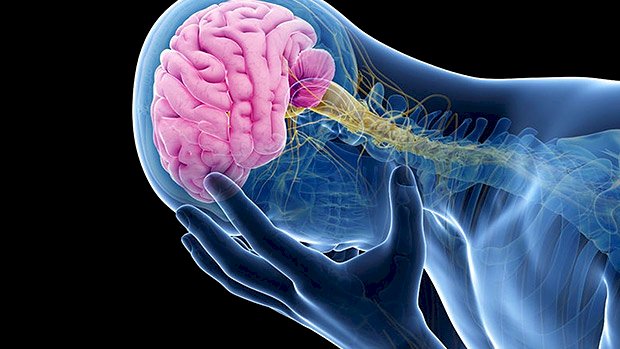
 Is She Crazy? Nah, She Just Needs a Steak. Harvard Health Publishing estimates that 1 in 10 adult women in America are taking antidepressants. They’re the pumpkin spice lattes of the drug world – women just love them. Or at least their docs just love prescribing them. Maybe women are more prone to depression. Or maybe men are just too macho to admit they’re having mental health issues. Or maybe (just maybe) women are being prescribed powerful and often unpredictable drugs to combat what could just be a common nutritional deficiency. For example, could some depressive symptoms be “treated” with a couple of juicy sirloin steaks every week? The findings of a new study out of Australia point in that direction. The Study Researchers at Deakin University had themselves a little theory. They believed red meat might be associated with mental health problems, so they conducted a little study to prove it. Boy, were they surprised. They gathered up 1000 Aussie Sheilas (women-folk) and evaluated their mental health and red meat consumption. It’s was all very thorough and utterly boring, so let’s skip to the their conclusion: red meat HALVES the risk of depression in women. The Important Details The women who didn’t eat red meat were twice as likely to have a diagnosed depressive or anxiety disorder. Now, only a few were full-blown vegetarians and some of them didn’t even avoid red meat; they just didn’t eat very much of it. Most of the study participants ate plenty of chicken, fish, pork, and turkey. Now, remember, this was an Australian study. And Down Under the recommended intake of red meat (beef and lamb) is three to four small servings a week. They used that guideline to establish low, normal, and high red meat intake. Another consideration: Most Australian beef and lamb is grass-fed. It’s certainly not the same stuff you’re getting in your Taco Hell Burrito Gordito. The researchers (surprising even themselves) ended up recommending a few servings of lean red meat a week to stave off depression and anxiety. They guessed that the sad, anxious women just weren’t getting enough omega-3 fatty acids, which are important for mental health. On the flip side, they also suggested that eating too much red meat (more than the Aussie standard of 3-4 servings a week) may also lead to mental health issues, though they didn’t explain why. Wait! Did They Miss Something? It’s true that the anti-inflammatory actions of omega-3s may help relieve depression. Grass-fed red meat contains more good-for-ya fatty acids than grain-fed red meat. But is something else going on here? I think so. What the beef-denying women were also missing was IRON. The symptoms of low iron overlap remarkably with some of the common symptoms of depression. Regardless of whether it’s inadequate iron or low omega-3s, it’s clear that women need to be eating red meat, up to a few times per week. Just make some of that grass-fed if you can. If that’s not possible, go the supplement route for both iron and omega-3s. Look, depression can have many causes, and we still don’t understand everything about it. But let’s make damn sure we take care of the nutritional aspects first before we start popping questionable prescription
Origin: Tip: The Food That Fights Depression
Tag: Food
This Stuff is Better Than Whole Food
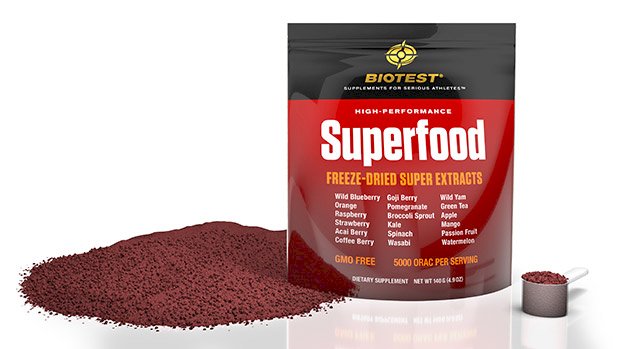 Nutritional Virtue Signaling You know what chafes me? It’s the mutts who are always tweeting about how they don’t need supplements and that we should instead get all our nutrition from “whole foods.” They think all “processed” things are bad. I’m guessing they also wear underpants made from the natural, un-dyed wool shorn of virgin yaks and their houses are constructed of organic hemp panels glued together with woodpecker spit. They’re paragons of wholesome naturalness. Yeah right. The “whole foods only” cliché is nutritional virtue signaling at its worst, a sad attempt to prove that the people who say it are more nutritionally pious than their peers, but let me smack them across the face with a cold, line-caught herring of truth: While there’s no shortage of crappy supplements and god-awful processed foods, some supplements are great and some processed foods are actually better than whole foods. Biotest’s Superfood is a great example. Granted, it’s only minimally processed – an array of 18 strategically chosen freeze-dried fruits and vegetables – but the whole-food absolutists still paint it with a horsehair brush as a processed food. Fine. Stick with your labels, but I’m here to tell you that Superfood is one food that every human being should be taking to improve their health, longevity, and, to those for who it matters, athletic ability. What’s In Superfood? Take a look at the ingredients: Berries Wild Blueberry (1.5% anthocyanin) Orange (40% vitamin C) Raspberry (20% ellagic acid, 0.7% anthocyanins) Strawberry Acai Berry (1.5% total phenolic acids, 1% anthocyanins) Coffee Berry (50% total phenolic acids) Goji Berry Pomegranate (40% ellagic acid) Vegetables Broccoli Sprout (5000 ppm sulforaphane) Kale Spinach (700 ppm lutein) Wasabi (20% glucosinolates) Wild Yam (20% diosgenin) Green Tea (95% total polyphenols, 65% total catechins, 40% EGCG) Other Fruits Apple Mango Passion fruit Watermelon (1000 ppm lycopene) What’s So Great About Superfood? One of the reasons I’m such a big fan of Superfood is because I’m high on the science of polyphenols, which are plant-derived, bioactive compounds that can repress inflammation by inhibiting damage from free radicals and interacting with the immune system, thereby conveying such health benefits as lowered blood pressure, lessened endothelial dysfunction, reduced cholesterol, lowered risk of type 2 diabetes, lowered risk of cancer, and even improved recovery from training. You know how nearly every other article you read says you should eat, I don’t know, yams or some other vegetable or fruit for this or that benefit? Despite what most novice nutritionists think, it’s not because they contain riboflavin or some other vitamin or mineral. Don’t get me wrong, those vitamins and minerals are super important, but the real magic of vegetables and fruits are in the polyphenols they contain and Superfood is possibly the richest, most diverse, and most condensed source of polyphenols on the planet. There are two really broad classes of these polyphenols – flavonoids and nonflavonoids. The flavonoid group can further be broken down into six dietary groups: Flavones:Found in abundance in citrus fruits, celery, and parsley. Flavonols:Rich sources include broccoli, blueberries, and kale. Flavanones:These are found in citrus fruit and mint, among other places. Isoflavones:Commonly found in vegetables and fruits in general. Flavanols:Apples, grapes, teas, and cocoa are rich sources. Anthocyanidins:Found in abundance in blueberries, blackberries, and eggplant. The non-flavonoid group can also be broken down into three different classes: Stilbenes:The well-known compound resveratrol is a stilbene. It and its cousins are commonly found in red wines, apples, pears, plums, peaches, and other foods. Phenolic Acids:These are found in coffee, teas, cherries, blueberries, and a bunch of other fruits. Lignans:Rich sources include kale, broccoli, berries, and whole grains. All of these classes of polyphenols are present in Superfood. The Biological Effects of Polyphenols Polyphenols are most famous for being general antioxidants. Got a free radical spillage on aisle 3? Send in the polyphenols to mop things up. We measure how potent an antioxidant is by something called the ORAC scale, which is a standardized test used by the USDA to measure the Total Antioxidant Potency of foods and nutritional supplements. The term stands for “Oxygen Radical Absorbance Capacity,” and the measurement is expressed as ORAC units per 100 grams of a given compound. For instance, the USDA determined an “average serving of fruits and vegetables” has an ORAC rating of between 400 and 500. But all fruits and vegetables aren’t created equal. Some, like coffee berry, acai berry, and goji berry (all of which are in Superfood) are off the chart on the ORAC scale. So just what is the ORAC rating of just one serving (two scoops) of Superfood? 5,315. That means just one teaspoon of Superfood has the
Origin: This Stuff is Better Than Whole Food
Tip: The Food That Intensifies Male Orgasms
 Women with higher levels of Vitamin D3 enjoy sex more than women who are low in Vitamin D3. They experience more desire and more intense orgasms. (Insert your own joke here about how D makes women want “the D.” I will not be doing that. That’s tacky.) But what about dudes? Can we do anything to have better glute-clenching orgasms? Yep. According to a new study, we can eat half a cup of walnuts, hazelnuts, and almonds every day. The Study Researchers gathered up 83 men between the ages of 18 and 35 who were eating the typical Western diet. The men were divided into two groups for this randomized, controlled, parallel feeding trial. Group 1, the control group, didn’t change anything about their diets. Group 2 consumed 60 grams of mixed nuts every day for 14 weeks. In a nutshell (see what I did there?) the men who ate nuts every day reported improved orgasmic function and sexual desire. Although the researchers tested peripheral levels of nitric oxide (NO) and E-selectin (surrogated markers of erectile endothelial function), there were no significant differences between the two groups. So basically, the researchers weren’t exactly sure why eating nuts helped with sexual function, but it certainly did. How to Use This Info Sixty grams of nuts is about half a cup. That’s pretty easy to slip into your diet. Just remember to eat mainly walnuts, hazelnuts, and almonds, and try to buy them raw, not cooked in junky oils. (More info: Nuts – You’re Eating Them
Origin: Tip: The Food That Intensifies Male Orgasms
Tip: Mix This Into Your Food to Get Super Healthy
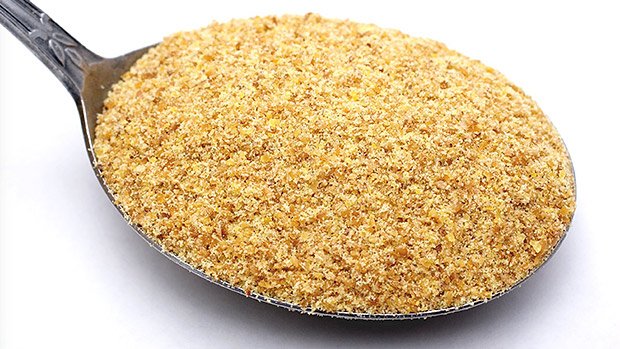 Flaxseed: The Comeback Poor old flaxseed was once a rising star in the nutritional world. It was touted as being the highest non-ocean source of omega-3 fatty acids, so if you didn’t like to eat mackerel, herring, or oysters every day, flaxseed was your girl. But then people found out that flaxseed came with an omega-3 catch: It didn’t actually contain DHA or EPA, the omega-3s the human body needs. Instead, it contained alpha linolenic acid, which the body has to convert to DHA and EPA. That might not sound like a big deal, but it turns out the conversion process is kind of a heavy enzymatic lift for the body, so much so that only 10 to 15% of the linolenic acid gets converted into DHA and EPA (the rest is burned as energy). So flaxseed fell out of favor. It was left to molder on the shelves at Whole Foods, passed over for the younger and prettier chia seeds, but don’t worry, flaxseed isn’t vindictive like your ex. She’ll take you back, because that’s just the kind of big-hearted seed she is. And while she may not have the omega-3 horsepower of her fishy friends, adding a daily teaspoon or two to your diet could improve your health considerably in the following categories: 1. Cardiovascular Disease Flaxseed, at least in animal studies, has proven to be effective in slowing the build-up of plaque induced by high-cholesterol and high-fat diets, in addition to lowering circulating levels of trans fats. As far as human trials, flaxseed has been shown to significantly decrease systolic and diastolic blood pressure, so much so that it led to a prediction of a 50% decrease in the incidence of heart attack and stroke. 2. Diabetes Dietary flaxseed reduced blood glucose in people with Type 2 diabetes, along with lowering blood sugar in people with prediabetes. 3. Cancer A review of ten human trials led to the conclusion that flaxseed reduced the rate of tumor growth in women with breast cancer. Cancers of the prostate, lung, colon, ovary, endometrium, liver, and cervix have also been inhibited by flaxseed. 4. Skin Health Women involved in a 12-week, randomized study found that dietary flaxseed oil led to a significant decrease in trans-epidermal water loss, skin roughness, and scaling, with an increase in skin hydration and fullness. 5. Gastrointestinal Health Because of its high fiber content, flaxseed has shown a lot of promise in giving relief from constipation, in addition to reducing symptoms of irritable bowel syndrome (IBS). It also appears that it’s fermented in the gut and leads to the formation of short-chain fatty acids, which may favorably alter the microbial microenvironment. Forms of Flaxseed While we generally think of flaxseed in its whole-seed form, it’s also available in ground form, as flaxseed oil, and as partially defatted flaxseed meal. More recently, a “milk” form has entered the market to compete with almond and oatmeal milk. The latter iteration is fast gaining popularity as it contains no cholesterol or lactose, is suitable for people with soy, nut, or gluten allergies, and is more healthful than almond milk. I prefer the ground form, though, as it adds a slightly nutty flavor to foods. Crushing the outer seed also makes both the ALA and the ecoisolariciresinol diglucoside (SDG), flax’s predominant antioxidant polyphenol, more bioavailable. However, crushing the seed through grinding also exposes these chemicals to oxidation, so ground flaxseed needs to be kept in the freezer to preserve its magic. What are the Naysayers Going to Point Out? Every nutrient or food seems to have its detractors, and flaxseed is no exception. They’ll tell you that the protease inhibitors, phytic acids, linantine, and cyanogenic glycosides found in flax make it impossible or unlikely that the body will be able to absorb and benefit from it. They’re right in theory, but wrong in practice, as several studies have reported no deleterious effects from these flax components. Other party poops will complain about the cyanide formed in the gut when flax is ingested, like cyanide ever killed anybody. Okay, it has, but this isn’t an issue here. Taking one to two teaspoons of flax will result in about 5-10 mg. of hydrogen cyanide being manufactured, but the human body can easily detoxify up to 100 mg. of cynanide a day. Just keep your flax consumption down to less than a kilogram a day (2.2 pounds), which I wouldn’t think would be an issue. Just the Flax, Ma’am To reap the benefits of flaxseed, add a teaspoon or two a day to anything that might benefit from its texture or taste, from oatmeal to salad or yogurt to soups. Start slow, though, as your gut may rebel against such a big dose of fiber if it isn’t used to
Origin: Tip: Mix This Into Your Food to Get Super Healthy
Where Food Fails Us
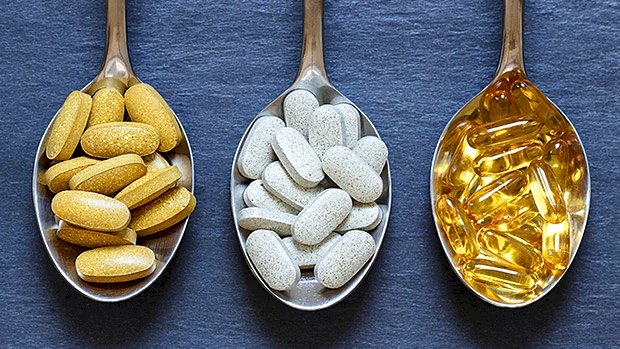 You know how important calories and macros are to health and performance, but what about all the little micronutrients that rarely get talked about? Is it even important to worry about that crap if you’re pounding a metric ass-load of protein, have your nutrient timing nailed down, and are smashing an adequate amount of fruits, veggies, and healthy fats? It might be. It probably is. Actually, yes, it is. And the major plot hole in the dietary landscape is this: You literally can’t cover your micronutrient needs through food alone. Poor Soil, Poor Food I’ve been guilty of telling people to get all of their micronutrient needs through their diet. And in theory, that’s how it should work. But there are some legitimate issues with this. The food we have access to today isn’t as nutritionally robust as it was decades ago. When the USDA compared nutrient values from the fruits and vegetables from the 1950’s to those available in the late 1990’s, they found significant declines in protein, vitamin C, calcium, phosphorus, iron, and vitamin B12 (1). It’s also been postulated that there have been significant declines in zinc, magnesium, vitamin B6 and vitamin E, but since those weren’t even studied in the 1950’s, there’s no way to know exactly how much they declined. Highly intensive farming has caused a depletion in soil nutrients, which means the crops aren’t as nutrient dense as they were generations ago. Combine that with new breeds of crops that grow larger, have better climate adaptability, and are more pest resistant in nutrient-depleted soil and, well, there you go. So what’s an athlete to do about being micronutrient deficient? And is shoring up your micronutrient gaps really that important? Sorry, But You’re Nutritionally Screwed Even if you’re buying grass-fed, wild caught, cage-free everything, you’re still probably not going to be covering all of the micronutrient bases, especially if you’re a truly hard-charging athlete or lifter. And since you’re probably NOT buying all grass-fed, wild caught, cage-free everything, then you’re almost assuredly micronutrient deficient in some areas, and probably more than you think. Over a decade ago, the Journal of the International Society of Sports Nutrition scanned seventy diets from both active and sedentary people and all of the diets fell short in meeting even the lowly recommendations of the RDA (2). Now consider the case of an athlete that’s actually on a hypo-caloric diet. He or she will be eating less volume of foods that are already lacking in micronutrients. In effect, they’re actually doubling down on creating micronutrient deficiencies. Let’s pretend for a moment that you could get food from 1959 that was far more nutrient dense than the food you have access to today. Even if that was a viable option, you’d still need to choose from a vast array of food selections to cover your bases. That would be very difficult for someone who’s trying to lose fat and also trying to meet their macro needs while also staying in a hypo-caloric state. Round and round we go. The point is, relying on foods to eliminate micronutrient shortcomings isn’t really viable and certainly isn’t going to be efficient. In short, this is an area where supplementation really wins over food. True story, boss. Just Take a Multivitamin? I honestly can’t believe people still take multivitamins. Without citing a zillion studies that show multivitamins really offer up zero health or performance benefits, can we just use some common sense here? Do you really believe one horse pill is going to magically shore up all of your micro deficiencies? Taking high quality vitamins and minerals separately could be an answer. That would also require that you get blood work done to see where you’re lacking and then figuring out an amount to fix your particular deficiencies. But who are we kidding? You’re not going to do that. The next best and easiest course of action is to just assume you’re deficient in the following nutrients. Most of us are. Vitamin D Virtually everyone is lacking in this hormone. Yeah, I wrote “hormone” because by definition, that’s what Vitamin D really is. And there are a lot of reasons why the great majority of people are deficient in it. Most foods don’t contain very much of it, and everyone is scared as shit of the sun. Apparently, they think if you’re out in it for more than a few nanoseconds, your skin bursts into a carpet of melanoma. That’s truly unfortunate because, well, it’s not true and second, your body needs sunlight in order to synthesize Vitamin D. That’s kind of important because your body uses it to regulate your immune system and produce insulin. Ideally, you’ll get both regular sunlight exposure (at least 15-20 minutes a day) and Vitamin D through the diet, but even if you do, you’ll still most likely need to supplement with it as well. Go with at least 1000 IU every day (3,4), probably more in the winter. Iron Note that I’m not talking about full-blown
Origin: Where Food Fails Us
 All about sport xlsport.club