
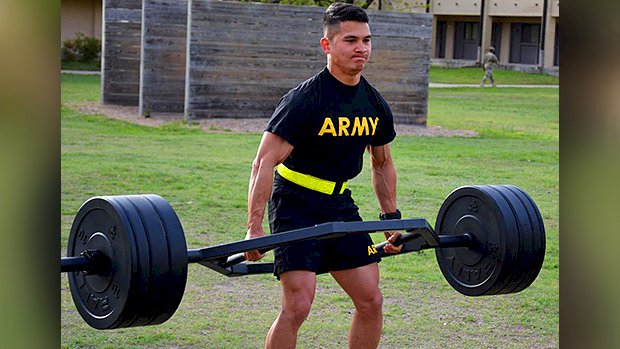
 APFT vs. ACFT Since the early 1980s, the United States Army has been measuring the American soldier’s physical readiness with the Army Physical Fitness Test (APFT). This test consists of a two-mile run for time, maximum number of push-ups completed in two minutes, and maximum number of sit-ups completed in two minutes. The APFT is conducted during the soldier’s initial entry/basic training and then at their unit every six months. The soldiers do this test collectively, usually at the platoon level (that’s a team of about 30-50 soldiers). Diagnostic testing may also occur during deployments to combat zones and other countries, but these don’t involve testing “for record.” The trouble is, the modern soldier needs to train and develop multiple aspects of fitness and performance, and the APFT doesn’t reflect that. To be frank, the APFT doesn’t reflect much of anything, but beginning in October, 2020, soldiers will instead be required to take the new Army Combat Fitness Test (ACFT). This new test is a huge step in the right direction. The old APFT may have been logistically simpler to implement, but it lacked the testing of critical physical skills that the new ACFT measures: power, absolute strength, and anaerobic conditioning. Also, unlike the old APFT, the ACFT is gender neutral – there won’t be different minimum standards for females or males. Understanding specifically what the ACFT is testing will help soldiers understand how to train for it. And if you’re not planning on enlisting, it would still be a “fun” way to test your readiness. The New Test The ACFT has six events. The ACFT has six events. Let’s use the requirements for soldiers in “heavy” physically demanding units or jobs, which may be more interesting to T Nation readers and lifters. To max the test, you have to score 100. To minimally pass the test, you have to score 70. Here’s how to train for them: 1 – Three-Rep Maximum Trap-Bar Deadlift: 2 attempts to establish a 3RM To score 100:340 pounds x 3 To score 70:180 pounds x 3 This test is a display of your absolute strength. Bodyweight circuit training isn’t going to cut it for this one! Being absolutely strong is a practical thing – picking up heavy artillery shells, throwing an M2 .50 caliber machine gun over your shoulder, or climbing over a wall while wearing 100 pounds of kit and body armor isn’t going to happen without some raw strength. You’re going to need to spend time in the gym lifting weights… heavy weights. 2 – Standing Power Throw: 10-pound medicine ball thrown over and behind the head To score 100:13.5 meters To score 70:8.5 meters Throwing a grenade, jumping over a ditch, tossing an ammo can to the gunner, kicking down a door – all of this requires the ability to generate force with high velocities. You need to be explosive and violent. Sharpening your reflexes and focusing on plyometrics and a few weighted movements are going to be your best bet – things like different varieties of jumps, throws, slams, swings, and Olympic lifts. 3 – Hand-Release Push-Ups: as many as possible in two minutes To score 100:70 To score 70:30 If the soldier already has a level of general, absolute strength, then this event will be a test of muscular endurance. However, when a soldier is extremely weak, this becomes a test of their strength, and soldiers need to train accordingly. 4 – Sprint, Drag, Carry: Sprint 25 meters, drag a 90-pound sled 25 meters, side shuffle 50 meters, and carry two 40-pound kettlebells 25 meters, all for time To score 100:1:40 min. To score 70:2:09 min. This is a new form of conditioning for the Army, yet it’s the most representative of what soldiers might see on a battlefield: sprinting to cover, dragging your buddy to safety, carrying ammunition 50 meters to the front. This test requires anaerobic conditioning, so being a good distance runner isn’t going to cut it. You need lots of muscle and lots of stored glycogen. Development of this type of conditioning requires a combination of “resisted” training like farmers walks, yoke carries, sled drags/pushes, and buddy/log carries, along with “unresisted” training like various sprints and bear crawls. 5 – Leg Tuck: Hanging From Pull-Up Bar (knees to elbows) To score 100:20 reps To score 70:5 reps Like the hand-release push-up, the leg tuck is going to be an endurance test for some and a strength test for others. Generally speaking, the smaller guys are going to see this as endurance training whereas the big boys will have to look at this as part of their strength training. 6 – Two-Mile Run for Time To score 100:12:45 min. To score 70:18:00 min. Everyone who hates to run pulls the old “I’ll never need to run for two miles in combat” card, but they’re missing the point. This test evaluates aerobic capacity: overheat and seize up, or run cool and efficient under high stress and nasty hot weather. I’ve seen plenty of big boys drop out as heat casualties while their weaker, yet
Origin: Can YOU Pass the New Army Fitness Test?
Tag: Fitness
How to be a Social Media Fitness Star
 The online world is like a digital proxy of the real world. With their anonymity secured behind a keyboard, people have the luxury of creating and promoting an idealized version of themselves – and not always with the best motives. On the internet, even the most timid among us suddenly grow a pair big enough to impress Conor McGregor. Paradoxically, spending too much time on social media platforms like Instagram, Facebook, and Twitter can transform otherwise well-adjusted people into neurotic shells of their former selves. The fitness genre is particularly emblematic of these perils. We’re all proud of our fitness accomplishments (and should be), but many of us are overly-invested with our gym heroics. These pitfalls have real consequences, so here’s a comprehensive guide to fun and rewarding online fitness behavior. Like all tools, the internet can help or hurt your personal cause – it just requires the proper application. Let’s dig in. When and How to Give People Advice Ah, we’re all full of invaluable advice, aren’t we? Especially when our anonymity hides the fact that the person we’re giving advice to is often more accomplished than we are. Giving lifting or nutrition advice to strangers is much more likely to be an unproductive experience than a positive one, for both giver and receiver. Here are a few tips on shifting the odds of success in your favor: Identify your motive. Are you really trying to help that dude who somehow, despite his limited knowledge, is far stronger and more jacked than you are? Or are you initiating a debate for the purpose of proving your superior knowledge and perhaps making yourself feel superior? If it’s for the former, consider contacting that person privately. Start the exchange with a sincere compliment of some sort, and then ask if he/she might be open to a suggestion. If the answer is yes, establish a bit of rapport by explaining that you found this particular tip helpful yourself, so you just wanted to spread the love, so to speak. This will make the recipient much more open to your advice. If instead you’re just engaging in a pissing contest, well, just don’t. It’ll piss them off and it’ll piss you off – it’s just lose-lose. If you’ve got pent-up frustrations in life that lead you to trolling fitness enthusiasts for stress-relief purposes, I’d suggest that you attend to your bad job, sad marriage, or whatever it might be that you’re dealing with offline. In the words of a certain polarizing professor and psychologist: “Before you fix the world, try fixing yourself.” Don’t spam. Another common motive for trying to “help” other lifters online is the attempt to sell coaching services. I’ll have more to say on this later, but for now let’s just say that people really hate spammers, so don’t be that guy. How to Receive Advice From Others Inevitably, whenever you choose to post a physique pic or a lifting video, you’ll get feedback ranging from supportive and positive praise to vile, heartless criticism. Your response to such feedback should be hinged on the intent of the replier. Your response to positive or helpful comments is easy – simply thank them for their kind words. If, however, someone is obviously trolling you, there are a handful of potentially productive actions you might consider: Direct your attention inward. Even if a troll’s reply to you is nasty and designed to piss you off, it still might have merit. So step back for a second and see if maybe he has a point. If so, sincerely thank him for the advice and move on. Ignore the offending post or reply. Trolls thrive off of attention, so don’t give them any. Block the troll. Yes, that’s a thing. Just block them and you’ll never see that person or his posts again. Ever. Problem solved! Leave a pithy reply. I don’t usually recommend this tack, but I know many of you can’t help yourselves, so if you must reply, do it well. A few of my favorites include: “Ordinarily I’d be happy to explain this to you, but right now I don’t have the time or the crayons.” “It’s pretty hilarious watching you try to fit your entire vocabulary into one sentence.” “Thanks for sharing. We’re all refreshed and challenged by your unique point of view.” Again, while I usually recommend against feeding the trolls, if you do choose to do so, at least do your best to be entertaining for the sake of anyone who happens to come across the thread. How to Avoid Being Offended There’s never a reason to be offended. I’ve never been offended, not even once. Here’s why: If someone comments that I’m old and have shitty calves, it doesn’t exactly make my day, but guess what? He’s right! Yes, he’s an asshole, but it won’t offend me. Conversely, if someone else tells me that I have no qualifications to express my opinion about fitness-related matters, he’s also being an asshole, but in this case he’s simply wrong, so again, I’m not offended. Another point of friction is when people are confronted with compelling evidence against a position,
Origin: How to be a Social Media Fitness Star
Tip: Your Fitness Tracker Sucks
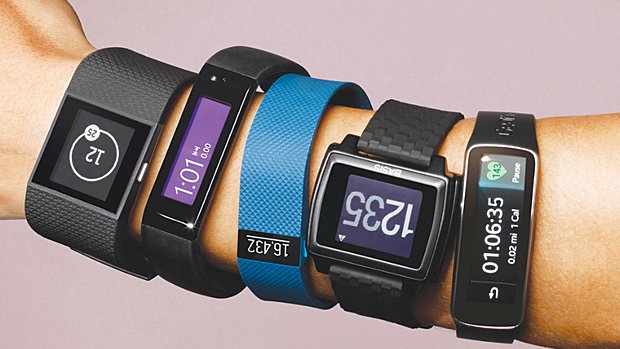 Since fitness trackers and smart watches have become popular, several bloggers have attempted to test their accuracy. Most have noticed the same thing: these suckers just aren’t very accurate. When the bloggers wore several of the gadgets at once, the devices all gave them different readings when it came to heart rate, steps taken, calories burned and other metrics. Not good. These were just regular folks doing the testing, but now science has stepped up to really put these devices through their paces when it comes to two important metrics: heart rate and energy expenditure (calories burned.) The Study In a Stanford University Medical Center study, researchers recruited 60 volunteers to test out several devices in a lab setting. The subjects wore up to four devices at the same time and did various activities such as walking, running, cycling and even just sitting. They were also hooked up to “gold standard” lab instruments that measure heart rate and energy expenditure. The idea was to compare the mass market gadgets to the super-accurate lab instruments. The Results For heart rate, most of the fitness trackers did okay. The Apple Watch had the lowest error rate (2%) while the Samsung Gear S2 had the highest error rate (6.8%). But that’s close enough for non-medical purposes. The problem was in the “calories burned” or energy expenditure readings. They all sucked: No device achieved an error rate in energy expenditure below 20%. The most “accurate” device was off by an average of 27%. The least accurate was off by 93%. The error rate was worse for males and those with darker skin tones. The Apple Watch had the most favorable overall error profile while the PulseOn had the least favorable overall error profile. Here’s an overview: Apple Watch: Not as shitty Basis Peak: Still kinda shitty Fitbit Surge: Pretty darn shitty Microsoft Band: Super shitty PulseOn: The shittiest How to Use This Info Whatever you do, don’t adjust your training or diet based solely on what a wearable fitness gadget is telling you. When it comes to “calories burned” measurements, they’re grossly inaccurate. The algorithms stink and what you’re basically getting is a broad, educated guess. But if you’re absolutely determined to buy one, the Apple Watch looks like the best bet based on this study. Or you could use that inexpensive, highly-accurate fitness assessment tool you already own: a
Origin: Tip: Your Fitness Tracker Sucks
Tip: 4 Minutes to Fitness
 Who among us doesn’t remember dad getting up to go to work in the morning and getting down on the floor before he even took a leak to grunt out some watch-out-for-that-mousetrap push-ups followed by some awkward calisthenics? Sure! The old man had to stay in shape so he could power walk into the office and nail the Willoughby account! Personally, I don’t remember Dad doing anything like that at all, but I did see dads on TV doing this kind of thing, so I have to assume the practice was at least partially based on reality. Oddly enough, it looks like these dads might have been onto something, as a new study has shown that a brief but brutal 4-minute workout, composed entirely of calisthenics, was about as effective a cardio protocol as classic sprint training or high intensity interval training. What They Did Researchers herded up 55 healthy men who were all around 23 years old and split them into three groups for a 16-week study: One group performed high-intensity interval training where they performed 8 20-second bouts of sprinting at 130% of V02 max, each bout interspersed with 10-seconds of slow treadmill walking. A second group ran on the treadmill at 90-95% of VT2 (ventilatory threshold) for 30 minutes straight. The third group did 4 minutes of max effort exercises consisting of burpees, mountain climbers, squat thrusts (done while holding 3 kg. dumbbells), and jumping jacks. Each exercise was done balls-out for 20 seconds with each 20-second bout interspersed with 10-second rest periods. After completing all four exercises, they repeated the entire sequence one more time for a total of 4 minutes of exercise. What They Found After 16 weeks, all groups significantly improved their VO2 max, time to exhaustion (Tmax), VT2, velocity associated with VT2, and time to reach VT2. While the sprint training increased these parameters slightly more than the 4-minute protocol, it could simply be because the group that sprinted on the treadmill was much more easily able to gauge their intensity and their speed, while those doing the calisthenics had to rely on their own un-measured definition of “maximum effort.” Despite the small disparity in results between the sprint group, the steady-state exercise group, and the 4-minute group, the researchers concluded: “Our results demonstrate that HIIT-WB (the 4-minute protocol) can be as effective as traditional HIIT (the sprint workouts) while also being time-efficient compared to MICT (the 30-minute running protocol) to improve health-related outcomes after 16 weeks of training.” What This Means to You If you hate running, don’t have a treadmill in your 100 square foot Japanese micro-apartment, or simply enjoy exercising in your home in your underwear, you might successfully employ a four-minute, mostly bodyweight exercise protocol like the one used in this study. There’s probably no need go get hung up on the specific exercises, though. For instance, if you dislike any of the exercises used in this study, you can easily swap them out for ones you prefer. For instance, the video below shows T Nation contributor Nick Tumminello doing the 4-minute protocol using speed squats, burpees, mountain climbers, and speed skips. Nick doesn’t use 3-kg. dumbbells for any of the exercise, but you could easily do them with the speed squats to more accurately duplicate the protocol used in the
Origin: Tip: 4 Minutes to Fitness
 All about sport xlsport.club