
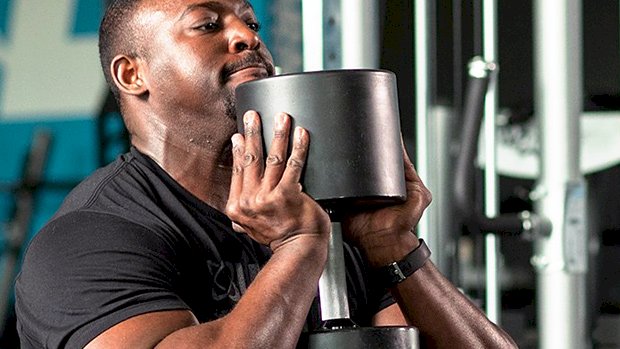
 The term “finisher” might bring back memories of Mortal Kombat and Sub Zero freezing opponents solid before punching their heads into tiny ice cubes, but in reality it’s just a short, intense effort at the end of a training session. Finishers are often framed as a great way to build work capacity and torch fat. While that’s not untrue, one of the lesser known benefits of well-designed finishers are their ability to help build muscle. A strategically designed finisher will provide all three of the mechanisms for muscular hypertrophy: mechanical tension, metabolic stress, and muscular damage to particular muscle groups. People often make two big mistakes when doing finishers: They don’t use exercises with enough loading. This basically leads to a glorified step aerobics session. Or… The movements chosen are too complex or loaded too heavily. The quality goes out the window as the heart rate goes up. When too much fatigue sets in, reps get ugly, range of motion decreases, and things go south. You can avoid those drawbacks with these four finishers. They’re made up of movements that are low on the complexity side, but pack a big punch since you’ll likely be able to handle substantial weights for an extended duration. This systemic stress will challenge your lungs and give you the stimulus needed to build more muscle. 1. Goblet Squat + Goblet Carry + Goblet Squat Grab a heavy dumbbell or kettlebell and knock out 10 goblet squats. Without putting it down, walk with it in the goblet position for 40-60 yards, then finish with 10 more goblet squats. Let your heart stop beating out of your chest, rinse, and repeat 2-3 times. Not only does this punish the legs, but with each round taking 75-90 seconds, the upper back and abs get torched from the duration of the hold. Not a challenge? Increase the weight on the next round. 2. Dips + Goblet Squat Countdown Using a dumbbell that’s half your bodyweight, do 10 goblet squats, then 10 bodyweight dips. Then 9 of each, then 8, and continue down to 1. Rest when needed but keep it to a minimum. When you start a set, try to complete all of the required reps. Holding the dumbbell in the goblet position becomes increasingly challenging as the fatigue in the triceps accumulates from the dips. This adds up to a lot of work (55 reps each of dips and goblet squats) in a relatively short amount of time, with constant stress on the triceps throughout, making it a solid choice if getting bigger arms is on your to-do list. 3. Goblet Squat + Hammer Fist Battling Ropes Set a timer for 10 minutes. Grab a dumbbell or kettlebell that you can hit 12-15 goblet squats with. Do 10 goblet squats and 20 seconds of hard rope waves. Work to get as many rounds in as possible. Your biceps, legs, lungs, and forearms will all be equally smoked. Be sure to keep the speed on the ropes going on each round. As fatigue sets in, you’re going to want to slow it down and just keep it moving. Take rest as necessary so you can keep the output level cranked up. 4. Chin-Up + Goblet Squat Countdown Using a dumbbell that’s half your bodyweight, do 10 goblet squats, then 10 chin-ups. Then 9 of each, then 8, and continue down to 1. Again, rest when needed but keep it to a minimum. When you start a set, try to complete all of the required reps. Use Finishers Wisely While finishers are a great exclamation point at the end of a workout, be frugal in how often you use them. Remember, this is a finisher. It’s done after the meat and potatoes of your strength training, so don’t get carried away with the “more is better” approach. When you push the envelope, you need extra recovery or you’re likely to see your performance impacted negatively in subsequent workouts. Think about adding one of these finishers in your last workout before a few days off, at the end of a training block, or at the very least, put an extra emphasis on sleep and recovery after doing one of
Origin: Tip: 1 Dumbbell, 4 Nasty Finishers
Tag: Finishers
Pump and Grunt – New Biceps Finishers
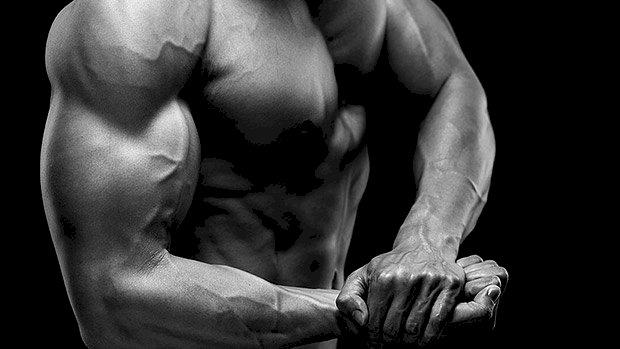 When it comes to biceps training, we all love our 21’s, our drop sets, running the rack, and various other schemes that add metabolic stress or act as time-efficient finishers. They can get stale, though, so let’s breathe a little life into your workouts with these intelligent and basic (yet not boring) biceps protocols. 1 – Biceps Rotisseries Let’s “slow cook” your biceps, as well as the brachioradialis, via a lot of rotation and change in hand position. The protocol: Dumbbell Reverse Curl:6-8 reps with an estimated 12-rep max weight Dumbbell Hammer Curl:6-8 reps (same weight) Dumbbell Curl:6-8 reps (same weight) Dumbbell Cheat Curl:6-8 reps (same weight) 90-Degree Alternating Pronation/Supination:6-8 reps (after last cheat rep) 90-Degree Isometric Hold:Hold for as long as possible (after last supination and pronation) You’ll use the same weight throughout and there’s no rest between the variations. Rest 90-120 seconds and repeat. You’ll likely have to drop down a set of ‘bells to do a second series. You’ll need to leave your ego at the door. This protocol is straight-up metabolic stress, skin-splitting pump work! If you need to use 15-20 pound dumbbells, then so be it. Now isn’t the time to try and impress the Gym Shark girl next to you with huge weights. The weight selection on that first exercise is key. You want to have several reps in reserve. If you go too heavy on the reverse curl and get too close to failure, you won’t last and won’t hit the rep targets on the movements that follow. Trust me, by the third or fourth movement, it’ll get plenty hard. A quick note on the cheat curl – you want to hip hinge just a little and “pop” up powerfully. Pause the contraction and then do a very slow and focused negative. 2 – EZ Does Its This is a straightforward mechanical advantage drop set. We start with the theoretical weakest exercise and then manipulate leverage and strength curve to pour on more volume and extend the set. The protocol: Bent Over EZ-Bar Spider(ish) Curl:8-12 reps (to failure) Strict EZ-Bar Curl with Shoulder Flexion:Max reps (same weight) Strict EZ-Bar Curl:Max reps (same weight) Cheat EZ-Bar Curl:Max reps (same weight) Do the first variation using weight you can lift for 8-12 reps. From there out, go for maximum reps, always using the same weight. Rest 90-120 seconds and repeat. You’ll likely need to reduce the weight a bit to do a second round. Again, this is metabolic stress work – you won’t need a lot of load and you should only do 2 sets, tops. Apply the same guidelines on the cheat curl as laid out above: a little hip hinge and pop up forcefully. Pause the contraction and use a very controlled negative. Here’s an alternative version: This one uses an EZ-bar cable attachment and a low pulley. 3 – Rise Ups This is another straightforward and effective mechanical advantage drop set. With this one, you’ll start face down but spin around on the subsequent set, finally ending up standing, hitting both the long and short heads of the biceps hard in the process: Dumbbell Spider Curl:8-12 reps (to failure) Incline Dumbbell Curl:Max reps (same weight, same incline) Strict Standing Dumbbell Curl:Max reps (same weight) Standing Cheat Dumbbell Curl:Max reps (same weight) 90-Degree Isometric Hold:Max time (after last cheat rep) Do the first variation using a weight you can lift for 8-12 reps. Then go for maximum reps on the exercise variations that follow. The same guidelines apply here in terms of rest periods, sets, and load reduction. How and Where to Use These Regardless of your training split, use these biceps variations mid to late workout – after your heavier, straight-set progressive overload work. There are no hard and fast rules here. Remember, this is metabolic stress and muscle damage work. These aren’t protocols where you’re chasing weight or personal records. It’s all about tension, volume, and mind-muscle connection. Go after mechanical tension, maximizing load, and progression earlier in the workout using other exercises. These are not entrees; they’re side dishes. In Defense of Finishers You can certainly thrive by hammering basic stuff over and over for years, but isn’t training supposed to be fun? And who doesn’t like to pump up their arms? The protocols presented here are a way to make your training “flexibly structured,” quench your bro thirst, and implement some smart variety. There’s nothing wrong with leaving the gym with a pump and a smile and chomping at the bit to come back for
Origin: Pump and Grunt – New Biceps Finishers
 All about sport xlsport.club