
 Hit this quick workout for a super pump at the end of your training sessions. Yes, it’s short, but aim for controlled reps with minimal rest. The routine consists of these three simple exercises: 1. TRX Bicep Curl Lean back away from the anchor point and have your elbows about shoulder height, palms facing up. Keep your shoulders back and down and curl from the elbow. Just pull to beside your head without letting the elbows drop. Avoid lifting from the shoulders and pulling behind yourself. Keep these slow and controlled and really focus on isolating the biceps while maintaining posture. 2. TRX Row Turn your palms so they face each other. Fully lock out the arms and think about engaging the lats before you pull. When you reach your chest to the handles, squeeze your shoulder blades together as much as you can before slowly returning to the start position. 3. The Push-Up Move to the floor. Place your hands shoulder distance apart, keep your belly tight, and push your feet into the ground. Fully extend the elbows at the top – no half reps. If you need to regress to your knees that would be better to maintain a full range of motion. The Rep Scheme 5 TRX bicep curls 8 TRX rows 10 push-ups Do 5 full rounds If don’t struggle with the exercises and your form stays strong throughout, then aim to go unbroken (no resting) between all five rounds. If you’re fairly new and your arms burn out quickly, take 30 seconds of rest between rounds. Remember the aim is quality movement with good tension. If you feel like you’re able to relax too much at the top of the rows or curls then walk your feet forward to put yourself more toward horizontal. This workout should take you around five minutes. If you can do it in 3 or 4 minutes, you’ve performed the exercises too
Origin: Tip: The 5-Minute Upper Body Finisher
Tag: Finisher
Tip: The Back Finisher You’ve Never Tried
 It’s always a good idea to start your back workouts with the big, basic exercises (rows, chin-ups, pull-ups, lat pulldowns, etc.) and chase rep and/or weight personal records. So, what could your back workouts be missing? Metabolic stress. There are lots of ways to get it in, so try leveling up your lat game with this finisher. All you’ll need is one set. 12 Reps, 3 Exercises, 1 Long Hold If you have access to a dual-adjustable pulley or freedom-type trainer, give this one a shot. You’re going to hold the reps constant from exercise to exercise while also adding a bit of weight at each transition. Do the following: Straight-Arm Pulldown:12 reps (use about a 15-rep estimated max weight) Split Stance High Row:12 reps (add a plate beyond what you used in the first exercise) Half-Kneeling Lat Pulldown:12-plus reps (add a plate beyond what you used in the second exercise) Half-Kneeling Lat Pulldown ISO Hold:max time Take about 10 seconds or so to transition between exercises, recover just a bit and change the weight, with the exception of the last exercise where you’ll take 20 seconds to recover from the previous movement. Try
Origin: Tip: The Back Finisher You’ve Never Tried
Tip: The 50-Rep Leg Day Finisher
 High-rep finisher sets have their place in bodybuilding. And they’re not just for building mental toughness. They also create metabolic stress (the pump) which is one of the primary drivers of muscle growth. Just finish off your workout with one 50-rep set. Use short rest-pauses if needed toward the end: do as many reps as possible, then take 10 deep breaths and go again. Repeat until all 50 reps are completed. Or you can break this into two 25-rep sets with only 30 seconds between the two sets, but the goal is to get all 50 in one shot eventually. Here’s Chelsie Lysenchuk using goblet squats as a leg day finisher: Find a dumbbell that’s a quarter of your bodyweight. So if you weigh 200 pounds, that’d be a 50-pound dumbbell or kettlebell. Now do goblet squats for 50 reps. Remember, this can be a “broken” set. You can stand and catch your breath as needed, but you can’t put the dumbbell down or sit. If you’re truly sadistic, do these in pump/piston rep style where you don’t lock out. Those will hurt a lot and increase the metabolites a hell of a lot faster than doing full-range reps with a lot of breaks during the
Origin: Tip: The 50-Rep Leg Day Finisher
Tip: Do This Finisher, Pack on Muscle
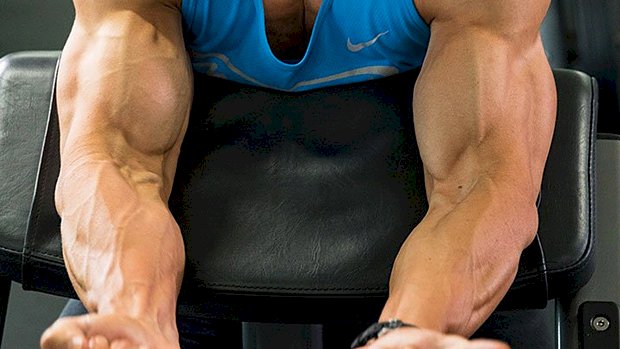 Back Off! Back-off sets are usually the first “finisher” a lifter learns. That makes sense because back-off sets are somewhat instinctive. Even someone who’s never read any articles about lifting will eventually stumble onto the technique all on their own. You do your 3, 4, or 5 heavy work sets and then, maybe having failed to get a satisfying pump, you reduce the weight for a final set and piston away until your gloriously blood-engorged muscles flame out. It’s bodybuilding’s version of an orgasm, complete with an O face. We’ve always assumed back-off sets work because, to a point, more volume is generally good, more time-under-tension is good, and a final set done with lighter weight and a greater number of reps taps into muscle fibers that only participated casually, if at all, in your main work sets. Even so, part of us wondered if these sets really did do anything to make muscle grow, or worse yet, were detrimental to muscle growth because maybe the back-off sets tapped too far into our recovery abilities. To find some answers, I dug up an older study conducted by some Japanese researchers who were also curious about back-off sets. What They Did Goto, Nagasawa, and their colleagues recruited 16 men and assigned them to one of two groups: Hypertrophy/Strength (HS) Hypertrophy/Combination (HC) During the first 6 weeks, both groups did leg presses and leg extensions using a hypertrophy-style regimen to gain muscle (10-rep maxes, short rest intervals, and progressively decreasing loads). After the 6 weeks were up, the HS group continued to work out another 4 weeks, this time performing a strength program where they did 5 high-intensity (90% of 1RM) sets. The HC group also continued to work out for another 4 weeks. Like the HS group, they also did 5 high-intensity sets, but they added a single set of low-intensity, high-rep work (the back-off set). Throughout the study (at weeks 2, 6, and 10), the researchers measured the muscle strength, endurance, and cross sectional area of the participants’ leg muscles. What They Found After the initial six weeks (during which the participants had practiced identical exercise programs), there was, predictably, no significant difference in the percentage changes of all variables between the two groups. After 10 weeks, though, the group that had switched over to the back-off set protocol (HC) showed significantly larger increases in leg press 1RM, maximal isokinetic strength, and muscular endurance in the leg extension. The cross sectional area of the quadriceps muscles of the HC group also “tended” to be larger. The researchers concluded the following: “A combination of high- and low-intensity regimens is effective for optimizing the strength adaptation of muscle in a periodized training program.” How to Use This Info There are various ways to do back-off sets. Powerlifters might do some work sets at 90% of their 1RM and then do a couple of doubles or triples at 90% of their work sets as back-off sets. This is done to build additional strength. Bodybuilders, however, generally drop their working weight by anywhere from 35 to 50% for their back-off set and aim to pump out an additional 25 reps or more until the muscles get all angried up and they can’t do any more. This, hopefully, gets them results similar to those noted in the Japanese study. One back-off set should suffice and while many lifters might choose to do them only on bench presses (mainly because they don’t have the cojones to do them on squats), there’s no real reason, outside your personal recovery limitations, that you can’t do a back-off set for nearly every body part in a workout. Most lifters wait 30 to 60 seconds between their final heavy work set and their back-off set, but many prefer the additional agony imposed by doing a back-off set immediately after the last heavy
Origin: Tip: Do This Finisher, Pack on Muscle
 All about sport xlsport.club