
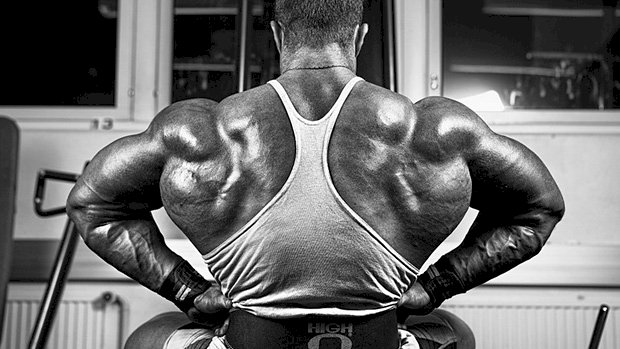
 This is one of the very best bang-for-your-buck exercises for increasing strength and muscle mass while also maintaining and even enhancing mobility through the shoulders and back. As anyone who’s tried to stretch a fully pumped muscle knows, this is not a comfortable feeling. That said, this isn’t for beginners. Neutral-Grip Lat Pulldown, Accentuated Eccentric The neutral grip allows the lats to increase their range of motion into a stretch at the top of the movement while also helping the shoulder complex stay in a more centrated position. Both variables are great for longevity, orthopedic health, and muscularity. Rock back a little in this exercise to create almost a high-row angle on the concentric (pulling) portion of the exercise, then come back and normalize your torso position into neutral. Bring your head forward to really stretch through the eccentric (negative) portion of the exercise. If you master this movement, get a partner to force the eccentric by pressing down on the weight stack as you slowly let your hands and arms move up into a straightened position. (See video.) If you’re a sicko who loves the pain, add a 10-30 second forced stretch out of this exact position while maintaining neutral shoulder alignment and stretching through the lats. This will stick a fork in your workout, so program it on the tail-end of an upper body or back-emphasized training
Origin: Tip: Crush Your Lats With This Exercise
Tag: Exercise
The Best Exercise for a Smaller Waist
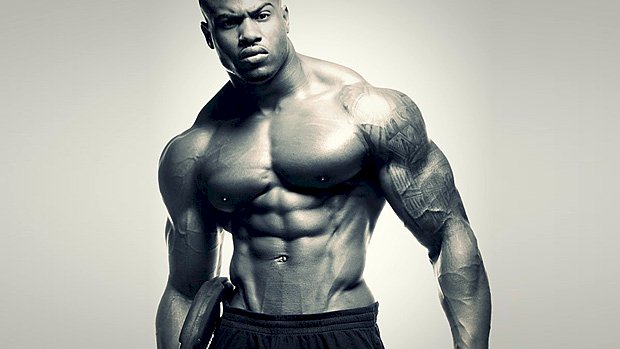 Here’s what you need to know… Back in the day, bodybuilders were judged on having small waists. And they actually trained using exercises to “tighten” the waist. You can’t narrow the width of the hips, but you can control the width from front-to-back. When Frank Zane was hitting his famous vacuum pose, he was intensely contracting his transverse abdominis or TVA. The TVA runs left to right across your midsection, much like a weight belt. In fact, the TVA acts as a natural weight belt. The TVA also plays a huge role in preventing back pain. To train the TVA, start with the supine vacuum, then progress to the quadruped vacuum, the seated vacuum, and then functional variations. How would you like to shrink your waist by performing one simple exercise? Want to know something that’s even cooler? The same exercise that’s going to decrease your waist circumference is also likely to remedy your lower back pain. The V-Shaped Physique Many lifters today prefer the old-school bodybuilding physiques as opposed to the modern day behemoths. A large part of that preference has to do with the sleek waists possessed by those classic, V-shaped bodybuilders. Back in the 70’s, bodybuilders didn’t just think about building individual body parts; they thought about the appearance of the physique as a whole. That’s what bodybuilding, whether recreational or competitive, should be about – creating a visually appealing physique in its entirety. Even Arnold Schwarzenegger, who was a mass monster in his day, had a really small waist. And when I’m talking small waist, I’m not talking genetically small as in left-to-right (narrow iliac crest or hip width). I’m talking about small front-to-back, which is something that is within your control, unlike your bone structure. Guys like Arnold, Frank Zane, and Lee Haney didn’t just stumble on these tiny waists and the incredible ability to hit a vacuum pose from any angle – they earned them. They actually made it a priority in their training and contest prep to work on performing the coveted vacuum. To them, working on pulling in their midsection was every bit as important as working chest and biceps, and I’d argue that we should have a similar perspective. Science of the Vacuum Exercise Let’s geek out a little bit and look at a little science behind this vacuum-thing. When Zane was hitting his famous vacuum pose, he was intensely contracting a muscle we sadly don’t think much about today, which is the transverse abdominis (aka transversus abdominis), or TVA. The TVA, which lies under the rectus abdominis and obliques, is the deepest of the abdominal muscles. It’s a unique muscle because it doesn’t connect to and move bones closer together like most other muscles. In fact, many of its fibers don’t connect to bone at all. Instead, they run across the midsection, hence the name transverse abdominis. So the TVA runs left to right across your midsection, much like a weight belt. And, in fact, that’s precisely one of the primary functions of the TVA, to act as a natural weight belt. When the TVA contracts, it increases intra-abdominal pressure and stiffens the spine. Again, just like a weight belt. But the TVA isn’t just for use when we’re lifting; it also serves to hold our internal organs up and in our abdomen where they should be. Think of the TVA as the anti-distended-abdomen muscle. And that’s exactly why you need to train it! Sleek and Pain Free A tight midsection isn’t the only reason we’re going to pay attention to the TVA. It also plays a huge role in preventing low back pain. In fact, numerous studies show that most people with low back pain have a “sleepy” TVA – one that doesn’t contract when it should. The good news is that studies also show that your sleepy TVA can be woken up via exercise, and that doing so will quite possibly reduce or eliminate your back pain. Training the Transverse Abdominis It makes sense to start with the easiest, most basic version of the vacuum exercise – or as it’s known in the clinical world, the “abdominal drawing-in maneuver” or ADIM. Given that you’ll get the assistance of gravity, the supine (face up) version is where we’ll begin. Supine Vacuum Start by lying on your back with your hips and knees flexed such that your feet are flat on the floor or bed. Next, exhale as much air as possible. This raises your diaphragm and, much like an empty stomach, allows for maximum contraction of the TVA. Lastly, pull your navel in as close to your spine as possible. The more your navels draws in, the more the TVA is contracting. In the beginning, try to hold the vacuum for about 15 seconds or so on each set. As with any exercise, you’ll want to progress over time. Work up to holding the vacuum for 60 seconds each set. Now, don’t let your inability to hold your breath keep you from doing these longer sets. Take small breaths as needed. Start with three sets and, over time, work up to five sets if you’re serious about getting results. By the way, to
Origin: The Best Exercise for a Smaller Waist
Tip: A New Exercise for Big Shoulders
 The delts are one of the most difficult muscle groups to develop. They’re also the most vulnerable to injury. The glenohumeral joint is the primary joint in almost all upper body functions. If you’re looking to press and pull heavy weight, you better have shoulders that are up for the challenge. There are two factors that need to be taken into consideration: You have to use movements that protect the health of the shoulder joint. You have to maximize the muscle recruitment to get them to grow This is often a difficult combination, except in this case. The Neutral-Grip Shoulder Press You’ve used the neutral-grip lat bar for pulldowns. Now try it for shoulder presses. Note that the cable is attached at the bottom of the handle, so you’ll be pushing up, not pulling down. The pulley should be set at about the belly or lower chest level. It’s a great pressing grip: elbows roughly 45 degrees from the body and hands in neutral grip (facing one another). The position of the arm alleviates unnecessary joint pressure to extend shoulder integrity. Begin with 25% of your normal barbell military press for 4 sets of 10. The video shows Musclemania Heavyweight Pro, Fred Shaka, who normally presses 225 pounds for reps, but trains this exercise at 60
Origin: Tip: A New Exercise for Big Shoulders
Tip: Exercise Variety is Overrated
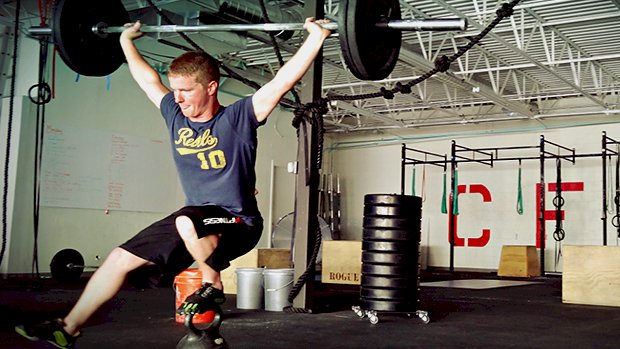 “You Must Have Variety, Bro!” Oh Really? Some say that you won’t make progress if you do the same workout twice in a row. Others say that you won’t make progress if you keep the same exercise in your program for more than a few weeks. The truth? It’s those who don’t stick to any one program for more than a few weeks that never seem to make any significant progress. They’re the ones quoting old-school Dave Tate articles, yet don’t even look like they could squat their bodyweight. The worst culprits are those who like to toss in exercises for the novelty alone. “Look Ma, BOSU ball squats while juggling oranges! You know, to keep the body guessing!” The Greatest Training Gap Look, I’m not bashing exercise variety. Variety has a time and place. However, the greatest gap in most people’s training isn’t lack of novelty, but rather lack of mastery. Most people never experience their “true” fitness or strength because they never allow themselves enough time to get comfortable with a particular lift or movement. Who wants to perform plain ol’ vanilla deadlifts when you can add chains or perform them in a mine field? Master the Simple Stuff To add variety you don’t need to be excessive. Just changing your grip, foot stance, bar height, or adding pauses can be enough of a change to make the deadlift more effective (given a specific technique flaw or weakness). So rather than adding exercises haphazardly for the sake of “doing something cool and different,” use less variety and learn to get really good at doing the simple stuff
Origin: Tip: Exercise Variety is Overrated
Tip: The Craziest Looking Grip Strength Exercise
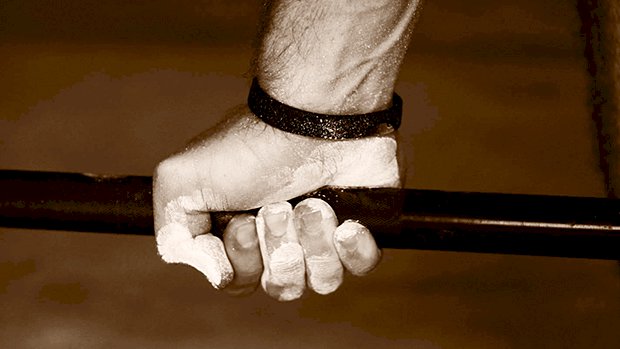 Barbell “Spiders” Most sports require good grip strength. And if you like lifting heavy barbells off the floor, grip strength is a must. This odd-looking but effective exercise builds dynamic crushing grip strength. It’s also a great movement for forearm size. Simply pick up a bar with a double overhand grip and pull the bar up as high as needed for you to catch it with a double underhand grip. This is a great way to get in extra grip work without any special equipment. I like to include grip training at the end of my lower body sessions, after deadlifting. You’re welcome to include grip training on other days if you find that works
Origin: Tip: The Craziest Looking Grip Strength Exercise
Tip: The Full-Body Core Exercise
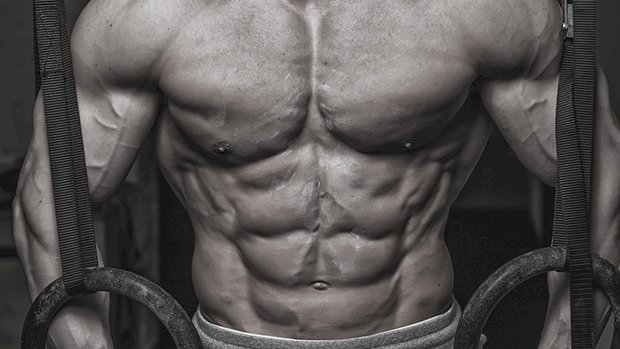 Dr. Stuart McGill changed the game with his outlook on core training to save the spine. He provides a great blueprint on bracing the core and all of the muscles that help stabilize your spine from just about every direction, which can improve performance. The “stir the pot” exercise is great for learning to brace the core: Now let’s ramp it up a notch. Try this variation: Grab a suspension gadget (TRX, rings, Blast Straps, etc.) with your body in the plank position – body straight from neck to toes and core braced tight. Make half circles with your forearms/elbows so the suspension device goes around your head, from shoulder to shoulder. Try not to move your body. (You can’t complete the circle because your head will be in the way, obviously.) This exercise is tougher than it looks. You’ll feel it all over your body. As you get accustomed to it, focus on limiting the speed of the movement and making larger circles with more tension throughout the body. This advanced exercise will improve your strength and stability, and it’ll have a big impact on your shoulders and
Origin: Tip: The Full-Body Core Exercise
Tip: Do This Medball Exercise Before Squats
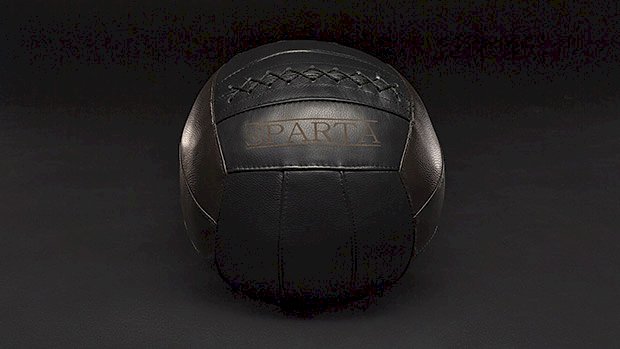 Doing an explosive exercise prior to lifting fires up your CNS and gets your body physically ready to lift hard and heavy. Olympic lifting variations are often used, but here’s one that almost anyone can do: the medball thruster. This exercise works great before squatting. Make sure you drive your knees out as you squat down. Utilize the stretch reflex (the bounce you feel at the bottom of the squat) to rocket your body back into a standing position. Once you reach this standing position, continue to explode up while forcefully extending the
Origin: Tip: Do This Medball Exercise Before Squats
 All about sport xlsport.club