
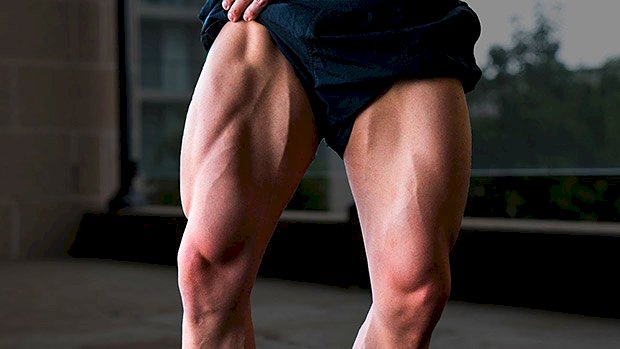
 Ordinary hack squats can be hit or a miss for some lifters. In my case, after a double knee surgery, they’re a huge miss. Enter landmine hack squats, where the foot-angle alone makes a world of difference for gimpy-kneed lifters. Landmine Hack Squat Instead of having to endure the compressive forces imposed by having your feet on a platform that’s exactly perpendicular to the direction of force (as you do with any conventional hack squat), the landmine hack gives the ankles a more open angle, and that means happier knees. This creates a feeling similar to squatting with a Smith machine, without the confines of a completely fixed path. Having the weight on a fulcrum also allows you to make minor lateral adjustments to find the perfect groove. Turning around allows you to find the perfect “lean” (and right foot position) to get a great pump. How to Do It Place the bar on your upper traps and hold it steady with the other hand. It doesn’t matter what shoulder you use, but it never hurts to switch to the other side between sets. Remember to fully lean against the plates themselves, so much so that if they weren’t actually there, you’d fall backwards on your butt. It’s a trust game. Sorry. To place more emphasis on getting a brutal quad pump, get deep and don’t come all the way up – it’ll amplify the time under tension and you’ll feel the burn. Focus on sets of 15-20. A few sets of this serves as a terrific finisher on leg day, but you can also add them into a superset or compound
Origin: Tip: You’ve Gotta Try This New Leg Exercise
Tag: Exercise
Tip: The Glute Exercise for Athletes
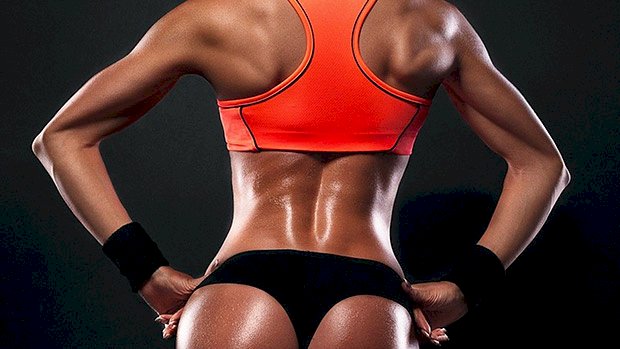 The glute bridge is basically a hip thrust performed with your back on the floor instead of on a bench. By using a resistance band as shown in the video below, the exercise will incorporate more of the muscle fibers involved in gait by requiring the hamstrings to contract at both ends. Bilateral Band-Resisted Bridge This changes the exercise into more of a performance-oriented challenge for intermediate and advanced athletes. It does this by increasing the contribution of the body’s deep longitudinal system. This is the line of interdependent muscles from the lower leg to the hip responsible for healthy gait. This modification and its progressions make for a great activation or warm-up for all deadlift and hinge-patterned movements, as well as antero-posterior patterns with contralateral loads. (That’s a bloated way of saying sprints and single-arm dumbbell lunges or step-up variations.) They’re also great for helping to ingrain movement skills such as upper and lower body disassociation and multi-planar hip stability. Here are several ways to make it even tougher: Progressions Band-Resisted Sprinter’s Bridge When performing the exercises, stabilize the foot with a powerful arch by digging the tip of the big toe into the floor. This prepares the lower body for sport and training by exciting the intrinsic foot muscles and calling for greater neural drive into the
Origin: Tip: The Glute Exercise for Athletes
6 Uncomfortable Thoughts About Exercise Form
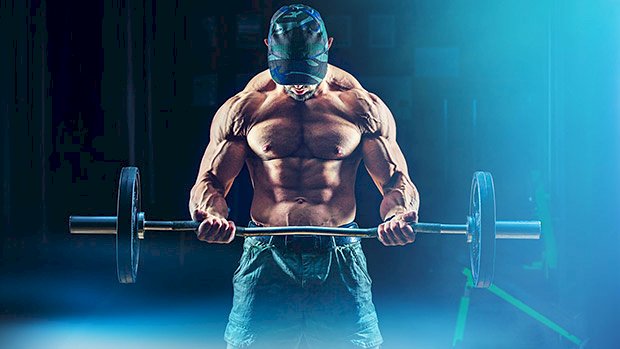 Yes, I know, you’re a stickler for perfect form. Aren’t we all? It’s only the other guy who has crappy form! But are you sure you understand what perfect form actually is? I’m not, and my lifting and coaching career spans 30 years. Let’s break down this topic. Warning: You may feel uncomfortable, but hopefully that’ll provoke some thought. 1 – There’s No Such Thing as Perfect Form To start with, the very word “perfect” implies an unreachable standard. Perfect technique doesn’t exist in the real world. Bottom Line: Avoid the word “perfect.” These terms are more useful when describing exercise form: acceptable, competent, safe, efficient, optimal, improved, good. 2 – Perfect From Isn’t Always Pretty Paradoxically, optimal technique can sometimes look really ugly, and vice versa. The late, great Konstantins Konstantinovs comes immediately to mind. Arguably the greatest deadlifter of all time, “KK” pulled 939 pounds with no supportive equipment whatsoever, not even a belt. Here’s the kicker, though: KK lifted with a such a pronounced rounded spine, your own lumbar region aches Pavlovian style, in the same way that your mouth waters when you vividly imagine chomping into a fresh lemon. No credible coach would teach, recommend, or condone KK’s lifting technique (including me), yet he could pull your best deadlift max with one hand. And I can find no evidence that he ever suffered from back pain. No, KK didn’t die in the gym. Instead, he purportedly met his demise at age 40 in some type of underworld gang incident. Bottom Line: Start with the established rules when it comes to proper technique, but don’t be afraid to improvise if textbook form causes pain. And don’t be too quick to criticize other lifters (especially if they’re successful) if and when their technique doesn’t meet your preconceived notions. 3 – Good Form Doesn’t Guarantee Safety Sorry, but good technique doesn’t eliminate the possibility of injury, nor does bad technique guarantee injury. Can you actually define what “injury” means? The best definition comes from T Nation contributor Dr. Stuart McGill: “Injury occurs when external forces exceed the tissue’s ability to withstand them.” So even if you could define and use “perfect” technique, you’ll be injured if you put too much weight on the bar or simply exert more force against a load than your tissues can tolerate. This gives rise to at least three under-appreciated truths: If you progress your training gradually enough for your tissues to successfully adapt to them, you’ll avoid most common injuries – even if your form truly sucks. Adequate training variation reduces the likelihood of overloading any given tissue too frequently for successful adaptation to occur. If you do suffer an injury, simply resting the injured tissue(s) should be the cornerstone of your rehab strategy. Anecdotal evidence confirms this hypothesis: We all know lifters who remain relatively injury-free, despite using super-sketchy technique, and we’ve also seen lifters with beautiful technique suffer serious injuries. Bottom Line: While good technique won’t guarantee your safety, it’ll nevertheless stack the odds in your favor. 4 – Good Technique is Personal Although there are certainly well-established principles that dictate proper technique (for example, during any type of pressing, your hands should always remain directly above your shoulders), optimal technique varies considerably from individual to individual based on their unique anatomy, injury history, and so on. Here’s one example: During the conventional deadlift, conventional wisdom dictates that at the start, your hips should be higher than your knees. And while I agree with this recommendation, there’s considerable wiggle-room in terms of exactly how high your hips should be at the start of the pull. A tall lifter with long femurs, “iffy” knees, and a strong, healthy low back might do best with a higher hip position than the textbooks would suggest. On the other hand, a lifter with more advantageous levers, healthy knees, strong quads, and/or lumbar issues would be better served starting with relatively lower hips. In another example, many old-school, grizzled lifters will roll their eyes in utter contempt if you don’t squat deep enough to leave a stain on the carpet. However, deep squatting isn’t always compatible with different people’s leverages, past injuries, or circumstances. Certain types of bony hip structures don’t permit deep squats without significant lumbar flexion, which exposes the lumbar spine to serious injury risk. Similarly, short/tight Achilles tendons or ankles would require considerable forward lean during a deep squat, which may also expose the low back to unnecessary risk. Finally, some people’s unique characteristics preclude safe performance of certain exercises, even if perfect form could be identified and implemented. As one example of this, lifters with “Type III” acromions or who have significant thoracic kyphosis
Origin: 6 Uncomfortable Thoughts About Exercise Form
Tip: Assisted Dips – Useful or Just a Sissy Exercise?
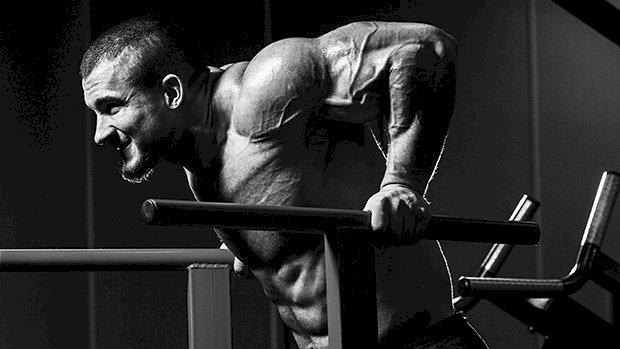 This machine gets poo-poo’d by the strength training community. The thinking is that everyone should be able to do regular dips with their bodyweight, bare minimum, for a set of 20. I don’t disagree with that. If your shoulders are in good health and you’ve got adequate anterior serratus strength, then dips are a staple in a “just barbell” program. Dips do an amazing job of developing the chest and triceps and, for the most part, have a low degree of injury potential. (I write that even though I suffered a tremendous pec tear doing dips, but I still consider them relatively safe.) The benefit of the Gravitron or any assisted dip machine is that the shoulder joint isn’t dealing with as much torque on it by having to offset the load of your bodyweight. With the Gravitron, you can still get the benefits of dips, but in a more joint-friendly fashion that also allows you to focus on making the muscles do the work, rather than focusing on moving your body through space. Thanks to the offset loading, you get a chance to “feel around” with different body positions, and that can help you figure out a torso and elbow angle that feels natural for you. Lastly, you can crank out some bad-ass metabolic stress work with assisted dips. Start by selecting an offset load that allows for 12 reps. Then increase the offset load so that you can do another set of 12 reps, but this time to failure. Increase the load one more time for another set of 12 reps to failure. If you haven’t done a set of these, then you’re missing out on some sweet pecs/triceps pump action. These hurt in a really glorious way. If you’re truly maniacal, hop on over to the Smith machine and do a set of Smith machine push-ups with the bar set at the bottom position. If that doesn’t smoke all of your pressing muscles to the max, then you’re truly dead
Origin: Tip: Assisted Dips – Useful or Just a Sissy Exercise?
Tip: The Russian Core Exercise
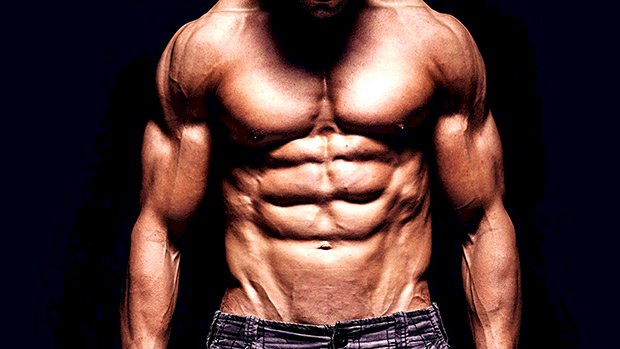 Do the Twist, Comrade! The Russian twist is a forgotten gem of an exercise. It’s one of the best anti-rotational core exercises on the planet when performed correctly. Bonus: Its progression capacity is limitless. This core exercise requires your glutes to contract to provide stability from which to rotate. It also helps improve end-range hip extension. It teaches you how to disassociate your chest and arms from your hips (and even your low back to a small degree) to rotate effectively and safely. If you aren’t in constant control while performing the movement you’ll immediately fall off the ball, so the design keeps you on high alert and provides instantaneous feedback about where your body is and how you’re moving – great for motor learning. The movement reinforces systemic whole-body tension. This skill can’t be discussed enough. If you’re trying to build a monster deadlift, squat, or bench press (or even run faster) then you’ll need to quickly generate high degrees of tension to create more strength. The Russian twist will help you do that.
Origin: Tip: The Russian Core Exercise
Tip: Do This Exercise FIRST on Back Day
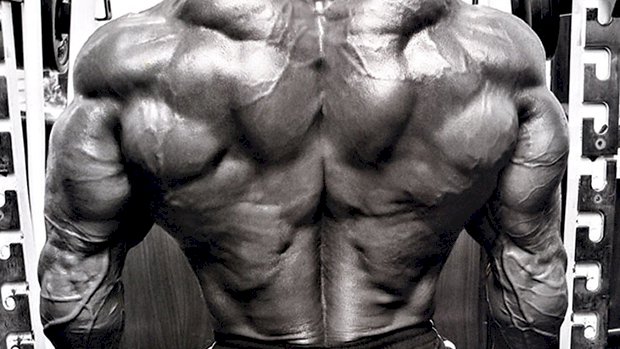 Do a stretch-based back movement before any big pulling exercises on back day. This “primer” exercise reverts your body into a normal posture by getting you into the opposite positions you most likely spend most of your day in. The single most effective movement to prime the back is the straight-arm pulldown and its variations. This movement involves isolating the latissimus dorsi. In most cases, it’s functionally shortened. Doing both an end-range stretch along with a peak concentric contraction works wonders. Straight-Arm Pulldown The straight-arm pulldown is based on internal tension. If you’re using a cable stack, it’s less about the external load you’re placing on the tissues and more about how you’re building and bracing your tension throughout a full range of motion throughout the set. As you’ll see, this movement will be humbling, so make sure you set your ego aside and train this exercise for the feel and
Origin: Tip: Do This Exercise FIRST on Back Day
Tip: Exercise Variety is Overrated
 “You Must Have Variety, Bro!” Oh Really? Some say that you won’t make progress if you do the same workout twice in a row. Others say that you won’t make progress if you keep the same exercise in your program for more than a few weeks. The truth? It’s those who don’t stick to any one program for more than a few weeks that never seem to make any significant progress. They’re the ones quoting old-school Dave Tate articles, yet don’t even look like they could squat their bodyweight. The worst culprits are those who like to toss in exercises for the novelty alone. “Look Ma, BOSU ball squats while juggling oranges! You know, to keep the body guessing!” The Greatest Training Gap Look, I’m not bashing exercise variety. Variety has a time and place. However, the greatest gap in most people’s training isn’t lack of novelty, but rather lack of mastery. Most people never experience their “true” fitness or strength because they never allow themselves enough time to get comfortable with a particular lift or movement. Who wants to perform plain ol’ vanilla deadlifts when you can add chains or perform them in a mine field? Master the Simple Stuff To add variety you don’t need to be excessive. Just changing your grip, foot stance, bar height, or adding pauses can be enough of a change to make the deadlift more effective (given a specific technique flaw or weakness). So rather than adding exercises haphazardly for the sake of “doing something cool and different,” use less variety and learn to get really good at doing the simple stuff
Origin: Tip: Exercise Variety is Overrated
Tip: The Only Good Smith Machine Exercise
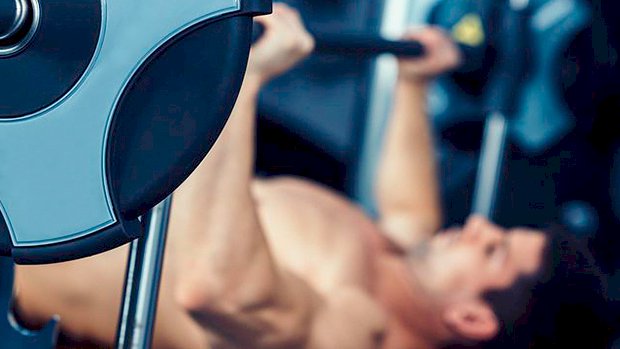 High-tension training methods teach our bodies to exert more force. Plyometrics and the shock method are often used for lower-body power development (depth jumps, loaded jumps, and landing from various heights.) However, very few people use the same methods for the upper body. Such drills can be very effective at improving bench-pressing strength. Example: the ballistic bench press. This is the only exercise in which I consider using the Smith machine effective. The objective is to lower the bar to the chest, throw the load in the air, then catch it and start again. The load you use should be light, because the goal is not to just be explosive, but to be ballistic. Use a weight that’s about 20 percent of your maximum effort. If you bench 300 pounds you’d use 60 pounds for the bench throws. Lower the weight under control, quickly reverse the motion, and toss the bar into the air as hard as you can. But be ready to catch it on the way down unless you want to get decapitated. Note: This won’t work well with Smith machines that use
Origin: Tip: The Only Good Smith Machine Exercise
One Exercise to Rule Them All
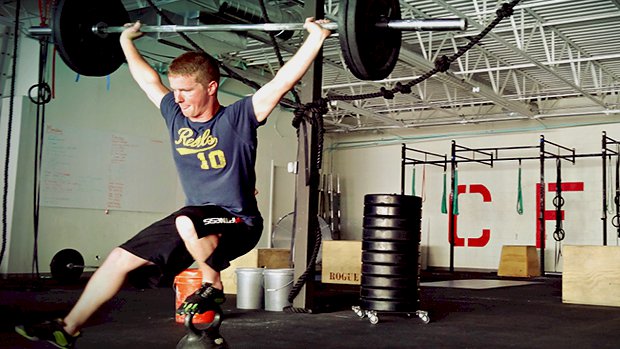
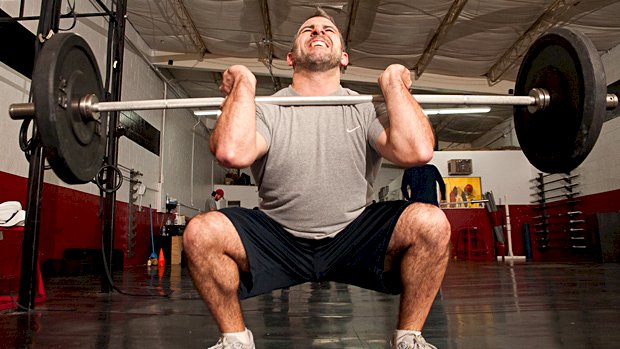 Lead Photo Credit: R. Frank Photography, CrossFit FBO Here’s what you need to know… The clean and press is the best accessory lift for increasing your bench, squat, and deadlift. Explosive lifting is missing from most lifter’s training programs, and it can pack muscle onto your frame quickly. Add the clean and press to your training in order to move the bar faster and more efficiently on all other lifts. Work towards a body-weight clean and press of 3-5 reps. Bigger Numbers, Better Body The clean and press combo is, flat out, the best accessory lift for vaulting the numbers of the big-three strength exercises. Let’s first define a clean and press so we’re all on the same page. We’re referring to a full “squat clean” where the bar is received in the rack position, followed up with a front squat. The pressing portion is a push press and not its wilder, more technical brother, the jerk. How to Perform the Clean and Press You have to progress through triple extension and receive the bar in rack position in a full squat. After you’ve landed in the full squat, return to the standing position and push-press the bar overhead. 1 – The clean It mimics an explosive deadlift, and the scoop or receiving portion recruits many of your upper body and core muscles. It’s no surprise that this part of the lift aids your deadlift. The next part of the lift requires you to front squat the weight. Firing from the hole in a deep front squat will do wonders for adding size onto your quads and improve your strength in the back squat. 2 – The push press Using your legs to dip briefly into a quarter squat, you drive the weight overhead with speed. This part of the lift will focus on strengthening your shoulders and get your upper chest involved while moving your arms to full extension. The best way to increase these lifts is to do them in a wisely structured program. Getting better at anything requires practice. Again, think of the clean and press as the best accessory exercise you can be doing for all of the main lifts and it should get its own day. Explosiveness = The Missing Link Explosively pulling weight from the ground, catching it, and tossing it overhead isn’t commonly done in most gyms, and you may think that these are only exercises for Olympic lifters and CrossFitters. Or maybe you think your explosive lifting days are over since you’re not playing hockey or football. Whatever the case, explosive lifting is the most common missing link in the pursuit of heavier weight on the bar and more pounds on your frame. The fear associated with cleaning comes from worrying about how it will affect your lower back, wrists, shoulders… and not knowing how to do it. But if you have healthy wrist mobility, shoulder mobility, and good elbow health, you’re prepared to clean and press. And, if you progress with the weights in a smart program, it’ll only strengthen your lower back. Then there’s the push press portion. Aggressively tossing weight overhead can be daunting, especially after you start working with weights heavier than 225 pounds. But if your form is correct and you progress in smart increments, it’s nothing to worry about. Keep the end goal in mind. Above all else, you want to increase muscle mass and continue to add weight on the bar for the big three lifts. Deadlifting, squatting, and benching heavy weight all put your body at risk for injury, so stop being a sissy and do what needs to be done. Why It Works for Muscle and Power Nothing puts muscle on an athlete’s frame faster than a power exercise. Strength exercises come close, but power definitely takes the edge. If a running back comes to me and wants to be bulletproof for the upcoming season, I give him explosive power exercises. When clients request better bench, deadlift, or squat numbers, I give them explosive power exercises. One of my new clients, who isn’t a beginner, began implementing explosive exercises in his program and he put on 12 pounds in under two months. Using a massive amount of force over a short period of time recruits a great deal of muscle fibers. When your goal is more muscle, maximal fiber recruitment is paramount. When you clean, the body has no choice but to recruit as many fibers as possible to produce the requisite force to complete the exercise. The push press also involves a massive amount of force development, and increasing the rate of force development is the key to lifting heavier. Move the Bar Faster Rate of force development (RFD) is how fast you generate force during an exercise or athletic activity. And if you aren’t lifting as fast as possible on the three lifts, you’re shortchanging your gains. As soon as you hit the concentric or lifting portion of the lift, you should be moving the bar as fast as you can in a controlled manner. Since moving the bar at a fast rate requires a great deal of force production, it stands to reason that you need to train RFD. The clean and press should be
Origin: One Exercise to Rule Them All
Tip: The Biceps Exercise for Powerlifters
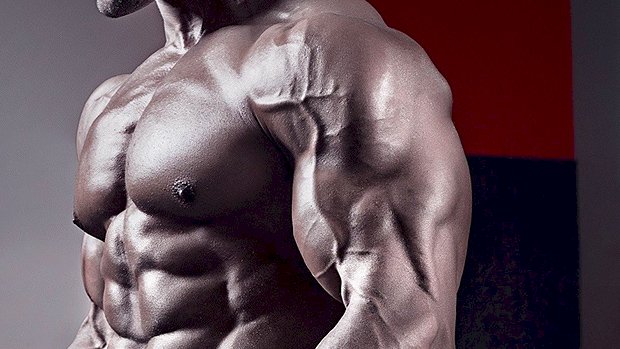 Most big-three guys – strength athletes who focus on the squat, bench, and deadlift – don’t think they need bicep work. But having strong forearms and biceps will help the bench. How? These muscles stabilize the elbow joint. Neglecting bicep work is a great way to end up with horrible elbow pain, which is a common occurrence, yet they seem to not know why. Hammer curls, done the right way, will prevent this. Strict Hammer Curl Now, these aren’t the swinging-dick hammer curls you see a lot of guys do at the gym, where they use ultra-heavy dumbbells and get almost no tension on the biceps and brachialis. Instead, do these with the dumbbells started on the front of your legs. This prevents cheating at the start of the movement, which means all of the tension gets hogged by the forearms, brachialis, and biceps. To add some pain to it, do sets of 30
Origin: Tip: The Biceps Exercise for Powerlifters
 All about sport xlsport.club