
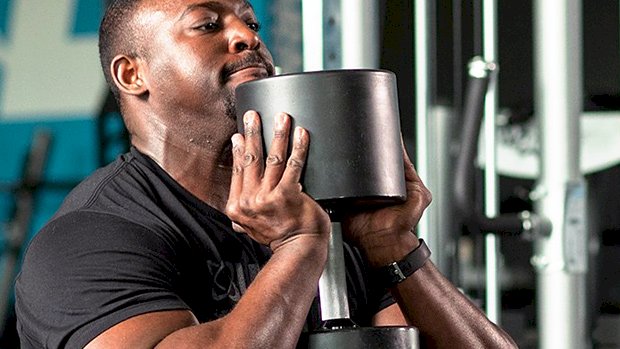
 The term “finisher” might bring back memories of Mortal Kombat and Sub Zero freezing opponents solid before punching their heads into tiny ice cubes, but in reality it’s just a short, intense effort at the end of a training session. Finishers are often framed as a great way to build work capacity and torch fat. While that’s not untrue, one of the lesser known benefits of well-designed finishers are their ability to help build muscle. A strategically designed finisher will provide all three of the mechanisms for muscular hypertrophy: mechanical tension, metabolic stress, and muscular damage to particular muscle groups. People often make two big mistakes when doing finishers: They don’t use exercises with enough loading. This basically leads to a glorified step aerobics session. Or… The movements chosen are too complex or loaded too heavily. The quality goes out the window as the heart rate goes up. When too much fatigue sets in, reps get ugly, range of motion decreases, and things go south. You can avoid those drawbacks with these four finishers. They’re made up of movements that are low on the complexity side, but pack a big punch since you’ll likely be able to handle substantial weights for an extended duration. This systemic stress will challenge your lungs and give you the stimulus needed to build more muscle. 1. Goblet Squat + Goblet Carry + Goblet Squat Grab a heavy dumbbell or kettlebell and knock out 10 goblet squats. Without putting it down, walk with it in the goblet position for 40-60 yards, then finish with 10 more goblet squats. Let your heart stop beating out of your chest, rinse, and repeat 2-3 times. Not only does this punish the legs, but with each round taking 75-90 seconds, the upper back and abs get torched from the duration of the hold. Not a challenge? Increase the weight on the next round. 2. Dips + Goblet Squat Countdown Using a dumbbell that’s half your bodyweight, do 10 goblet squats, then 10 bodyweight dips. Then 9 of each, then 8, and continue down to 1. Rest when needed but keep it to a minimum. When you start a set, try to complete all of the required reps. Holding the dumbbell in the goblet position becomes increasingly challenging as the fatigue in the triceps accumulates from the dips. This adds up to a lot of work (55 reps each of dips and goblet squats) in a relatively short amount of time, with constant stress on the triceps throughout, making it a solid choice if getting bigger arms is on your to-do list. 3. Goblet Squat + Hammer Fist Battling Ropes Set a timer for 10 minutes. Grab a dumbbell or kettlebell that you can hit 12-15 goblet squats with. Do 10 goblet squats and 20 seconds of hard rope waves. Work to get as many rounds in as possible. Your biceps, legs, lungs, and forearms will all be equally smoked. Be sure to keep the speed on the ropes going on each round. As fatigue sets in, you’re going to want to slow it down and just keep it moving. Take rest as necessary so you can keep the output level cranked up. 4. Chin-Up + Goblet Squat Countdown Using a dumbbell that’s half your bodyweight, do 10 goblet squats, then 10 chin-ups. Then 9 of each, then 8, and continue down to 1. Again, rest when needed but keep it to a minimum. When you start a set, try to complete all of the required reps. Use Finishers Wisely While finishers are a great exclamation point at the end of a workout, be frugal in how often you use them. Remember, this is a finisher. It’s done after the meat and potatoes of your strength training, so don’t get carried away with the “more is better” approach. When you push the envelope, you need extra recovery or you’re likely to see your performance impacted negatively in subsequent workouts. Think about adding one of these finishers in your last workout before a few days off, at the end of a training block, or at the very least, put an extra emphasis on sleep and recovery after doing one of
Origin: Tip: 1 Dumbbell, 4 Nasty Finishers
Tag: Dumbbell
Tip: 200 Pound Man, 100 Pound Dumbbell
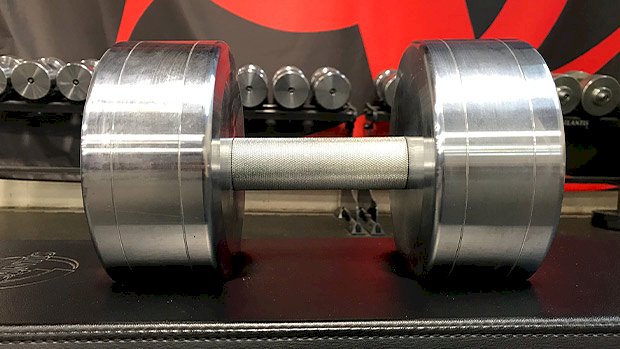 The One-Arm Dumbbell Bench Press Test You should be able to perform 5 reps per side with 50% of your bodyweight. That would be a 100-pound dumbbell for a 200 pound man. Before you throw a tantrum, yes, the barbell bench is absolutely valuable. The problem is, you can get away with pushing heavy weights even if you have glaring weaknesses and faulty mechanics. When you become “efficient” despite these issues, it’s only a matter of time until your strength reaches a glass ceiling and you get hurt. Once you refine your pressing mechanics and eliminate or decrease imbalances, you’ll stay healthy and build more strength over the long haul. The one-arm dumbbell bench press exposes any weak links and gives you immediate feedback on strength discrepancies between sides. With this info, you’re able to train each side individually and bring up weak points in your shoulders, pecs, and triceps. As a bonus, the unilateral load forces your core to work overtime to avoid the humiliation of falling off the bench. Can’t Do It? Take a brief hiatus from the barbell, dust off your dumbbells, and get re-acquainted with them. Perform the exercise with one arm or alternate sides on each rep, focusing on slowing down the eccentric (negative) portion of the movement and mixing in iso-holds at various
Origin: Tip: 200 Pound Man, 100 Pound Dumbbell
Tip: Death by Dumbbell – The Workout
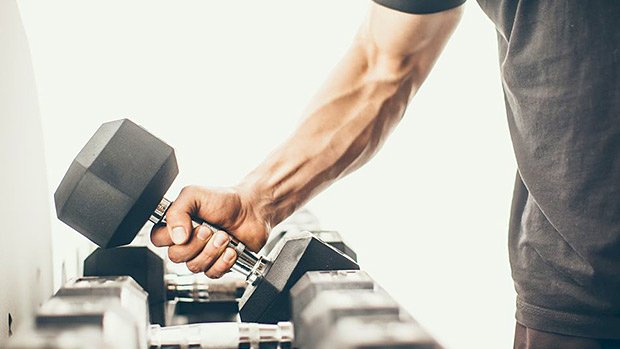 This is a simple, full-body workout that only requires one heavy dumbbell. It’s only four exercises, but they will challenge your shoulders, legs, and core stability. A lot of people avoid these exercises because they’re quite humbling. Don’t do that. Here’s what it looks like: The Workout 5 rounds of: 5 x Left arm overhead lunge 5 x Right arm overhead lunge 10 x Alternating bear row 5 x Left arm dumbbell strict press 5 x Right arm dumbbell strict press 5 x Goblet squat Take minimal rest between each round, aiming to finish in 12 minutes or less. To figure out what weight to use, find a dumbbell you can strict press for 10 reps with each arm and use that as your starting point. The strict press will be the limiting factor for most people. Exercise Tips Overhead Lunge:Make sure your elbow stays locked out the entire time and your ribs are pulled down. Do not arch your back; keep braced and reach high. Bear Row:Press down hard with the arm on the floor and draw the elbow of the pulling arm back as far as you can while maintaining square hips (squeeze your glutes). You can be super strict if you want, aiming to keep an unmoving plank throughout, but they’re a difficult movement so don’t be too hard on yourself. Just try not to look like a banana from the side. Dumbbell Strict Press:Don’t lean to the side. Pay attention to your lockout position, no half reps. Keep a more neutral grip and keep the dumbbell close. These will start to become challenging as you progress through the sets. Goblet Squat:Even though you’re holding the weight in front of you, try not to round your upper back. Keep your chest tall, grab the ground with your toes, and use the dumbbell to help you get nice and deep into your
Origin: Tip: Death by Dumbbell – The Workout
 All about sport xlsport.club