
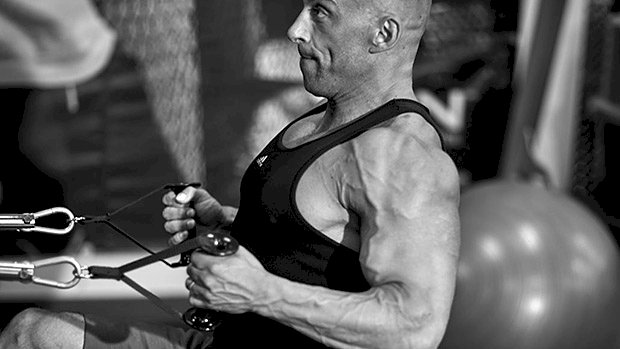
 Can You Maintain Strength While Cutting? Many things can contribute to strength. As such, you can lose strength for many reasons while dieting down. The two main reasons you lose strength when trying to get lean are: 1. You’re losing muscle. This is the most obvious one. But it should never happen unless you get down to lower than a real 8 percent body fat. If you keep training hard (but smart), have a high protein intake (1.25 to 1.5 grams per pound of body weight) and an acceptable deficit (not losing more than two pounds per week) you won’t lose muscle. 2. You’re losing tightness. This is the most common reason for losing strength. Normally what happens is that you get weaker on the big basic lifts (bench, overhead press, and squat) but your strength on isolation exercises for the muscles involved will be the same or even higher. By losing muscle glycogen, intramuscular fat, water, and fat, your strength leverage becomes worse and the joints are less “compressed.” If you accumulate a lot of glycogen, water, and fat inside the muscle and water/fat outside the muscle, you’re creating pressure around the joint which stabilizes it. This passive stabilization makes you stronger. When you lose it, the body feels less “safe” and force production is more easily inhibited as a protective mechanism. Let’s Address the Muscle-Loss Thing The reason why people lose muscle while dieting is NOT the caloric restriction. To maintain or even increase muscle, your body needs protein and enough calories to fuel the repair processes. “Yeah, but Thib, if I’m in a caloric deficit I don’t have enough calories to fuel the repair process!” Really? When you’re in a deficit you still walk, move around, and train, right? Of course! But you’re in a deficit… by definition you are not taking in enough energy to fuel all of that. How can you still function? Well, by using stored energy for fuel. And the same can be done to fuel the muscle repair and growth process. Even in a deficit, if protein intake is sufficient you should be able to repair and even grow some muscle by relying on stored energy and the ingested protein. I’m not saying you can build as much muscle on a deficit. When you eat less – especially when you go lower in carbs – you get a lower level of mTOR and IGF-1, which can make it harder to build muscle. But you should still easily be able to maintain what you have. So why then are people losing muscle while dieting down if it’s not because of the caloric deficit? Because they’re afraid of losing muscle. That fear leads to the fulfillment of that fear. So let’s say a dude decides to get shredded. He cuts calories and maybe starts doing cardio. But he heard that he’ll lose muscle when trying to get lean. At first, he feels smaller in his clothes and doesn’t look shredded yet. It’s even harder to get a pump (because of lowered carbs and sodium). So in his mind, it must be because he’s “losing muscle.” So what does he do? He trains with more volume and intensity. He goes to failure more often, uses a ton of set-extending techniques like drop sets, rest/pause, and supersets for 90-120 minutes sessions using short rest intervals. The higher volume and intensity both dramatically increase cortisol levels. Cortisol is already elevated more when you diet down (since it’s involved in energy mobilization). And this chronic output of cortisol greatly increases the risk of losing muscle since cortisol breaks down muscle tissue. You also create a lot more muscle damage. Under normal circumstances this would be fine since you need the damage to grow. But if you create so much damage that you can’t repair it all before protein synthesis comes back down (24-36 hours after your workout) you might lose muscle! When you’re dieting down, you shouldn’t try to use your lifting workout to burn more calories (by increasing volume), nor should you panic and jack up the volume. If anything, when you’re dieting your capacity to tolerate volume and adapt is lower. You need to do less, not more. Just make sure you push hard on those sets. The Loss of “Tightness” or Joint Stability This is likely the main cause of strength loss while dieting down, especially in the initial phase of dieting. The more stable a joint involved in a lift is, the stronger you’ll be. If the joint is more stable there’s less of a strength leak. Also, if the body feels “unsafe” it won’t allow you to use all of your strength potential. When you’re on a fat loss regimen you lose… Subcutaneous fat Intramuscular fat Muscle glycogen Intramuscular water Extracellular water When you lose intramuscular fat, muscle glycogen, and intramuscular water you “deflate” your muscles. As a result, these muscles aren’t pushing as much on the joints. The bigger the muscles are, the more “packed” the joint is, even passively. This makes the joint more stable. When that happens, you’ll lose strength on the multi-joint movements, mostly the pressing movements – the shoulder is an
Origin: Tip: Does Getting Ripped Make You a Weakling?
Tag: Does
Does Soy and Soy Protein Feminize You?
 Back in 1999, I got an email from someone who said he was a scientist that worked for Archer Daniels Midland, the giant global food-processing corporation whose mission it is to sprinkle the world knee deep in soybeans. He wrote to tell me about how some of his research had shown that soy contained chemicals that acted like estrogen and could affect the reproductive systems of human males, thereby reducing sperm counts and reducing testosterone levels. As is commonly done by evil corporations everywhere, Archer Daniels Midland squelched the research. Whether he really worked at the conglomerate and whether ADM really did suppress his research, I don’t know, but regardless, he wasn’t the first scientist to report that soy had negative effects on mammalian reproductive systems. Prompted by his email, I wrote Bad Protein, probably one of the first mass market articles to talk about any possible adverse effects to men from eating soy. Since then, as you’d expect, the bodybuilding subculture, along with bio-hackers, nutritional chemists, and enlightened nutritionists, have long debated the health effects of soy, especially soy protein. Most of the former are at least suspicious, if not downright terrified, of soy, while most of the lay public, thanks in large part to the marketing strength of ADM and other companies in the soybean business, continues to regard all-things-soy as synonymous with health. But it’s been almost 20 years since I wrote that groundbreaking article and a lot of the people who used to condemn soy have forgotten what it was about the grain that got everyone so lathered up in the first place. In fact, most modern-day articles don’t even mention the possibility of an association between soy and male reproductive health. So is soy still “bad protein”? It’s time to take another look at it and see if it deserves a second chance. Someone’s In My Parking Spot The concern with soy is that it contains plant chemicals known as isoflavones that function as endocrine disrupters. These isoflavones are genistein, daidzein, and glycetein. There’s also a fourth – equol – but it doesn’t occur naturally in soy; instead, it’s a particularly potent metabolite of daidzein that only shows up in 33 to 50% of humans who possess the particular bacterial strain necessary for its conversion (1). These isoflavones can affect mammalian cells in two ways. They can either bind to high-affinity, highly specific cell receptors in the cell nucleus, which in turn attach to DNA that leads to protein transcription. In effect, they act just like estrogen, albeit a weaker version. Alternately, they can simply bind to these receptor sites and sit there, preventing real estrogen from getting its normal “parking spot,” thereby preventing it from initiating protein transcription. You don’t want the first scenario to happen, particularly if you’re a male. At least that’s the theory. The thinking is that estrogen, or something that acts just like a weaker version, can be responsible for a host of “feminizing” effects. It can also make it harder to put on muscle. Of course, if you’re a male who has high levels of estrogen in the first place, you wouldn’t mind if any of these isoflavones stole estrogen’s parking spot because they’re weaker than real estrogen. The isoflavone would prevent the real, stronger, estrogen from binding and initiating protein transcription and you’d miss out on possible side effects like additional body fat, gynecomastia, possible BPH, and reduced sperm counts and testosterone levels. If, however, you have a low level of estrogen in the first place, the comparatively anemic activity of the weak estrogen could nevertheless lead to some of this undesirable estrogenic activity. Does It Really Feminize You? What’s the Research Show? We’ve known that isoflavones can cause reproductive disturbances in mammals since 1946 when it was discovered that sheep that grazed on red clover (which is high in phyto, or plant, estrogens) were infertile. Scientists made a similar observation about 20 years later when cows that were stall-fed red clover were also found to be infertile. Soon after, captive cheetahs on a soy-based diet turned out to have the same problem. Fertility was restored in all three cases when the isoflavone intake was reduced. There have also been innumerable experiments on mice and rats, most if not all showing that dietary isoflavones led to reduced fertility, reduced sperm counts, and reduced testosterone levels. Granted, most of these studies involved amounts of genistein that were probably five times more than a human would get through food, but they need to be taken seriously because, as Heather Patisaul, a soy researcher at North Carolina State University, explains, “Our reproductive system and the rat reproductive system aren’t that different. The same hormones are involved.” Some of the human studies showed similar problems. In one study of 99 men, the men who’d eaten the most soy in the
Origin: Does Soy and Soy Protein Feminize You?
Tip: Does Compression Gear Really Work?
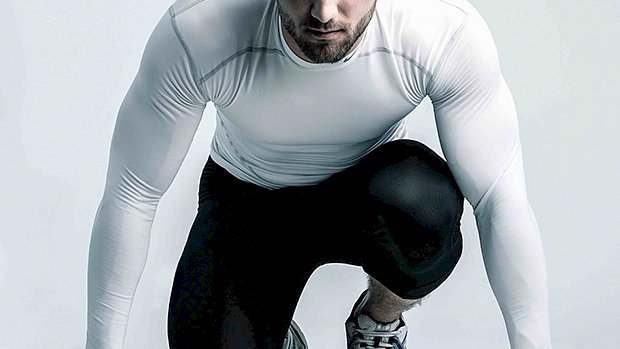 Is compression gear worth wearing during strength or cardio workouts? The short answer is… sort of. It depends on the activity and your goal. Multiple studies have examined the effect of compression clothing on endurance, strength and power, motor control, and post-exercise recovery. Let’s go through it. Endurance This one is a little hazy. What we’re looking for here is some impact of compression on physiological markers such as oxygen uptake, blood lactate concentration during continuous exercise, blood gases, and cardiac parameters. The majority of research in this area is inconclusive on the impact of compression on these physiological markers. Note that while there seems to be plenty of anecdotal evidence supporting the use of compression wear during endurance exercise, the studies have been unable to consistently show a correlation. People may THINK they’re benefitting, which may in fact create a psychological and even an actualized benefit. But it’s impossible to isolate the psychological effect without using a placebo condition in a study. Strength and Power Exercise Research is mixed in this area as well. Some small positive effects have been observed on sprint performance and vertical jumping, but these benefits seem to be almost negligible. However, here’s where we get to some real potential benefits of compression gear: studies have shown positive effects on the removal of lactate (H+ buffering) during short rests between sets of High Intensity Interval Training (HIIT). Without getting into too much detail about hemodynamics, it makes sense that tight compression gear may enhance local blood flow and improve oxygen delivery, and additionally, may enhance arterial blood flow, which in turn will facilitate more efficient clearing of metabolites, the aforementioned H+ buffering, and distribution of nutrients. Proprioception and Neural Mechanics Research on compression gear has shown some improvements in proprioception and sensory feedback. As a reminder, proprioception is the body’s ability to know where it’s located in space. These improvements also may help explain the strength and power benefits during HIIT exercise. Muscle Recovery We know that compression will increase arterial blood flow and venous return. We can say that it will also increase clearing of cellular waste products, which may result in quicker recovery after an intense bout of high intensity exercise. Thermoregulation Clothing generally provides a barrier to heat transfer and thus slows sweat evaporation. Compression clothing may inhibit this natural process of heat transfer even more, which would IMPAIR performance in the short term (during exercise), even while potentially improving muscle repair and recovery times (post-exercise). Research is lacking on the effect of compression gear on sweat evaporation in cold weather temperatures. However, in theory, inhibited sweat evaporation would be less important in cold weather environments, so the negative impact of compression gear may be lessened, while the potential performance and recovery enhancements would remain. Summary It’s important to understand that compression may have benefits to exercise performance and recovery, particularly during and after high intensity interval training, but it may also have negative impacts on overall exercise performance in others areas such as the inhibiting of sweat evaporation. Hey, maybe you just wear it because it makes you look jacked, but it’s always a good idea to get the facts
Origin: Tip: Does Compression Gear Really Work?
 All about sport xlsport.club