
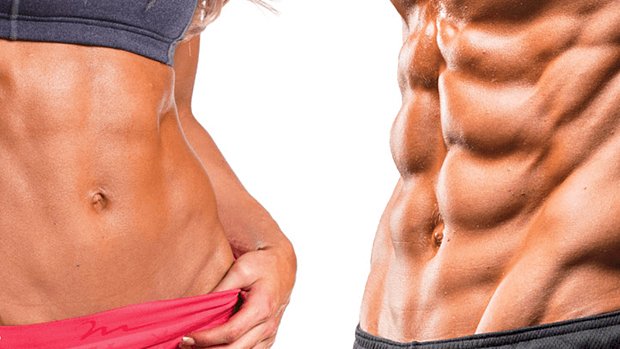
 You’re probably not trying to get peeled like a stage-ready bodybuilder. That’s fine. But if you want to get relatively lean (something beyond seeing your top two abs), and you’ve had trouble doing it, then your dietary compliance probably sucks. You just can’t stick with the plan. But why? Let’s get into that, then talk about five proven ways to stay compliant. Compliance Matters Most “My diet is better than your diet!” You hear that a lot these days… and anyone who says it is probably wrong. Throughout the 1990s, bodybuilders used moderate protein, high carb, low fat diets to get ripped. But somewhere into the 2000s there was a shift where carbs suddenly became the enemy and were responsible for everything from cancer to Nickleback. Lately it’s become sugar. Just eliminate sugar and eat more fat and your jiggly tissue will fall off. None of that’s accurate, of course. But it hasn’t kept the masses from getting overzealous about high-fat, low-carb, n=1 anecdotes. Incidentally, they ignore mountains of research and discredit the anecdotes of those who didn’t use that approach. Here’s the truth: For the person who’s lifting weights and trying to lose fat, all diets that equate for caloric and protein intake work basically the same. When it comes to fat loss, no one type of diet is superior to any other when those factors – eating plenty of protein and being in a caloric deficit – are considered. What generally allows a person to get results from ANY diet is their degree of compliance. Ultimately, that ends up being the secret of why it worked. It’s not because removing carbs or reducing fat did something magical. Each diet just reduced caloric intake. Those who claim that their diet is superior basically just found a style of eating that was easier for them to adhere to. Because their diet was a nice fit for them, they were able to stay in a caloric deficit for enough time to lose fat. Period. Why is compliance a big deal? Because a consistent energy deficit is what has to happen to get lean, and you can’t maintain a consistent energy deficit if your diet is too hard to keep doing. The 5 Steps to Dietary Compliance 1 – Know Your Triggers All of us have trigger foods. These are foods that send us spiraling right into the seventh circle of gluttony hell. Those triggers vary greatly from person to person. This is one area where I’d define foods as being “good” or “bad” based on your reaction to eating them. Contextually, a bad food is one that meets the seventh circle criteria when you’re trying to get lean. It’s up to you to be aware of what foods cause you to eat more even after you’ve had your fill. For me, it’s basically anything that doesn’t fall under the bro-diet umbrella. So basically anything that’s not eggs, oatmeal, rice, chicken, etc. I don’t just eat a slice of pizza; I eat four pizzas. I don’t just eat one doughnut; I clean out the bakery. Some people CAN just have two Oreos. They’re called sociopaths and they feel nothing, have no emotions, and lack empathy. It’s up to you to identify your trigger foods and eliminate them during the time that you’re trying to have a high degree of compliance. No, this isn’t something you have to do forever. But if you’re wanting to shed fat and you don’t want to screw it up, then just eliminate the foods that cause those problems. Now, there’s one obstacle to look out for: the scarcity effect. It’s when we end up wanting something because of the perceived lack of availability. The less access we have to something, the more we tend to crave it. This can be a lethal combination when it comes to trigger foods. The solution to replace those trigger foods with foods that are “close enough.” If you love pizza, try a thin crust or cauliflower option using toppings that are higher in protein and lower in calories: grilled chicken instead of sausage, extra veggies, half the cheese, etc. If you love cookies and brownies, try the low fat and/or low carb recipes for those foods. If it’s easier for you to just abstain all together, then do that. But figure out what you need to do to stop short-circuiting the fat loss process by giving in to your trigger foods. 2 – Figure Out Your Ideal Meal Frequency For decades there was this belief that eating more often raised our metabolic rate causing us to lose more fat. You know, eat six small meals a day instead of three big ones. We know now this isn’t actually true and eating frequency has no major effect on metabolic rate. What most likely was happening was that frequent eating created a higher degree of satiety throughout the day, so people had a higher degree of compliance and didn’t feel the need to overeat at any one meal. From a muscle retention standpoint, it’s probably a good idea to have some protein coming in every four hours or so to stay highly anabolic and to keep muscle protein synthesis elevated. That usually means about four meals a day. Anecdotally, I’ve found this to work well for people who don’t
Origin: How To Make Any Diet Work
Tag: Diet
Tip: Can You Boost Testosterone with Diet?
 The Testosterone Boosting Diet? Is there a way to boost testosterone, or at least optimize it, via diet alone? First off, think of testosterone like a sex and reproduction barometer. It’s partly responding to the environmental inputs. When it comes to diet, the question is: Is there enough food to drive metabolic demand? Not too little and not too much? If so, bring on the T! The metabolism wants the “goldilocks effect” when it comes to testosterone. This is why fat couch potatoes and ripped, show-ready bodybuilders have no motivation, no desire for sex, and soft, non-responsive, or less reliable erections. So, the first thing to remember is, don’t go too low for too long in any one of the macronutrients (protein, carbs, and fats). That can be a T killer. The second thing is to balance training with recovery. But this topic is a nuanced one, and I don’t want to come down too hard on any one dietary practice. I’ve seen slightly overweight individuals go on keto diets and measure notable positive changes in T levels. I’ve seen that same diet cause issues in libido, muscle gains, and erections. The discrepancy is explained by the individual. If I had to give a general rule of thumb (which is usually dangerous and stupid), I’d say… Don’t go below 20% fat. Don’t go below 30% carbs. Keep your protein above 20%. A 40-30-30 (carbs-protein-fat) ratio if you’re trying to gain muscle or compete in a sport is great. A 30-40-30 macronutrient ratio if you’re wanting to lose fat is good for most. Oh, and some studies suggest that if you’re low in magnesium, zinc, or vitamin D you may get a T boost from supplementation. ZMA® along with appropriate sun exposure and 2000-5000 IU vitamin D daily (take with your biggest meal) may be some good insurance. So to repeat… Stay away from extremes in leanness and extremes in fatness. Stay away from extreme macronutrient and calorie imbalances. Train enough, but not too much. If your T is optimized, you should feel it. Your brain will be focused and driven. Your exercise performance and recovery will be on point. You’ll be lean and feel fit. And your penis will be responsive, recharged, and
Origin: Tip: Can You Boost Testosterone with Diet?
Tip: What a Bug Can Teach You About Diet
 Beware of Supernormal Stimuli Foods High reward foods are very calorie dense and often very tasty. They’re generally high in added fats and/or sugar, and the reward properties of these foods may also be enhanced through the use of salt or monosodium glutamate (MSG). High reward foods are “supernormal stimuli,” sometimes called a supernormal releaser. The term, which is from ethology (the study of animal behavior), refers to a behavioral phenomenon whereby animals respond more intensely to stimuli that are exaggerated versions of the normal stimuli with which they evolved (1,2,3). Here’s a fun example. The Australian jewel beetle has a body that’s big, long, and brown. The males are hard-wired to like certain features of the female, namely largeness, brownness, and shininess. So what’s really large, brown, and shiny? A beer bottle. That’s right, the males attempt to copulate with a type of discarded brown beer bottles called “stubbies.” Just as animals respond more strongly, and often preferentially, to the exaggerated (supernormal) stimuli, humans can respond similarly to exaggerated versions of foods. This isn’t to suggest you might mate with a pork chop. It just means these high-reward foods can act as supernormal stimuli and can lead to maladaptive eating behaviors that hinder fat loss and promote fat gain. Here are two of them: Consistent and continued consumption of high-reward foods (the supernormal stimulus) can render whole foods (a normal stimulus) less appealing or unappealing. The influence of supernormal stimuli has changed what people think is a “large” portion size for a single meal. Research in 2006 replicated a study that was done in 1984 in which participants were asked to serve themselves an amount they considered to be a typical portion of each item on a buffet table (4). The 2006 study found that peoples’ perceptions of what they consider to be normal portion sizes have changed in the past 20 years. As you might guess, they’ve grown larger. Much larger. The researchers called this “portion distortion” (5). Exaggerated portion sizes can serve as a supernormal stimulus that distorts your perception of appropriate amounts to eat at a single meal. How to Use This Info Keeping the above two points in mind, not only can high-reward foods cause you to be less satisfied by whole foods (and therefore make adherence to a diet that emphasizes whole foods more difficult), but also more likely to eat larger portion-size meals. Given this phenomenon, it makes sense to minimize exposure to high-reward foods, or at least be continually aware of portion
Origin: Tip: What a Bug Can Teach You About Diet
The Paleo Hybrid Diet
 Here’s what you need to know… The ultimate Paleo diet for lifters is a caveman-based diet with the re-introduction of a few starchy carbs and workout nutrition to support weight training. There’s no such thing as an essential carbohydrate, but tell that to the guy who’s combining high amounts of anaerobic training with no carbs and whose ding-dong has been lifeless for a year. The anaerobic energy production pathway runs on glucose/carbs. High intensity muscular contractions require glucose. The true value of an ancestral approach to nutrition is what it cuts from the average person’s diet. Let’s make this simple. The optimal eating approach for merging health with performance and physique enhancement is to follow a caveman-based diet – animal proteins and veggies, no junk – with the re-introduction of a select few starchy carbs and peri-workout nutrition to support weight training. That’s it. It’s a revamping of the classic “don’t eat crap, adjust the macronutrients to the demands of your modern sport” nutrition plan. And while the mainstream is starting to catch on, as evidenced by the legions of new paleo converts who ponder whether a caveman would’ve had access to rice cakes or quinoa, the dust is far from settled. Many office workers still follow high-carb diets better suited to athletes, and many strength trainers follow no-carb diets better suited for sedentary populations. The principle of specificity has been lost in the dogma-thumping, and people across the board are as confused as hell. Paleo Pondering What’s lost in all of the intellectual pontification and academic posturing is what should be the true goal of any educator – giving people simple, effective, actionable strategies that will help them produce results in the real world. So let’s allow the gurus to hash it out for dietary supremacy. You should focus on finding the most efficient path given your individual situation and goals. The Paleo Way The caveman theme is a simple theme. It works for practically everyone, from advanced athletes who have been information-overloaded by the fitness industry, down to complete beginners who don’t know (or care) much about nutrition and need a simple approach to get started. Paleo simplifies the overcomplicated and gives people actionable steps, instead of being frozen with “paralysis by analysis” listening to scientific debate. Cut out refined garbage and eat more plants and animals. I bet that will take 90% of people 90% of the way. Paleo calls bullshit on much of the “health” industry that preys on uninformed consumers. Organic crap is still crap. Gluten-free crap is still crap. Organic, gluten-free cookies are still cookies, and are not that great for your health or body composition goals. Wild salmon and spinach are gluten free as well. But apparently, in some elitist athletic and academic circles, you can’t even say the world “paleo” or “caveman.” Doing so would make you appear less cutting-edge or advanced, and certainly wouldn’t grant you access to the V.I.P. parties where everyone circle jerks over their credentials. So we have flowery language, unnecessarily technical diet strategies, and obsession over minutia. Aren’t you more interested in getting shit done? While the science behind them is crazy complex and could take a lifetime to fully master, the most effective diet and training programs are the simplest ones on paper. Crap-Loading and Other Crap Diet numbers are the most important variable to get right for physique results, so if that’s all you really care about (that’s all I cared about when I was 20, too), then crapload away: eat whatever junk food you want. But that doesn’t necessarily merge your physique goals with long-term health enhancement. Take it from someone who has worked with clients of all ages and former athletes who have messed themselves up with uninformed or extreme methods. It’s the cumulative effects of your diet over a lifetime that matter, not any 10-week timeframe. Serge Nubret once said, “Every sickness comes from food.” I think genetics and environment also play a part, but food is the thing you can fully control. Beyond theory, marketing material, “study wars,” and pointing to that one genetically gifted guy who can pull it off, you can’t tell me that when you step back from it all and just use pure common sense that you think shit-loading every day can be good for your long-term health. There are many athletes that look great on the outside but are train wrecks internally. They’re extremely unhealthy and dealing with side effects such as sleep disturbances, depression, elevated disease risk factors, metabolic damage, and digestive disorders. Ever wonder why there are so many dicks in the fitness industry? Maybe that’s part of it. Like it or not, food choices are important for optimizing overall health. If you still want to eat pizza and Pop Tarts every day, be my guest. Low Carb Is for Couch Potatoes The paleo approach certainly isn’t the
Origin: The Paleo Hybrid Diet
 All about sport xlsport.club